Family History Organisations to Merge

We are pleased to pass on the post below with the news from the recently merged society now known as the ‘ Airedale and Wharfedale Family History Society’.

We commend all of the extensive work done by the societies in the past and look forward to working with the newly formed society in the future.

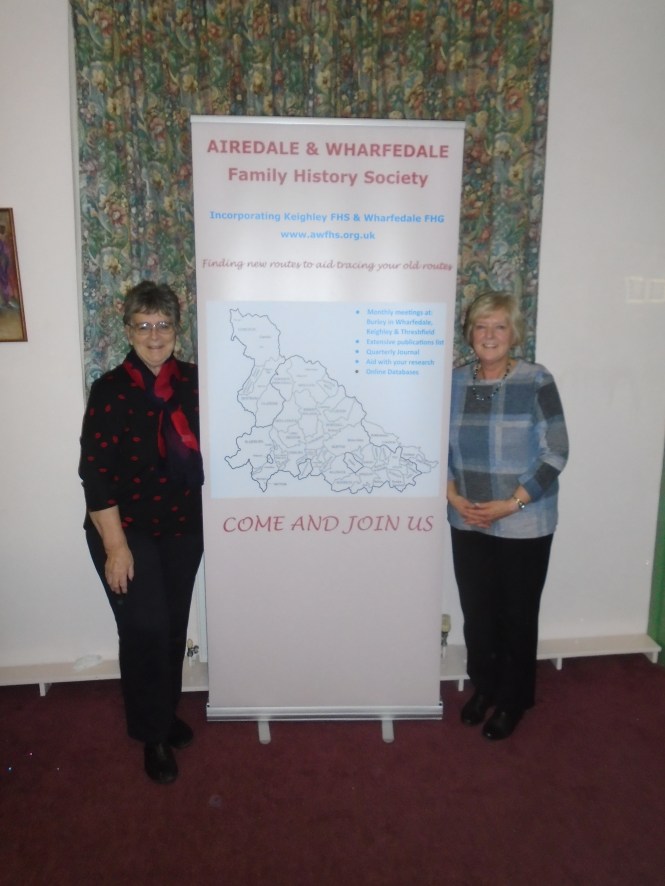
Two Yorkshire family history organisations, Wharfedale Family History Group and Keighley Family History Society, both of which have been in existence since the nineteen eighties are to merge.  From 1st January they will be known as the Airedale and Wharfedale Family History Society.  The society will have three branches – Burley in Wharfedale, Keighley and Threshfield.

The two organisations have had overlapping areas of interest and the new society will take in Wharfedale, Airedale, the Forest of Bowland and all towns and villages to the borders of Lancashire and Cumbria.  Their list of publications which will number close to five hundred encompasses parish registers and memorial inscriptions – valuable aids for anyone in search of their roots.

The society’s aims are:

  • To provide good lively informative monthly meetings at our soon to be three branches.
  • Attract new members
  • Offer assistance for those new to the hobby.
  • Provide new research aids, particularly those less obvious and less  financially rewarding to warrant the interest of the major websites.

Although a lot of family history research can be carried out on the internet, due to the complexities of the records it is very easily to come to a standstill or end up in the wrong tree!  Local knowledge of available sources can supply invaluable aid to the researcher at a much lower cost and with more accurate results.

The society website can be found at www.awfhs.org.uk.  This includes a list of the publications and several databases, details of the society meetings, articles and news.

The first meeting of the new society is on Thursday January at the Salem Hall in Burley in Wharfedale starting at 7.30.  This will be a research evening, an ideal opportunity for visitors and new members to come and meet the team.  Visitors and new members are always welcome at our meetings.
good news pic

House History at Keighley Local Studies Library

Gina Birdsall and Angela Speight who delivered our recent courses on the subject of House History agreed to write a blog for us about the course.

Following the recent popularity of television programs like ‘A House Through Time’  on BBC 2 that aired earlier this year which looked into the social history, occupants and architecture of a house throughout different periods of history we decided to embark on delivering a course on that often neglected and sometimes difficult area of research: the history of your house.

Condensing such a wide area of research down into a manageable two hour course was a bit of a challenge. Ultimately, we opted for an introductory level course with a one hour talk and slideshow divided into three main areas possible to research: Site, Building and People. There was a small fee for this course which included printing and hand-outs, some concessions applied.

After addressing these research options we then embarked on trying to help get people started or further their research.

Some people opted to look at the computerised resources and used ancestrylibrary.com and findmyppast.co.uk   to look at the Census and 1939 Register. These websites can be used free of charge in all Bradford Council libraries.

With some help people did have some success in finding who had lived in their properties. Others took a look at some of our vast resources that we had on display including the conservation area assessments and the Tithe Awards for the local area.

With such a wide range of properties and different areas to cover, time seemed to fly and we soon had to finish up, with most people keen and inspired to continue their research. Still the course seemed to be a great success so much so that we hope to run the course again sometime during the New Year.

Gina and Angela

Many thanks to all who have been on courses and left such useful feedback.

‘An excellent session thanks’, ‘Really enjoyed it’ were a couple of comments received.

For more information about further courses contact Keighley Local Studies Library on 01535 618215 or email keighleylocalstudies@bradford.gov.uk

This slideshow requires JavaScript.

Temporary Closure of Keighley Local Studies Library

Keighley Local Studies Library will close for a week from Monday 26th November for Collections Week.

The Keighley Lending Library will remain open.

The week’s closure will enable work to be carried out on a section of the large collection of Local Authority material with the aim of increasing convenience of user access and ensuring that these unique items are stored in the best way possible for future preservation.

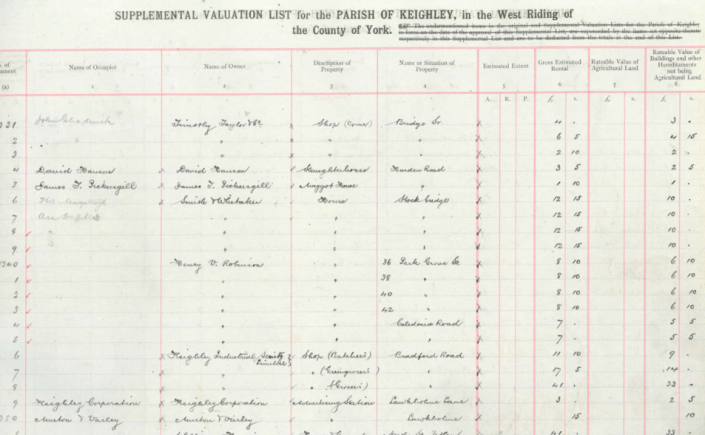
This collection which originated in Keighley Town Hall consists mainly of rate books from local Urban District Councils and Townships including Morton, Oakworth,  Oxenhope, Haworth and of course Keighley.

The collection also includes UDC committee minutes, account books and various administrative records.

The earlier records date from 1820 and many of the items are a unique source of information representing the early and middle part of the 19th century for the area.

As records of people and places for the central period of the industrial revolution, these archives are used by a wide range of researchers. They provide an important source of local, social and economic historical information.

UDC committee minutes are also popularly used for the history of villages and their pattern of development.

Local Authority archives are a valued source of information for present day conservation area assessment reports and restoration projects such as Keighley’s North Parade and Royal Arcade.

Rate books are also becoming increasingly requested records of research due to the continuing and growing popularity of family history and house history. They give information on the owner/occupier of the property and in some cases,  a description and details of size.

A selection of items from the Local Authority archives will be on display when the Local Studies Library reopens on Monday 3rd December..


Treasure of the week no. 24: ‘Wot! No telly!’ – Creative recreation for 1858’s working man

Popular Amusements. Four Essays by Working Men of Bradford. (Bradford Review, 1858)

JND 196/1 (Please quote this number if requesting this item.)

Football challenge 001

In 1858, the Bradford Review of 21st August offered a prize of one guinea (£1.05) for the best paper, and half-a-guinea (52½p) for the second best in reply to the following question:

What are the best and most practicable means of promoting recreation among the people, during the winter months, in manufacturing towns?

It is hard to imagine life without television and radio, phones (mobile and landline), i-pads, video and CDs, the internet, even electric light and motorized transport. What were young people to do in the evenings after work but congregate in the streets, visit the pubs and betting shops, and generally be a raucous nuisance? What was needed to provide a positive solution to the problem?

Fourteen essays were submitted and forwarded to the adjudicators, the Rev. J.P. Chown and W.R.Haigh, Esq. In addition to the prizes for the first two, Mr Haigh offered a third prize, and the proposer thought that one of the unsuccessful essays contained suggestions of so practical a character that he thought a pity if these hints could not be discussed. Four essays, then, were printed in the Bradford Review, and reprinted in a 32-page pamphlet by James Hanson of Bradford. It is this latter that is to be found in the Dickons Collection of Bradford tracts.

The prize was won by William Harrison, a compositor, who proposed singing classes, Saturday evening concerts and entertainment, a public gymnasium and popular lectures. Chess, draughts and billiards were also suggested.

Second prize went to Malcolm Ross, a lithographic printer, who urged the establishment of a Working Man’s Literary Association to embrace  debating and other classes of an improving character; also a reading and news-room of social and political knowledge. This reminds us that there were no public libraries in Bradford at this time.

Benjamin Preston, a wooolsorter, won the third prize. He suggested cheap music or popular concerts, together with dancing and theatrical entertainments under judicious regulation.

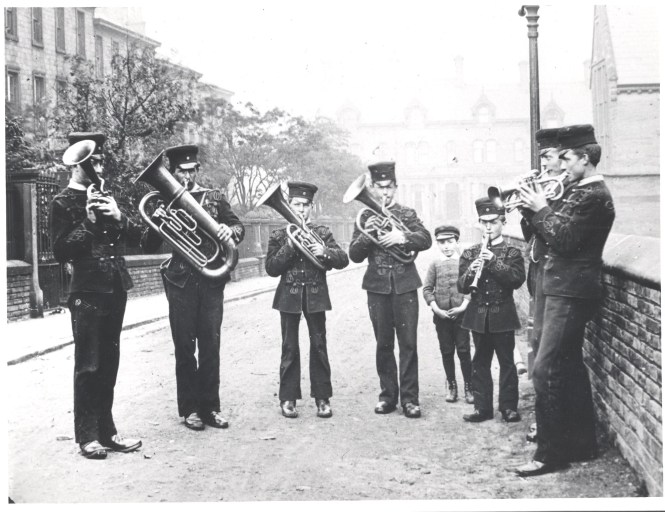
Brass Band 001

The final prize winner was Edward Sloan, a book canvasser, who proposed that the workmen of each establishment, firm, or location, should form themselves into a small society for their mutual instruction and amusement. As with all the candidates, Sloan emphasized the need to provide creative opportunities to counteract, in his words, “depression of spirits, exhaustion of body, a sickness and deadness of the whole man, [which] cry out imperatively for a change. But hitherto the world has provided for the ignorant no place of recreation half so enticing as the public house.” Wise words from a woolsorter.

Reading these accounts emphasizes how much society has changed since those mid-Victorian times. The essays were followed by a feature article in the Review of October 9th, 1858, commenting on the proposals. Reading them today we see that what was proposed closely foreshadows the establishment of public libraries, youth clubs, and many of the social and cultural activities we have today. Maybe the essays of William Harrison, Malcolm Ross, Benjamin Preston and Edward Sloan had a part to play!

Stackmole