The Discovery of Yorkshire’s Landscape Heritage

This particular summer many of you will have embraced the outdoor life more fully with a great, hearty “Phew!” and for that you will have used maps of all kinds and many of you will have run, walked, cycled, driven, wild swum and sailed through the Yorkshire moorland, parkland and countryside, hopefully marvelling at its great variety and beauty. However, not that many of you will have heard of John Phillips and his uncle William ‘Strata’ Smith who both contributed so much to the identification and classification of our wonderful land, despite both lacking in any kind of formal higher education.

William Smith (1769-1839) pioneered geological researches. His techniques and those of other such surveyors and engineers promoted the development of canal and navigation networks to be constructed over suitable water retaining fault-free ground.  William Smith analysed the strata of rock layers and he was the first to realise that the age and properties of rock strata in the British Isles could be indicated by the fossils found in each stratum. William’s life was not an easy one, facing competition and theft from colleagues, a wife who tragically went mad and eventual imprisonment for debt. His fascinating life and achievements can be followed in The Map That Changed the World, A Tale of Rocks, Ruin and Redemption by Simon Winchester (Penguin Books, 2002), available for loan in Bradford Libraries.

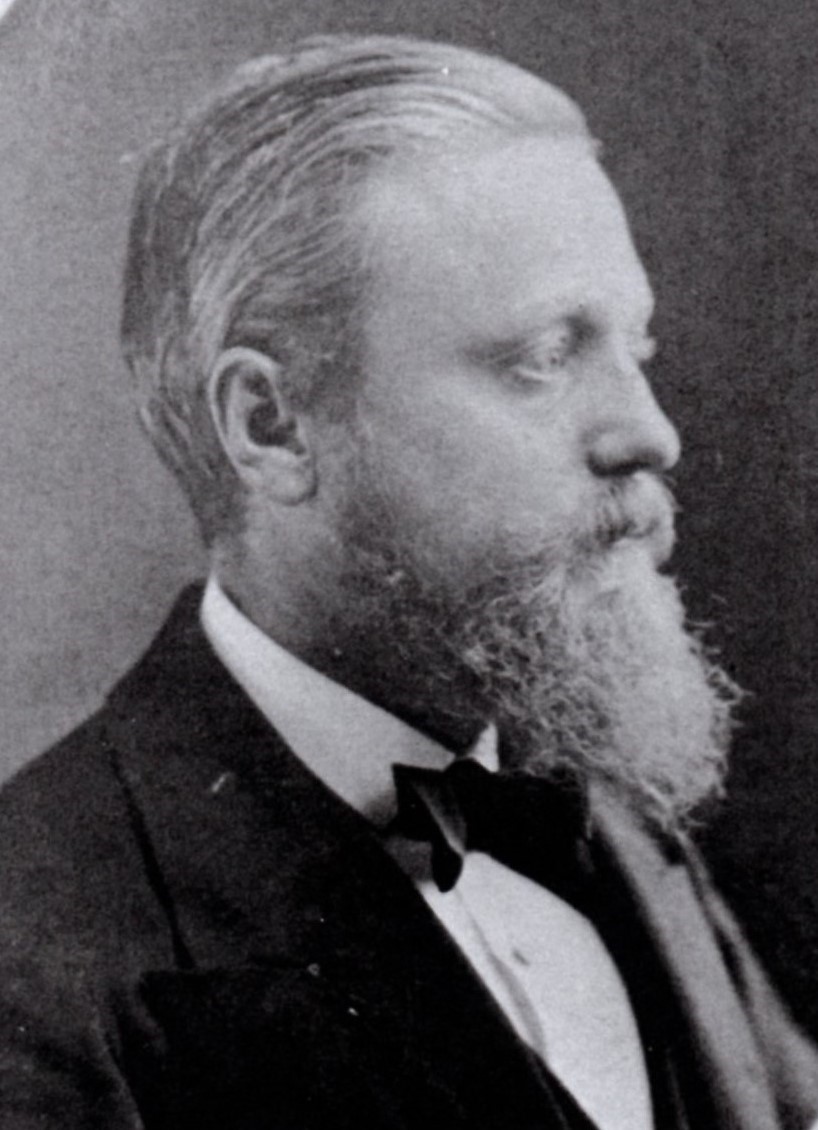
John Phillips (1800-1874)

Smith’s nephew, John Phillips, became one of the most influential scientific figures of the mid 19th century. What is remarkable about his eventual achievements is that Phillips, like his uncle William Smith, had no formal higher education. Early tuition was paid for by his uncle William but funds did not stretch far and so he began to work for William as his assistant between 1817-1819, making regular surveying trips around England. Consequently, he absorbed Smith’s practical engineering and surveying skills and the application of the new science of geology.

John Phillips must have really appreciated that without the influence of his family and friends in his early life, he would not have enjoyed career success in pursuing interests that had fascinated him from a young age. This is probably why he later became committed to the general education of people of all classes and gender and in particular to helping make the modern science of geology more popular and accessible to the public. He contributed much to modern understanding of the natural world through research, lecturing, academic and popular writing and published the first geological timescale. Phillips also adopted and was passionate about the landscape heritage of Yorkshire, especially its history and archaeology. He was amongst the first to produce studies of the carboniferous limestone of the Yorkshire Dales as well as detailed studies of the Yorkshire coast. Amongst other achievements, he helped to found the Yorkshire Geological Society and the British Association for the Advancement of Science (British Science Association), established in York in 1831. He was Senior Secretary of the Yorkshire Philosophical Society (https://www.ypsyork.org/ ) and became Keeper of Collections (1825-1840) of one of Yorkshire’s first purpose built museums, the Yorkshire Museum in York which still has a library dedicated to the Society and displays of maps, fossils and other artefacts depicting the work undertaken by William Smith and later with John Phillips.

https://www.yorkshiremuseum.org.uk/exhibition/the-map-that-changed-the-world/

New book for loan

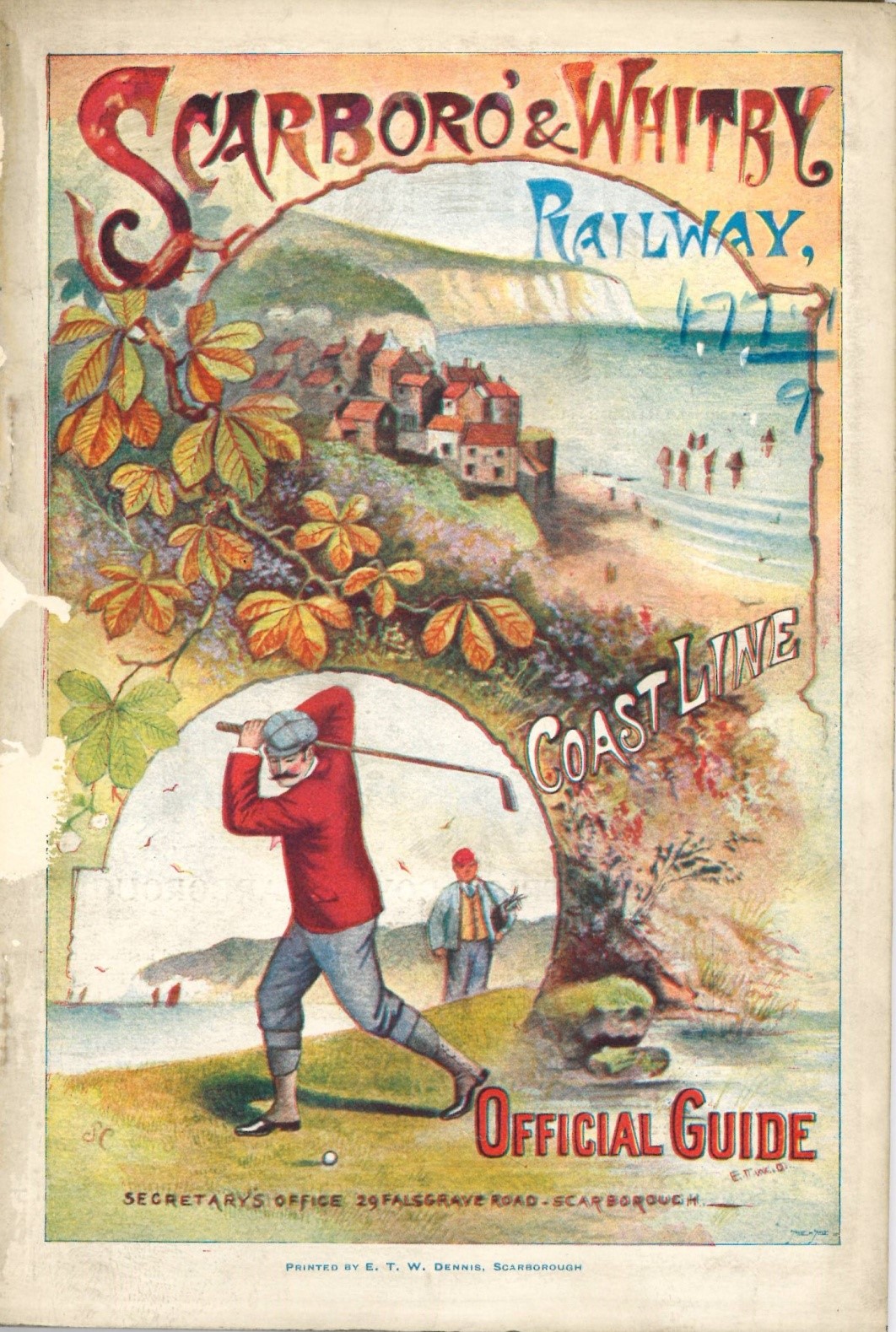
A recently published and very enjoyable book by Colin Speakman, John Phillips, Yorkshire’s traveller through time is now available for loan in Bradford Libraries and, as well as discussing the above, presents John Phillips as a pioneer walker-writer and artist in his adopted Yorkshire and tells of how he went on to produce two of the best early guidebooks to Yorkshire and one of the first ever railway guidebooks in the world. Perhaps a Michael Portillo moment coming up? The book traces his footsteps through the moors, dales and coastal beauty of Yorkshire and how he became a source of inspiration behind Britain’s National Park and outdoor movement. You never know John Phillips may even have had a hand in influencing your own summer time adventures this year.

Read and Visit

John Phillips, Yorkshire’s traveller through time by Colin Speakman (Gritstone Publishing co-operative, 2020)

The Map That Changed The World, A Tale of Rocks, Ruin and Redemption by Simon Winchester (Penguin Books, 2002), the story of William Smith

Now the main tourist crowds have gone, why not visit the ‘Reading Room’ and see William ‘Strata’ Smith’s ground breaking 1815 geological map of England and Wales at The Yorkshire Museum, York Museum Gardens, York

https://www.yorkshiremuseum.org.uk/access/

You could also visit the Rotunda Museum in Scarborough. This was designed by William Smith in 1829 and is one of the world’s first purpose built museums:

https://www.scarboroughmuseumstrust.com/rotunda-museum/

If your interest is peaked in geology and you don’t want to travel further than Bradford visit our own Cliffe Castle museum in Keighley which houses the Airedale Gallery exploring the geology of the district, the Molecules to Minerals Gallery, and its own Natural History Gallery all wonderfully curated. The Molecules to Minerals Gallery has been described by the former head of the Geology Museum as ‘…probably the best, as regards the range and quality of its minerals and its design, outside the major national museums’.

https://www.bradfordmuseums.org/venues/cliffe-castle-museum

Gina Birdsall, Keighley Local Studies

Home access to Find My Past


As restrictions across the United Kingdom are now being lifted, and with libraries now able to welcome back their members, Findmypast have taken the decision to bring the remote access offering to an end from 1st September 2021.

From this date all access will available in the library only.

Art for Everyone

Getting through Lockdown well has involved many people turning to hobbies and interests, including arts and crafts. If you are interested in art and artists and are inspired by the works of others, then check out the latest publications coming to Bradford Libraries based on Bradford and District’s very own.

In the last couple of years, 3 well illustrated books by Colin Neville have been published. Past Silsden Artists;  Lesser Known Artists of the Bradford District 1860-1997 and the latest publication that has particular resonance with recent events,  as it looks at the highs but also the lows of a selection of artists and how this affected their art and work, The Highs-The Lows, Past Artists of the Bradford District (Imprint 2021). For more details of these books, please follow the link below to the Not Just Hockney web site. These books will be available for reference and for loan in Bradford Libraries.

Very many people are looking forward to the re-opening of local art galleries and museums in May. Until then, however, there is a great web site that champions and promotes local professional artists past and present:
Not Just Hockney:  https://www.notjusthockney.info/  
This is a non-commercial web site that was launched in 2015 by Colin Neville, a Silsden resident and  former lecturer. By December 2020, the site had come to include 450 artists past and present who had significant residency and/or works, links with the Bradford district”. It’s a fully illustrated site so there is a lot of art to inspire, including of course David Hockney himself.

The site also helps to promote local art trails, The Young Masters Visual Art School (primary school age children), the Art School Ilkley, and also works with the Bradford UNESCO City of Film to present local artists on the public Big Screen in Centenary Square, Bradford.

Bradford’s own museums and art galleries will be opening in mid -May but you can keep up to date and hone your art skills using their online services, their brilliant, illustrated blog post, https://www.bradfordmuseums.org/blog/ , online exhibitions  and  AtHome Activities. This last provides weekly home art projects to inspire you to “draw, write, think, talk, move, make, build, explore, invent, reflect or play” at any age. Please follow this link and get inspired by amazing objects, beautiful art works and historic buildings.

https://www.bradfordmuseums.org/whats-on/you-inspire-me-to-draw-like-david-hockney-2020-04-03

Meanwhile Bradford Libraries have a wonderful stock of teach yourself art and drawing books, DVDs of art techniques (Keighley Local Studies), and regular online story times with related activities https://www.youtube.com/user/bradfordlibraries

Many Bradford and District adults and children in Lockdown turned to art to express their emotions, moods, to escape and to find a sense of fulfilment in difficult times. Bradford Libraries published some in the books: Stay at Home: Poetry and art from the people of Bradford in response to COVID-19 and Stay at Home: Poetry and art from Bradford children and young people in response to the Covid-19 pandemic 2020 (Bradford Libraries paperback 2020) both available in Bradford Libraries . Let’s hope that such comforts can be carried with us into the future for whatever challenges face us and thankfully there’s plenty of advice and inspiration out there to help us to do that.

Keep up to date with what’s opening up and available in your area through Bradford Libraries, Galleries and Museums at: www.bradford.gov.uk

Gina Birdsall, Keighley Local Studies

International Women’s Day – March 8th 2021: The Indomitable Molly Jones.

From time to time people who I remember from my earliest days working at Keighley Library will suddenly pop into my head, usually for no particular reason, sometimes stirred by memories from a newspaper article or picture that I have been looking at. Not long ago I was thinking about a man called Reg Jones. Reg was a good man and we would often pass the time of day on his frequent visits to Keighley Library. This got me thinking again about that old adage ‘behind every good man there’s a great woman’ and in Reg’s case no truer word was spoken.

When I was invited to write this blog (my first one ever incidentally) there was one lady who’s name immediately sprang to mind. On International Women’s Day 2021 with the NHS very much to the fore, this lady’s life is well worth celebrating. In my eyes she is an unsung hero of whom Keighley owes a huge debt. I never met Molly Jones, but growing up in Keighley in the 70s and 80s I heard her name mentioned constantly. Looking back at Molly’s life and her remarkable achievements, it is only now that I have come to realise what a true pioneer she was in every sense of the word. Keighley should be extremely proud to claim Molly Jones as one of its own, she paved the way for health services that exist in this town to this day.

Molly, christened Mary, was born on a farm in Cockerham and attended Lancaster Girls Grammar School. Her father was not keen on her choice of a career in nursing, so at first Molly took a clerical job with the school health service. However her desire was such that Molly decided to leave her well paid secretarial job behind and enrolled to train as a state registered nurse and midwife on her 21st birthday. By 1942 she was working as a nurse in London and recalled that her pay was £30 a year which increased at the rate of £5 annually until it reached £75. She then transferred to St. Pancras where her work involved supporting new mothers by visiting them when the midwives ended their duties fourteen days after giving birth. As a trainee Molly had to sit with three women who died as a result of back street abortions and this horrendous experience would drive her on to campaign vigorously for abortions to be made legal.

Molly’s next move was to Keighley where she was a health visitor in 1948 on the day the NHS was born describing it as ‘a normal working day’. She was very impressed by the new council estates that were springing up all over the town. Health visitors in their navy uniforms were instantly recognisable and were often called in by mothers who saw them on their way to visit new borns. In that same year Molly married Reg Jones and settled in to her home at Utley going onto have four children of her own. It was soon after her marriage to Reg that Molly retired from paid work, however her involvement in health matters was as committed as ever.

Molly, who had taken mothers under her care in London to a family planning clinic, was by now well positioned to give advice on the subject in Keighley. She told them about a Marie Stopes Clinic in Leeds despite being warned by her superiors not to do so. A pioneer in the field of contraception, Molly was also keen to help women who did not want more children. In 1952 she worked as a volunteer at an evening clinic in Shipley set up by the Family Planning Association. It proved so popular that women started to arrive way before it opened just to make sure that they were seen. Molly would laugh as she recalled ‘they used to make a night out of it with a fish and chip supper on the way home!’

As a health visitor half a century ago Molly also set up a baby and anti-natal clinic at Westgate. She recalled giving out National Dried Milk alongside brand named baby milk, orange juice, virol and cod liver oil. She firmly believed that parenting was the most important thing for any child and that the government should not be encouraging mothers to go out to work.

Molly set about learning relaxation techniques so that women might not need pain killers when giving birth and spearheaded relaxation classes. She was keen to highlight the over-prescribing of tranquilizers and set up several support groups.
Fast-forwarding to the year 2000, Molly called on health chiefs in Airedale National Health trust to provide Macmillan nurses in order to support patients from the moment they are diagnosed with cancer. She believed that it offered a more focused and specialised service compared to district nurses.

I know that a lot of Molly’s achievements will have never been recorded so I will not be aware of them but in later years she became involved in the care of older people and founded SHAPE (a pioneering Senior Health Awareness Project) on Temple Street. She was a staunch supporter of Keighley’s Voluntary Sector through membership of several management and working groups, including Keighley Council for Voluntary Services (KCVS). Heavily involved in many other groups, such as Airedale Community Health Council (KCVS), the Women’s Health Group and a support group for Parkinson’s disease.

Her accolades include winning a Yorkshire Women of Achievement Award and Keighley Community Personality of the Year in 1989.

Molly eventually benefited from some of the services she had supported during her lifetime, such as the Parkinson’s group. She was still attending a keep fit class at the Salvation Army well into her 80s.

On Molly’s death in 2015 at the age of 98, Val Mills, the long-time leader of Keighley Voluntary Services, paid tribute in the ‘Keighley News’ to Molly’s long and active time as a dynamic and determined community health campaigner and volunteer. She said “Molly was an ardent and very vocal campaigner on public health issues, particularly for women. She was often well ahead of the game in new public health issues and growing concerns. She gave many hundreds of hours of volunteer time during 40 plus years.”

Molly’s daughter, Chris Baillie, said “some of my earliest memories are connected with mum’s tireless work for the health of the people of Keighley. She was a campaigner who always fought to right any injustices she saw. My mother’s memory let her down in the last few years, but the spirit carried on.”
Molly’s son, Mike jones was a canoeist who at 19 descended the Grand Canyon and led an expedition down the Blue Nile, later writing a book about his exploits. He drowned in 1978 in Pakistan trying to save his best friend. A film was made about his life.

Molly’s grandson, Tim Baillie, won a gold medal for pair’s canoe slalom at the 2012 Olympic Games.

Molly’s life was well lived and thinking back to Reg in the library back in the day, I think he was a very lucky man indeed to have Molly in his life. I’ll leave the last word to Molly Jones (not many people can say this) summing up her lifetime in health care she said simply “I’ve enjoyed every minute of my work.”

Janet Mawson.
Keighley Local Studies Library.

‘Gentleman Jack’ and a first same-sex wedding ceremony

In this LGBTQ+ History Month, we celebrate the life and love of one of Yorkshire’s greats, Anne Lister of Shibden Hall and the first person in the Yorkshire area to have a same-sex wedding ceremony in 1834.

Anne Lister (1791-1840) was part of the famous mill owning Lister family of Bradford and as such was related to Samuel Cunliffe Lister of Manningham Mills.  Anne, however, lived at Shibden Hall, Halifax where that branch of the Lister family had lived since 1615.

Anne was not born at Shibden but moved there as a child to live with her aunt and uncle. She became co-owner in 1826 and, following the death of her brother, inherited the estate in 1836. She became a keen businesswoman, undaunted by the sometimes openly hostile male chauvinism in her local business and political world, and was an adventurous traveller abroad.  She was also the only woman co-founder of the Halifax Literary and Philosophical Society.

Anne Lister assiduously wrote diaries and journals, 24 in number. They listed her daily social, political and business life and travelling exploits but at least one sixth of them were handwritten in code. This coded text later revealed the extent of Anne’s romantic affairs and sexual encounters with women, when they were finally decoded from a mixture of Greek letters, numbers and symbols. Apparently, it was not until the women’s liberation movement of the 1970s and 1980s that it was felt that uncensored editions of her sometimes explicit diaries could be published (Gentleman Jack:  a biography of Anne Lister by Angela Steidele, p.Xi)

Diary extracts and samples of code can be viewed on the excellent web pages of the West Yorkshire Archive Service, that hosts a full exhibition about this remarkable woman, please follow this link:

http://wyorksarchivestreasures.weebly.com/the-diaries-of-anne-lister.html

In 1832, Anne Lister struck up more than her earlier acquaintance with Anne Walker (1803-1854) who, through inheritance with her sisters, had become joint owner of the neighbouring substantial Crow Nest Estate in Halifax. The two Annes became lovers and exchanged rings on 27 February 1834. However, it was on Easter Sunday, 30th March 1834 that they sealed their union when they took communion together in Holy Trinity Church, Goodramgate, York. This building now displays a commemorative rainbow plaque.

https://www.yorkpress.co.uk/news/16377725.rainbow-plaque-unveiled-holy-trinity-church-goodramgate-york/

Anne Walker and Anne Lister lived together as a married couple at Shibden Hall and also travelled a great deal. It was on one of their journeys in Georgia in 1840 that Anne Lister died. She was only 49 years old. Sadly, Anne Walker, who had always suffered with mental health problems had a severe relapse and was removed to York from Shibden Hall in 1843 having been declared of ‘unsound mind’.  Although she returned to Shibden, she later moved back to her family’s estate Cliffe Hall in Lightcliffe,  where she had been born. She died there in 1854.

There is a wealth of material online about Anne Lister, her life and diaries,  Anne Walker, Shibden Hall and about the making of the most recent television series Gentleman Jack, filmed in Halifax and using Bradford popular film locations, and now into the filming of a second series. Bradford Council also has a number of events to celebrate LGBTQ+ History Month.  Please follow the links below.

Gina Birdsall, Keighley Local Studies

Events in Bradford this month:

https://www.bradford.gov.uk/arts-and-culture/whats-on-in-bradford-district/lgbtqplus-history-month-2021/

To borrow (hard copy or ebook) the acclaimed book that the TV series inspired, Gentleman Jack A Biography of Anne Lister: Regency Landowner, Seducer & Secret Diarist by Angela Steidele, translated by Katy Derbyshire (Serpent’s Tail, 2019)

https://capitadiscovery.co.uk/bradford/

The diaries:

http://wyorksarchivestreasures.weebly.com/the-diaries-of-anne-lister.html

https://www.bbc.co.uk/programmes/articles/3QT2z16RXhfxSDn1mrbRNVp/the-real-diaries-of-anne-lister

Shibden Hall:

https://museums.calderdale.gov.uk/visit/shibden-hall

Filming the series in Yorkshire:

https://www.thetelegraphandargus.co.uk/news/18938555.gentleman-jack-filming-bingley/