Black History Month 2021 #1 – Henry Box Brown

Bradford Libraries are Proud To Be part of Black History Month 2021 and delighted to share some of the historical stories featured in the Black History Timeline for Bradford District.

The Black History Timeline showcases the long history of black people in our community and the contribution they have made to our society.

You can view the full timeline here: https://bradfordlocalstudies.com/black-history-timeline-for-bradford-district/

Henry ‘Box’ Brown

The fascinating story of Henry ‘Box’ Brown is inspirational across the world.

Henry Box Brown was born in 1815 and enslaved on a plantation in Louisa County, Virginia.

In 1849 he escaped slavery to freedom by concealing himself in a wooden crate and arranging to have himself mailed to abolitionists in Philadelphia, enduring 27 hours of travel.

Brown became a noted abolitionist speaker and later toured the UK with his anti-slavery panorama to tell his story and help the abolitionist cause.

In 1851, Henry ‘Box’ Brown appeared to a crowded audience at the Mechanics’ Institute in Bradford for 5 nights, ‘depicting in a striking and painful manner, the abominations and horrors of slavery’. (Bradford Observer 8th May 1851)

He re-enacted his escape by having himself shipped from Bradford to Leeds where his arrival was greeted with a parade of music and banners throughout the central streets.

In 2009 to celebrate Black History Month this journey was re-enacted by artist Simeon Wayne Barclay who was transported in a box by van from Bradford Central Library before being unveiled in Leeds.

Simeon Wayne Barclay

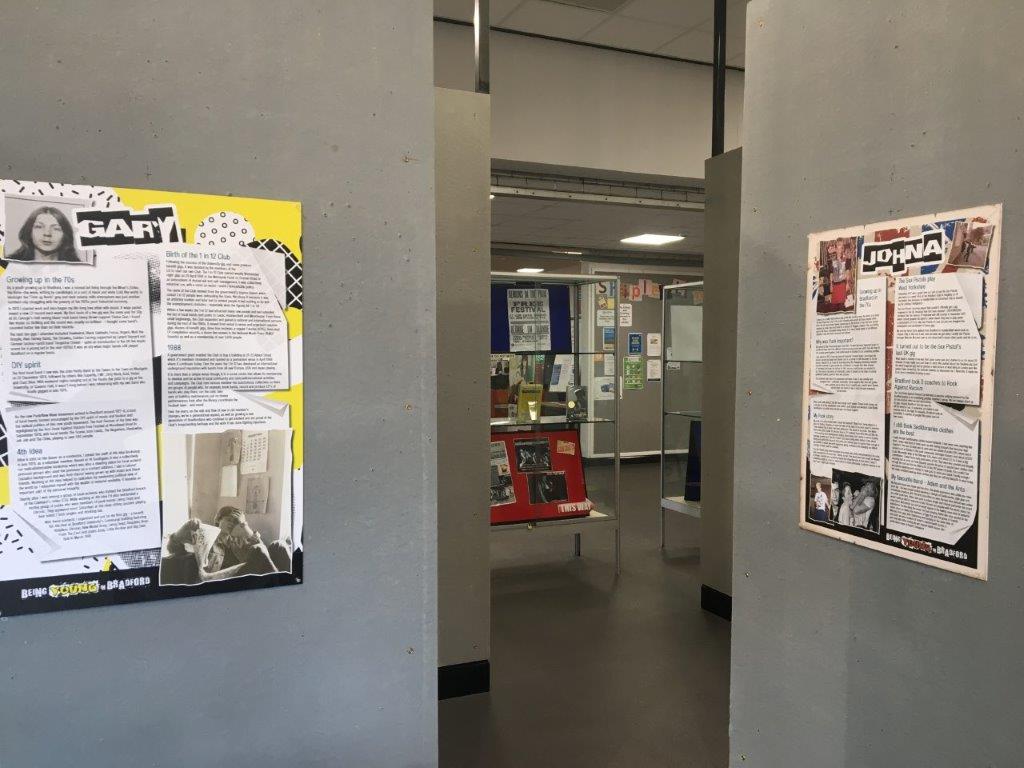
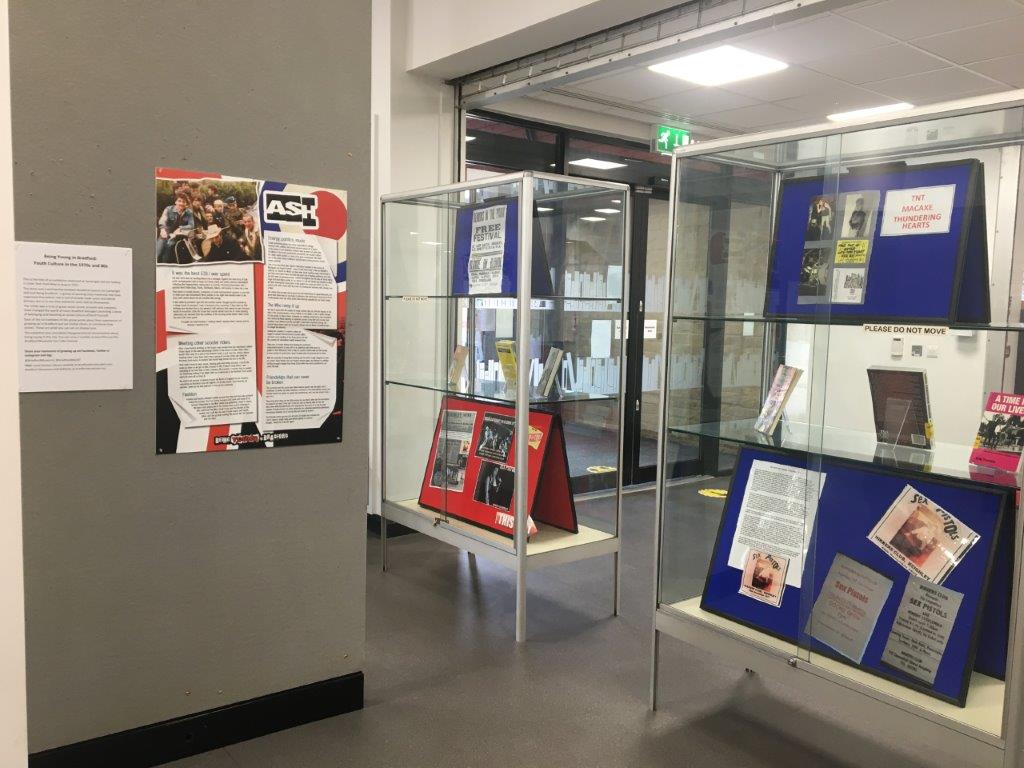
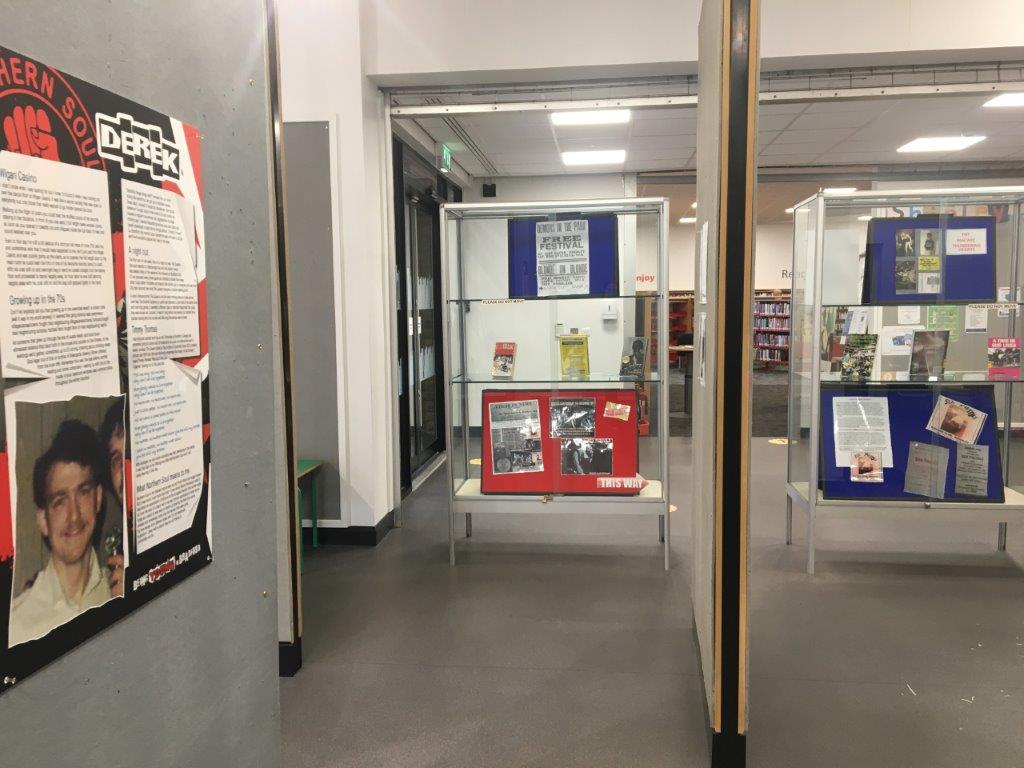
Being Young in Bradford: Youth Culture in the 1970s and 80s

This was the title of an exhibition on display at Cartwright Hall Art Gallery in Lister Park from May to August 2021.

People can now view stories from this exhibition in Bradford Libraries.

The show was a partnership between Bradford Council run Cartwright Hall and Being Bradford – a group of working class mavericks that have organised themselves into a sort of artistic trade union and whose primary aim is to see their authentic story told by themselves and featuring in the city of Bradford’s cultural narrative.

The 1970s was a time of great political and social unrest yet also of creativity and activism. Punk changed the world of many Bradford teenagers providing a sense of belonging and fostering an active culture of Do It Yourself.

Each of the six members of the group wrote about their experiences of growing up and others were invited to contribute their stories.

These stories will be on display in Shipley Library from Monday 27 September to Friday 15 October and in City Library from Monday 25 October to Friday 19 November.

The exhibition also prompted intergenerational conversations about being young in the city. View a number of short films on the subject on the Bradford Museums You Tube Channel.

Share your memories of growing up if you are on facebook, twitter or instagram and tag:

Twitter

@BradfordMuseums

@bradfordlibs247

The Discovery of Yorkshire’s Landscape Heritage

This particular summer many of you will have embraced the outdoor life more fully with a great, hearty “Phew!” and for that you will have used maps of all kinds and many of you will have run, walked, cycled, driven, wild swum and sailed through the Yorkshire moorland, parkland and countryside, hopefully marvelling at its great variety and beauty. However, not that many of you will have heard of John Phillips and his uncle William ‘Strata’ Smith who both contributed so much to the identification and classification of our wonderful land, despite both lacking in any kind of formal higher education.

William Smith (1769-1839) pioneered geological researches. His techniques and those of other such surveyors and engineers promoted the development of canal and navigation networks to be constructed over suitable water retaining fault-free ground.  William Smith analysed the strata of rock layers and he was the first to realise that the age and properties of rock strata in the British Isles could be indicated by the fossils found in each stratum. William’s life was not an easy one, facing competition and theft from colleagues, a wife who tragically went mad and eventual imprisonment for debt. His fascinating life and achievements can be followed in The Map That Changed the World, A Tale of Rocks, Ruin and Redemption by Simon Winchester (Penguin Books, 2002), available for loan in Bradford Libraries.

John Phillips (1800-1874)

Smith’s nephew, John Phillips, became one of the most influential scientific figures of the mid 19th century. What is remarkable about his eventual achievements is that Phillips, like his uncle William Smith, had no formal higher education. Early tuition was paid for by his uncle William but funds did not stretch far and so he began to work for William as his assistant between 1817-1819, making regular surveying trips around England. Consequently, he absorbed Smith’s practical engineering and surveying skills and the application of the new science of geology.

John Phillips must have really appreciated that without the influence of his family and friends in his early life, he would not have enjoyed career success in pursuing interests that had fascinated him from a young age. This is probably why he later became committed to the general education of people of all classes and gender and in particular to helping make the modern science of geology more popular and accessible to the public. He contributed much to modern understanding of the natural world through research, lecturing, academic and popular writing and published the first geological timescale. Phillips also adopted and was passionate about the landscape heritage of Yorkshire, especially its history and archaeology. He was amongst the first to produce studies of the carboniferous limestone of the Yorkshire Dales as well as detailed studies of the Yorkshire coast. Amongst other achievements, he helped to found the Yorkshire Geological Society and the British Association for the Advancement of Science (British Science Association), established in York in 1831. He was Senior Secretary of the Yorkshire Philosophical Society (https://www.ypsyork.org/ ) and became Keeper of Collections (1825-1840) of one of Yorkshire’s first purpose built museums, the Yorkshire Museum in York which still has a library dedicated to the Society and displays of maps, fossils and other artefacts depicting the work undertaken by William Smith and later with John Phillips.

https://www.yorkshiremuseum.org.uk/exhibition/the-map-that-changed-the-world/

New book for loan

A recently published and very enjoyable book by Colin Speakman, John Phillips, Yorkshire’s traveller through time is now available for loan in Bradford Libraries and, as well as discussing the above, presents John Phillips as a pioneer walker-writer and artist in his adopted Yorkshire and tells of how he went on to produce two of the best early guidebooks to Yorkshire and one of the first ever railway guidebooks in the world. Perhaps a Michael Portillo moment coming up? The book traces his footsteps through the moors, dales and coastal beauty of Yorkshire and how he became a source of inspiration behind Britain’s National Park and outdoor movement. You never know John Phillips may even have had a hand in influencing your own summer time adventures this year.

Read and Visit

John Phillips, Yorkshire’s traveller through time by Colin Speakman (Gritstone Publishing co-operative, 2020)

The Map That Changed The World, A Tale of Rocks, Ruin and Redemption by Simon Winchester (Penguin Books, 2002), the story of William Smith

Now the main tourist crowds have gone, why not visit the ‘Reading Room’ and see William ‘Strata’ Smith’s ground breaking 1815 geological map of England and Wales at The Yorkshire Museum, York Museum Gardens, York

https://www.yorkshiremuseum.org.uk/access/

You could also visit the Rotunda Museum in Scarborough. This was designed by William Smith in 1829 and is one of the world’s first purpose built museums:

https://www.scarboroughmuseumstrust.com/rotunda-museum/

If your interest is peaked in geology and you don’t want to travel further than Bradford visit our own Cliffe Castle museum in Keighley which houses the Airedale Gallery exploring the geology of the district, the Molecules to Minerals Gallery, and its own Natural History Gallery all wonderfully curated. The Molecules to Minerals Gallery has been described by the former head of the Geology Museum as ‘…probably the best, as regards the range and quality of its minerals and its design, outside the major national museums’.

https://www.bradfordmuseums.org/venues/cliffe-castle-museum

Gina Birdsall, Keighley Local Studies

Home access to Find My Past


As restrictions across the United Kingdom are now being lifted, and with libraries now able to welcome back their members, Findmypast have taken the decision to bring the remote access offering to an end from 1st September 2021.

From this date all access will available in the library only.

Art for Everyone

Getting through Lockdown well has involved many people turning to hobbies and interests, including arts and crafts. If you are interested in art and artists and are inspired by the works of others, then check out the latest publications coming to Bradford Libraries based on Bradford and District’s very own.

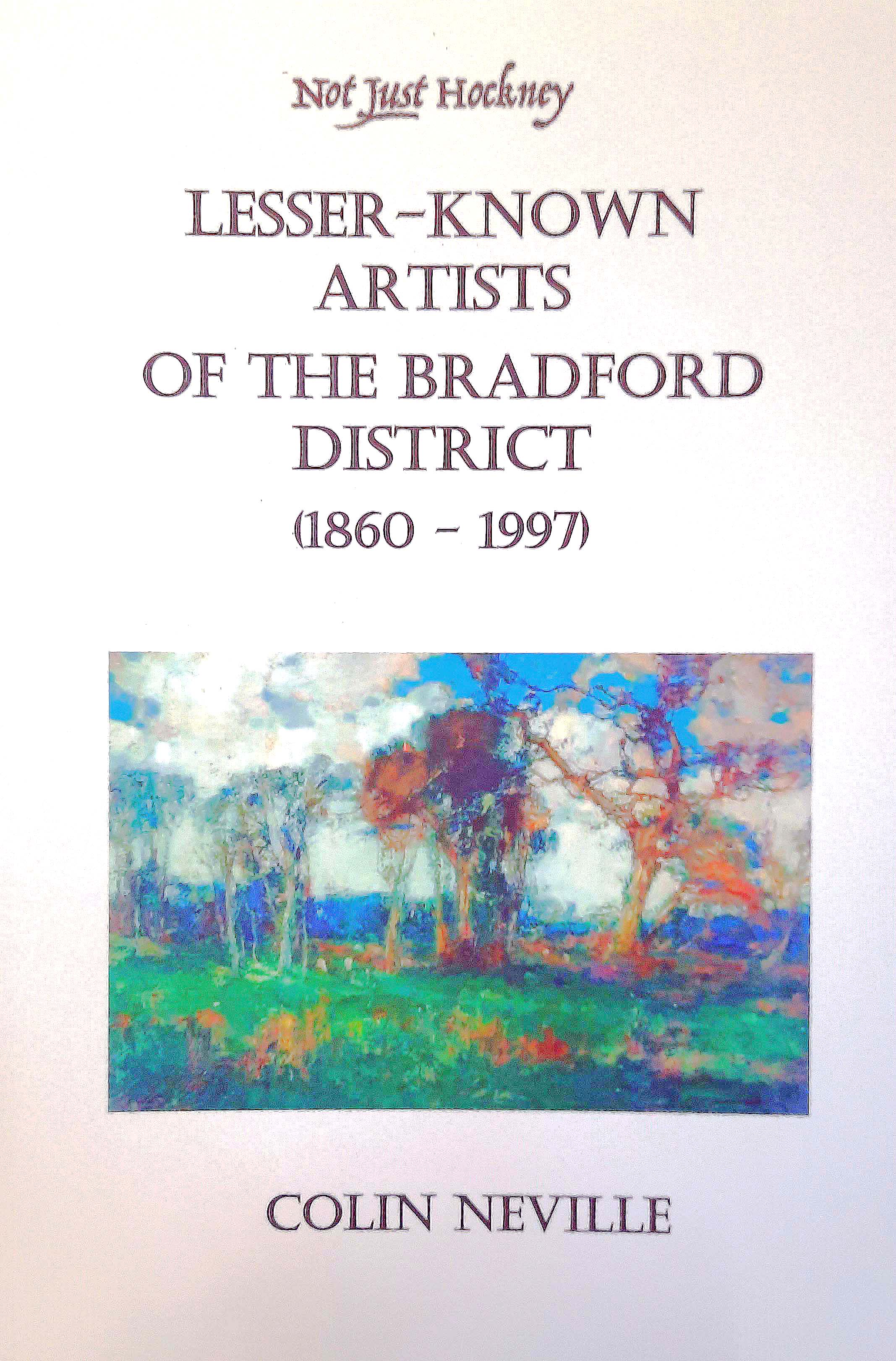
In the last couple of years, 3 well illustrated books by Colin Neville have been published. Past Silsden Artists;  Lesser Known Artists of the Bradford District 1860-1997 and the latest publication that has particular resonance with recent events,  as it looks at the highs but also the lows of a selection of artists and how this affected their art and work, The Highs-The Lows, Past Artists of the Bradford District (Imprint 2021). For more details of these books, please follow the link below to the Not Just Hockney web site. These books will be available for reference and for loan in Bradford Libraries.

Very many people are looking forward to the re-opening of local art galleries and museums in May. Until then, however, there is a great web site that champions and promotes local professional artists past and present:
Not Just Hockney:  https://www.notjusthockney.info/  
This is a non-commercial web site that was launched in 2015 by Colin Neville, a Silsden resident and  former lecturer. By December 2020, the site had come to include 450 artists past and present who had significant residency and/or works, links with the Bradford district”. It’s a fully illustrated site so there is a lot of art to inspire, including of course David Hockney himself.

The site also helps to promote local art trails, The Young Masters Visual Art School (primary school age children), the Art School Ilkley, and also works with the Bradford UNESCO City of Film to present local artists on the public Big Screen in Centenary Square, Bradford.

Bradford’s own museums and art galleries will be opening in mid -May but you can keep up to date and hone your art skills using their online services, their brilliant, illustrated blog post, https://www.bradfordmuseums.org/blog/ , online exhibitions  and  AtHome Activities. This last provides weekly home art projects to inspire you to “draw, write, think, talk, move, make, build, explore, invent, reflect or play” at any age. Please follow this link and get inspired by amazing objects, beautiful art works and historic buildings.

https://www.bradfordmuseums.org/whats-on/you-inspire-me-to-draw-like-david-hockney-2020-04-03

Meanwhile Bradford Libraries have a wonderful stock of teach yourself art and drawing books, DVDs of art techniques (Keighley Local Studies), and regular online story times with related activities https://www.youtube.com/user/bradfordlibraries

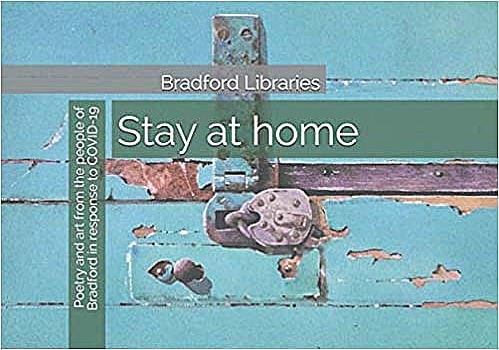
Many Bradford and District adults and children in Lockdown turned to art to express their emotions, moods, to escape and to find a sense of fulfilment in difficult times. Bradford Libraries published some in the books: Stay at Home: Poetry and art from the people of Bradford in response to COVID-19 and Stay at Home: Poetry and art from Bradford children and young people in response to the Covid-19 pandemic 2020 (Bradford Libraries paperback 2020) both available in Bradford Libraries . Let’s hope that such comforts can be carried with us into the future for whatever challenges face us and thankfully there’s plenty of advice and inspiration out there to help us to do that.

Keep up to date with what’s opening up and available in your area through Bradford Libraries, Galleries and Museums at: www.bradford.gov.uk

Gina Birdsall, Keighley Local Studies