Keighley Library has been blessed with a number of volunteers over the years and, in that time, they have seen many changes to the staff, service and building. However, Mr Jackson, as a Keighley resident himself, has virtually seen them all and embraced each one with his continued support of the library service and its staff for over twenty-five years!
Philip Jackson
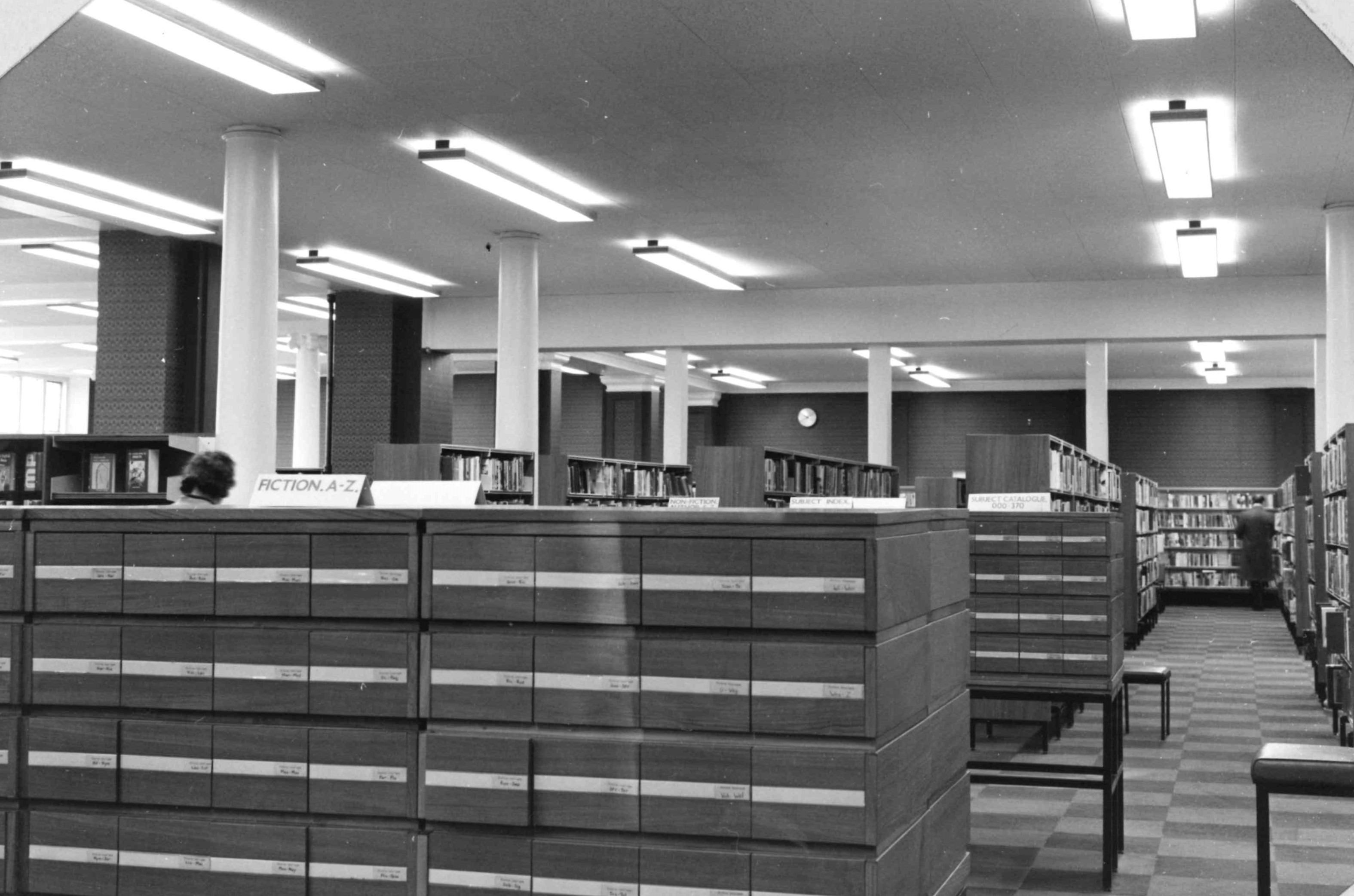
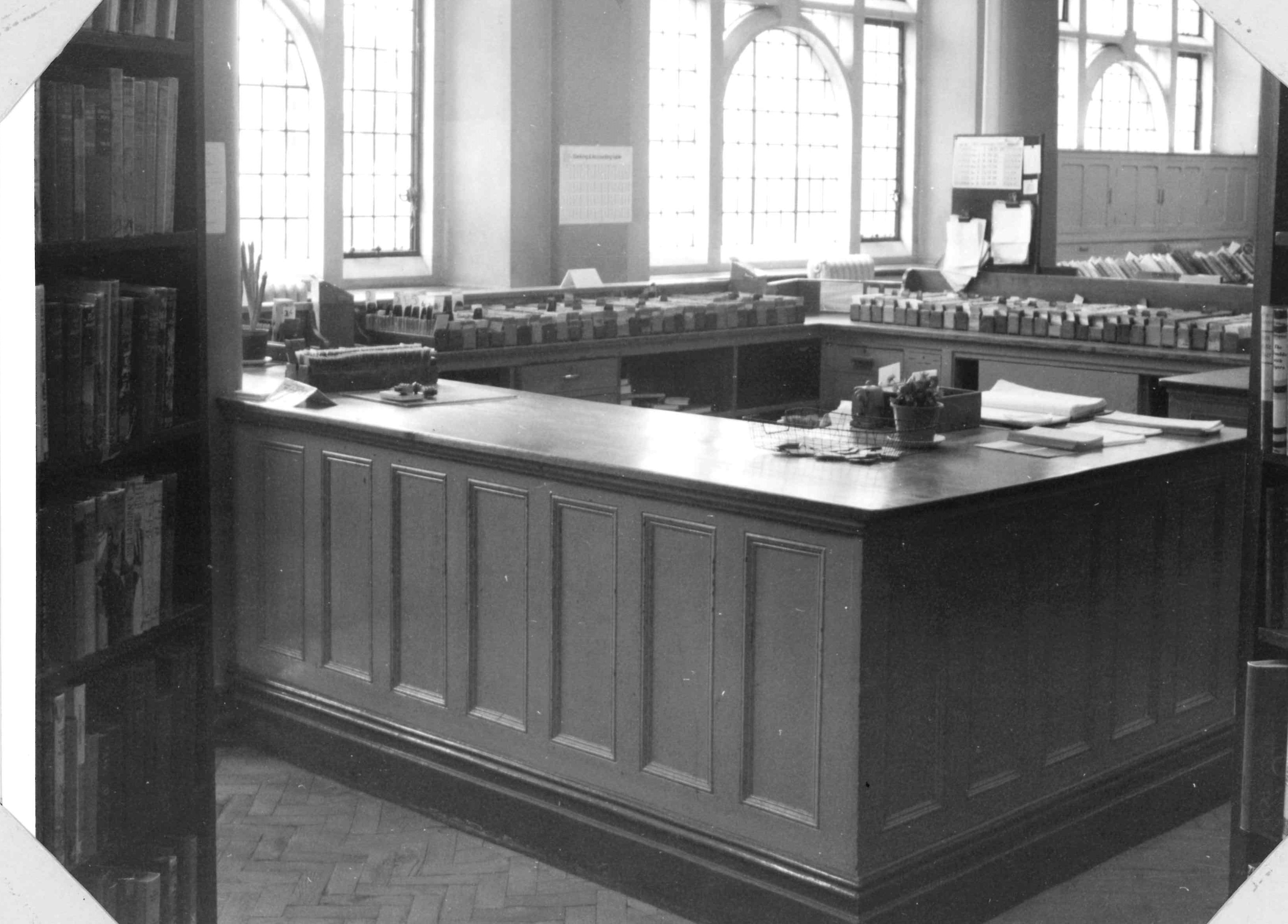
Information technology has had the greatest impact as drawers of index cards and library membership tickets (Browne issue system) were replaced by online catalogues. Nothing fazed, Mr Jackson was at the forefront as a volunteer, following his retirement, and soon began scanning photographs and submitting word processed transcripts and indexes in Excel. Over the years we have bound over 15 volumes of his work that have helped staff and family history researchers at home and abroad.
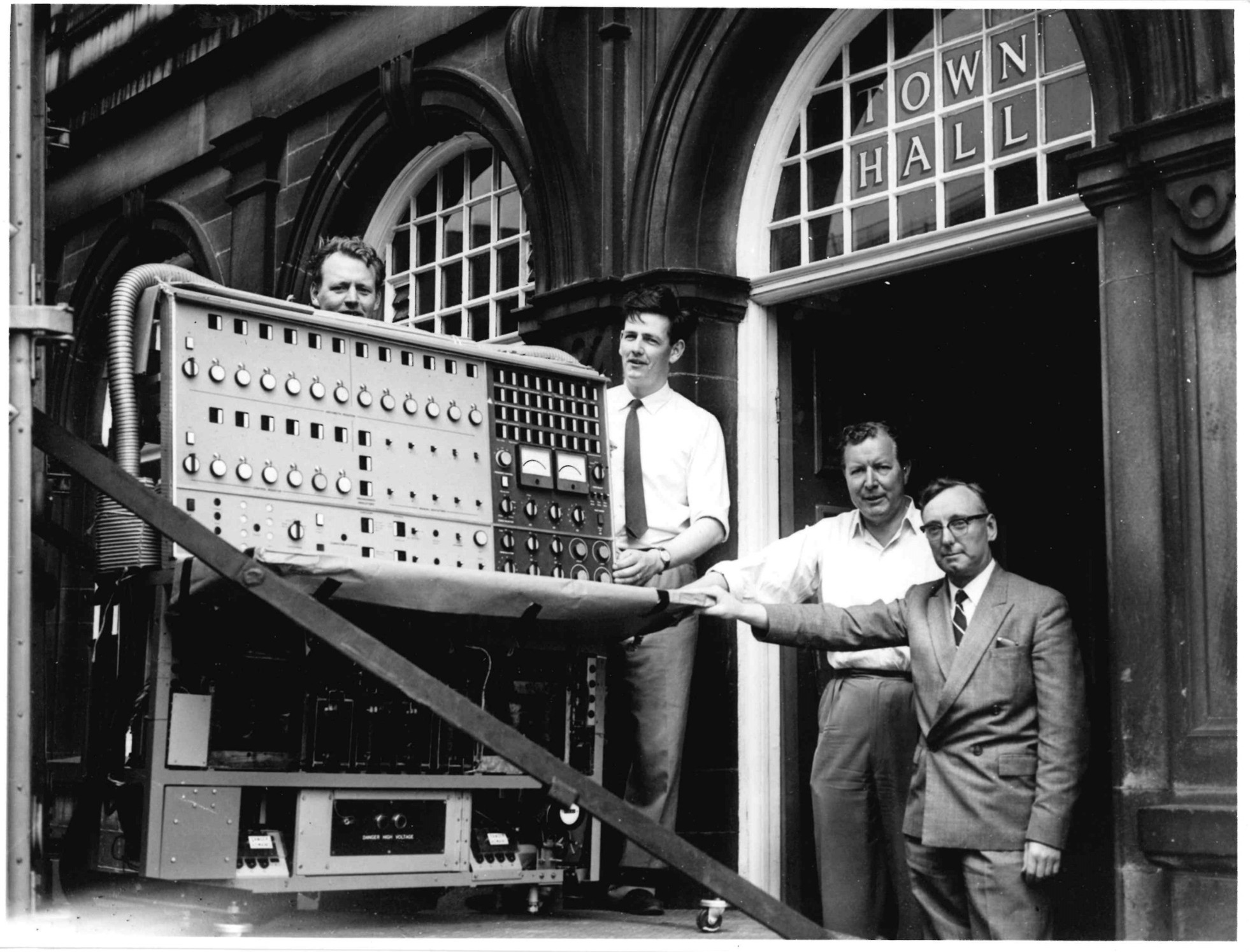
Moving the new computer control panel into the Town Hall, Keighley News, 26th June, 1965.
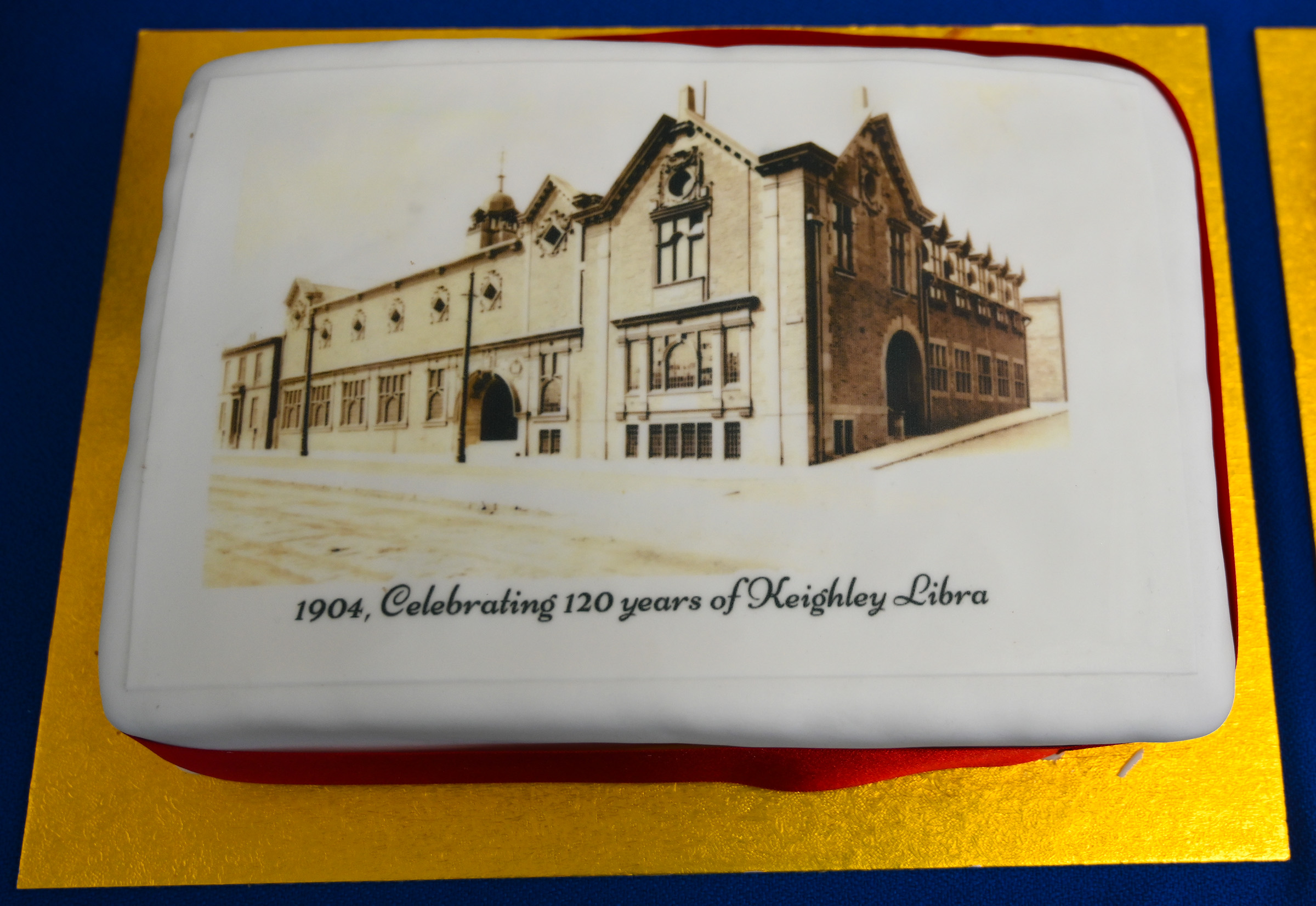
Mr Jackson cut the cake for us to celebrate Keighley Library’s 120th anniversary year and continues to attend events and support us and we thank him so much for such dedication.
Cutting the Cake
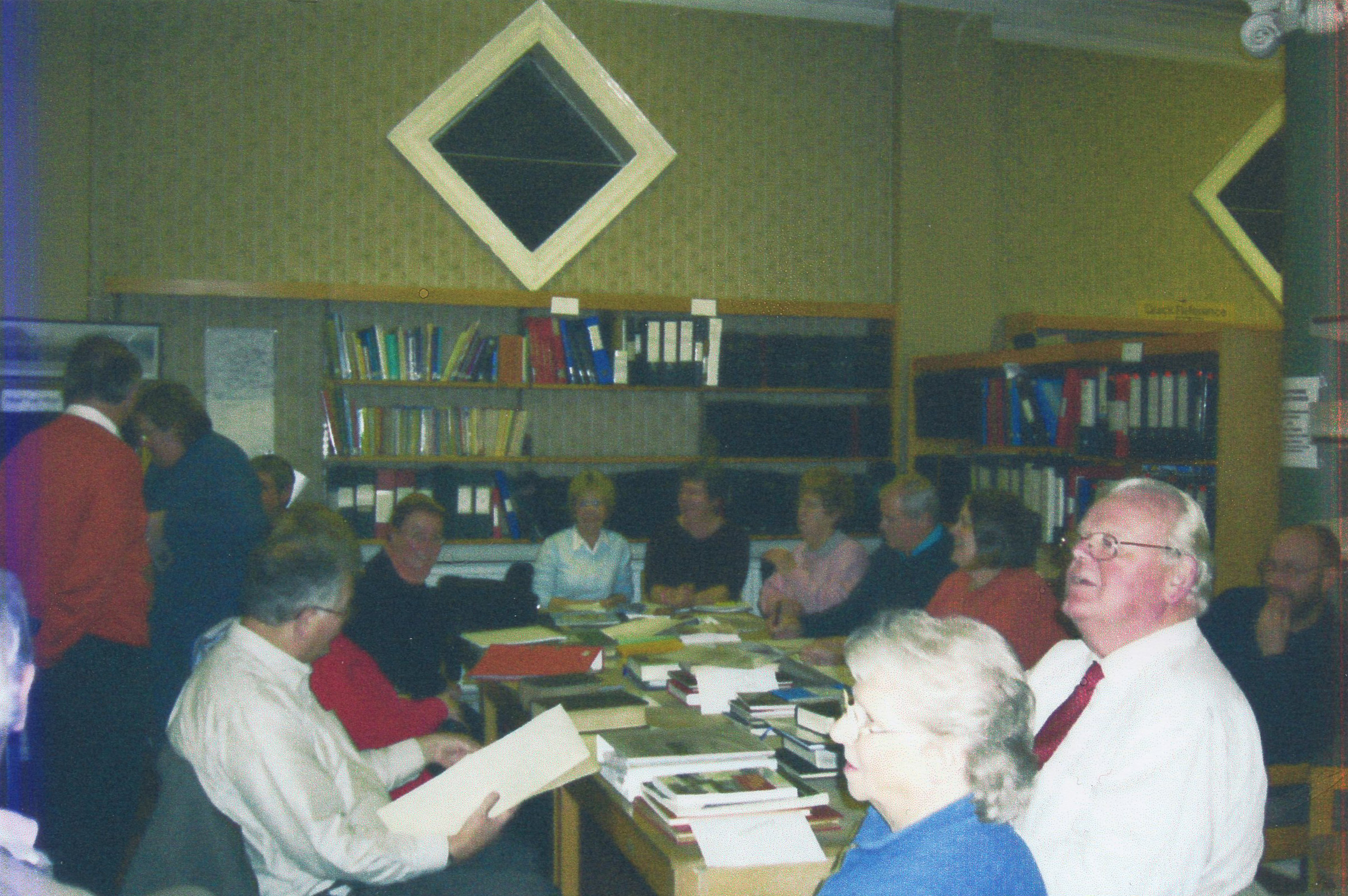
These photographs showing Keighley Library’s previous incarnations reveal a few of the changes over the last 100 years.
These talks are given by members of FoBALS (Friends of Bradford Archives & Local Studies) with Bradford Local Studies Library and West Yorkshire Archives Bradford.
‘Bradford’s Historic Charities: what they were, how they were run and what happened to them’ An illustrated talk by Janet Senior
Bradford Local Studies Library
Thursday 30th January Doors open at 1pm for a 1.15pm start. Free entry to all events. Booking essential.
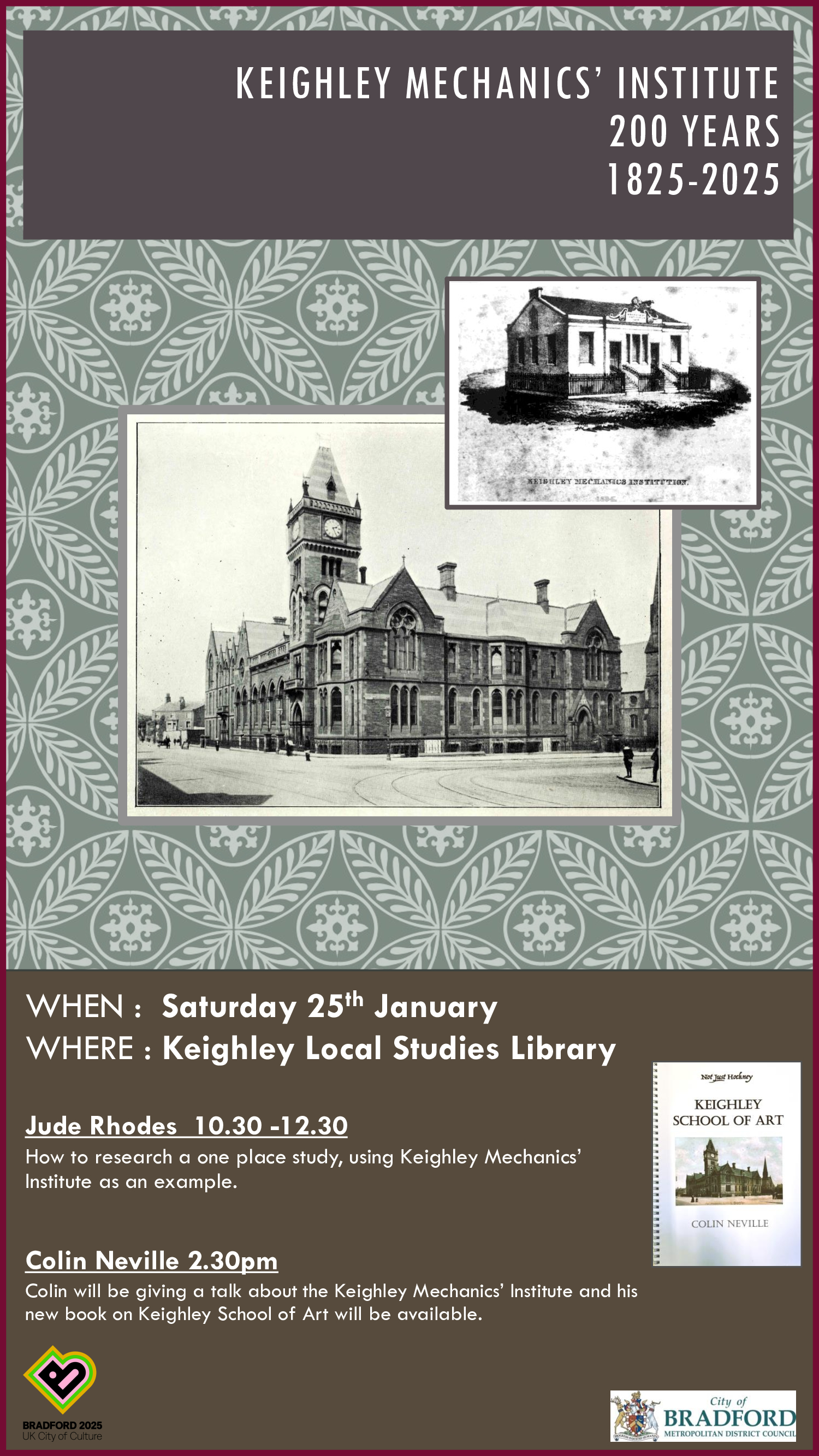
As part of the City of Culture celebrations, Keighley Local Studies Library is planning a day of events to celebrate the foundation of Keighley’s own Mechanics’ Institute, a cultural institution that had enormous reach in its heyday and was one of the first in England, following on the heels of the very first in Edinburgh in 1821 and Glasgow in 1823.
Founded formally by 4 working men at a public meeting held on 14 February 1825, join Jude Rhodes, lecturer in local history and genealogy and the Local Studies’ staff, as they take you through a one place study of this institution, its history, influence and far-reaching impact. We shall look at the characters whose lives the institution and its member influenced, including the Brontë family and later how it benefited scholars of Keighley’s Grammar School, including internationally famous historians: Lord Asa Briggs and Sir Herbert Butterfield. We shall also look again at the Institute’s associations with Andrew and Louise Carnegie and their ultimate gift of the Keighley Public Library to the town in the 1890s.
In the afternoon, Colin Neville, writer and editor of the popular “Not Just Hockney” web site, will take us through the Institute’s history, emphasising the role of the School of Art, the subject of his very latest book in his series on the history of art in the Bradford District. Colin will show how the art school became internationally renowned through its technical education, led by Sir Swire Smith, and how it produced artists, art historians and teachers such as Sir Augustus Spencer who became Principal of the Royal College of Art in London. Colin Neville’s latest book, “Keighley School of Art” will also be on sale.
Both events are free, just turn up on the day please. We look forward to seeing you and sharing our wonderful archives.
The Keighley & District Local History Society was formed in late 2004. It was created to focus on the history of the town and the surrounding area, looking at the industries and mills, the shops and streets, the parks and buildings, key players such as business people, mayors and politicians, and was designed to complement the Keighley and District Family History Society which already existed (and which continues today as Airedale and Wharfedale Family History Society).
The history of the History Society is inextricably linked with that of Keighley Library, although there are no official or formal bonds. The need for the existence of the History Society emerged from discussions around how to celebrate the centenary of the Public Library, which was 100 years old in 2004. One of the key players in those discussions was Pauline Barfield, who was Senior Information Manager in the Local Studies Library at the time. Pauline was also the guest-speaker at the very first open meeting of the society, held in the Local Studies Library on Wednesday 15th December 2004, and was later made Honorary President of the society.
Another important crossover figure is the late Ian Dewhirst, who was Reference Librarian at the Library from 1967 to 1991. As well as being a driving force behind building the invaluable collection of locally focussed documents, photographs and paraphernalia that now form the backbone of the Local Studies Library’s collections, Ian also wrote over twenty books focussed on the history of the town and the wider Yorkshire area that brought awareness and knowledge to a broad and grateful readership. It was only natural that Ian was supportive of the idea of a local history society for the town. Although never formally involved in its running, Ian gave at least half-a-dozen talks to the Society before his untimely death in January 2019.
Ian Dewhirst talk 2009
With very few exceptions, the History Society has held open meetings on the second Wednesday of each month ever since it started. These have mainly been held in the Local Studies Library (and we are extremely grateful to the Library for facilitating this) – which is a very natural fit, committed as we both are to “preserving and sharing” the stories of the town and surrounding area. For various reasons (including when the Library was undergoing a major facelift for most of 2007) we held our meetings in other local venues. These have included the Swire Smith Hall of Keighley College (when it was on the other side of North Street to the Library), the service room of The Knowle funeral home, the Civic Centre, and St. John’s Church in Ingrow. Of course, along with the rest of the world, we had to move our meetings in 2021 onto Zoom as a result of the coronavirus outbreak, and we continue to offer this ‘innovation’ today as we broadcast the majority of meetings over Zoom live from the Library for those members unable to join us in person.
But the Library has always been our main home, and we have held around 200 hundred monthly meetings and other events there. Guest speakers over the years have included former town mayor Graham Mitchell, Haworth historian Steven Wood, principal curator of the Bronte Parsonage Museum Ann Dinsdale, Ian Walkden and Andy Wade from the Men of Worth Project, former Keighley News journalist Sharon Wright, postcard collector Kevin Seaton, textiles expert Pam Brook, art historian Colin Neville, local stalwart Charlie Bhowmick, Bradford historian Kathryn Hughes, and many many others. And the range of topics is way too expansive to even start listing.
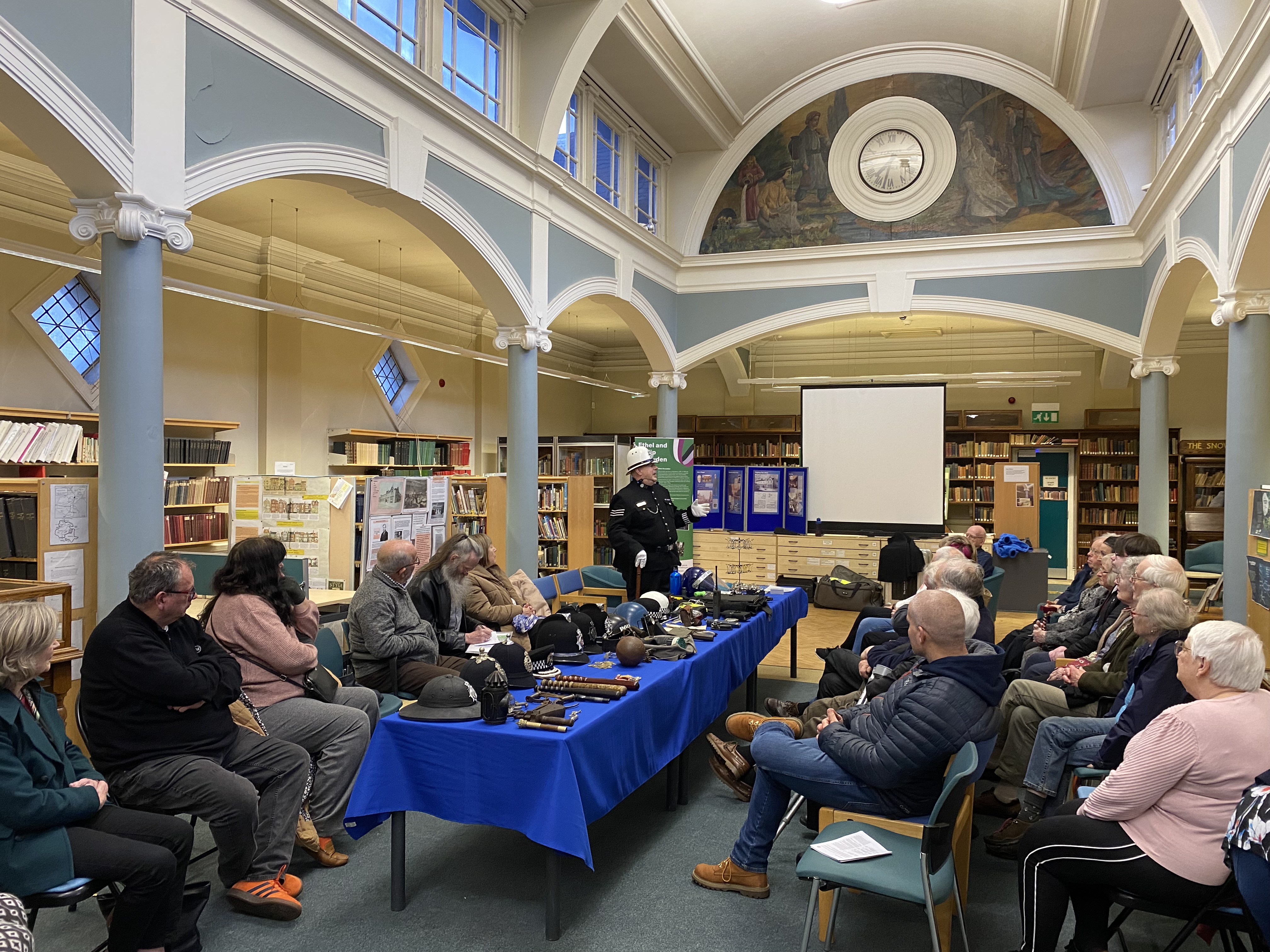
David Hardcastle Police talk 2004First Meeting December 2004The Committee at Keighley Show Sept 2009
The success of the History Society is stronger now than it has been at any point in its twenty year history. We continue to meet on the second Wednesday of each month, mostly still upstairs in the Library. We have over 75 members who live both locally but also come from further afield – people keen to maintain links with a town that was important to them in their past. We try and spread the word about the fascinating history of the town at events like Keighley Show, the Heritage Open Days, Yorkshire Day celebrations, and other history-related celebrations.
Our single objective remains “to preserve and share” the history of the town and the surrounding area. People continue to be extremely generous and continue to loan or donate items that enable us to do this. We record and catalogue these items, from personal photographs, postcards, leaflets, publications – all sorts of items! – which we then seek to share via our digital archive on Flickr. Our Flickr site currently has over 25,000 items available to view by anyone, and continues to grow.
If you’d like to find out more about the History Society, please look us up on our website or our Facebook page – or better still drop into one of our meetings on the second Wednesday of the month in Keighley Library!
All the photographs are “courtesy of the Keighley & District Local History Society”. The one of Tim Neal on his own at his desk is by “Cath Muldowney Photography”
Keighley library’s celebrations got underway in earnest on Saturday 30th November with a day full of events. Mr & Mrs Carnegie were here to help celebrate our libraries milestone and St Andrew’s Day was a fitting day to celebrate our Scottish benefactors generosity in giving the gift of £10,000 in 1899 for the building of Keighley Library, the first library in England he financed.
Just some of the photos from the day. All photographs supplied by Cath Muldowney Photography.
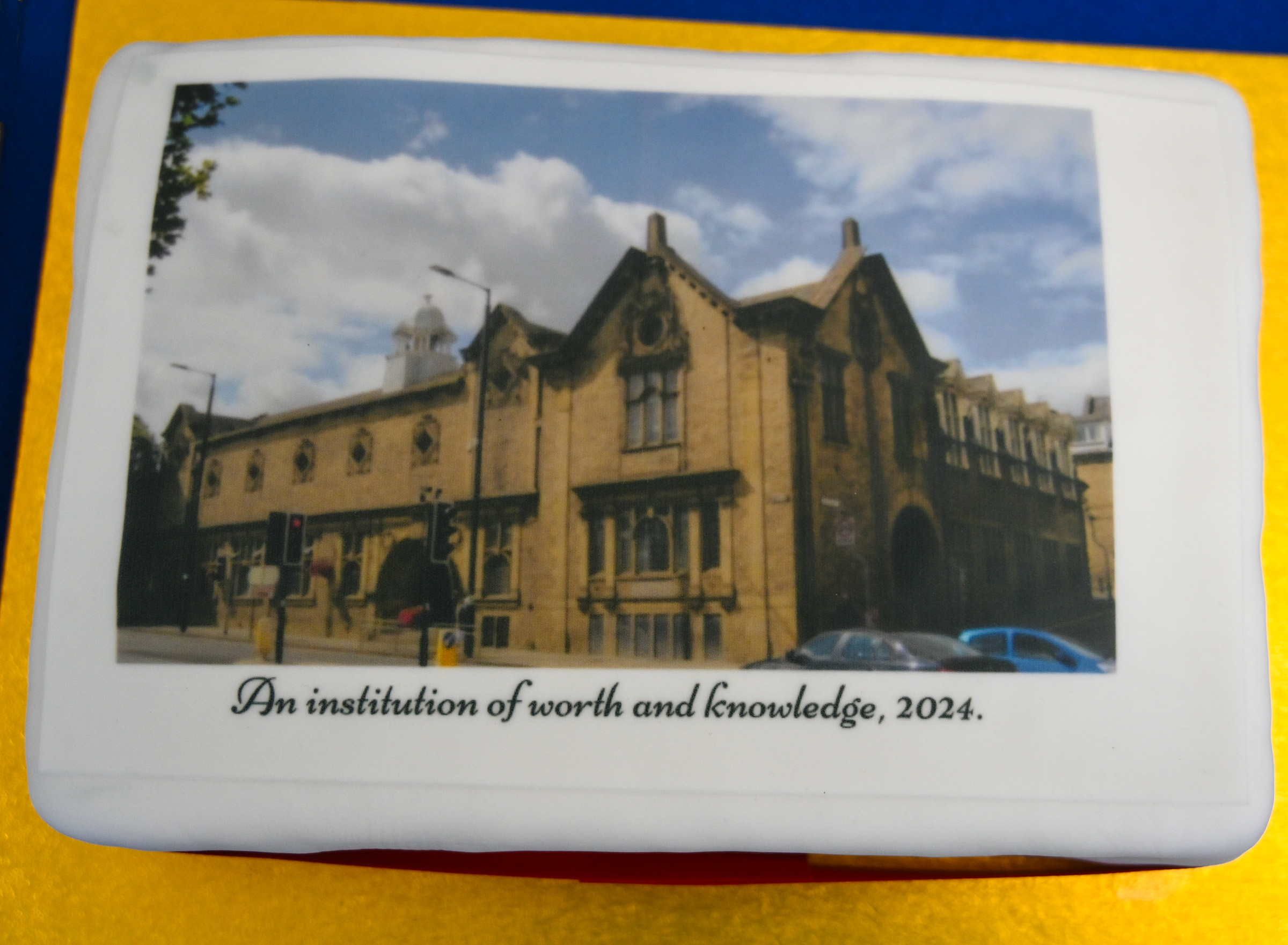
Our two wonderful cakes were generously supplied by the Keighley Lions.
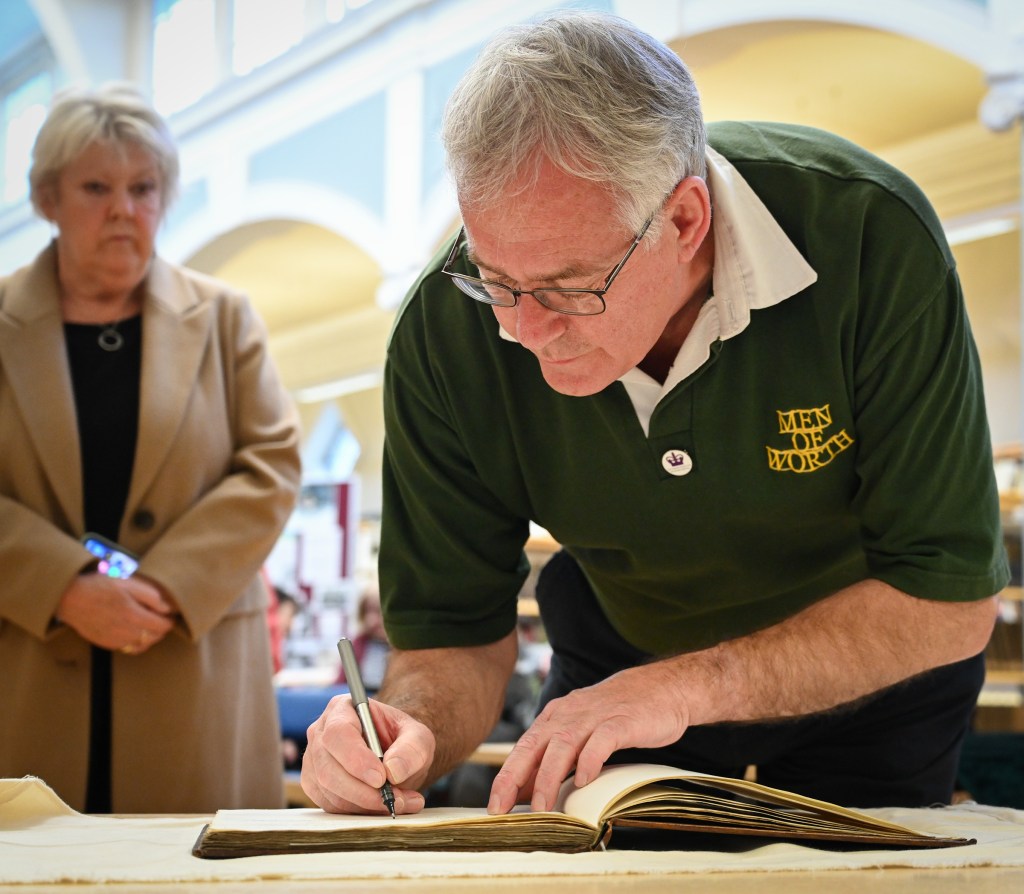
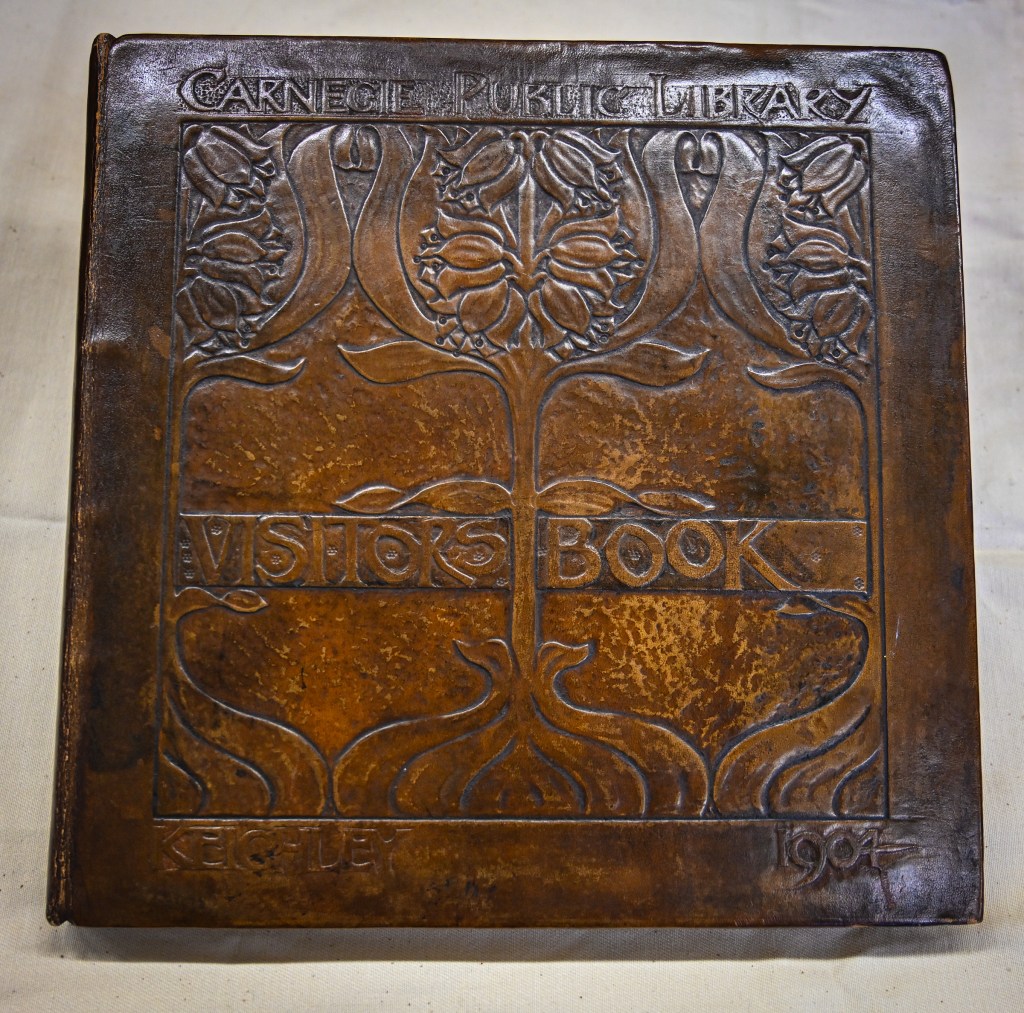
Many guests signed the original visitors book from 1904.
Mr Philip Jackson and Charlie Bhowmick MBE
The cake was cut by our longest serving volunteer Mr Philip Jackson aged 99. Mr & Mrs Carnegie ( John Ibbotson, Irene Lofthouse ) also lent a hand cutting the cakes.
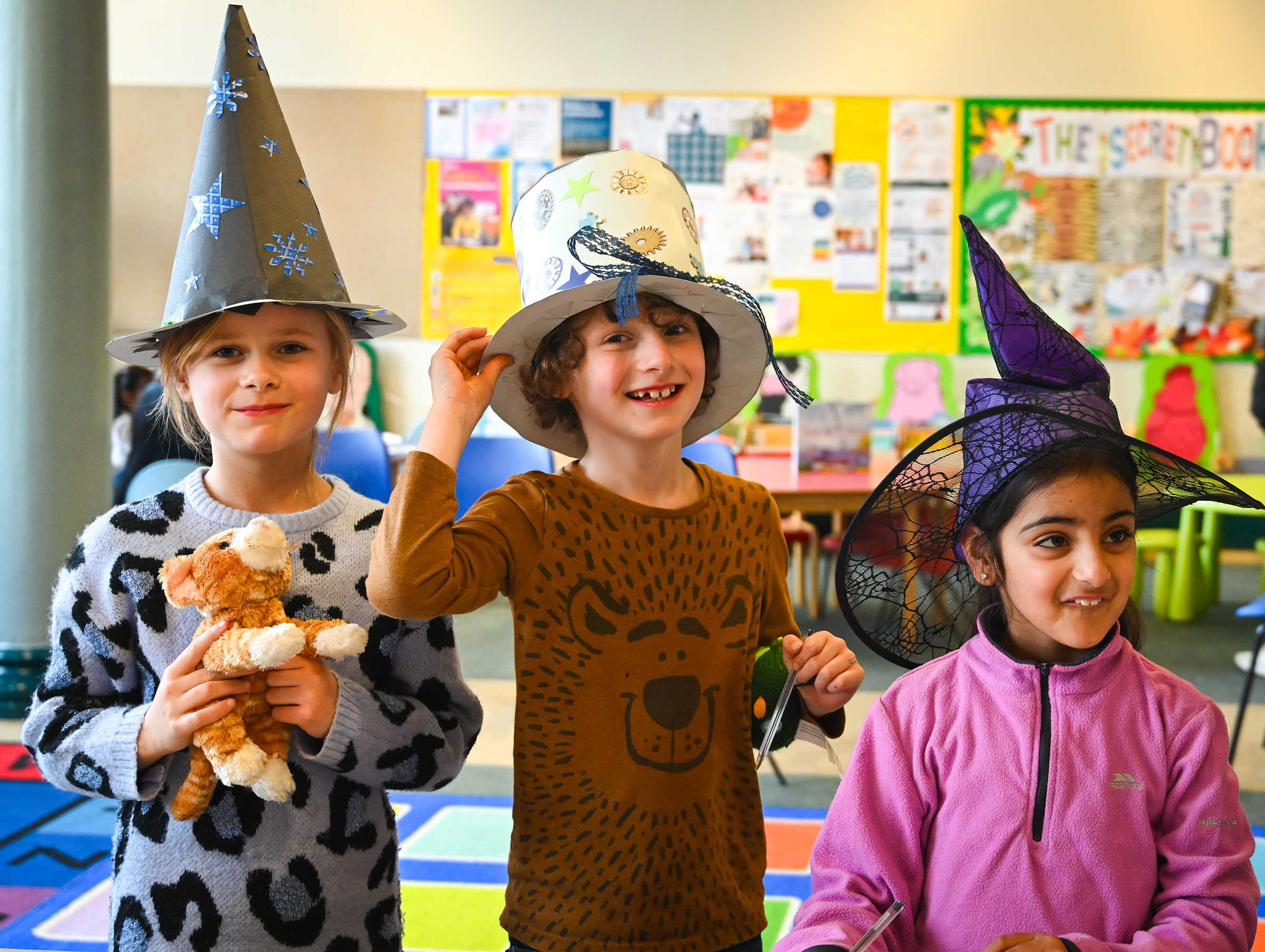
Children enjoyed making hats.
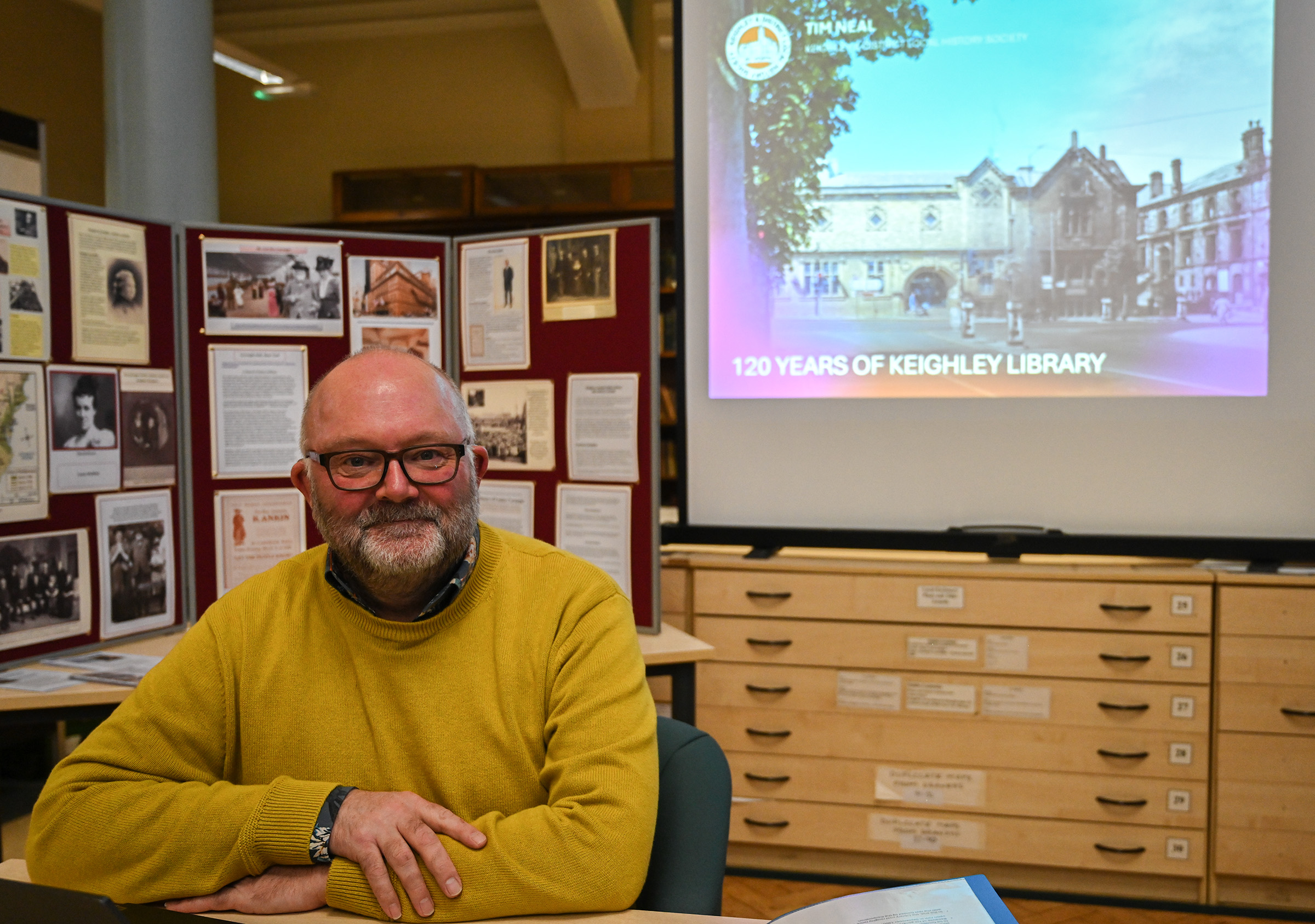
Tim Neal from Keighley & District Local History Society gave an excellent talk on the History of the Library.
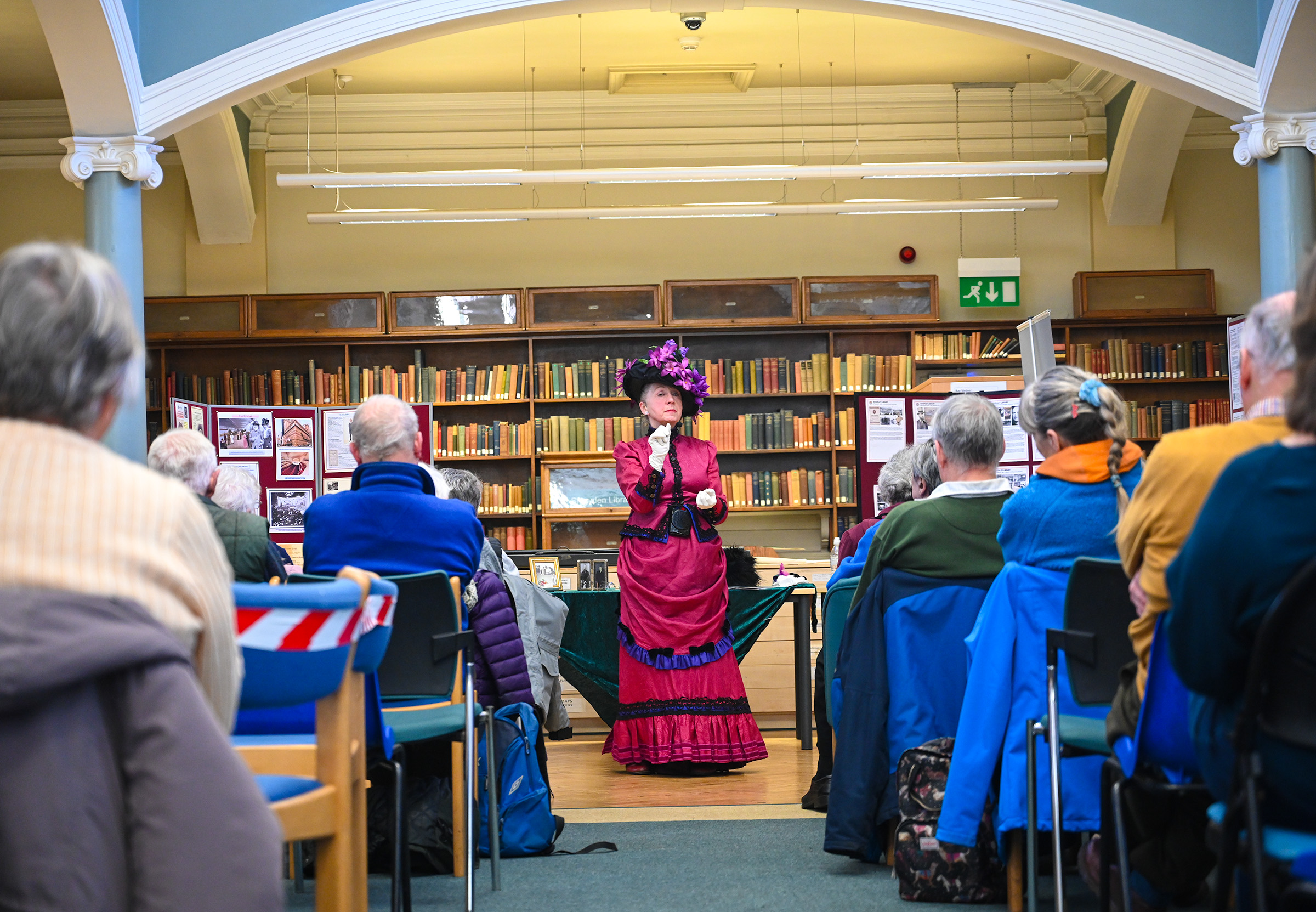
Irene Lofthouse as Mrs Carnegie.
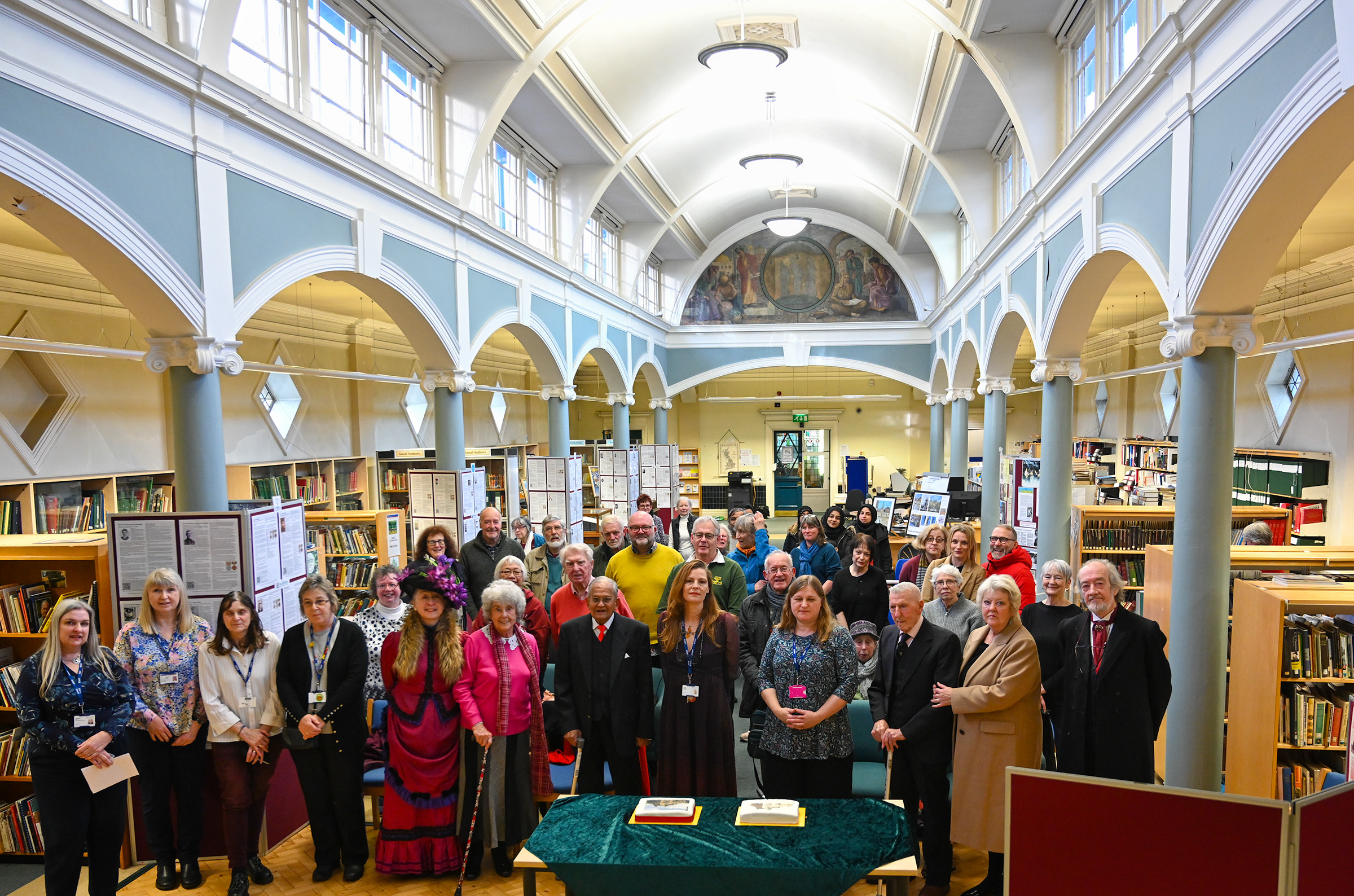
Library customers, staff and volunteers posed for a group photo.