“The Margins of History: William Scruton’s Private Doodles.”

William Scruton (c. 1840–1924) was a prominent local historian, writer, and illustrator from Bradford who co-founded the Bradford Historical and Antiquarian Society in 1878, who dedicated much of his life to documenting the rapid architectural and social transformation of Bradford, West Yorkshire, during the Victorian era.

Life and Career

  • Early Life: Born at Little Horton Green, Bradford, he attended a local dame’s school and evening classes at the Mechanics’ Institute.
  • Profession: He worked for many years as a solicitor’s clerk in Bradford.

Writing & Illustration: A proficient illustrator and staunch Nonconformist (Moravian), he documented Victorian Bradford’s changing architecture, nooks-and-corners, and social history. He contributed regularly to the Bradford Observer and the Yorkshireman.

As an antiquarian, he was highly concerned with preserving the memory of the town before its old landmarks were demolished to make way for industrialisation and expansion into a major city. He is most famously remembered for his masterpiece, Pen & Pencil Pictures of Old Bradford, published in 1889.


Key Historical Contributions

Founder of the Bradford Historical and Antiquarian Society:
 On 12 July 1878, Scruton became a founder member of the Bradford Historical and Antiquarian Society alongside fellow historians William Cudworth, T.T. Empsall, and James Horsfall Turner. He frequently wrote historical articles for the Bradford Observer and the society’s journal, The Bradford Antiquary.

The Bronte Connection: Beyond local town history, Scruton was deeply fascinated by the Brontë family who lived nearby. In 1898, he published Thornton and the Brontës, detailing the birthplace of the famous literary siblings. He even famously attempted to sketch portraits of Emily Brontë based on historical accounts and photographs.


Pen & Pencil Pictures of Old Bradford (1889)
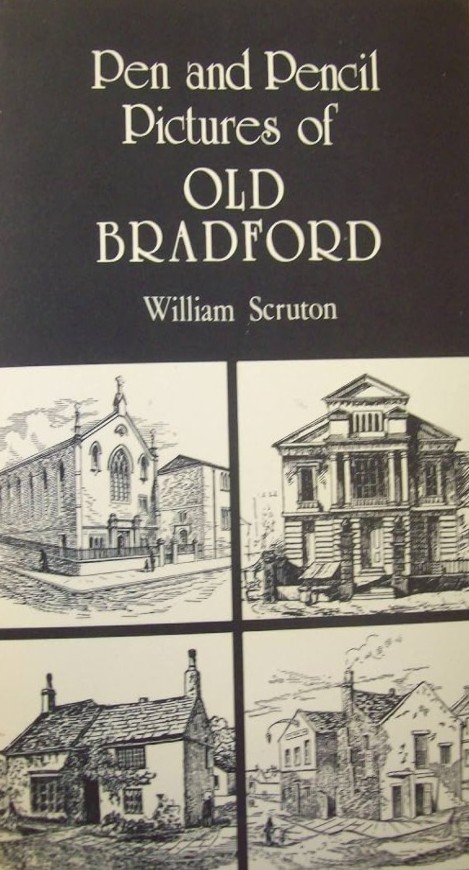
cover page of William Scrutons book, Pen and Pencil drawings of Old Bradford. Brown header and footer with 4 sepia images of pen and pencil drawings.
Cover of Pen and Pencil Drawings. 1889

William Scruton’s artwork served as a vital visual rescue mission for Victorian Bradford, capturing the city’s architectural transition during the Industrial Revolution. As mills and terraced housing rapidly expanded, Scruton actively sketched landmarks, streets, and characters that were slated for demolition His focus, technique, and subject choices reveal a deep passion for preserving local history.


What He Framed: Subject MatterVanishing Architecture:

Scruton meticulously documented medieval and early modern buildings “gone forever”. His sketches featured the old Court House at the top of Westgate, the earliest town workhouse, the Old Corn Mill, and the Old Piece Hall. He also drew majestic lost mansions like Stott Hall, Manor Hall, Bierley Hall, and Horton Hall.

Street Scenes and Shops: He frequently drew daily life in bygone commercial areas like Kirkgate and Ivegate. One famous sketch captures a row of old shops in Kirkgate right before they were demolished to clear space for the Midland Hotel.

Local Personalities: Beyond buildings, Scruton drew the people who gave Bradford its character. His books feature illustrations of eccentric locals, such as Mr Tordoff (a prominent tea dealer), “Dumb John” (a quiet barber), and Judy Barrett (a famous local spice and humbug sweet seller).

The Brontë Family: Through his later work, he provided architectural illustrations of buildings tied to the Brontë family in Thornton and Haworth, alongside portrait sketches of Emily, Charlotte, and their relatives.


Artistic Technique and Style

Scruton’s illustrations were primarily pen-and-ink line drawings and detailed sketches designed specifically for woodcut or plate reproduction in print

His masterpiece, Pen and Pencil Pictures of Old Bradford (1889), remains heavily referenced by historians today because it serves as one of the few surviving visual registers of the pre-industrial town

Eye-Witness Accuracy: Most of his streetscapes were sketched directly from his own observations while walking through Bradford.

Collaborative Legacy: When a building had already been demolished before his lifetime, Scruton meticulously reconstructed the image by studying the artwork of earlier local Bradford artists like Arthur McArthur and William Geller.

Purpose over Fine Art: Scruton did not view himself as a commercial fine artist. He treated his drawings as historical evidence, often filling his personal notebooks with extensive text, annotations, and arrows alongside a sketch to explain exactly who lived in a building or when it fell.

His masterpiece, Pen and Pencil Pictures of Old Bradford (1889), remains heavily referenced by historians today because it serves as one of the few surviving visual registers of the pre-industrial town


The Significance of His Doodles & Character Drawings

A Window into Private Wit: Scruton’s published works are polite, respectful Victorian histories. However, local historians know he had a keen, sharp eye for human eccentricity. His private doodles often catch the “Worthies” in unvarnished, candid, or slightly satirical states—revealing a personal humour never printed in his formal books.

The “Bradford Worthies” Connection: In the 19th century, this term referred to Bradford’s elite—powerful mill owners (like Titus Salt or Robert Milligan), politicians, and cultural figures. If Scruton was writing to them or collecting their correspondence, it confirms his deep integration into the city’s intellectual circle.

Working Method Insights: His marginalia and doodles were often his visual shorthand. He used random scraps of incoming mail and the blank space of letters to quickly capture a facial profile, an unusual hat, or a caricature of a speaker during local society meetings before he forgot the details.


In The Margins of History: William Scruton’s Private Doodles

When we picture William Scruton, we usually think of the dignified co-founder of the Bradford Historical and Antiquarian Society, meticulously documenting vanishing medieval streetscapes. But behind the formal historian was a man with a sharp, candid eye for human character. A scrapbook held at Bradford local Studies Library reveals an intimate look at Scruton’s working mind: a collection of letters to and from Bradford Worthies, heavily decorated with his raw, spontaneous doodles and caricatures.

1. The Scrapbook as a 19th-Century Creative Workspace

For Scruton, paper was a premium canvas, and inspiration didn’t wait. The margins of incoming correspondence from Bradford’s civic elite became his creative playground. Where official letters discussed society business, legal matters, or local history, Scruton used the blank spaces to capture the world around him.

Visual Shorthand: These doodles weren’t just idle distractions; they were his visual diary.

Candid Caricatures: While his published books like Pen and Pencil Pictures of Old Bradford feature polite, formal portraits, these private sketches show a lighter, more satirical side—catching the “Worthies” mid-speech, pulling faces, or sporting the exaggerated fashions of Victorian Bradford.

2. Who Were the “Bradford Worthies” in the Margins?

The letters themselves provide an incredible context. In the late 19th century, Bradford was an industrial powerhouse, and its “Worthies” included influential mill owners, politicians, and fellow antiquarians.

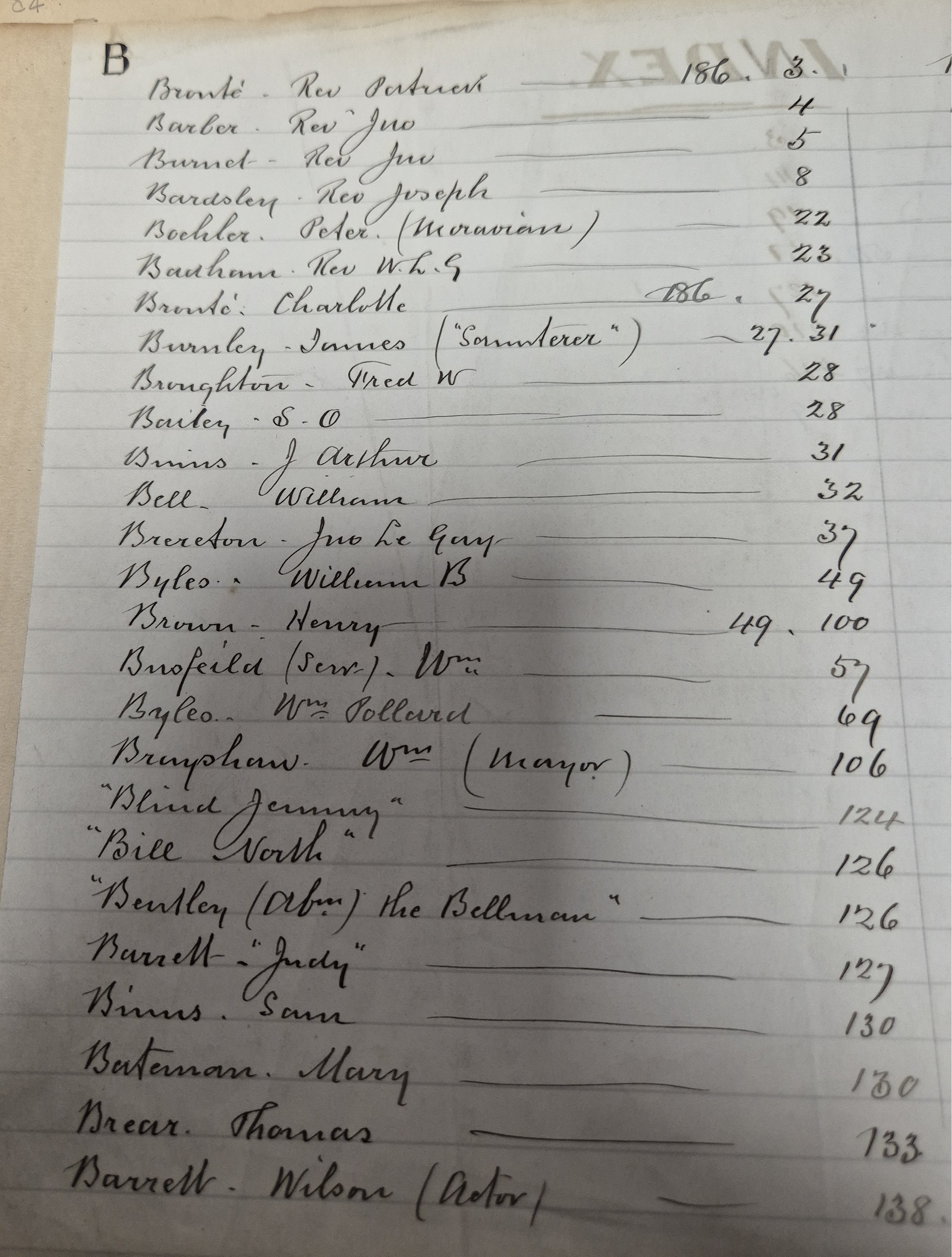
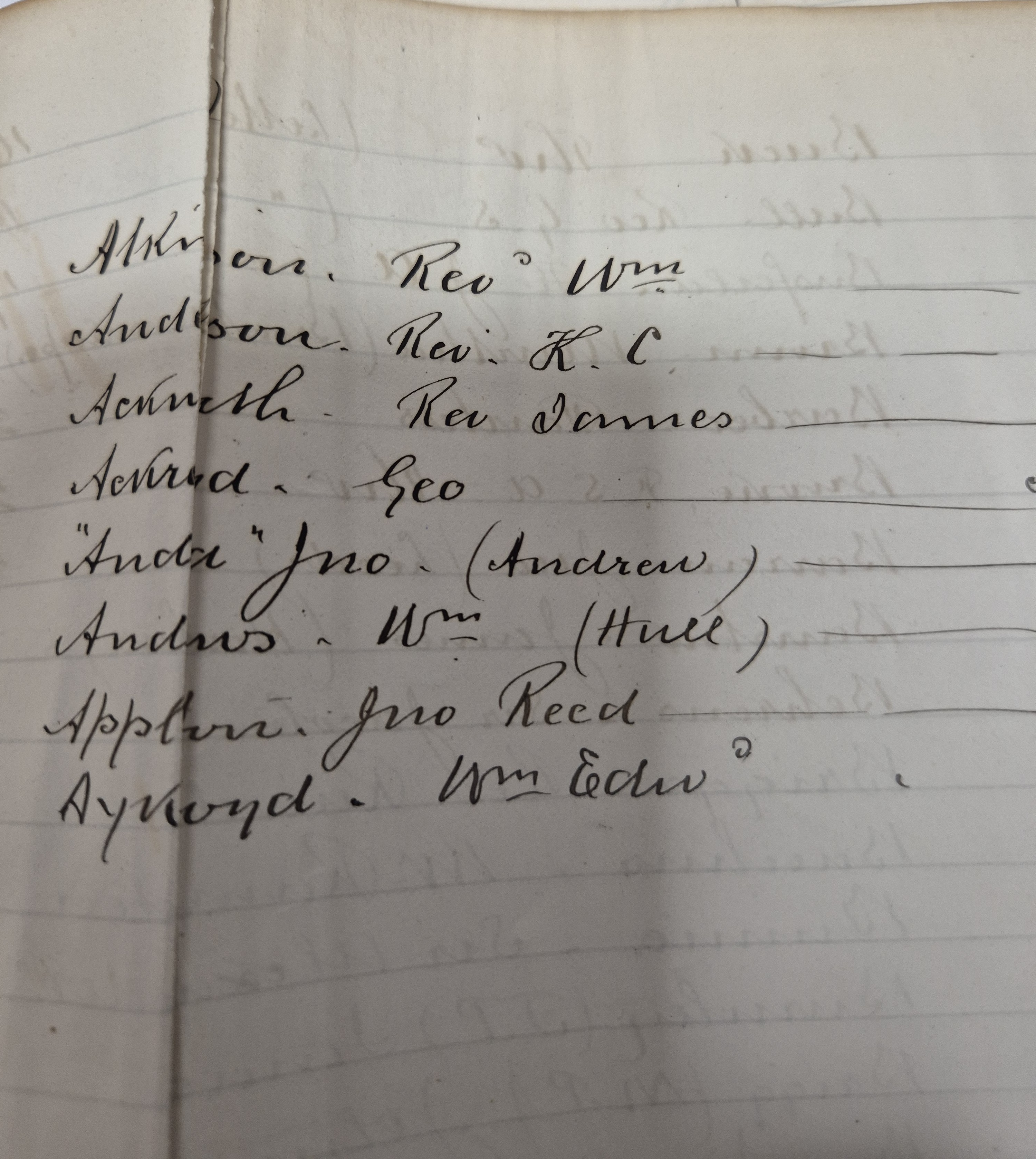
The Index: Scruton indexed his scrapbook, showing, therefore a list of the’worthies’ he was in communication with. Three of the pages are copied further below.

The Contrast: There is a brilliant, human irony in seeing a stuffy, formal letter written by a prominent civic leader contrasted against a whimsical profile doodle or an eccentric character sketch drawn right next to their signature.

3. Why This Completes the Scruton Legacy

This scrapbook bridges the gap between Scruton the meticulous researcher and Scruton the human being. It shows us a man who was deeply amused by the eccentricities of his contemporaries. For modern researchers visiting the Bradford Local Studies Library, items like this prove that local history isn’t just about cold dates and demolished stone walls—it is about the living, breathing characters who walked the streets of Ivegate and Kirkgate.


“Ye ‘Appy Hartist” (Image 1)
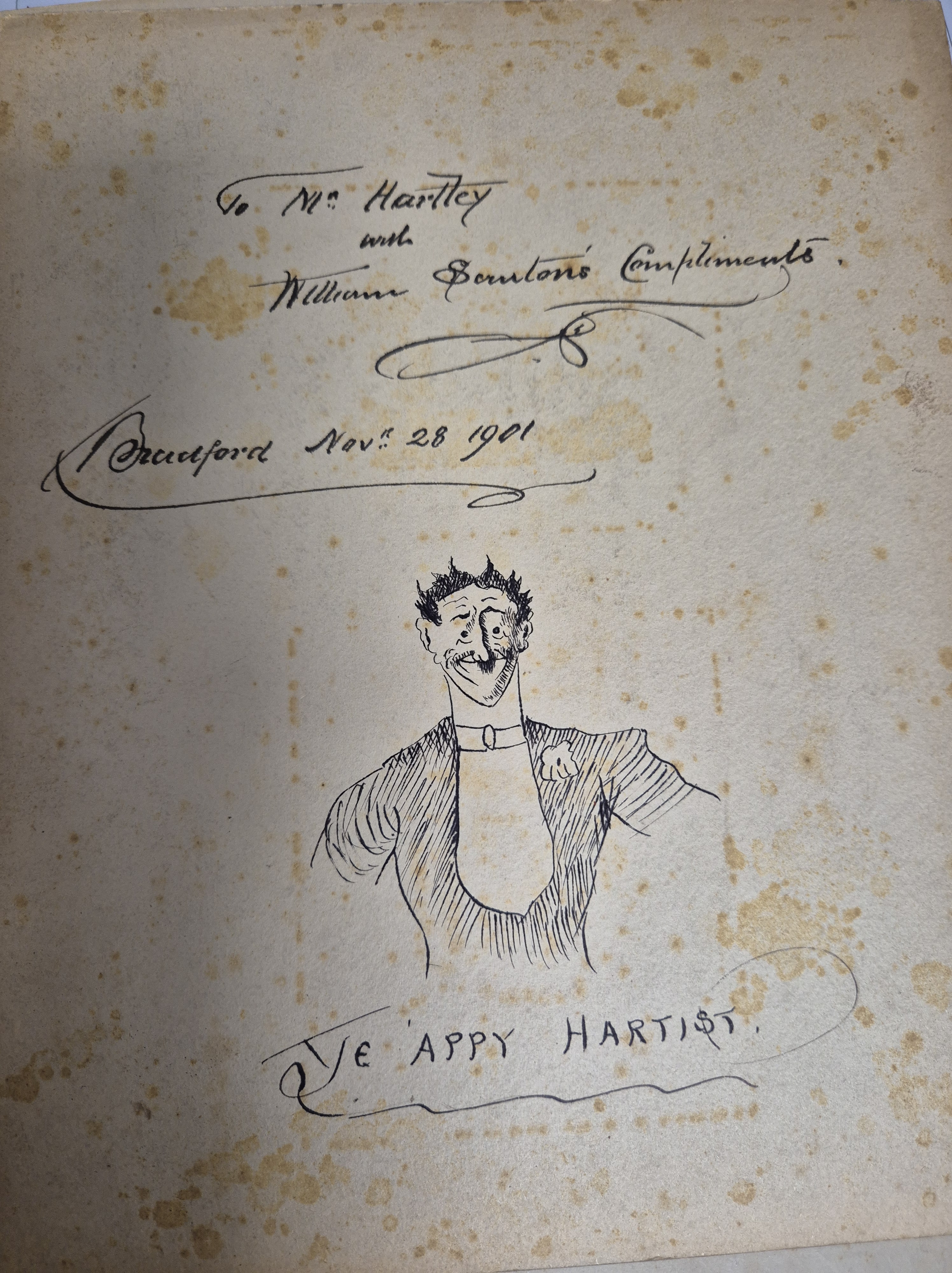
This is an original, playful self-caricature or a personalized greeting card drawn by Scruton himself, jokingly signing his name under a sketch of a smiling man in formal evening wear as "Ye 'Appy Hartist" (The Happy Artist).
Doodle inside a card

The Context: This is an original, playful self-caricature or a personalized greeting card drawn by Scruton himself, jokingly signing his name under a sketch of a smiling man in formal evening wear as “Ye ‘Appy Hartist” (The Happy Artist).

The Inscription: It reads: “To Mr. Hartley with William Scruton’s Compliments. Bradford Nov.r 28 1901.”


The Home of “Fair Becca” (Image 2)
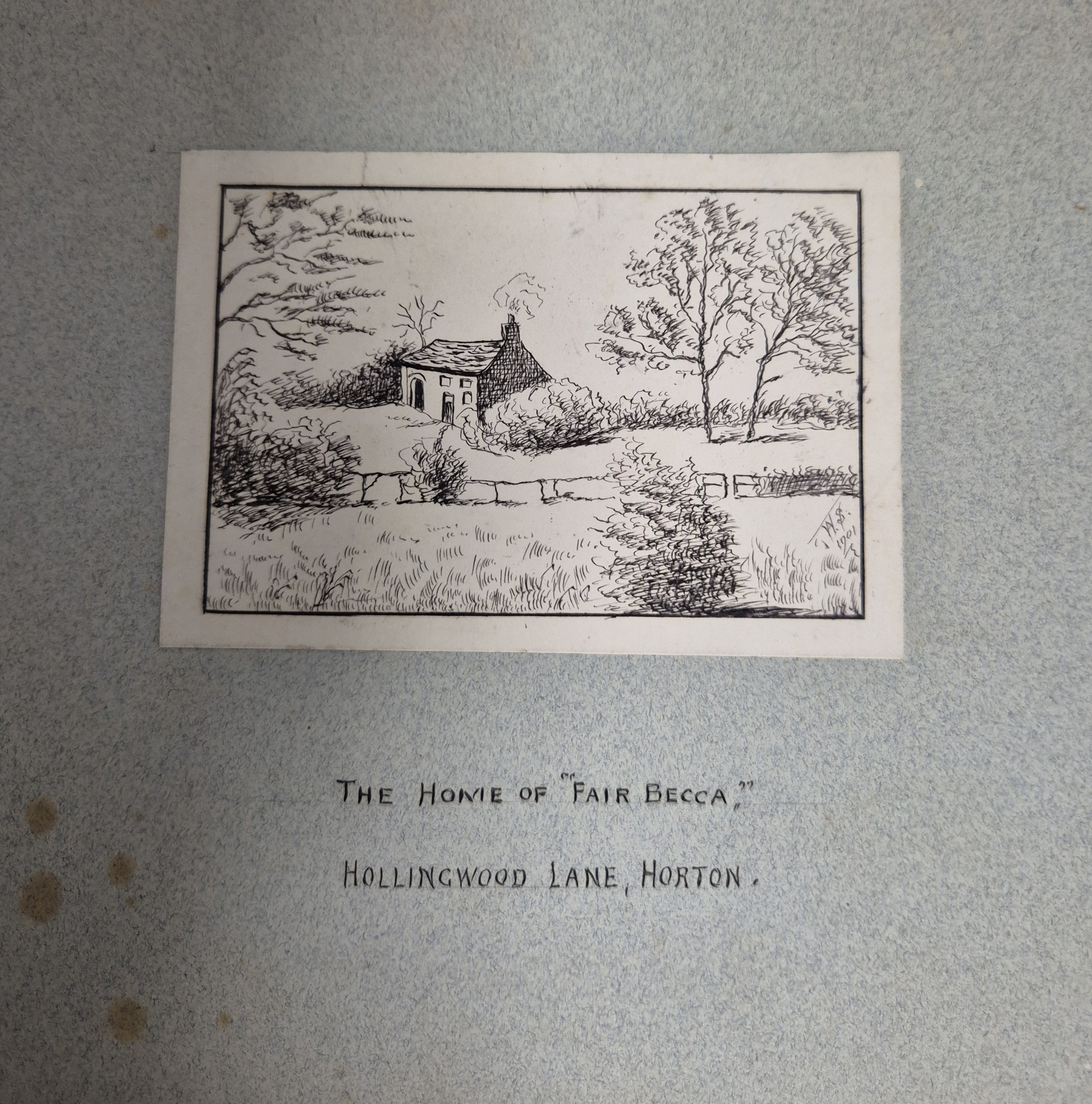
•	The Location: Hollingwood Lane, Horton.
The Location: Hollingwood Lane, Horton.

The Story: “Fair Becca” (Rebecca Berry) is a legendary, tragic figure in Bradford folklore. According to local lore, she was murdered in the 18th century near a well on Hollingwood Lane, which came to be known as “Fair Becca’s Well” or “Fair Becca’s Ghost.” Scruton loved documenting old folk stories and vanishing landmarks, making this precise architectural drawing highly characteristic of his preservation work.


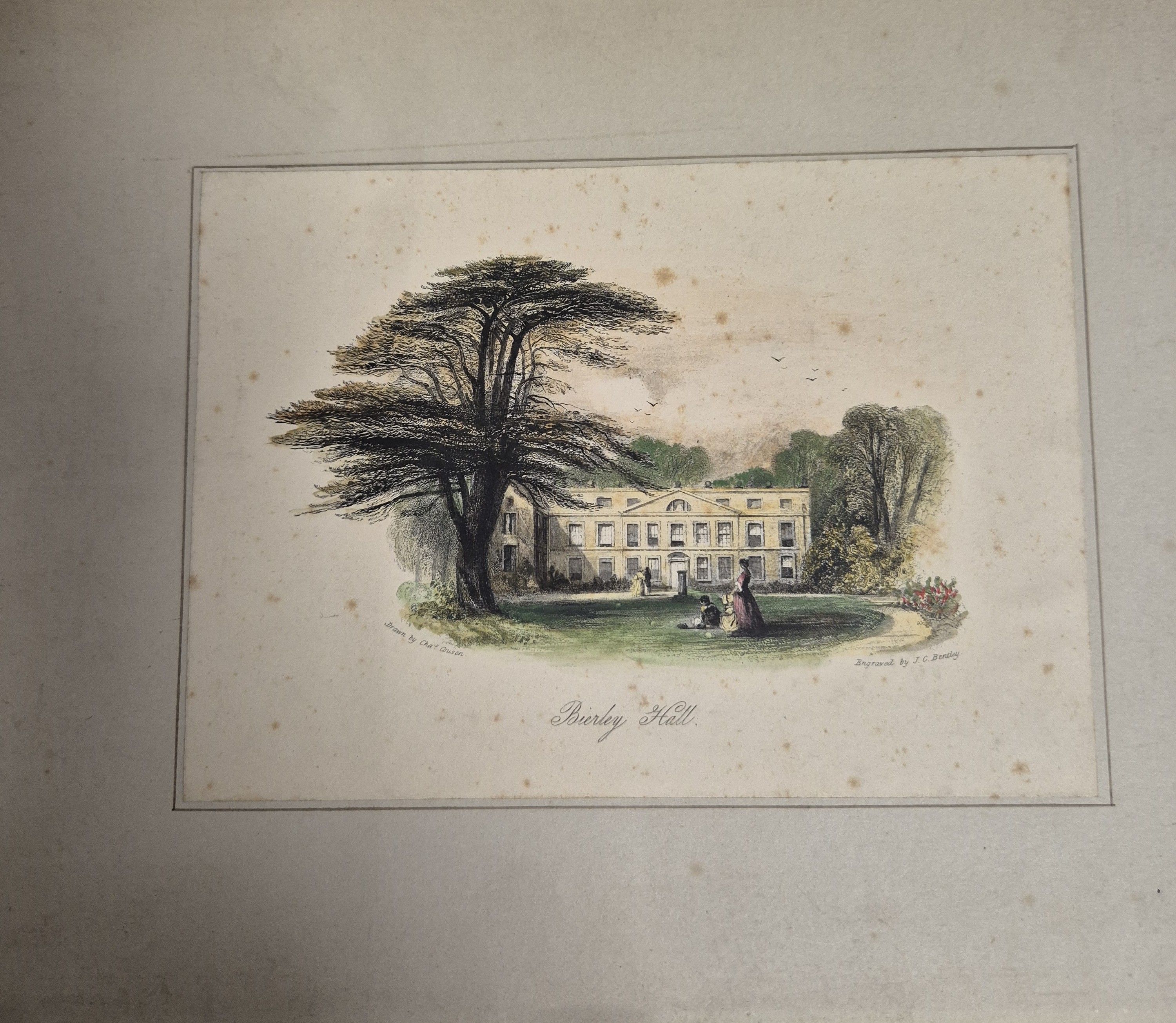
Bierley Hall & The Engraving (Images 3 & 4)
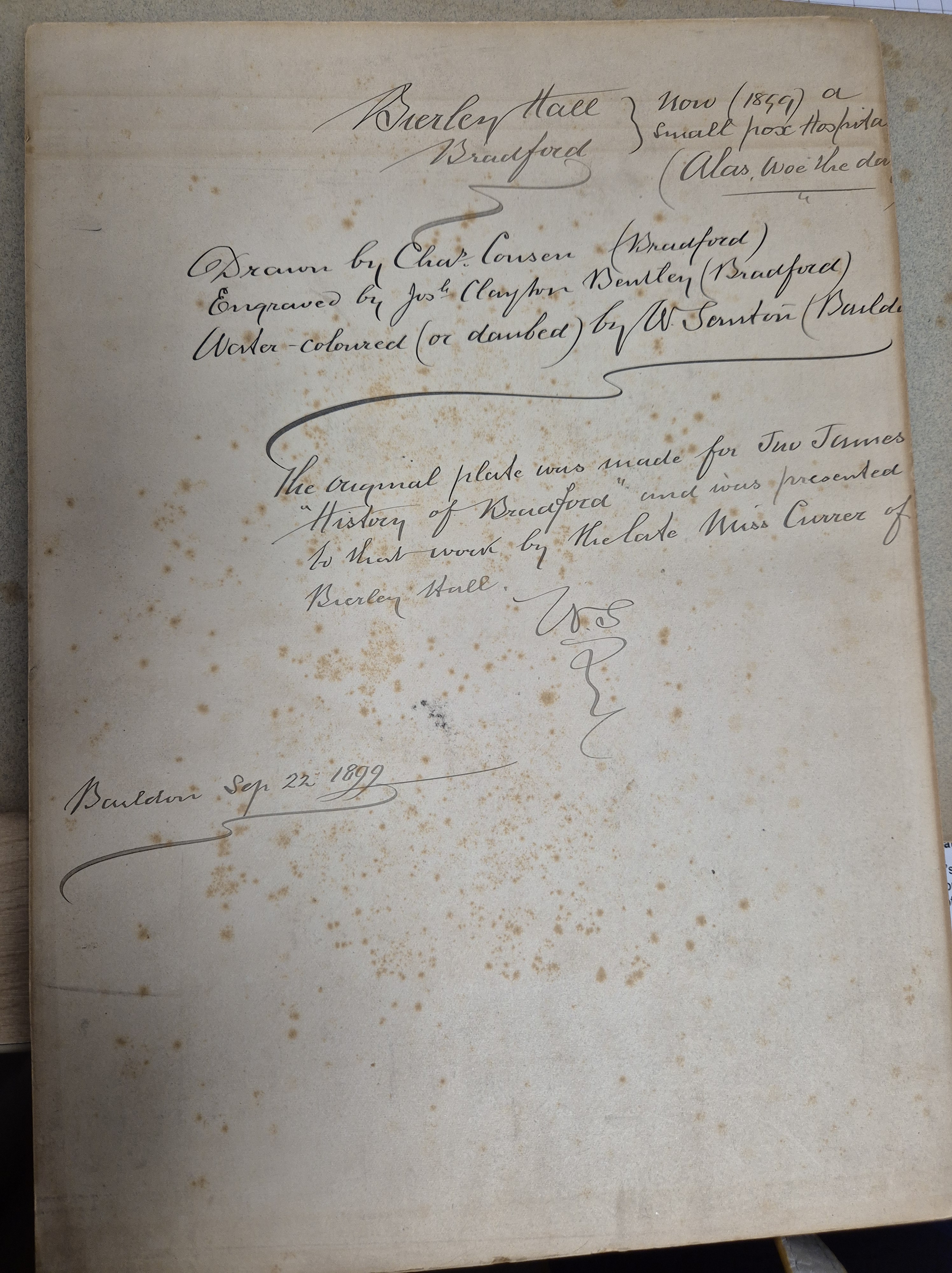
Image 3 is a highly detailed, historically valuable annotation written by Scruton on September 22, 1899, while he was living in Baildon. It details the provenance of the coloured print of Bierley Hall shown in Image 4.
Annotation on rear of Beirley Hall Image.
  • The Inscription Transcribed:

“Bierley Hall, Bradford. Now (1899) a small-pox Hospital (Alas, Woe the day!). Drawn by Cha.s Cousen (Bradford). Engraved by Jos.h Clayton Bentley (Bradford). Water-coloured (or daubed) by W. Scruton (Builder).””The original plate was made for Jno James’ ‘History of Bradford’ and was presented to that work by the late Miss Currer of Bierley Hall. W.S. Baildon Sep 22 1899.”

Historical Significance: This note is a treasure trove. It confirms Scruton hand-coloured (“daubed”) this specific print. It records the tragic conversion of the grand Bierley Hall estate into a municipal smallpox isolation hospital at the turn of the century. Frances Mary Richardson Currer, mentioned here, was an exceptionally wealthy heiress, a famous 19th-century book collector, and a patron of literature (Charlotte Brontë chose her pen name, Currer Bell, in tribute to her).

“The Coming Age” & New Year Letter (Images 5 & 6)
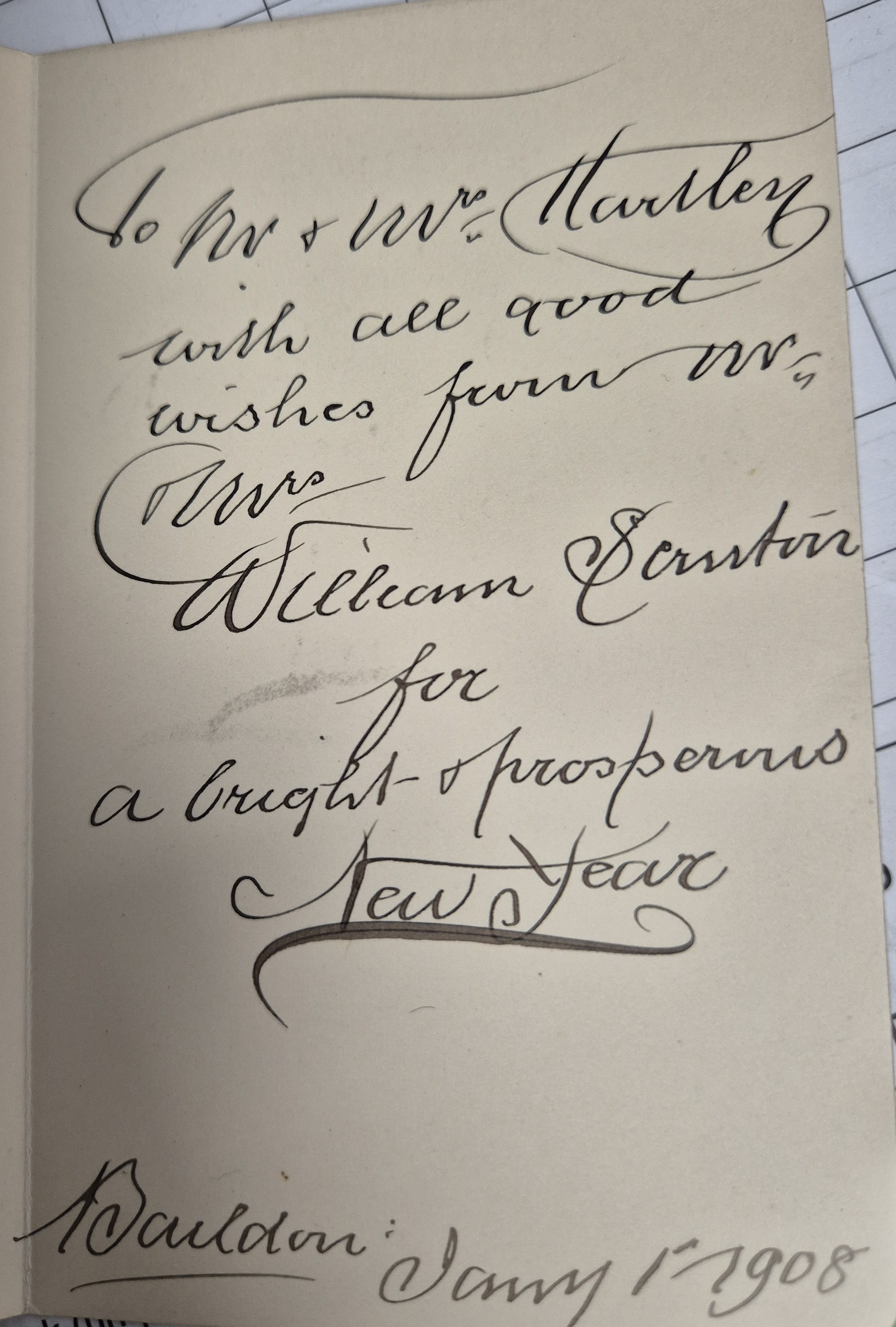
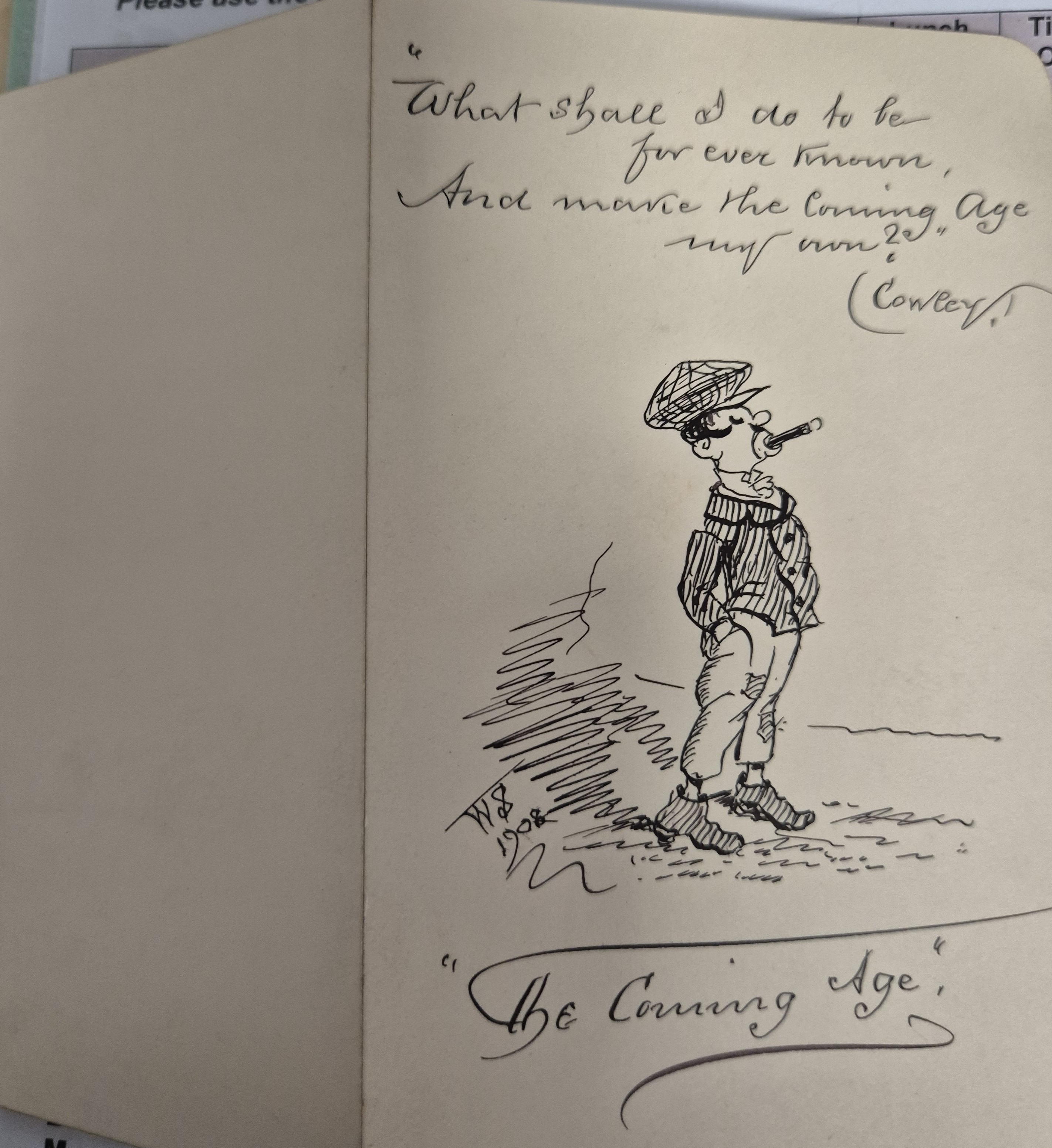
The Context: A hand-drawn, satirical cartoon card dated January 1, 1908, sent from Baildon to his close friends, the Hartleys.

The Artwork: The sketch shows a ragged wanderer smoking a pipe, symbolizing the uncertainty or humility of what the future holds, titled “The Coming Age”. Below, he pens a poetic verse: “What shall I do to be forever known, and make the coming age my own?”

The Greeting: On the reverse panel (Image 6), his exceptional, sweeping calligraphy wishes a “Bright & Prosperous New Year” to Mr. and Mrs. Hartley.


Portrait & Index Pages (Images 7, 8, 9 & 10)
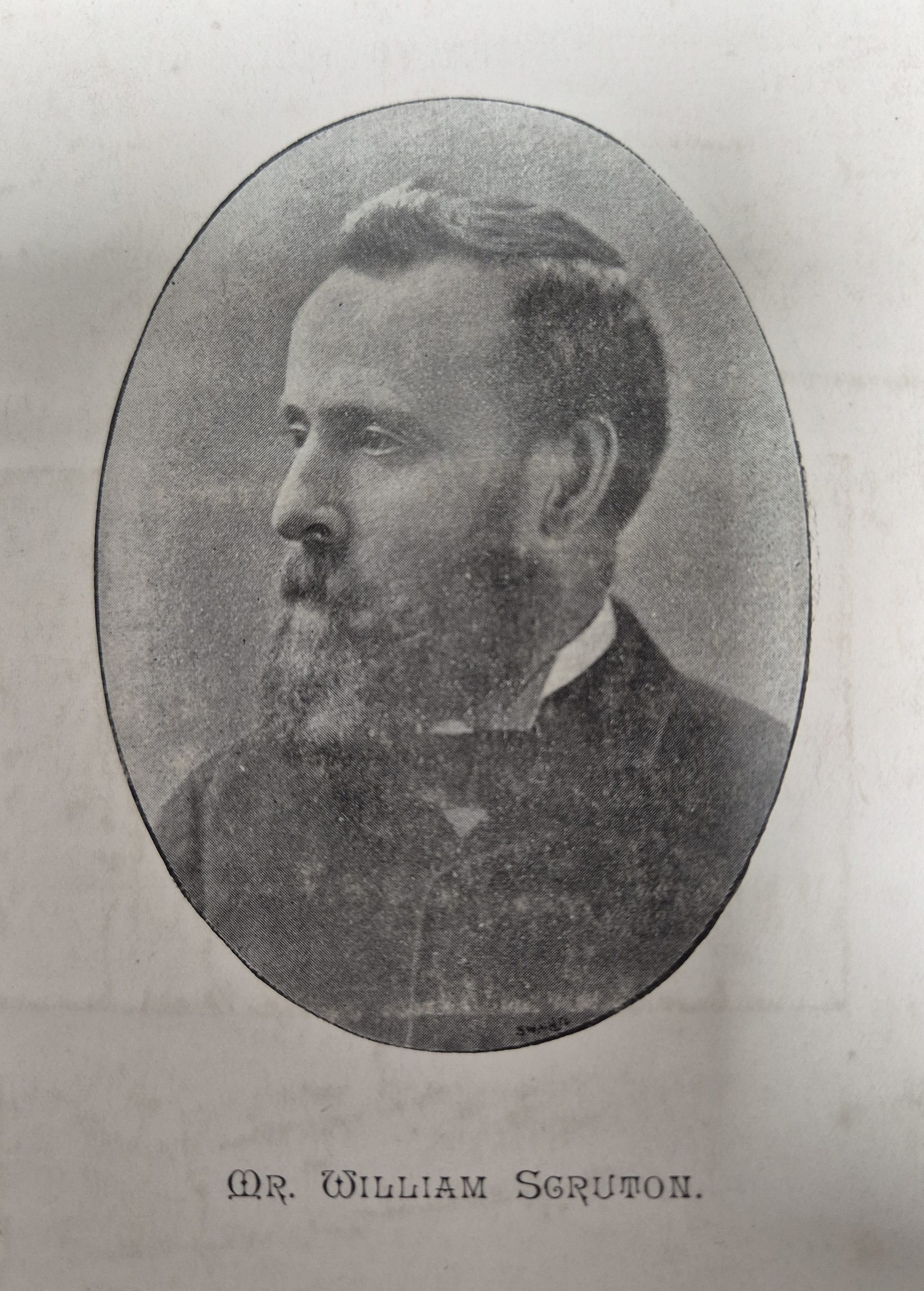
black and grey portrait image of William Scruton.
William Scruton (1840-1924)

The Notebook Indexes: Images 9 and 10 show pages from his ledger indexing historical figures, clergymen, and eccentric local characters in alphabetical order. Notably, under the letter B (Image 10), Scruton lists some of Bradford’s most legendary figures:

“Brontë – Rev. Patrick” (the father of the Brontë sisters—Scruton later wrote a book titled Thornton and the Brontës in 1898).

“Brontë – Charlotte”.

Famous street figures like “Blind Jemmy”, “Bill North”, and “Bentley (Abm) the Bellman”.

Scruton also illustrated stories of well-known legends and tales, such as the Bradford Boar and wrote about many different interests such as:

The Great Woolcombers and Weavers strike of 1825.

The Old Bradford gaslight company.

Charlotte Bronte.

History of different churches.

He had a passion for history, drawing and people, and amassed a collection of drawings, historical documents and other letters.

Bradford Local Studies Library is exhibiting some of the works by William Scruton throughout September. On Wednesday 16th September, there will be pen and pencil drawing workshops and a short talk on his work, from 2pm onwards.

Booking is essential as spaces are limited. This is a free event.

Contact Bradford Local Studies Library on 01274 433688 or email local.studies@bradford.gov.uk to reserve a space.

The Impact of German Butchers in Keighley

‘Meeting the Meat Demand’ with Karl-Heinz Wüstner.

Over the summer, the History Society was presented with the opportunity for a talk by Karl-Heinz Wüstner on German immigration to West Yorkshire. With all of our regular slots already filled (and the budget pretty much used up), our solution was to book Keighley Local Studies Library for an extra talk on the afternoon of Wednesday 1st October. The talk, entitled ‘Meeting the Meat Demand’ will start at 2.30pm and will finish around 4.30pm (time for the talk plus discussion at the end). There is a charge of £2 per person (fee applies to members and visitors).

Karl-Heinz Wüstner is a retired high school teacher from Ilshofen, Germany. As a local historian he has studied labour migration and conducted research on trade and craftsmanship in the Hohenlohe region of Germany for many years. He is a committee member of the Historical Society for Württemberg-Franconia and chairman of a local museum that exhibits painted furniture. He writes books and articles, and has given talks at numerous conferences and seminars.

Karl-Heinz Wüstner: “The continuing industrialisation of Yorkshire in the 19th century created many additional jobs in wool mills and factories. Industrial centres grew rapidly and the large number of newly arrived workers needed to be fed. German immigrants in particular took advantage of these circumstances. As butchers, they not only offered meat, but also produced a variety of tasty sausages, meatloaf, rissoles and many other products that could be eaten either cold or warm after brief heating. With the introduction of takeaways, also offering hot meals, they broke new ground in food supply and thus established new eating habits.

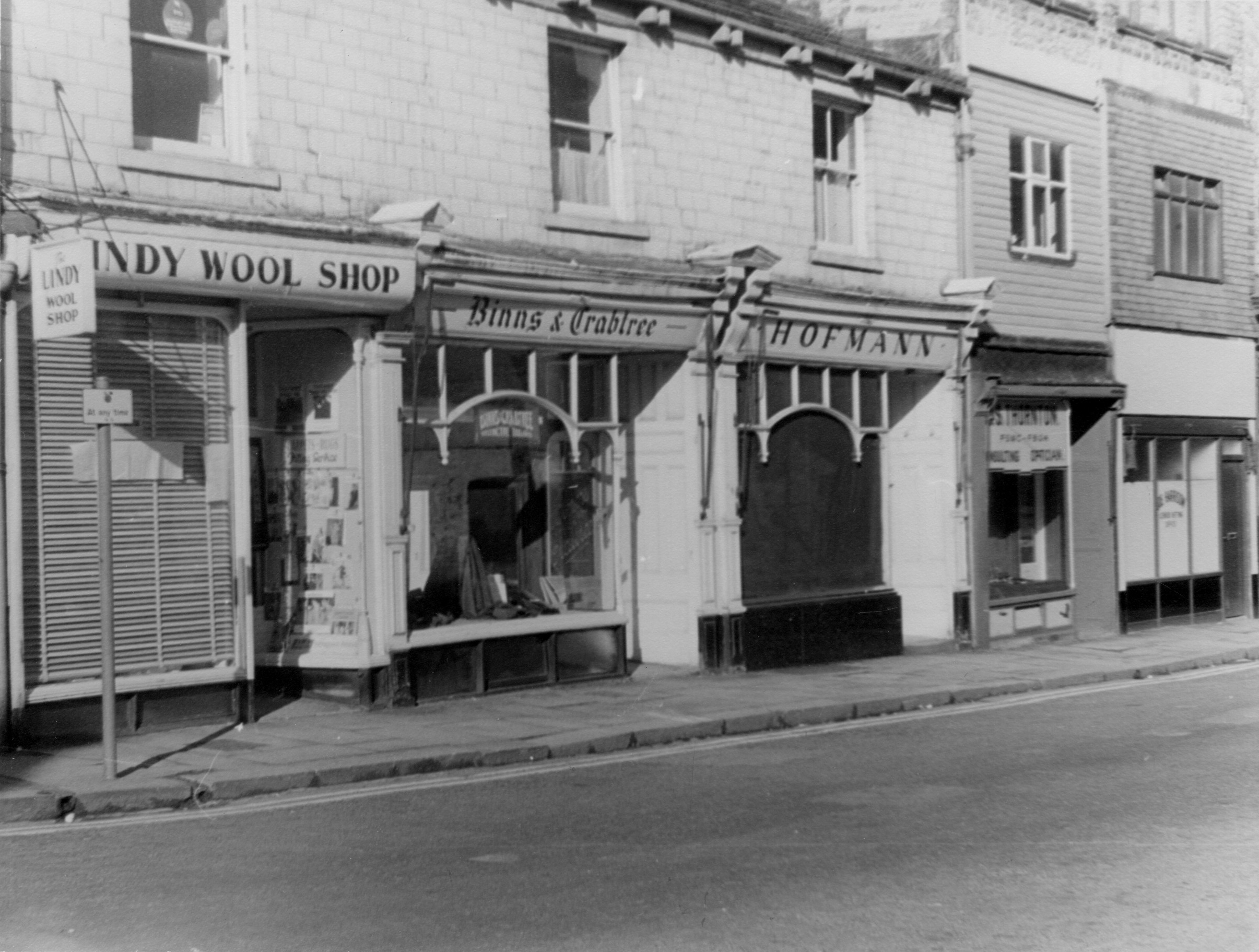
“Quite a number of such pork butchers settled in the up-and-coming town of Keighley. A whole series of butcher’s shops with more than thirty female and young employees dominated the streetscape. Names such as Andrassy, Pfeiffer, Hofmann and Schneider may still be remembered by some today.

“I will try to explain why the butchers and their families left their homeland and how they were able to succeed as immigrants. I will explore the important role they played in the development of the towns and cities, as well as their personal fates.” 

Article and Photos by Tim Neal, Keighley & District Local History Society.

“Bolshevism run mad.”

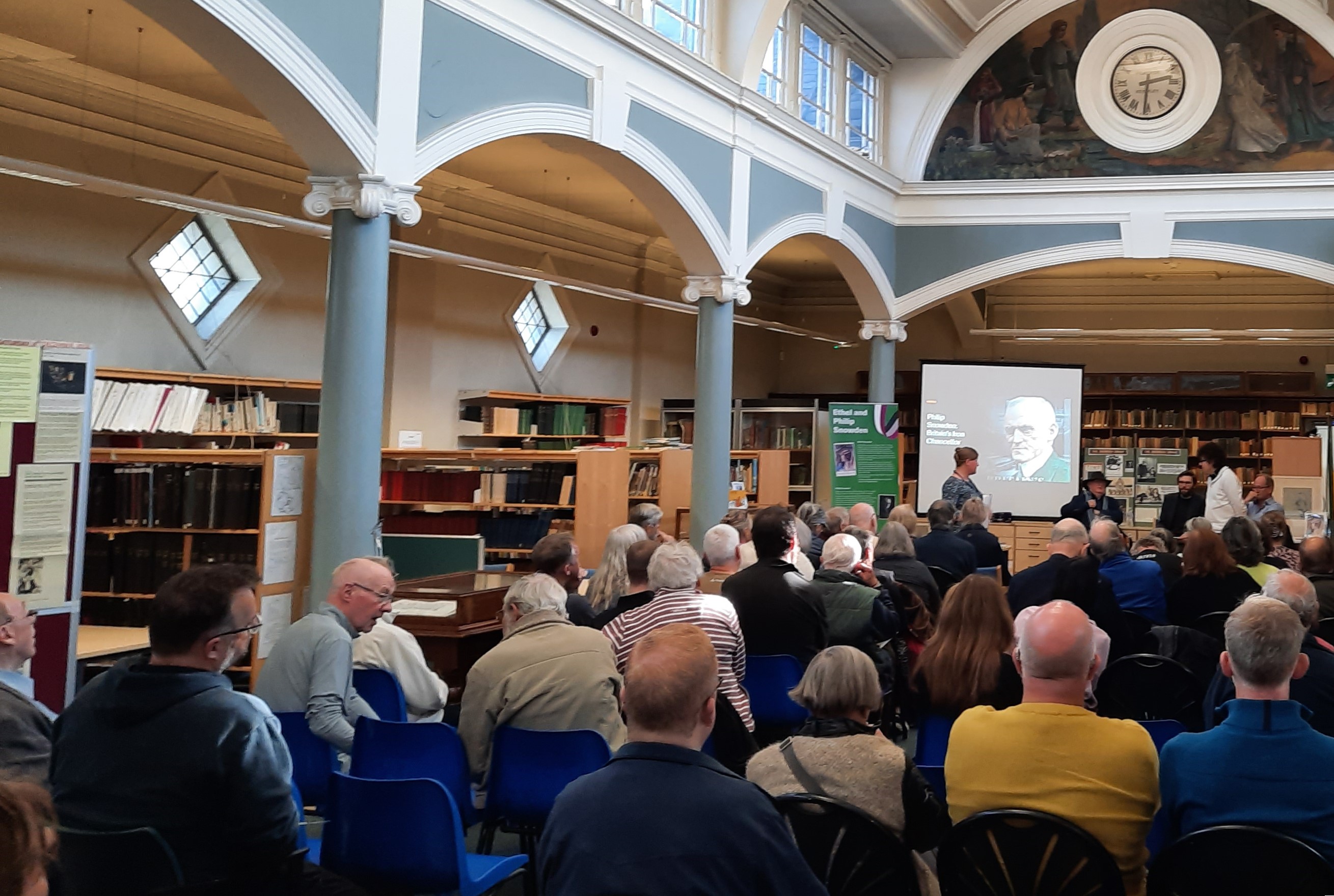
On Saturday, Keighley Local Studies Library was able to showcase one of its wonderful collections to another enthusiastic audience. This time it was the Lord Philip and Lady Ethel Snowden library and archive that we could highlight with the event of a book launch of a new edition of Philip Snowden’s vitriolic autobiography, edited by the author Alexander Clifford.

“Alex” Clifford is a history teacher as well as speaker and author of other historical works. He has written books on the Spanish Civil War and Hindenburg Ludendorff & Hitler, Germany’s generals and the rise of the Nazi’s.

Originally written in 2 volumes, Philip Snowden’s newly edited autobiography edition comes in a handy single volume format. The event itself consisted of a talk and photographic presentation by Alex Clifford about Philip Snowden’s life, values, interests and motivations and of course his controversial crossing from Labour to Conservative during the National Government of 1931 when he was expelled from the Labour Party.

The talk was followed by an expert panel discussion with questions from the audience to follow. We were privileged to have the well known authors and experts: Keith Laybourn and Andrew Thorpe: Professor Keith Laybourn is the president of the Society for the Study of Labour history and author of the leading biography of Philip Snowden. Professor Thorpe is Dean of the Faculty of Arts, Humanities & Culture at the University of Leeds and author of ‘The History of the Labour Party’.

The Event was chaired by Will Barber-Taylor who is Deputy Director of the Centre Think Tank, he is a political writer and podcaster who is currently producing a new documentary on Snowden. 

The audience responded well and there was a high calibre of questions from attendees who were clearly familiar with Snowden’s life and politics. The volatility of the times was also considered in the first quarter of the 20th century with the rise of “revolutionary socialism” as well as “evolutionary socialism”, World War 1 and the subsequent years of depression, testing times for any government and certainly any chancellor. Amongst the audience were a national newspaper journalist and a former government adviser.

Such events show the continued popularity of local history study and debate and help to highlight the value and importance of local study library collections that reveal the human experience and development of our communities.

We would like to thank all those who attended. Two new leaflets have been produced by library staff on the Snowdens and our collection in Keighley and will be in our guide section on this web site shortly.

A good number of copies of the new book were sold and there was a request for a similar event in the future, regarding another Keighley political figure in recent history.

“Britain’s Iron Chancellor, Philip Snowden, An Autobiography”, edited by Alexander Clifford (is available from all good bookshops, priced £25 and will be available soon in Keighley Local Studies Library for reference, later for loan (Pen & Sword Books Limited, Barnsley, 2024, ISBN 978 1 39902 495 2).

International Women’s Day

Wednesday 8th March is International Women’s Day and today we feature two ‘Women of Conviction’ active in local historical reforms: Frances Smith and Margaret McMillan.

Frances Smith was the first woman to winboth a municipal council election in Keighley and sit on the town’s Industrial Co-operative Society in the 1940’s and 50’s. One of her roles was chair of the council’s maternity and child welfare committee..

Margaret McMillan worked in deprived areas of Bradford in the 1890’s and agitated for reforms to improve the health of young children.

Frances Smith

Frances Maddocks was born at Hope St, Pennington, Leigh, Lancashire on the 1st August 1891. One of five children her father Edwin was a coal miner and her mother a silk winder. Her father premature death at the age of 44 from TB had a lasting effect on Frances. The family had to become resourceful. Aged only 9 Frances and her siblings sold fruit to the queues of people outside the local theatre and her mother took in boarders. Frances first job was as a Silk weaver and it was through seeking work in this industry that she moved to Keighley some time before the First World War.

In 1915 she married local man Harry Smith an iron Moulder and they went on to have one son Edwin in 1916. It is no longer possible to find out what stirred Frances’s involvement into the Co-operative moment or Local Politics but by 1943 she was actively involved in the movement and became the 1st woman to be elected to the board of directors of the Keighley Co-operative Society Ltd.

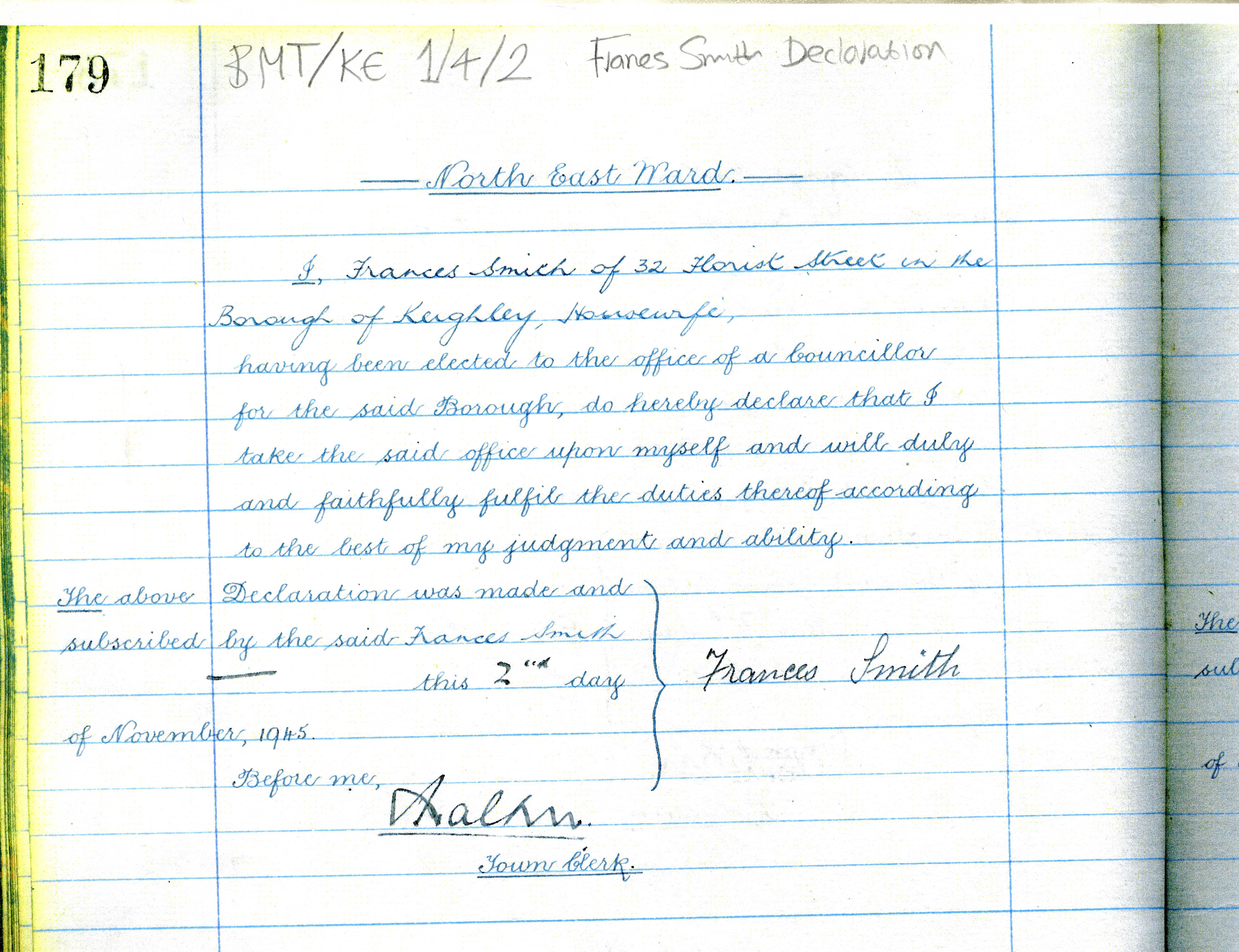
But Frances involvement in local issues did not stop there. By 1945 she had been working for the labour party for some years. Frances had forged a friendship with Ivor Thomas who in July 1945 took up his seat as Labour MP for Keighley on the labour parties winning of the general election. With his support, Frances was invited to stand as candidate for the 1945 municipal election. In November 1945 Frances won her seat with the biggest majority of the day. She signed the declaration book on 2nd of November 1945, and made history again by becoming the first woman to win a contested municipal election.

Frances wins the North east Ward Seat Municipal Election

For more information on Frances Smith see the full article ‘A Woman of Conviction: Councillor Mrs Frances Smith, First Lady of Keighley by Frances Gilbert and Angela Speight, published in Bradford Antiquary (2012) Volume 16 available at Bradford and Keighley Local Studies Library.

Margaret McMillan

Working in deprived districts of Bradford and Deptford, Margaret McMillan agitated for reforms to improve the health of young children, wrote several books on nursery education and pioneered a play-centred approach.She was born in New York in 1860. Her parents, were from Inverness but had emigrated to the United States in 1840. When she was four, an epidemic of Scarlet fever killed her father and sister. Mrs. McMillan returned to Scotland with her daughters Margaret and Rachel, where both attended the Inverness High School. Margaret went on to study Psychology and Physiology, followed by Languages and Music in Germany.

By 1888 both sisters had become active in local politics.In 1889, Rachel and Margaret helped the workers during the London Dock Strike. In 1892 they moved to Bradford. There they joined the Fabian Society, the Labour Church, the Social Democratic Federation and the Independent Labour Party.

With Bradford’s school medical officer, Dr. James Kerr, Margaret carried out the first medical inspection of elementary school children in Britain. They published a report and began a campaign for local authorities to install bathrooms, improve ventilation and supply free school meals for children, after seeing the success of Bradford Cinderella Club providing a warm meal to underprivileged children.

Their experiences in Bradford were to shape their later work in Deptford.

For further reading about Margaret and Rachel McMillan we have a good selection of books in Local Studies, please see the list below:

Select reading list of Margaret McMillan books in Bradford Local Studies Library

 Margaret Macmillan: portrait of a pioneer by Bradburn, Elizabeth. Routledge (1989), 9780415012546

All children are mine: inaugural Margaret McMillan lecture by Greenwood, Arthur London U.P (1952)

Margaret McMillan in Bradford, with reminiscences: fourth Margaret McMillan lecture by Lord, Miriam. London U.P (1957)

Our children: Margaret McMillan and the open air nursery school by Lord, Miriam. Lund Humphries

Margaret Mcmillan the childrens champion by Lowndes. Museum P (1960)

Margaret Mcmillan:founder of the open air nursery school by Margaret McMillan Memorial Fund

Camp school by McMillan, Margaret. George Allen & Unwin (1917)

Margaret McMillan: ‘I learn, to succour the helpless’ by Moriarty, Viv. Nottingham Educational Heritage (1998) 9781900219136

The young child and the life of today: third Margaret McMillan lecture by Niblett, William Roy. London U.P (1956)

Margaret McMillan, 1860-1931: reminiscences by Rachel McMillan College Association

Social and political change in England: Margaret McMillan and the battle for the slum child by Rees, Rosemary. Longman Resources Unit (1986) 9780582173637

Childhood, culture and class in Britain: Margaret McMillan, 1860-1931 by Steedman, Carolyn. Virago (1990) 9781853811234

Margaret McMillan: prophet and pioneer: second Margaret McMillan lecture by Stevinson, Emma.