Family History Courses Starting Soon!

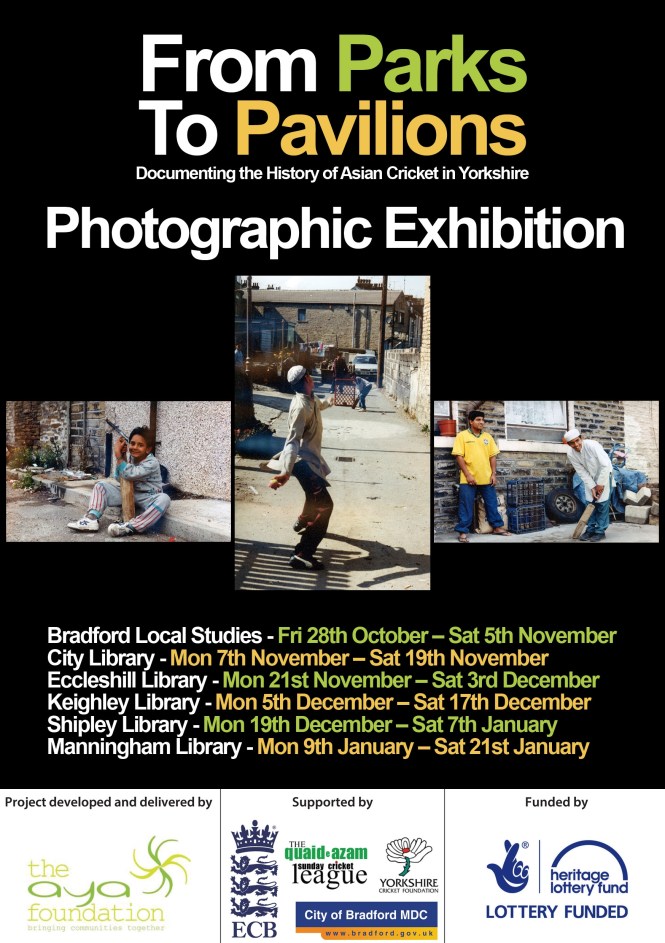
Courses run by Bradford College will be starting soon at Bradford Local Studies Library and Keighley Local Studies Library including blogging and websites for all.

Wednesdays 10.00am-12noon for 11 weeks starting 21st September at Bradford.

Tuesdays 10.00am-12noon starting 20th September or Thursdays 10am-12noon for 11 weeks starting 22nd September at Keighley.

Researching family history can be a rewarding and exciting experience and these events can help to guide people to the unique resources they need to investigate the past and provide a fantastic opportunity to learn new skills.

The fee for an 11 week course is £75.00 including an administration fee of £15. Concessions may apply. Contact Bradford College on 01274 436300 for more details or Bradford Local Studies Library or Keighley Local Studies Library to book a place.

fh

Treasure of the Week #1 – Sir Henry Mitchell

In the basement of Bradford’s Local Studies Library are collections of nineteenth century pamphlets (and some of earlier date). Ranging from sermons and programmes of royal visits, to reports, articles, obituaries and regulations, they are a treasure-trove of local history. What follows is an account of one of these treasures. To consult any of these items please ask the staff. Card catalogues of these collections are located in the Local Studies Library.

 JND 290/4 (Please quote this number if requesting this item.)

Sir Henry Mitchell of Bradford – A Biography. c.1880. 8 pages

henry-mitchell

Sir Henry Mitchell

The fourth of the seventeen pamphlets bound together in volume number 290 of the J N Dickons Collection is a slim eight-page account, plus portrait, of Sir Henry Mitchell of Bradford. The pages are taken from a book of which neither title, nor author, nor publisher, nor date (1880s?) is noted. Two other biographies accompany Mitchell on JND 290 from the same anonymous source. One is on The Worshipful Mayor of Bradford, Mr Angus Holden, and the other is on Lawrence Game, a prominent lawyer and MP for East Leeds (number 3 and 5).

Opposite the Local Studies Library at the bottom of the Manchester Road is Sir Henry Mitchell House, currently the base of some of Bradford Council’s staff, but few people know who Sir Henry Mitchell was, or did. But in the book store in the depths of Margaret Macmillan Tower, is the answer. Although brief, the account is concise and fact-filled, lucid and fulsome.

Henry was born in 1824 at Esholt and aged fourteen he commenced learning the different processes of wool sorting, combing, spinning and weaving. In 1842 he was  appointed Manager for Messrs William Fison & Co., of Bradford, of which  W E Forster, M.P. was a partner. 1848 finds Mitchell as a Buyer for Messrs A & S Henry & Co. of Bradford, becoming a partner in 1852. In the next few years Mitchell becomes a leading figure in the commercial life of Bradford. He was elected a member of Bradford Town Council in 1870 and was a councillor for 21 years, being made an Alderman in 1874. He was also an influential and active member of the Bradford Chamber of Commerce, being elected President on four occasions. In 1876 he was the English Judge for woollen and silk fabrics at the Philadelphia Centennial Exhibition. Two years later he was Vice-president of the jurors selected to adjudicate upon worsted yarns and fabrics at the Paris Exhibition of 1878.

Education as well as textiles was a passion in Mitchell’s life. He was a member of the first School Board elected for Bradford, Vice-President of the Bradford Mechanics’ Institute, and a Governor of Bradford Grammar School. But his greatest work was in connection with the Bradford Technical College.

‘He saw clearly that if England was to retain her supremacy in the production of worsted fabrics, it was necessary that a higher and more systematic training should be adopted on the part of those whose lot it would be to carry the trade forward in the face of foreign competition; and he set his heart upon the establishment of a Technical College in Bradford which should at least equal anything of the kind attempted abroad.

The College was erected at a cost of £40,000, of which Sir Henry subscribed £10,000. The College was opened by The Prince of Wales in June 1882, with Mitchell appointed President. He was made an Honorary Member of the Worshipful Company of Clothworkers in honour of his work in promoting textile education, and a member of the Board of Governors of the City and Guilds of London Institute.

Respected by workers and employers alike, Mitchell was employed to arbitrate in trade disputes, notably in the great dyers’ strike. He was chairman of the local Conservative Party, but resisted frequent attempts to persuade him to stand for Parliament. He was a prominent member of the Wesleyan Church in Bradford. He was knighted in 1885 and made a Freeman of the Borough in 1889, the year of his death.

Stackmole

Heritage Open Day, Keighley Local Studies Library

On 10th September as part of the Heritage Open Days Festival, Keighley Local Studies Library will be host to a variety of local societies and groups and will be exhibiting some of the treasures from their archives and collections.

This is a great opportunity not only to see some of the hidden gems of the Keighley archives, but also to meet local groups, see displays and exhibitions on the history of the local area, and to get help with your family tree and research.

It is also an chance to bring along your own stories, memorabilia and pictures to help celebrate the rich and diverse history and heritage of the Keighley District.

Amongst the groups exhibiting will be Keighley and District Local and Family History Societies, The Airedale Writers Circle, Silsden Local History Society, Oxenhope historians and local authors.  

The event will feature the exhibition from Men of Worth about the men of Keighley and District in the Battle of the Somme and Keighley’s Military Hospital along with a showing of the film ‘The Battle of The Somme’.

This is a free ‘drop in’ event and will run from 10.30am until 4.00pm. All are welcome.

KeiHeritage

Map of the week: a century of Bradford Hailstones

As I work on the reserve map collection the same local land-owners appear regularly. Examples are: Rev. Godfrey Wright, Mrs Giles and Miss Dawson. Godfrey Wright owned a great deal of property around Bradford, but seemingly lived near Doncaster. ‘Mrs Giles’ was clearly a member of a family who owned much of Horton, and she sold the land on which the Bradford workhouse (later St Luke’s Hospital) was built. ‘Miss Dawson’ was probably Eliza Dawson, grand-daughter of Joseph Dawson, partner in the Low Moor Iron Company. The name of Samuel Hailstone also occurs regularly. His importance to Bradford, and his fame as a Yorkshire naturalist, will ensure that his memory stays green.

Samuel Hailstone (1768-1851) was that rare combination, a lawyer and a botanist. His brother John Hailstone MA FRS took holy orders and became a professor of geology at Cambridge. Samuel himself was born in Hoxton, London but his family soon moved to York. In time he became articled to John Hardy, a Bradford solicitor, and Hardy & Hailstone eventually became partners. John Hardy was elected an MP and was the father of another politician Gathorne Gathorne-Hardy who was created Earl of Cranbrook. I understand that Samuel and John Hardy were the moving spirits behind the 1803 Bradford Improvement Act. More than forty years before Bradford became a borough this act established commissioners with a variety of local government powers such as street cleaning, lighting, and water provision.

Samuel continued to practise as a solicitor and was later in partnership with the Thomas Mason who became a director of the Bolling Iron Company and lived at Bolling Hall (see the previous map). Samuel Hailstone was the classic example of a wealthy and highly successful professional man. His politics were Liberal and, slightly unusually for non-conformist Bradford, he was an Anglican. He purchased the Bolton House estate although he never resided there. I get the impression that Yorkshire botany and geology were Samuel’s main interests. A collection of more than 2000 plant specimens was passed to the Yorkshire Museum on his death. But despite these studies he was active in issues affecting his chosen town. He helped found the Bradford Literary & Philosophical Society and also the Mechanics Institute. He served as a major in the Bradford Volunteer Infantry and was clerk to the Trustees of the Leeds and Halifax Turnpike Road.

This brings us to the maps. In Samuel Hailstone 1837 he offered for sale the land between Croft Street & Bridge Street. A small portion of a very large sale plan is illustrated here.

Map of the Week 011A

A second map shows land further south which is also divided into lots. This map is stylistically very similar and shows Samuel’s place of business and house. What is now called Croft Street took its name from Croft House, in Bowling Lane (now Manchester Road) which was was where Samuel lived in his early years.

Map of the Week 011B

In 1808, quite late in life, Samuel married Ann Jones, the daughter of a Bradford surgeon, and the couple had several children.  Samuel died at Horton Hall, Bradford in 1851. In his census return for that year he indicates that he is living alone, except for a house-keeper and five servants.

The Hailstones were a very high achieving family. One son, Samuel jnr., was also a noted amateur naturalist and a collector of crustacea. He pre-deceased his father in 1841. There were two surviving sons, Rev John Hailstone (1810-1871), the vicar of Bottisham, Cambridgeshire, and Edward Hailstone FSA (1818-1890). Edward took over the Bradford legal practice but is famous for a huge assembly of books and documents relating to Yorkshire history, especially those of the Sharp family who were the previous owners of Horton Hall. This was the project of his retirement when he lived at Walton Hall, near Wakefield. At his death the collection was left to the archives of York Minster where it can still be consulted today.

Derek Barker, Local Studies Library Volunteer

The Township of Idle

This article is an extract from The Illustrated History of Bradford’s Suburbs 2002

THE township of Idle, to the north of Bradford, has always been quite large in both area and population. William Cudworth described the extent of Idle in Round About Bradford (1876) as reaching ‘…from Apperley Bridge to Windhill Bridge, and from Buck Mill to Bolton Outlanes’. The population today, due to the new housing developments that rapidly appeared from the mid – 20th century onwards, is near to 10,000.

The origins of the name Idle can be the subject of much speculation. The spelling of the word in historical documents is often Odell or Ydell, and J. Horsfall Turner, the noted Bradford historian, stated that the spelling Idle was frequently used in the Calverley parish register for the best part of 300 years.  Another Bradford historian, William Claridge suggested that the village took its name from the fact that much of the locality was uncultivated moorland; land that was literally idle.

Idle is well documented through history, and indeed seems to have been settled, or at least passed through, as far back as Roman times.

One William Storey, when opening a quarry on Idle Moor in around 1800, found many Roman coins, and human remains enclosed in stone were also discovered. Written records mention Idle (or, rather, ldel) as far back as the 12th century, when Nigel de Plumpton is quoted as giving a piece of land there to the nuns of Esholt. The Plumpton Family are associated to quite a considerable extent with ldle’s past, and Sir William Plumpton and his son and heir (also William) took part in the Battle of Towton near Tadcaster in 1461. The younger William was killed in the battle, plunging the Plumptons into years of turmoil and dispute, which eventually saw the Manor of idle being first halved and then quartered, the portions being owned at any one time by George, Earl of Cumberland (father of Lady Anne Clifford), and Sir John Constable, who split his half between his two daughters. Possession of the manor eventually ended up in the hands of Robert Stansfield, of Bradford, who bought it in the 1750’s from the Calverley family.  A detailed account of this early period in Idle’s history is available in Cudworth’s Round About Bradford.

By the mid to late 19th century, Idle, like much of the Bradford district, was heavily involved in the textile industry.  A look at the Ordnance Survey map of 1893 shows many mills in the area, including Castle Mills, Union Mill on Butt Lane and the nearby New Mills.  By the 1870s around 1,100 people from Idle were employed in the township’s mills. Idle seems to have achieved some kind of parity in the size of the mills that operated there.   Cudworth states that no giant manufacturer dominated the neighbouring companies in the village.   Indeed he goes on to say that the villagers of the late 19th century were probably the most ‘equal’ in the entire land, with no man of exalted rank or great wealth residing in the township.  The villagers displayed a prominent love of their home but Cudworth found them rather ‘clannish’ in their attitudes to outsiders.

Another source of income and employment in 19th century Idle was quarrying.  Stone was dug underground from beneath Idle Moor and raised to the surface via deep shafts, so unlike areas such as Bradford Moor with its vast coal mining operations, the landscape was not utterly ruined.  Idle stone was well known and was considered superior to stone from many other areas.  It was used on public buildings in many towns in England, and was even exported as far as China, Australia and South America.  Among those involved in extracting Idle stone in the early 19th century were William Storey of nearby Apperley, William Child of Greengates, and later Thomas Denbigh, among others.

Idle grew rapidly during the 19th century, reflecting an increase in the population of the Bradford district as a whole.  In 1801 the township’s population had been around 3,400, yet by 1871 it had risen to over 12,000.

At this time the village itself was well established, along lines that are easily recognisable today.  At the top of the village, on Towngate, the Old Chapel of Ease, which was erected in 1630, was still in its original use.  The chapel came by its name due to the fact that the nearest parish church was at Calverley, quite a trek away, so the chapel was quite literally built for the ease of the people of Idle.  The building currently houses the highly successful Stage 84 drama school.  Adjoining the Old Chapel was the township’s lock-up, complete with stocks.  On the opposite side of Towngate and a little further down stands Holy Trinity Church, built in 1830.  Just across from the church is the former library building, a large Victorian structure which seems to loom over the road.

The rooms above the library were latterly used as meeting rooms for local clubs and societies but were once used for meetings of the Idle local board, which oversaw the township’s affairs. The library moved into former shop premises in a more centralised location just below the Green in the early 1990s.

Idle can aptly be described as a village of two halves.  First there is the top half, centred around High Street, which runs steeply downhill from Highfield Road to the Green, from around which the bottom half of Idle radiates.  It was at the junction of Highfield Road and High Street that workmen making road improvements uncovered three ancient cellars.  The discovery, in 1987, caused much excitement in the local community, and it was suggested that the cellars offered proof of the location of the old Manor House, lost to historians for many years.  The proof of this theory may never now be tested as the cellars, which may have had underground passages running to Holy Trinity Church, were subsequently filled in.  High Street is also home to the wonderfully named Idle Working Men’s Club.  The club has found international fame due to its name and has boasted celebrities such as jockey Lester Piggott and Tom O’Connor among its honorary members.

idpic2

Idle Working Men’s Club

The bottom half of the village still boasts an array of small local shops, but the lure of nearby supermarkets with their cheap prices has inevitably caused something of a decline.  In its heyday Idle had its own railway station and cinema, both now long gone.  The station was on the line between Laisterdyke and Windhill, which opened to passengers in April 1875.

Sadly there is now little evidence left of the railway line that neatly bisected the village, reinforcing the division between upper and lower Idle.

Idle today is a busy, well-populated suburb of Bradford.  Smart, early 20th century housing lines Highfield Road, and a modern complex of flats stands on Bradford Road, at its junction with ldlecroft Road. The village itself has many excellent facilities for its residents to enjoy.  Small shops around the Green almost give the centre of Idle the appearance of a Dales market town. Idle boasts its fair share of pubs – the New Inn and the White Bear at the very top of the village, the Alexander and the Brewery Tap down on Albion Road, and the White Swan, which stands on the Green, to name but a few.

idpic3

The Green, Idle

The village has two supermarkets within easy reach, and a new medical centre was built on Highfield Road in the early 1990s, and the village has numerous clubs and societies to occupy its residents.

Like many of Bradford’s other suburbs then, Idle is a popular, pleasant place to live, offering all the trappings of modern living, yet retaining something of its historic appearance and charm.  This is most definitely one part of Bradford that doesn’t live up to its name.

Further Reading

Cudworth, William. Round About Bradford, 1876. (Reproduced 1968, Arthur Dobson Publishing Co.)
Watson, W.  Idlethorp, 1951.
White, E. Idle Folk Idle & Thackley Heritage Group, 1995.
White, E. Idle, an Industrial Village Idle & Thackley Heritage Group, 1992.