Historical Objects on Country Walks

Finding historical objects on country walks

It is well known that spending some time outdoors for daily exercise can have a positive effect on physical and mental wellbeing.

However, it is an often overlooked fact that observations on country walks can also provide fascinating insights into the natural history, geology and archaeology of an area.

We are pleased to share here the first in a series of articles by renowned local historian Derek Barker on the historical objects which may be seen on walks.

These articles will be based on the historic bulletins of Sidney Jackson (1902-1979), eminent expert in Natural History, Geology and Archaeology and curator in Bradford Museums until 1967.

Important note:

As long as government guidelines on social distancing are being followed people are allowed to leave their homes in certain circumstances. Woodlands, moorlands, public rights of way and other public green spaces remain open for individuals and households to take daily exercise.  Anyone venturing out should follow government advice.

Please use the link below for information and guidance from Bradford Council about the use of public green spaces at the current time:
https://www.bradford.gov.uk/emergencies/council-service-disruptions/public-green-space-and-rights-of-way-guidance/

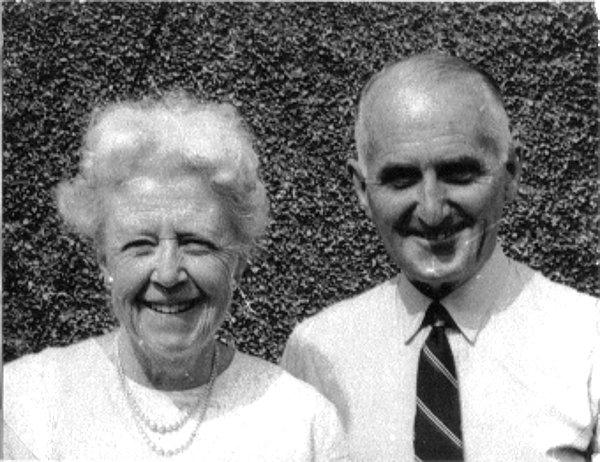
Sideny & Marie Jackson

Marie and Sidney Jackson


Sidney Jackson ‘Jacko’ (1902 – 1979), despite being self-taught, was in charge of Natural History, Geology and Archaeology at Bradford museums (based at Cartwright Hall) for 28 years before retiring in 1967. I never met him, moving to Bradford in 1979 the year he died, but there must still be Bradford people in their late 60s and 70s who attended one of the memorable educational walks he provided for children. When I looked into this topic, some years ago, I found several of his former pupils were now in senior archaeological and scientific posts. Jacko attended Bradford School of Art in 1915-17 to train as a textile designer: later he was justly famous for the quality of his archaeological drawings. I have provided two examples: showing cup and ring marks, and loose-rail fence posts. He introduced the concept of the glass-fronted beehive to Cartwright Hall, an example of which is still to be found at Cliffe Castle Museum.

Carved stone heads, which he believed were often of ‘Celtic’ origin, were Jackson’s great interest. His card index lists over 650 from all over the country, but particularly West Yorkshire (378). His second love was for Iron Age querns which were once used for hand-powered corn grinding. I think we can be quite certain that few today could match his knowledge in the combined fields of natural history, archaeology and geology. Public enquiries on these subjects were frequently answered by return of post. There cannot be many people in modern Bradford appreciate what a cultural debt is owed to Jacko. Traditional archaeology and natural history are still represented at Cliffe Castle Museum, Keighley but with only a fraction of the prominence he would have considered appropriate. His successor, Stuart Feather, was responsible for the creation of Bradford Industrial Museum. Feather felt, and I feel, that the study of industrial history and archaeology was very suitable for Bradford, but I’m fairly certain his illustrious predecessor would not have agreed. Although not without his faults Sidney Jackson was a unique and irreplaceable man.

The extent to which archaeological inferences can be securely drawn from surface finds, rather than finds discovered in context by excavation, is still an important a question and one which was frequently explored in the excellent Archaeology Group Bulletin which Jacko edited. The journal was founded in May 1954 and appeared monthly until 1967. Copies are still available in Bradford Libraries, and the Yorkshire Archaeological & Historical Society transcribed the whole series for a CD-ROM. The AGB is an extremely good source of information about what might be called ‘country walk archaeology’. What was the function of that odd shaped piece of stone? Is that a prehistoric flint tool? Is that a Neolithic cup and ring mark? What is the likely date of that barn? Topics that have rather been abandoned by the professional but can still be of great interest to the amateur and to which I shall return in the future.

When the Local Studies Library re-opens you can learn more about the subject in ‘Mr Jackson at Cartwright: A Gentleman and Scholar’: The Bradford Antiquary (2012) 3rd series 16, pp. 75-87.

Derek Barker
Treasure of the week no. 27: Full dress subscription concert, February 1886

In the basement of Bradford’s Local Studies Library are collections of nineteenth century pamphlets (and some of earlier date). Ranging from sermons and programmes of royal visits, to reports, articles, obituaries and regulations, they are a treasure trove of local history. What follows is an account of one of these treasures. To consult any of these items please ask the staff. Catalogues of these collections are located in the Local Studies Library.

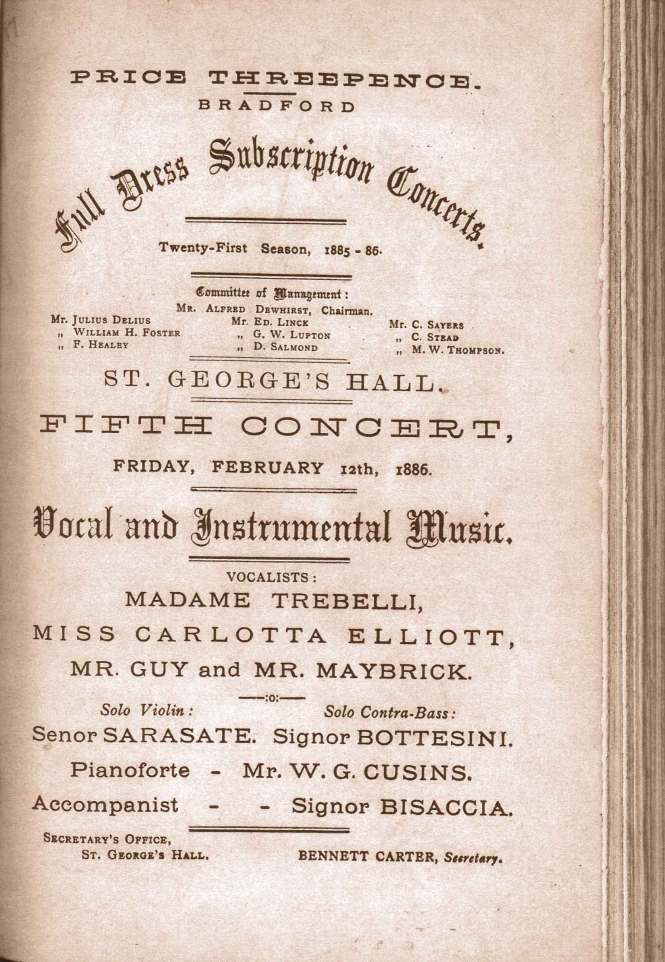
BRADFORD SUBSCRIPTION CONCERTS. Full Dress Subscription Concert. 21st season, 1885-6. February 12th. Vocal and Instrumental Music. Printed by John Dale & Co. of Bradford, 1886. 24 pages.

JND 1/16 (Please quote this number if requesting this item when we are open again)

st-georges-old

Tres-27-image-copy-web

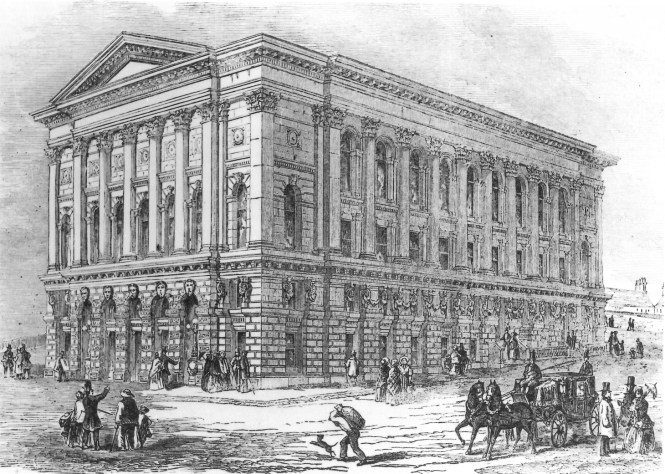
A healthy cultural life was a measure of the success and standing of Britain’s Victorian towns. An important cultural institution in Bradford was its Subscription Concerts held in the St George’s Hall. The 24-page pamphlet JND 1/16 in the Dickons Collection is a programme from the 21st season. So what went on in February 1886? In typical wordy Victorian fashion we start with the Regulations:

With a view to facilitate the INGRESS and EGRESS … the GRAND ENTRANCE is exclusively appropriated to the visitors to the STALLS. Holders of Tickets bearing ODD NUMBERS will proceed to their seats by the Stairs on the RIGHT HAND SIDE of the Grand Entrance. Subscribers having Tickets with the EVEN NUMBERS will proceed on the LEFT HAND SIDE.

And further: Private Conveyances and Engaged Conveyances must fall into line as usual in Hall Ings, and there wait till called for. Finally, The Police have strict instructions to enforce the above Regulations. By Order, THOMAS HILL, Mayor.

Then comes a list of SUBSCRIBERS to the STALLS: 210 of Bradford’s Good and the Great, including such luminaries as Sir Jacob Behrens, Julius Delius and W E B Priestley. This is followed by RESERVED AREA SUBSCRIBERS, another 210, and then SUBSCRIBERS FOR THE WEST GALLERY, 105 of them.

And who did they see and what did they hear? Vocalists Madame Trebelli, Miss Carlotta Elliott, Mr Henry Guy and Mr Maybrick; Señor Sarasate (Violin), Signor Bottesini (Contra-Bass), and Mr W G Cusins (Pianoforte) accompanied by Signor Bisaccia. Texts and translations are given of the songs. Composers included Chopin, Gounod, Sarasate, Gluck, Bottesini and Rossini. The Pianoforte was ‘kindly provided by Messrs John Brinsmead & Sons’.

The printed programme ends with a timetable of ’Railway Arrangements’ for those without their own conveyances. The 11.20 Lancashire and Yorkshire service was to call at Cleckheaton, Liversedge, Heckmondwike, Thornhill, Horbury and Wakefield; and the 11.25 at Wyke, Lightcliffe, Hipperholme, Sowerby Bridge, North Dean, Elland, Brighouse and Mirfield (though not, I suspect, in that order!). Times are also given for the Midland and Great Northern train services.

And so ended a February’s evening’s cultural entertainment in Bradford.

Stackmole

Treasure of the week no. 26: Hedgehogs, polecats and churchwardens.

This week we resume our popular ‘Treasure of the Week feature by our volunteer ‘Stackmole’. These treasures are from 19th Century Publications which give a varied insight into the Bradford of the 19th Century – history as it happened. We hope these articles will encourage people to study these items and to pursue this interest into other aspects of Bradford’s history.

Natural History Notes from the Bradford Churchwarden’s Accounts by Herbert E. Wroot. Offprint of pages 183-187 from The Naturalist, June 1895. Contains a transcript of the entries relating to payments for catching wild animals from 1668 to 1748.

JND 18/12 (Please quote this number if requesting this item)

Tres 26 image

The Churchwardens were very much the local officials in the seventeenth and eighteenth centuries and were responsible for the administration of the law. Interesting are the payments made for catching vermin and wild animals. The entries in The Accounts of the Bradford Churchwardens date from 1668 to the end of 1748. From these, journalist and naturalist, Herbert Wroot, transcribed the entries that relate to wild animals. They give evidence that in and near Bradford there were:

  • Hedgehogs (or ‘Urchins’)
  • Wild Cats
  • Foxes
  • Otters
  • Badgers (or ‘Greys’)
  • Polecats (or Foumarts)
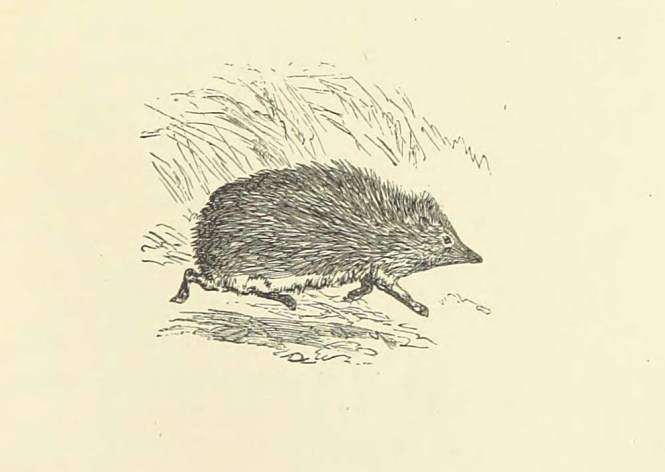
hedgehog from Eileen Aroon p 127

Image from ‘Eileen Aroon’ by Stables, Gordon, 1884 https://www.flickr.com/photos/britishlibrary Flickr Commons

Most common of these were hedgehogs, the deaths of 180 being recorded. Superstition against this harmless creature was strong – they were supposed to seek the milk from the udders of cows as they lay on the ground. The existence of the wild cat in the district is especially interesting; the animal being long ago extinct in England. Four specimens are referred to – two were caught in 1676, one in 1678, and the last in 1680. The badger or ‘gray’ seems to have been scarce or rarely seen. The sole specimen referred to was killed in 1676 at Shipley. Although polecats are several times noted, there were no martins, weasels or stoats. Otters were not uncommon, five having been killed, the last mentioned in 1731.

No payment was made for any of the birds whose destruction was prescribed by the Acts; birds such as hawks, kites, the buzzard, magpie, jay, rave or kingfisher. Likewise, there is no record of smaller vermin such as rats, mice or moles. The rewards paid, one shilling each for foxes and greys, and two pence each for hedgehogs, otters, wild cats and polecats, were in conformity with the scale prescribed by the Government.

The struggles of the illiterate churchwardens with spelling of the words ‘urchin’ and ‘hedgehog’ are amusing. Two examples are:

1670, April 23   Paid to Thomas Roe for Catshing two heg hoges ..… 4d.

1679-9   Aloud to the Churchwarden of Shipley for 6 uerchanes & for a wild cat ….. 2s. 02d.

Stackmole

Image from ‘Eileen Aroon’ by Stables, Gordon, 1884 https://www.flickr.com/photos/britishlibrary Flickr Commons

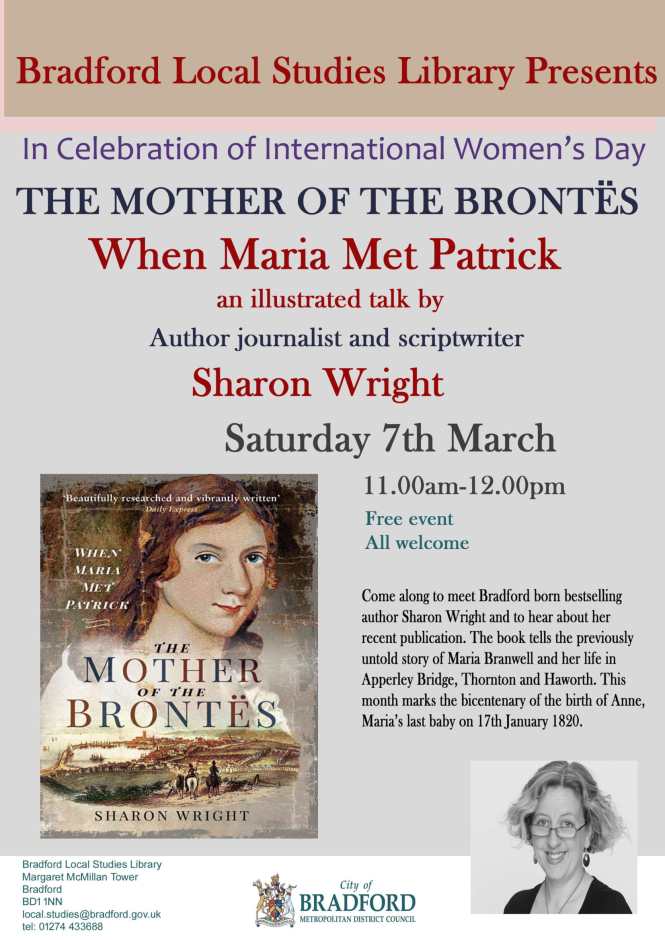
The Mother of the Brontës: when Maria met Patrick

In celebration of International Women’s Day.

Come along and meet Bradford born bestselling author Sharon Wright and hear about her recent publication.

The book tells the previously untold story of Maria Branwell and her life in Apperley Bridge, Thornton and Haworth.

This month marks the bicentenary of the birth of Anne, Maria’s last baby, born on 17 January 1820.

Free event
All welcome

Bradford Local Studies
Margaret McMillan Tower
Bradford
BD1 1NN

Mother of the Brontes poster pdf-1

The Mother of the Brontës

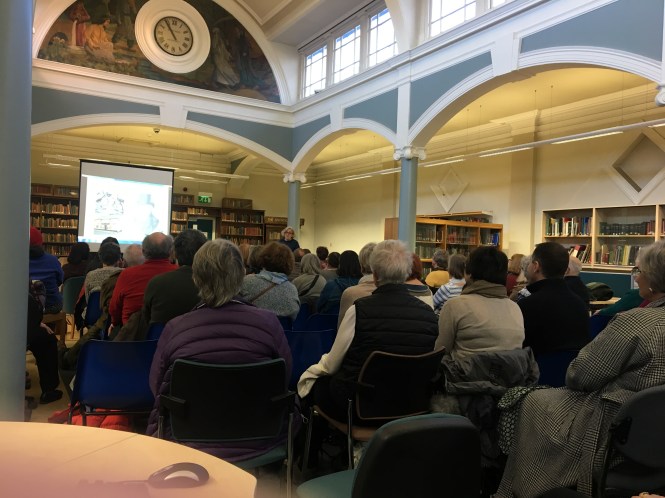
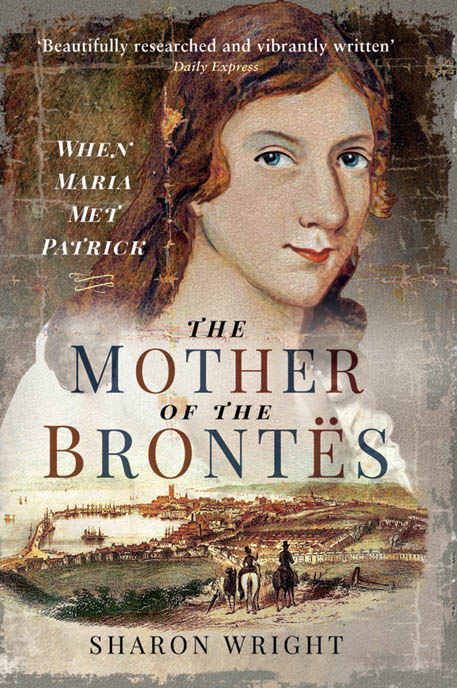
A large audience at Keighley Local Studies Library on Saturday 18th January was treated to a wonderful talk by author, journalist and screenwriter Sharon Wright about her recent publication: ‘The Mother of the Brontës.

Sharon Wight display


It was a joy to welcome Sharon back to Keighley where she started her journalistic career at the Keighley News.

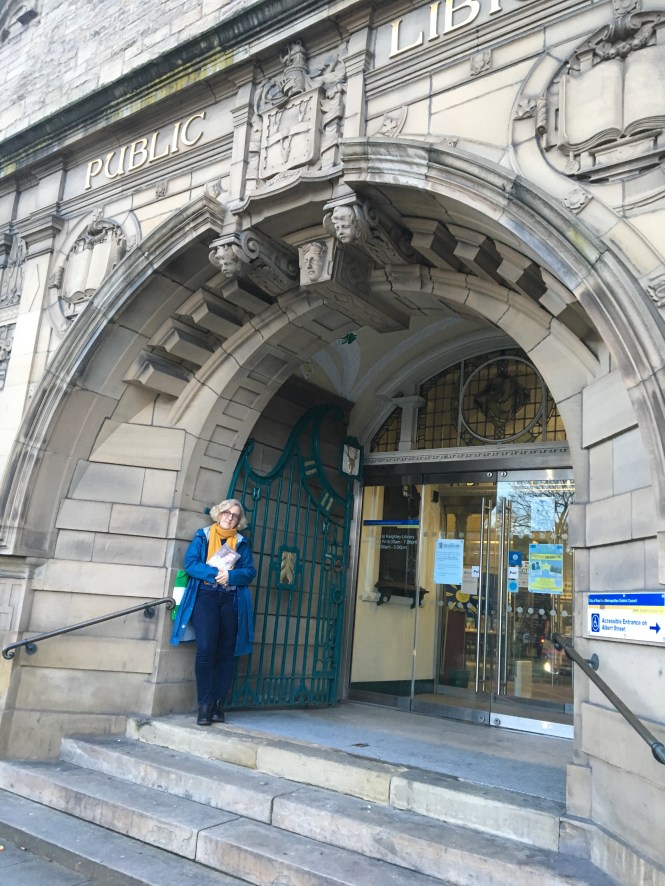
Sharon Wright library steps

In the talk Sharon shared her journey of discoveries about the mysterious Mrs Brontë through her thorough original research which took her to many locations from Cornwall to West Yorkshire. The historical detail and the compassion for the Cornish gentlewoman who fell in love with the poor Irish curate Patrick Brontë and gave birth to 6 children was enlightening. The joy of finding new discoveries in the story of Maria Branwell was an inspiration.

Sharon wright talk

‘The Mother of the Brontës: when Maria met Patrick’ is published by Pen and Sword, ISBN: 978-1526738486

Bronte-Book