Camps Libraries in WW1

International Literacy Day, 8th September 2015, should remind all readers of the importance of books and libraries of books, whether hard copy or digital, as a means of education but also of enjoyment, and escape and comfort in difficult times. This was certainly the case during WW1.

The Camps Library was THE organisation officially recognised by the War Office for the distribution of literature to British soldiers, sailors and prisoners of war. It was also the medium of distribution for the War Library which supplied the hospitals and hospital ships.

This unique archive is from Keighley Library’s own Brigg collection, BK 10/683/4/6 and also outlines the role played by the British public in helping to stock those war libraries.

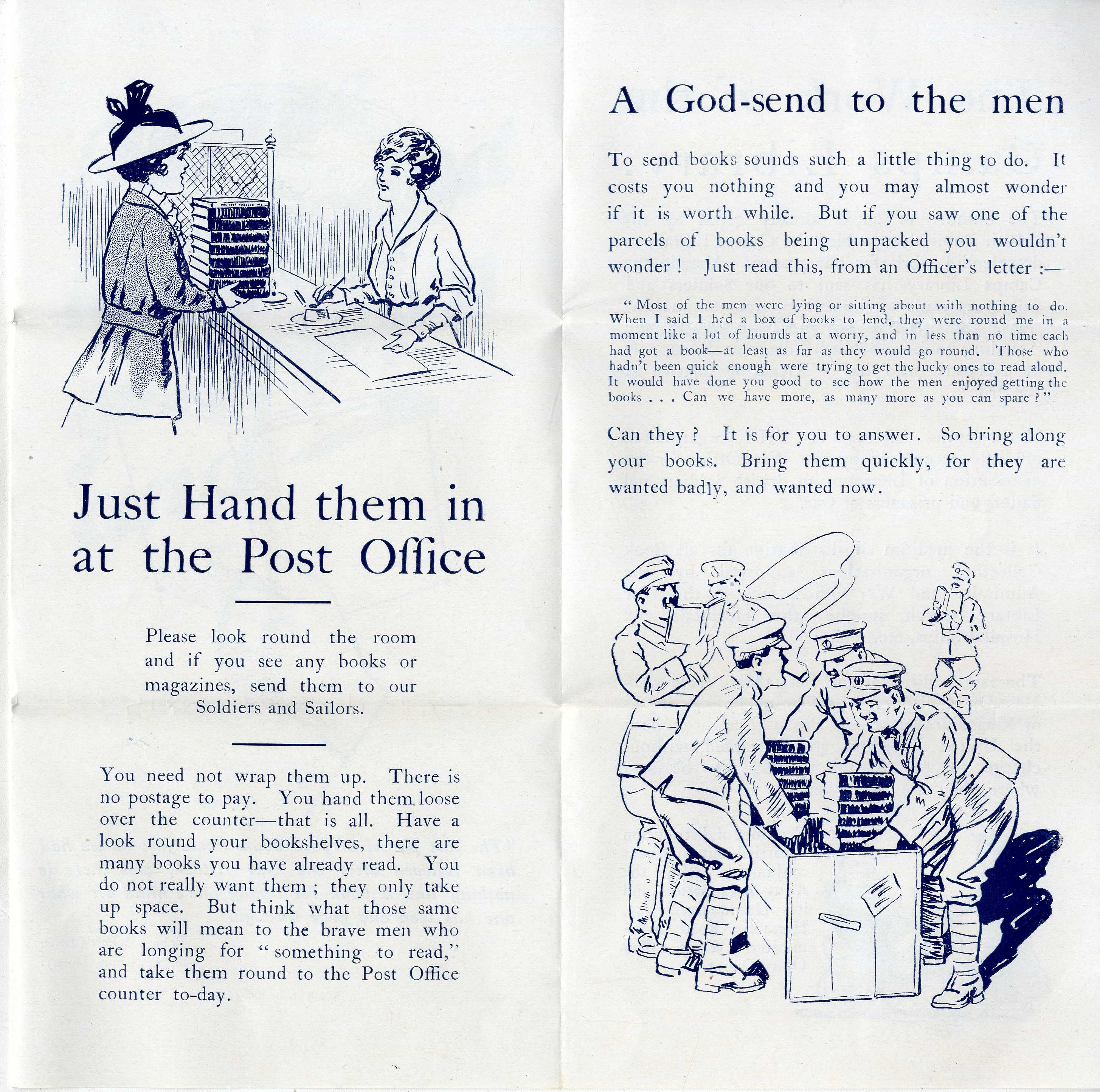
Camps Library Books in war002

Burley Poet is Celebrated

There is currently an exhibition in Burley library featuring Alfred J Brown, 1894-1969, walker, writer, passionate Yorkshireman and Burley resident as part of the Burley Festival.

Alfred John Brown was a Bradford businessman living in Burley who began writing prose and poetry while recovering from illness during the First World War. He was one of the most popular authors of guide books to walking in the Yorkshire Dales between the 1920’s and the 1950’s. His works include ‘Tramping in Yorkshire’, ‘Striding through Yorkshire’, ‘Poems and Songs’ and ‘Broad Acres’ as well as ‘Four Boon Fellows’ about a 100 mile weekend walk one Easter weekend from Barnard Castle to Ilkley.

His headstone is inscribed with words from one of his poems Dales in Paradise: “There must be Dales in Paradise, which you and I will find.”

Another of his poems ‘Emily Bronte’s Grave’ is reproduced here.’

Emily Bronte’s Grave

She is not buried here
Beneath this tomb;
Death could not pinion her
In such small room.

This is too strait a place
For her wild blood,
Only the dust of her
Rests by this Rood.

Look for the soul of her
On the high Moor,
Where the wind wails for her
And the clouds low’r.

There where the curlews cry
List for her voice!
Cage-free and glad – at last
Hear her rejoice!

The display will be on until mid-September.

Hermit Inn

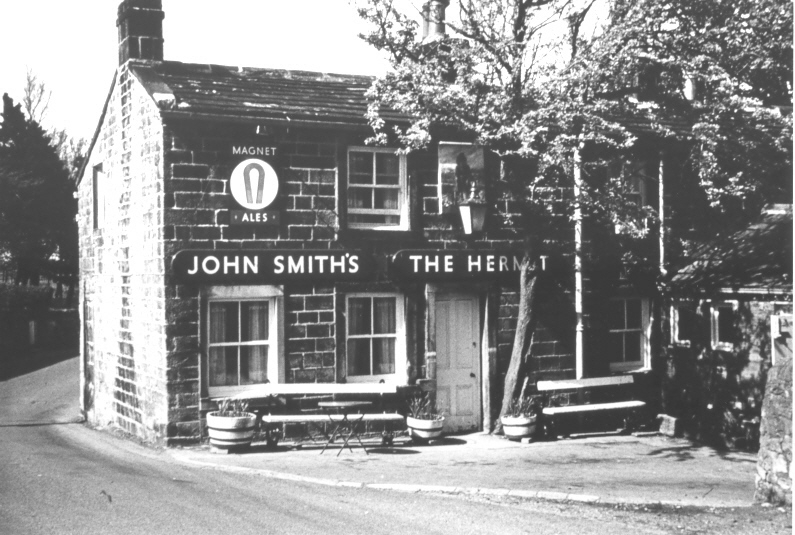
One of his favourite pubs was the Hermit at Burley Woodhead where on occasions he met J B Priestley.

Battle of Britain

“Never in the field of human conflict was so much owed by so many to so few”. Those were the words of Prime Minister, Winston Churchill, regarding RAF Fighter Command’s part in the Battle of Britain, during the Summer of 1940, 75 years ago.

Keighley Library has a chilling reminder of the Luftwaffe’s air campaigns in the form of two maps brought from Germany after WW2.The war maps consist of British 6 inch Ordnance Survey maps, on to which has been superimposed the German grid system. The maps show military geographical data, supposedly gathered by April 1942, and provide the location of places of significance. They were produced, for service use only, by the Department for War Maps for the German Army General Staff and, significantly, they are second editions.

In his book, Keighley in the Second World War, Ian Dewhirst points out their disturbing thoroughness as a whole and, rather alarmingly, the potential targets highlighted by the Department in red, purple and black which include all types of industry, transport routes and centres, bridges and sources of water supply. One would hope that hospitals and schools were only noted to be avoided in any attack.

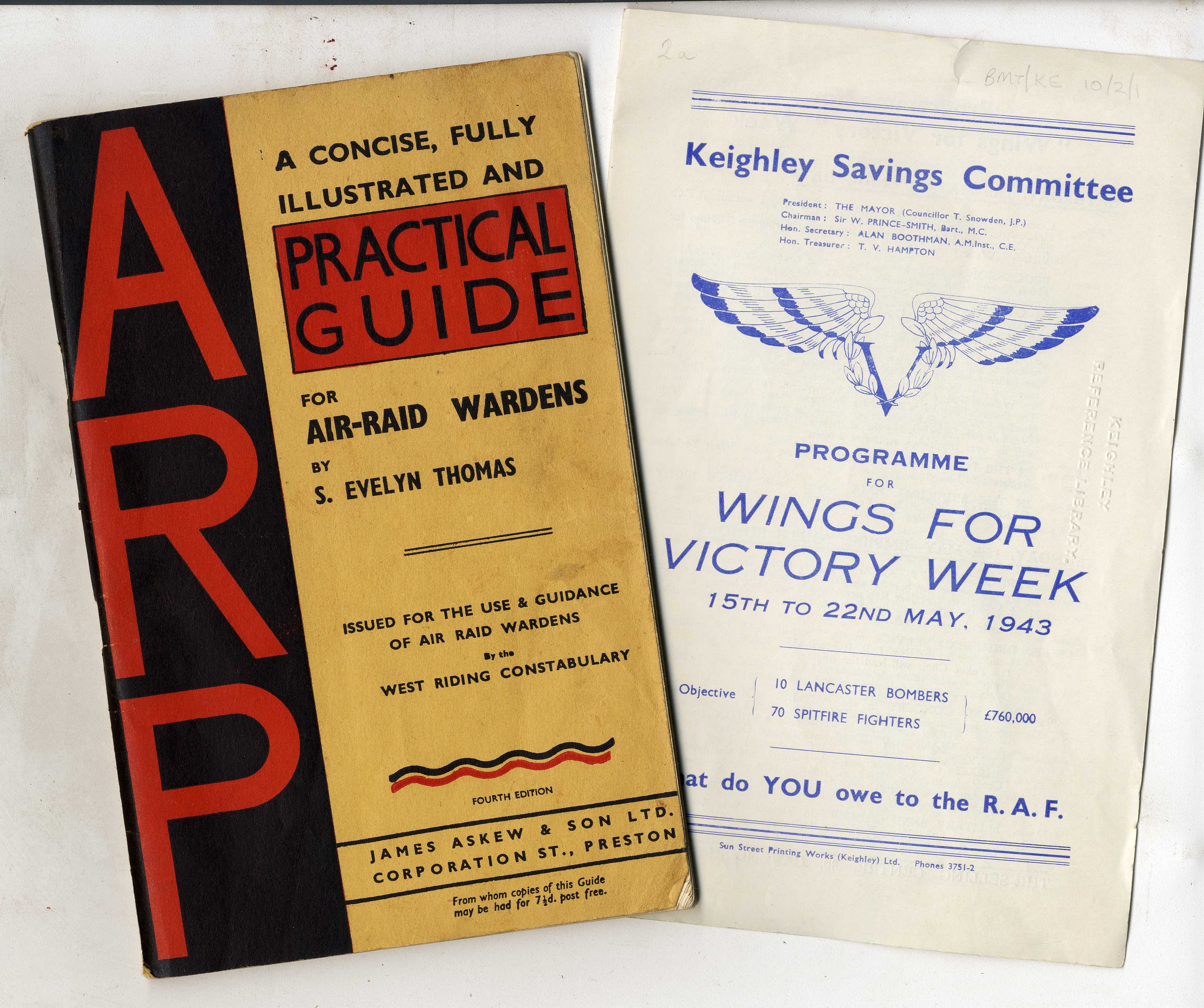
The related items shown are from the BMT/KE 10/WW2 collection.

Battle of Britain items

The photograph  below shows one of a batch of 200 Hurricanes bought in 1941 by public subscription – this one is Keighley’s, No Z2749.

Hurricane Aircraft

Hindenburg Over Keighley

Hindenburg
On Friday evening, May 22nd, 1936 the German Zeppelin Hindenburg en route from the USA to Frankfurt altered her course to fly across Yorkshire reaching Keighley about 8 o’ clock.


It was the biggest airship ever built and included a dance floor amongst its lavish passenger accommodation.
As it flew over High Street, a parcel fell from the Zeppelin and was picked up by two boy scouts, Alfred Butler and Jack Gerard. The parcel contained a bunch of carnations, a small silver and jet crucifix, some postage stamps, a picture of a flying boat and a request written upon Hindenburg notepaper to deposit the flowers and cross upon the grave of ‘my dear brother Franz Schulte, Prisoner of War in Keighley near Leeds.’ The letter was signed by ‘John B Schulte, the first flying priest.

The flying priest’s brother had been a prisoner of war at Morton Banks War Hospital and upon his death had been buried in Morton Cemetery. The Movietone News came and filmed the boys laying the flowers and cross upon Franz Schulte’s grave and 300 scouts were granted free seats at Keighley Picture house to view the newsreel.

You can see the short film here
You Tube – Hindenburg

There is also a relevant newspaper article with the full story here:
Hindenburg Article

Yorkshire Day

1st August is Yorkshire Day with a celebration of all things Yorkshire across the district.

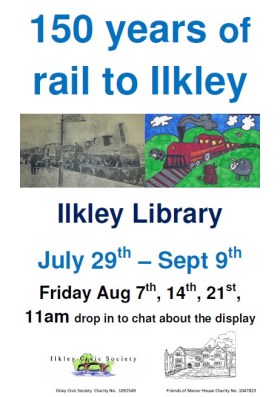
In Ilkley the Yorkshire Declaration will take place at Ilkley Railway Station following the arrival of the special train at 10.57 to celebrate 150 years of the first train coming to Ilkley.

The exhibition to celebrate the event is currently on in Ilkley Library until September 9th. A local history expert will be present in the library on Friday August 7th, 14th and 21st from 11am so people can drop in and chat about the display.

In Bradford city centre the celebrations will start at 12 noon with the City Hall bells striking the hour and playing the Yorkshire anthem ‘On Ilkla Moor Baht’at.’

The song is thought to have become popular locally during the latter part of the 19th century but became more widely known during World War One as it was used as a quick march song by the men of the Yorkshire Regiment and then picked up by others.  In 1917 ‘The Ilkley Gazette’ referred to an article printed in ‘The War Illustrated ‘ about the various refrains, chants and songs sung by soldiers at the front:

‘ the following quaintly humorous song and refrain is sung by men of the Yorkshire Regiments to the hymn tune ‘Cranford’(sic)…’

 The writer, who is evidently not a Yorkshireman, explains that the words of the refrain mean in English ‘On Ilkley Moor without a hat.’

The song is actually sung to the tune ‘Cranbrook, by Thomas Clark, not to be confused with ‘Cranford’, a novel by Mrs Gaskell in 1853!

Rail Poster