International Women’s Day – March 8th 2021: The Indomitable Molly Jones.

From time to time people who I remember from my earliest days working at Keighley Library will suddenly pop into my head, usually for no particular reason, sometimes stirred by memories from a newspaper article or picture that I have been looking at. Not long ago I was thinking about a man called Reg Jones. Reg was a good man and we would often pass the time of day on his frequent visits to Keighley Library. This got me thinking again about that old adage ‘behind every good man there’s a great woman’ and in Reg’s case no truer word was spoken.

When I was invited to write this blog (my first one ever incidentally) there was one lady who’s name immediately sprang to mind. On International Women’s Day 2021 with the NHS very much to the fore, this lady’s life is well worth celebrating. In my eyes she is an unsung hero of whom Keighley owes a huge debt. I never met Molly Jones, but growing up in Keighley in the 70s and 80s I heard her name mentioned constantly. Looking back at Molly’s life and her remarkable achievements, it is only now that I have come to realise what a true pioneer she was in every sense of the word. Keighley should be extremely proud to claim Molly Jones as one of its own, she paved the way for health services that exist in this town to this day.

Molly, christened Mary, was born on a farm in Cockerham and attended Lancaster Girls Grammar School. Her father was not keen on her choice of a career in nursing, so at first Molly took a clerical job with the school health service. However her desire was such that Molly decided to leave her well paid secretarial job behind and enrolled to train as a state registered nurse and midwife on her 21st birthday. By 1942 she was working as a nurse in London and recalled that her pay was £30 a year which increased at the rate of £5 annually until it reached £75. She then transferred to St. Pancras where her work involved supporting new mothers by visiting them when the midwives ended their duties fourteen days after giving birth. As a trainee Molly had to sit with three women who died as a result of back street abortions and this horrendous experience would drive her on to campaign vigorously for abortions to be made legal.

Molly’s next move was to Keighley where she was a health visitor in 1948 on the day the NHS was born describing it as ‘a normal working day’. She was very impressed by the new council estates that were springing up all over the town. Health visitors in their navy uniforms were instantly recognisable and were often called in by mothers who saw them on their way to visit new borns. In that same year Molly married Reg Jones and settled in to her home at Utley going onto have four children of her own. It was soon after her marriage to Reg that Molly retired from paid work, however her involvement in health matters was as committed as ever.

Molly, who had taken mothers under her care in London to a family planning clinic, was by now well positioned to give advice on the subject in Keighley. She told them about a Marie Stopes Clinic in Leeds despite being warned by her superiors not to do so. A pioneer in the field of contraception, Molly was also keen to help women who did not want more children. In 1952 she worked as a volunteer at an evening clinic in Shipley set up by the Family Planning Association. It proved so popular that women started to arrive way before it opened just to make sure that they were seen. Molly would laugh as she recalled ‘they used to make a night out of it with a fish and chip supper on the way home!’

As a health visitor half a century ago Molly also set up a baby and anti-natal clinic at Westgate. She recalled giving out National Dried Milk alongside brand named baby milk, orange juice, virol and cod liver oil. She firmly believed that parenting was the most important thing for any child and that the government should not be encouraging mothers to go out to work.

Molly set about learning relaxation techniques so that women might not need pain killers when giving birth and spearheaded relaxation classes. She was keen to highlight the over-prescribing of tranquilizers and set up several support groups.
Fast-forwarding to the year 2000, Molly called on health chiefs in Airedale National Health trust to provide Macmillan nurses in order to support patients from the moment they are diagnosed with cancer. She believed that it offered a more focused and specialised service compared to district nurses.

I know that a lot of Molly’s achievements will have never been recorded so I will not be aware of them but in later years she became involved in the care of older people and founded SHAPE (a pioneering Senior Health Awareness Project) on Temple Street. She was a staunch supporter of Keighley’s Voluntary Sector through membership of several management and working groups, including Keighley Council for Voluntary Services (KCVS). Heavily involved in many other groups, such as Airedale Community Health Council (KCVS), the Women’s Health Group and a support group for Parkinson’s disease.

Her accolades include winning a Yorkshire Women of Achievement Award and Keighley Community Personality of the Year in 1989.

Molly eventually benefited from some of the services she had supported during her lifetime, such as the Parkinson’s group. She was still attending a keep fit class at the Salvation Army well into her 80s.

On Molly’s death in 2015 at the age of 98, Val Mills, the long-time leader of Keighley Voluntary Services, paid tribute in the ‘Keighley News’ to Molly’s long and active time as a dynamic and determined community health campaigner and volunteer. She said “Molly was an ardent and very vocal campaigner on public health issues, particularly for women. She was often well ahead of the game in new public health issues and growing concerns. She gave many hundreds of hours of volunteer time during 40 plus years.”

Molly’s daughter, Chris Baillie, said “some of my earliest memories are connected with mum’s tireless work for the health of the people of Keighley. She was a campaigner who always fought to right any injustices she saw. My mother’s memory let her down in the last few years, but the spirit carried on.”
Molly’s son, Mike jones was a canoeist who at 19 descended the Grand Canyon and led an expedition down the Blue Nile, later writing a book about his exploits. He drowned in 1978 in Pakistan trying to save his best friend. A film was made about his life.

Molly’s grandson, Tim Baillie, won a gold medal for pair’s canoe slalom at the 2012 Olympic Games.

Molly’s life was well lived and thinking back to Reg in the library back in the day, I think he was a very lucky man indeed to have Molly in his life. I’ll leave the last word to Molly Jones (not many people can say this) summing up her lifetime in health care she said simply “I’ve enjoyed every minute of my work.”

Janet Mawson.
Keighley Local Studies Library.

‘Gentleman Jack’ and a first same-sex wedding ceremony

In this LGBTQ+ History Month, we celebrate the life and love of one of Yorkshire’s greats, Anne Lister of Shibden Hall and the first person in the Yorkshire area to have a same-sex wedding ceremony in 1834.

Anne Lister (1791-1840) was part of the famous mill owning Lister family of Bradford and as such was related to Samuel Cunliffe Lister of Manningham Mills.  Anne, however, lived at Shibden Hall, Halifax where that branch of the Lister family had lived since 1615.

Anne was not born at Shibden but moved there as a child to live with her aunt and uncle. She became co-owner in 1826 and, following the death of her brother, inherited the estate in 1836. She became a keen businesswoman, undaunted by the sometimes openly hostile male chauvinism in her local business and political world, and was an adventurous traveller abroad.  She was also the only woman co-founder of the Halifax Literary and Philosophical Society.

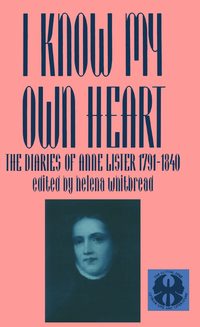
Anne Lister assiduously wrote diaries and journals, 24 in number. They listed her daily social, political and business life and travelling exploits but at least one sixth of them were handwritten in code. This coded text later revealed the extent of Anne’s romantic affairs and sexual encounters with women, when they were finally decoded from a mixture of Greek letters, numbers and symbols. Apparently, it was not until the women’s liberation movement of the 1970s and 1980s that it was felt that uncensored editions of her sometimes explicit diaries could be published (Gentleman Jack:  a biography of Anne Lister by Angela Steidele, p.Xi)

Diary extracts and samples of code can be viewed on the excellent web pages of the West Yorkshire Archive Service, that hosts a full exhibition about this remarkable woman, please follow this link:

http://wyorksarchivestreasures.weebly.com/the-diaries-of-anne-lister.html

In 1832, Anne Lister struck up more than her earlier acquaintance with Anne Walker (1803-1854) who, through inheritance with her sisters, had become joint owner of the neighbouring substantial Crow Nest Estate in Halifax. The two Annes became lovers and exchanged rings on 27 February 1834. However, it was on Easter Sunday, 30th March 1834 that they sealed their union when they took communion together in Holy Trinity Church, Goodramgate, York. This building now displays a commemorative rainbow plaque.

https://www.yorkpress.co.uk/news/16377725.rainbow-plaque-unveiled-holy-trinity-church-goodramgate-york/

Anne Walker and Anne Lister lived together as a married couple at Shibden Hall and also travelled a great deal. It was on one of their journeys in Georgia in 1840 that Anne Lister died. She was only 49 years old. Sadly, Anne Walker, who had always suffered with mental health problems had a severe relapse and was removed to York from Shibden Hall in 1843 having been declared of ‘unsound mind’.  Although she returned to Shibden, she later moved back to her family’s estate Cliffe Hall in Lightcliffe,  where she had been born. She died there in 1854.

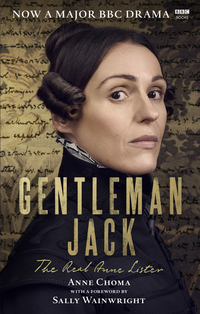
There is a wealth of material online about Anne Lister, her life and diaries,  Anne Walker, Shibden Hall and about the making of the most recent television series Gentleman Jack, filmed in Halifax and using Bradford popular film locations, and now into the filming of a second series. Bradford Council also has a number of events to celebrate LGBTQ+ History Month.  Please follow the links below.

Gina Birdsall, Keighley Local Studies

Events in Bradford this month:

https://www.bradford.gov.uk/arts-and-culture/whats-on-in-bradford-district/lgbtqplus-history-month-2021/

To borrow (hard copy or ebook) the acclaimed book that the TV series inspired, Gentleman Jack A Biography of Anne Lister: Regency Landowner, Seducer & Secret Diarist by Angela Steidele, translated by Katy Derbyshire (Serpent’s Tail, 2019)

https://capitadiscovery.co.uk/bradford/

The diaries:

http://wyorksarchivestreasures.weebly.com/the-diaries-of-anne-lister.html

https://www.bbc.co.uk/programmes/articles/3QT2z16RXhfxSDn1mrbRNVp/the-real-diaries-of-anne-lister

Shibden Hall:

https://museums.calderdale.gov.uk/visit/shibden-hall

Filming the series in Yorkshire:

https://www.thetelegraphandargus.co.uk/news/18938555.gentleman-jack-filming-bingley/

The Bradford Antiquary 2020

Despite having to abandon their 2020 programme of meetings and visits due to the Coronavirus, the Bradford Historical and Antiquarian Society have been able to produce their annual journal, The Bradford Antiquary. Copies are now available in several of our libraries. 

The contents of this 81st issue are:

From Donkey-Boy to Oxford Don: the childhood of Dr Joseph Wright of Thackley
by Christine Alvin.

The Birds and the Beasts. Text of a 1830s tract on the ‘Factory Question’.

We Can Take It Again’ by Norman Alvin. On a wartime air raid

‘No food or fire – decent people’: Bradford during the first national coal strike of 1912
by Derek Barker and Jane Wheeler.

Bradford in Fiction by Astrid Hansen. Bradford through the eyes of Willie Riley, J B Priestley, John Brain, A A Dhand and others.

Some Empsall Treasures A selection of topics from the library’s collection of 19th century pamphlets ranging from Homeopathy and the Henpecked Husbands’ Club to the Disorders of Horned Cattle and Spirit Writings! A window into a Bradford long gone.

W E Forster and the 1870 Education Act by Dave Welbourne

A Shelter for the Cabmen of Bradford by Laura Bird of The National Tramway Museum

The Ancestry of the Phoenix Dynamo Company, Thornbury by Gina Bridgeland

Rural Tanners in late 16th and 17th century Bradford by G D Newton

Book Reviews

Society News

Going back to 1882, The Bradford Antiquary provides an unrivalled history of Bradford, Keighley and the West Riding. The Editor, David Pendleton, is always pleased to receive ideas for, and submissions of, possible articles (davidpendleton1@gmail.com).

Further Information about the Society can be found on the society’s website: www.bradfordhistorical.org.uk

Christmas Capers of Yorkshire Past

Department Store Christmas

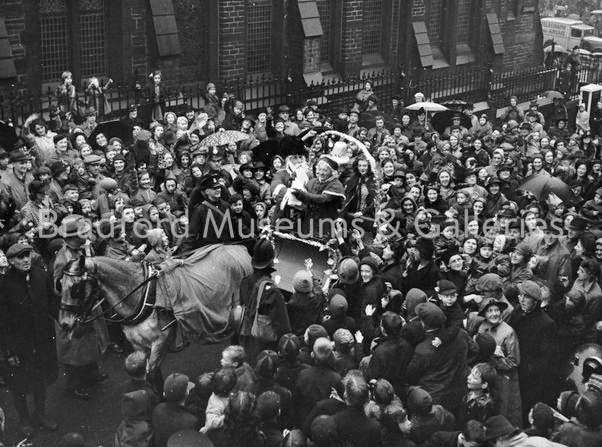
Arrival of Father Christmas, Busbys’, Manningham Lane, Bradford
C.H. Wood, (Bradford Museums’ Photos)


The first purpose built department store in England was Brixton’s Bon Marché opened in 1877.
https://www.brixtonbuzz.com/2018/03/brixton-history-bon-marche-department-store-in-the-edwardian-sun-and-the-straw-boater-riot/
It was not until the end of the 19th Century that electric lighting was common in shops and with that came some wonderful Christmas lighting. Busbys’ department store was founded in 1908 (merging with Debenhams in 1958) and over the succeeding 70 years became one of the most popular shops in Yorkshire. At Christmas, Busbys’ Santa’s grotto was a must visit for many families in the Bradford district. The following quotes are taken from Busbys’ A Shop Full of Memories by Michael Callahan and Colin Neville (Bradford Museums, Galleries & Heritage, 2008).

“I was chosen to be ‘Little Red Riding Hood’, and I felt very proud to be doing this. The day the Grotto opened we started out for Busbys’ on a big flat lorry from Dockfield, in Shipley. There was Mother and Father Christmas and their fairy, and myself in the lorry, and we were joined by some of the Hammond Sauce Band and they played Christmas songs and carols along the route. We had a big bags of sweets, and all along Manningham Lane there were children and mothers just lining the road and we threw sweets to them all along the way; it was such a big event. In the Grotto I had my own little sweet shop and talked to the children while they were waiting to see Father Christmas. The Grotto was so big; it was never-ending! There was a lot to see – and it was magical. Dorothy West”
p.70

“As the electrician at Busbys’ from 1972-75 I have great memories of the family atmosphere there. The highlight and privilege was wiring all the working models and fairy lights for the Grotto. Seeing the children’s faces from behind the scenes was magical. Keith Brown” p. 71

Father Christmas’s Grotto, Busbys’ Department Store, Bradford
C.H. Wood, (Bradford Museums’ Photos)

“My memory is being taken to see Santa Claus when very small. My memory is a huge display of lights and tinsel and magic. We had to walk down paths and over bridges, pull strings, and glitter snowed down on us. It seemed as though we walked for ages before we saw Santa… that walk and the magic has never been equalled in any display since. A.Wallace” p.59

‘I must have been the only child who didn’t enjoy the visit to Santa’s Grotto. I was aged about 3, and when we finally reached Santa he said, “what do you want little girl” I replied, “I want to get out of here!” Anonymous, p. 61

Mill Christmas

Messrs. Heatons’, Keighley, decorated for peace celebrations, 1918 (Keighley Local Studies)

Many textile mills decorated workplaces, and even some machinery, for royal events but also for Christmastime:

‘We would buy a few packets of crimped paper, which we cut and made into streamers to decorate the room at the mill. We would have a walk round at dinner time to see the other rooms and decide which we liked best. As Christmas drew near there was always someone singing carols during meal-times. Someone would start “Hark the herald angels sing” or “While shepherds watched”, and soon it was taken up by another and another, till soon almost everyone had joined in. It was in the mill that I was introduced to Handel’s Messiah. Most of the mill workers, if they could sing, would be taking part in the Messiah at their own places of worship. They put in a bit of practice while working.’ Picking up Threads Reminiscences of a Bradford Mill Girl by Maggie Newberry (Bradford Libraries, 1993), p. 52

At Christmas we’d take some sherry and mince pies, and happen a Christmas cake, and have a break for about an hour in the afternoon. The weavers, you could hear them going mad, but we weren’t with them, we just sat round our mending tables and had us own bit of fun. We never went in any other part of the mill at all.’ Woman.  Born 1915 From Textile Voices A Century of Mill Life by Tim Smith and Olive Howarth, BHRU (Bradford Arts, Heritage & Leisure, 2006), p. 115

Salt’s Mill (Saltaire) Limited, final Christmas party for the burling and mending department, (n.d.) BHRU, (Bradford Museums’ Photos)

Artists’ and Writers’ Christmas

David Hockney: One Tuesday afternoon in December 1951 three boys from Bradford Grammar School boarded the trolley bus. The three, namely Hockney (David), Taylor, M.S. (later Oxford University scholarship), and Dixon, M. (minor), had all been subjected to a ‘half Tuesday’ – detention – for a variety of misdemeanours. It was decided a visit to Busbys’ to see Father Christmas and the grotto was in order. We joined a long queue. After what seemed like hours we finally arrived at the head of the queue. Alas! We were approached by a very imposing commissionaire in uniform complete with bristling moustache who enquired ‘where were our parents?’ On being informed they were at home he said ‘sorry, but we could not see Father Christmas’. He politely showed us the Emergency Exit and kicked us out! On the wall immediately opposite was the famous Busbys’ sign with the marching guardsmen and the slogan ‘The Store with the Friendly Welcome’. The now world famous David Hockney was heard to mumble ‘some friendly welcome!’ “ Michael Dixon  in Busbys’  A Shop Full of Memories by Michael Callahan and Colin Neville (Bradford Museums, Galleries & Heritage, 2008) p.71. See also https://capitadiscovery.co.uk/bradford/items?query=the++Hockneys

Charles Dickens: On 28th December 1854, ‘Mr Christmas’ himself, Charles Dickens (author of such Christmassy works as A Christmas Carol, Pickwick Papers and The Chimes) read from his works to a packed audience at the new St George’s Hall in Bradford. Special trains were put on for journeys to Halifax and Huddersfield, such was the popularity of the event. However, for some female members of the audience, the evening might not have turned out quite as Dickens had initially promised, that is like “a small social party assembled to hear a tale told round the Christmas fire…” because, as a skilled actor, his dramatic readings of the violent murder of Nancy in Oliver Twist, for example, had been known to cause women in the audience to swoon into a dead faint.

https://www.thetelegraphandargus.co.uk/news/10898020.charles-dickens-entertained-st-georges-hall-audience-with-his-festive-tale/ https://www.bl.uk/collection-items/letter-about-a-performance-of-the-chimes-from-charles-dickens-to-his-wife-catherine-28-december-1854

Charles Dickens’s Mr Pickwick

J.B. Priestley: Much later in time, a great fan of Charles Dickens, a young Bradford born J.B. Priestley, who would frequently forego dinner to buy books, was said to have “spent one Yuletide with a chum at an old inn near Bradford where he smoked a church-warden pipe and tried a brew of punch”, in order “to sample Christmas very much as Dickens’s Mr Pickwick would have done.” (Rebel Tyke Bradford and J.B. Priestley by Peter Holdsworth (Bradford Libraries, 1994), p.45

https://www.bradford.ac.uk/library/special-collections/collections/collections/j-b-priestley-archive/

Nativity Christmas

Nativity play at Heaton Middle School, Bradford, BHRU, (Bradford Museums’ Photographs)

The school nativity has long provided a Christmas gift that keeps on giving to parents and teachers alike. Let’s hope that this year will be the only year that for many has to be watched only on film at home or not at all. If you have never seen or been part of one, Gervase Phinn gives some lovely and humorous accounts from his Yorkshire School Inspector days, such as at St Helen’s school where the teacher, Mrs Smith had asked the children to write parts of the Christmas story in their own words, one child read,

’The three kings were very rich and they wore beautiful clothes and had these crowns and things. They looked at the stars every night. One night one of the kings said, “Hey up, what’s that up there, then?” “What?” said the other kings.  “That up there in the sky? I’ve not seen a star like that one.” The star sparkled and glittered in the blue sky. “You know what?” said another king. “It means there’s a new baby king been born. Shall we go and see Him?” “All  right.”’

The narrator continued: ‘They shouted to their wives: “Wives! Wives! Go and get some presents for the baby king. We’re off to Beth’lem to see Him.” “OK,” said the wives.’ Head Over Heels in the Dales (Michael Joseph, 2002), p. 95  These books are available for loan, follow: https://www.bradford.gov.uk/libraries

Charity in Depression Christmas, 1932

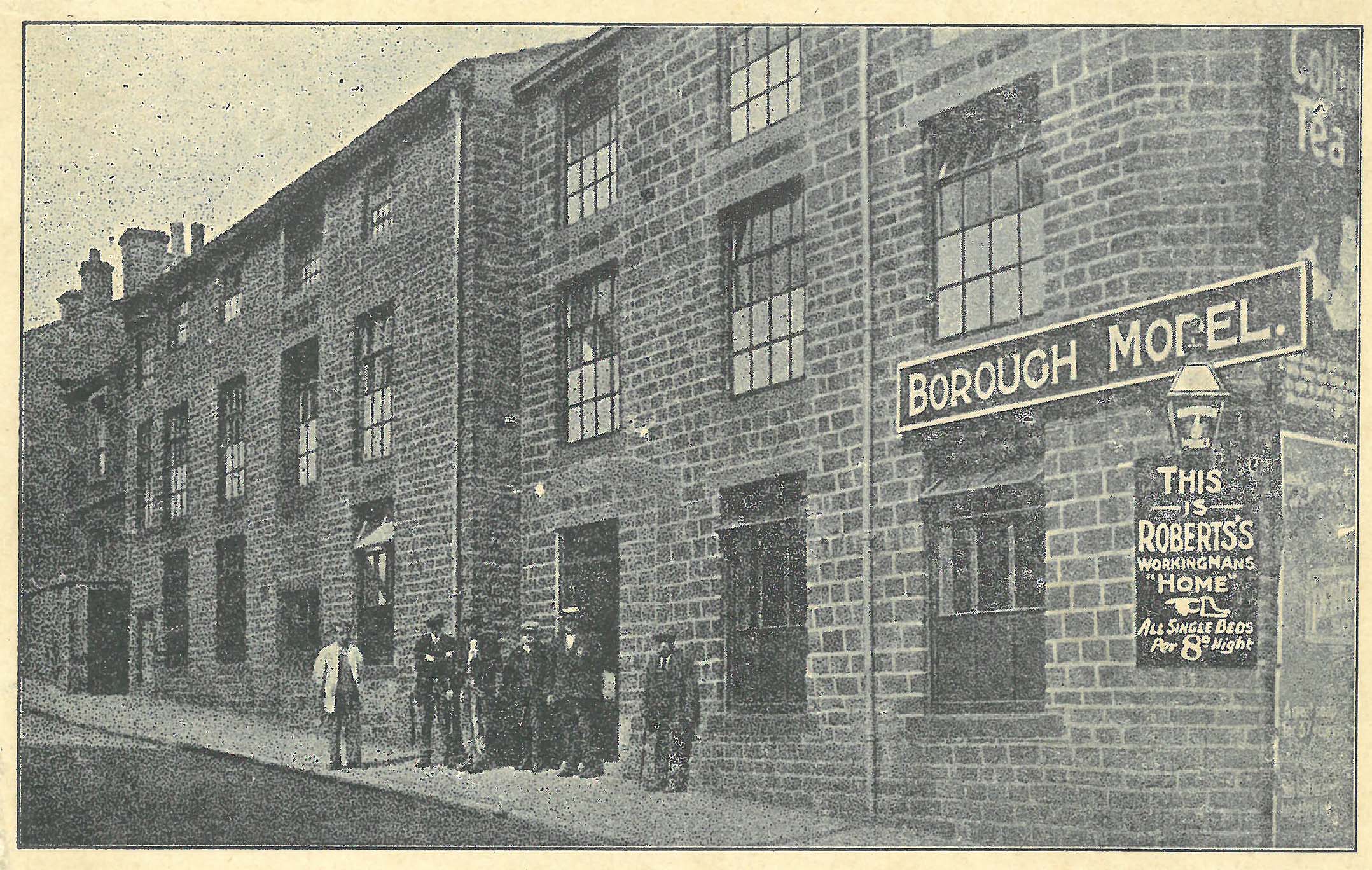
Roberts’s Model Lodging-house, Leeds St, Keighley, c.1924, (BK36, Keighley Local Studies)

In 1861, Francis Middlebrook wrote, “Mother went to Keighley workhouse to see all the inmates get rum and tea”, the latter being donated by William Busfield Ferrand of St Ives. Keighley News 24 Dec 1982

In Keighley at the two lodging houses, Mr Edward Roberts, landlord, provided a ham and egg breakfast and an anonymous donor provided parcels of tea and sugar. Mr Roberts organised an annual fund and as a consequence each resident was also given free lodgings, tobacco and cigarettes on Christmas day. Each child in various Keighley institutions was also given a new shilling piece by a Mr Asa Smith. Keighley News 10 December 1982

Unruly Christmas

The Keighley Police Force in 1865, (Ian Dewhirst MBE archive)

Hearth and home in Victoria’s reign was not for everyone. With no regular police force yet, law and order in Bradford and Keighley was kept by Watchmen. In Keighley, there were 6 patrolling the streets.  One of these kept a diary between the years 1848-1853, now held in Keighley Local Studies Library archive (BK 309) and was called, James Leach. He had a very busy Christmas in 1848. In his diary he reported that at one o’clock on Christmas Day morning Mrs Wilkins’ Star Inn had “company in her house from 15 to 20 persons”. They were still drinking there at a quarter to three on Boxing Day.   On 27th December one Zyckriah Ashton was found in Cony Lane drunk and very ill. On the 28th December at one o’clock there was fighting at the Black Horse amongst a group of men and at two o’clock Mr Lapish of New Town was found drunk and disorderly. On the 31st , Samuel Smith, ‘comonley caled Mucky Sam’, ‘threw Patrick Waterhouse over the batlment at Damside a depth of 5 yards & cut & wounded im daingerousley’. The New Year started in a similar way…

War Time Christmas, 1939

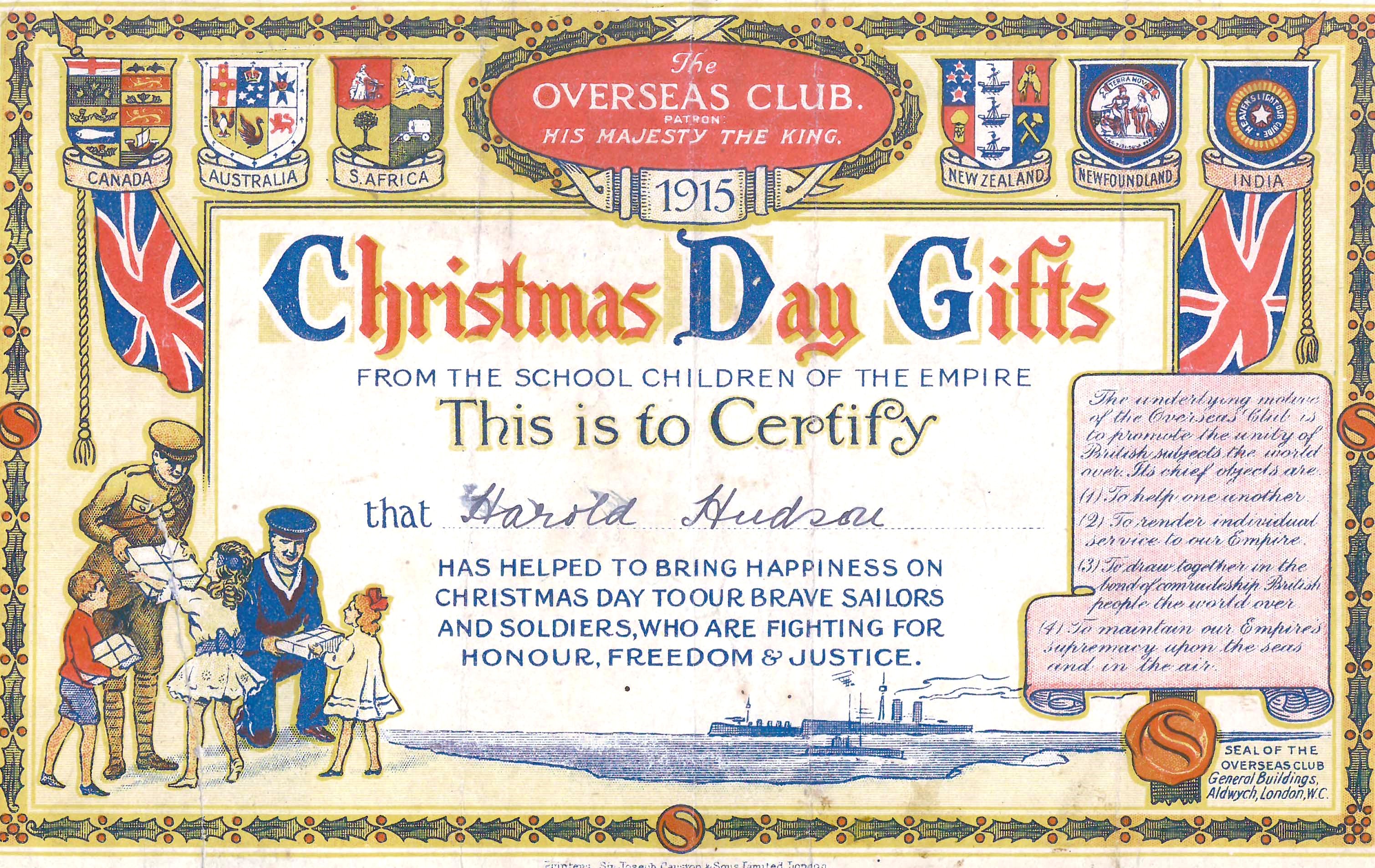
Christmas war certificate for donations made. (BK10/683, Keighley Local Studies)

During WW2, Keighley people on the Home Front, as in other districts, did their best to provide “comforts” for those serving in the forces. They provided funds for recreational and rest huts. During November, four large bales of knitted woollen comforts were despatched to France, also to the Navy and Air Force. “Cigarettes, sweets, candles etc.,” were also sent. Firms such as Ward, Haggas & Smith; Clapham Bros., and Dean, Smith and Grace also had schemes to provide comforts as well as Christmas parcels to their work people serving in the Forces. Keighley News, 9 December 1939
For those Evacuees remaining in Keighley and the Worth Valley over the holidays, there was a large Christmas party on 4th January with a film show, community singing and a play. On other days, there were to be games in schools, walks and visits to museums and places of interest. Keighley News 23 December 1939.

Hospital Christmas

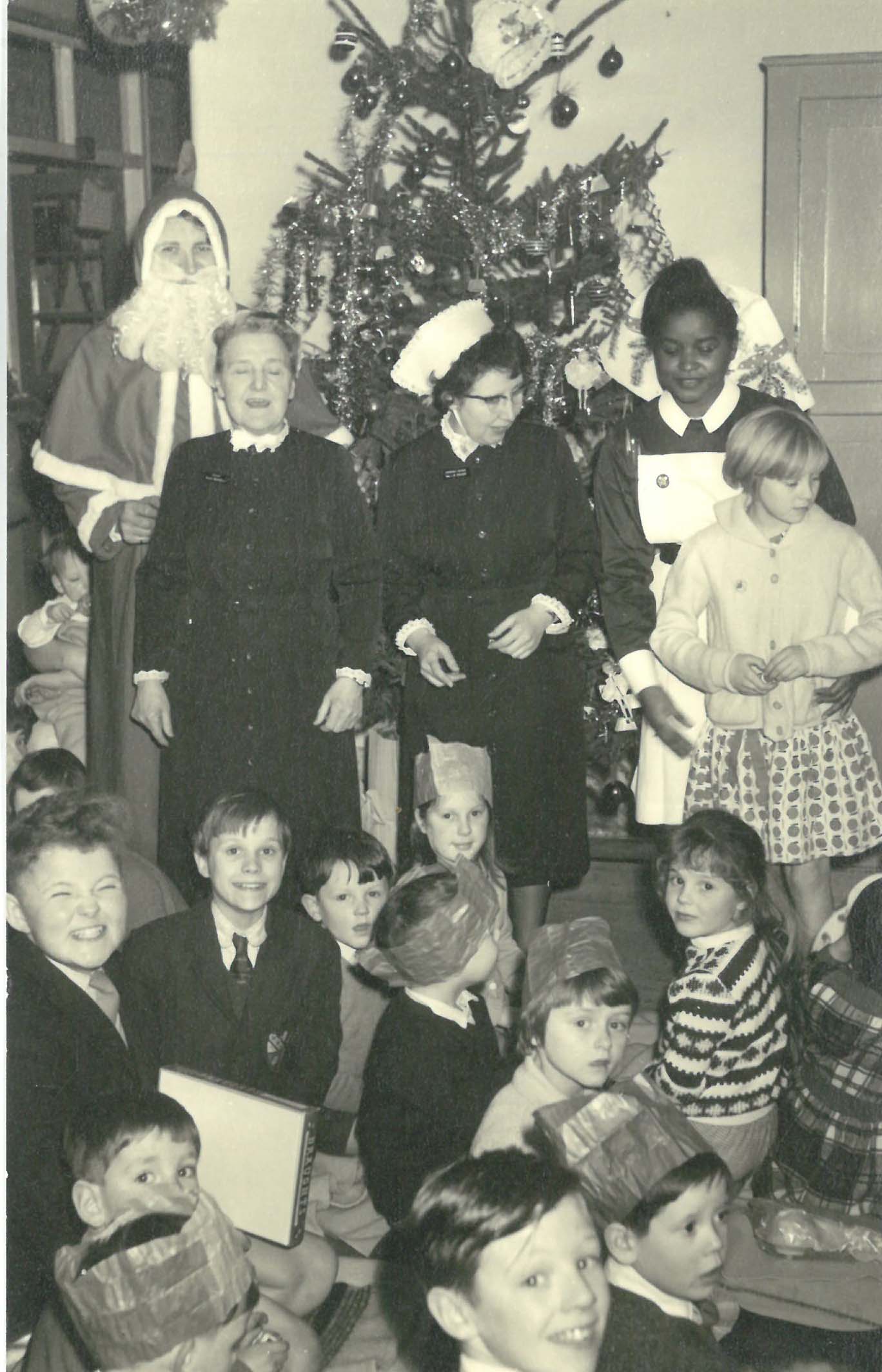
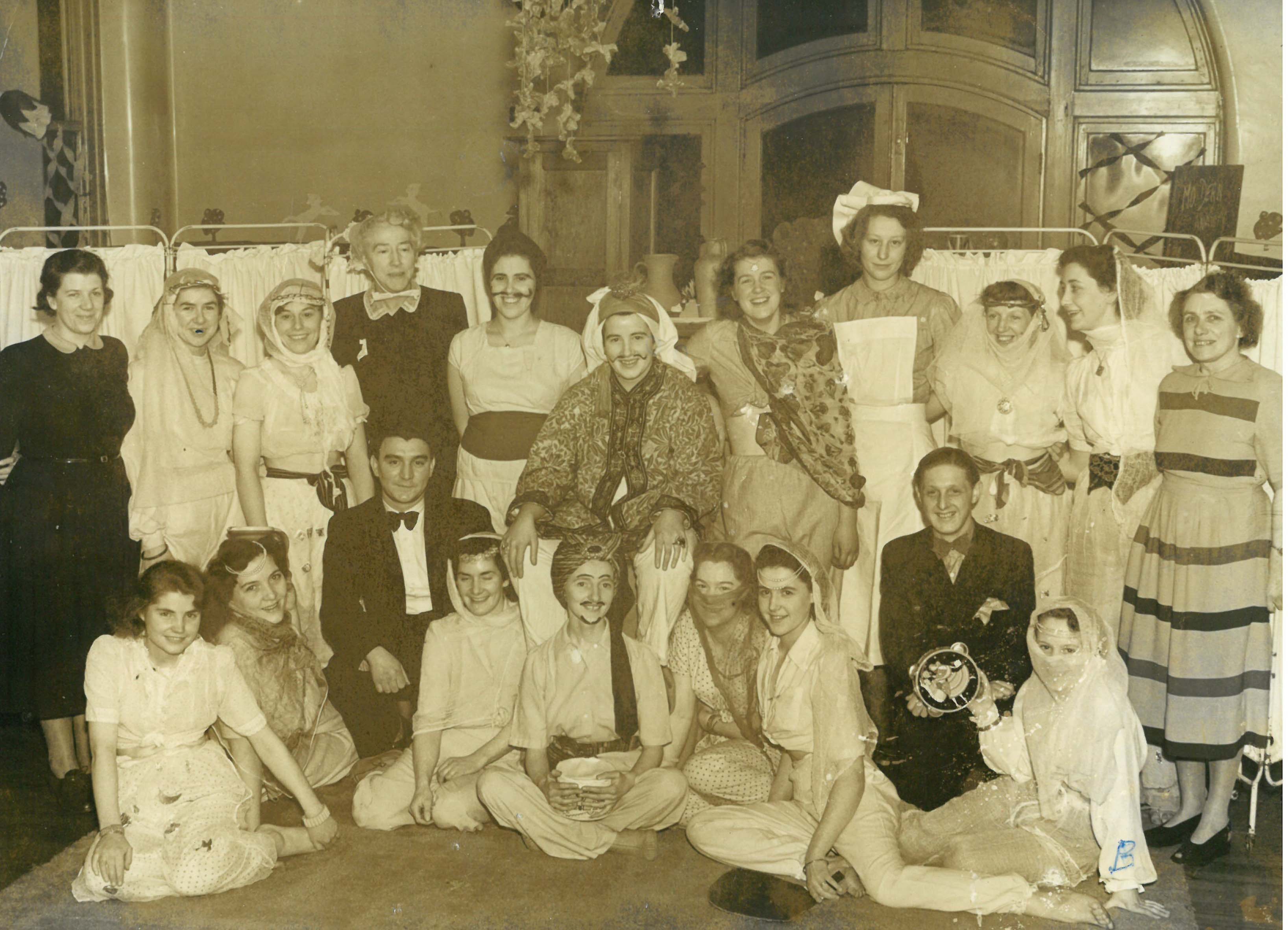
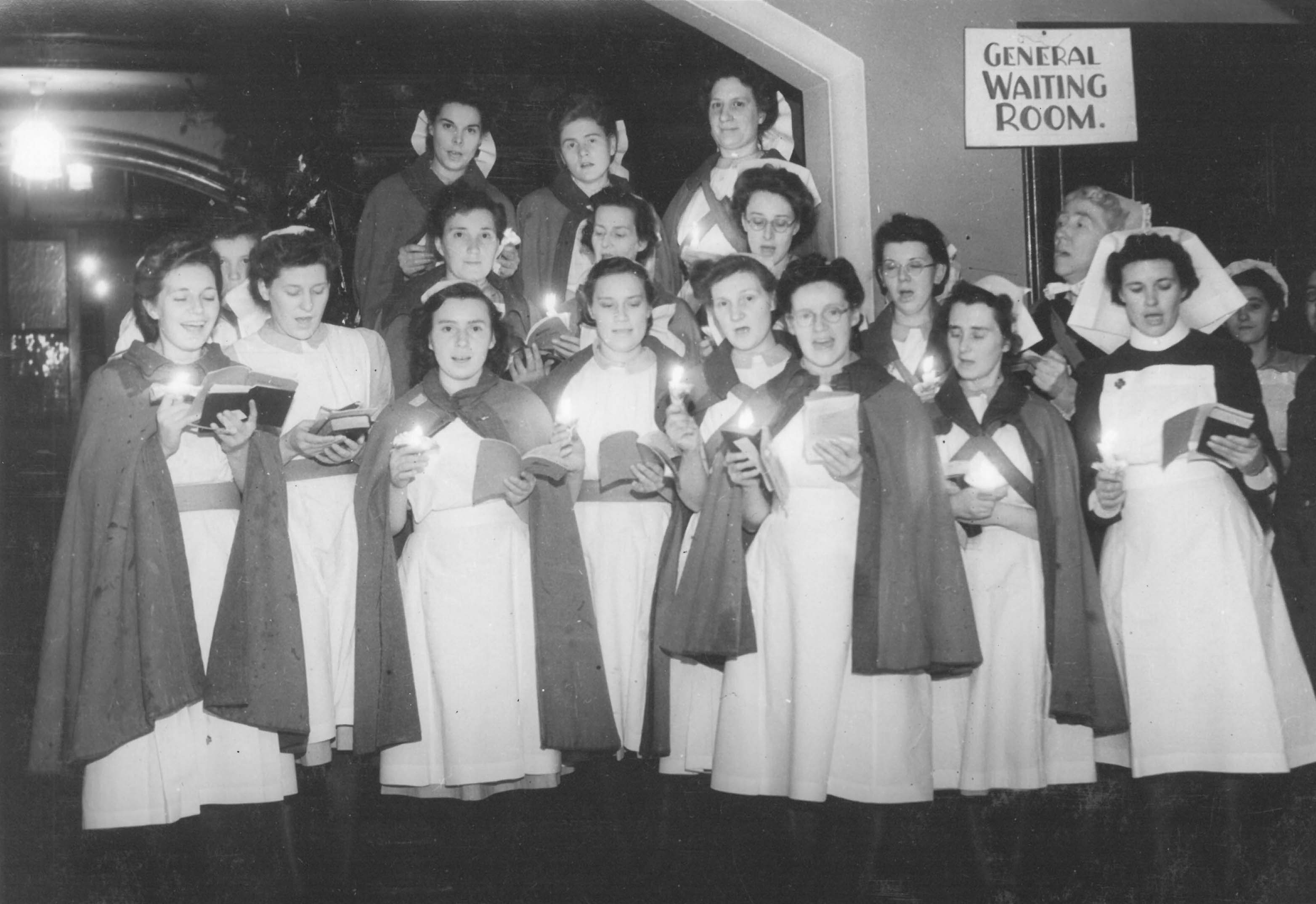
Keighley and District Victoria Hospital held regular children’s Christmas parties even during the war years. Ian Dewhirst noted that in 1943, the visiting Santa Claus was none other than Dr Joseph Chalmers, hospital surgeon. Nursing staff also performed a pantomime, “Boy Blue” and patients received presents from the Matron’s Christmas Fund and the Workpeople’s Collection Committee. Keighley News 21 December 2001.

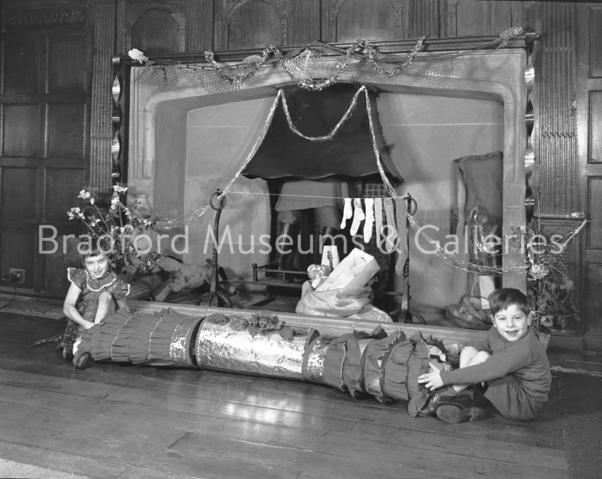
World’s first ‘socially distancing’ cracker

Hawksworth Hall, 1961, C.H. Wood (Bradford Museums’ Photographs)

COVID Christmas 2020

Another shadow, another queue, hopefully we shall soon be on the bright side…….

Father Christmas at a works’ children’s party, 1955 C.H. Wood (Bradford Museums’ Photographs)

To join the library, borrow books and examine local 19thC newspapers using our online services from home, as well as gain free access to Ancestry and Findmypast, follow the link below:

https://www.bradford.gov.uk/libraries

See also Bradford Museums Photo Archives:  https://photos.bradfordmuseums.org/

http://www.bradfordhistorical.org.uk/everyone.html

Bradford’s Oral History collection is housed in Bradford Local Studies Library. It consists of 800 tape recorded interviews (also transcriptions) with local people’s memories including subject areas such as textiles, health, war, immigration to Bradford.
https://www.bradfordmuseums.org/venues/visit/bradford-industrial-museum

Other useful sites:

https://new.millsarchive.org/about-us/  traditional and modern mills’ repository of records and photographs

Gina Birdsall, Keighley Local Studies Library

Update. Local Studies services from 4 November 2020

The Local Studies research appointment service has been suspended at the present time as one of the steps taken by Bradford Libraries in line with the Government regulations. There will be no access to study spaces during this time.

This is a perfect time to delve into local and family history and Bradford Libraries will continue to offer the free use of AncestryLibrary and Find My Past from home at the current time. This is available to anyone with a library card. 

Local studies library staff are continuing to provide a telephone and email service to answer enquiries involving the unique local collections. You can contact Bradford Local Studies Library on 01274 433688, email local.studies@bradford.gov.uk or Keighley Local Studies Library on 01535 618215, email keighleylocalstudies@bradford.gov.uk.

Apologies for any inconvenience and we hope to see you back soon.