
Book Review: Punjab to Bradford: Life Stories of Punjabi Immigrants in Bradford

Punjab to Bradford: Life Stories of Punjabi Immigrants in Bradford. By Ramindar Singh and Kashmir Singh Rajput. Privately published (ramindar.singh@ntlworld.com), 2013
204 pp.  ISBN: 978-0-907734-71-10.  £10.00.

Available at Bradford Libraries

Dr Ramindar Singh MBE

This book presents the lives of 44 Punjabi migrants who came to Bradford in the 1950s and made the city their home. With only a few pounds to their name they came here with great hopes and some with good academic qualifications. They were obliged at first, however, to take up unskilled work on the buses, in mills and foundries, finding their qualifications were not recognized in Bradford. They suffered much discrimination too, until opportunities arise where they could use their knowledge and skills more appropriately.  Local colleges, particularly Bradford Technical College, played a significant role in making this transition possible. It was good to find, too, that most of their children became well-qualified and successful in their occupations. As seen with other migrant groups, early arrivals often gave room in their homes to new arrivals, in spite of difficulties it caused. This of course had a substantial effect in promoting community cohesion. The reunion of families when wives came to join their husbands and find work themselves outside the home, must have contributed significantly towards social mobility of their families.

This book gives personal accounts of how the early Punjabi immigrants in the 1950’s coped with their frustrations, humiliations and discrimination.  After an editorial introduction explaining how the book was compiled, there follows an account of the Punjab and reasons of why migration occurred, and its process.  An account is then given of the development of the development of the Punjabi community in Bradford.  The main part of the book contains the stories of individuals who left their homes and families in the Punjab during the 1950s through 1970s to seek their fortunes in vilayat (England).  At the conclusion of these accounts there is a chapter entitled: Reflections of life through Mehfil (informal gatherings). Topics covered here are: Community spirit and mutual support; Understanding local people; Learning new work norms; Duality of conduct; Life in a male dormitory; Entertainment; Women’s position and experience; and Utopian Vilayat vanished.  Finally there is a useful Glossary of Punjabi words and phrases.

In their Conclusion, the compilers note how the Bradford that the 1950 pioneer migrants experienced is no more, and that their children and grandchildren experience a very different world. Reminiscences such as those here are important in keeping the heritage alive. Something, of course, which is true of all cultures, whether migrant (from overseas or other parts of Great Britain ) or even non-migrants. This book is a valuable contribution to Bradford’s social history.

Dr Singh is a former Bradford College lecturer, JP, and deputy chairman of the Commission of Racial Equality. He is author of The Struggle for Racial Justice: From Community Relations to Community Cohesion in the Story of Bradford 1950-2002. K.S.Rajput was a senior education officer with Bradford Council. Bob Duckett

Review reprinted from the Bradford Antiquary, 2016, courtesy of the Bradford Historical and Antiquarian Society.


Book Review – Windyridge: A Classic Yorkshire Novel

Windyridge: A Classic Yorkshire Novel by Willie Riley; with a new introduction by David M. Copeland. Northern Heritage Publications, 2010. 62 + 245 pp. ISBN 978-1-906600-18-1 pbk; 978-1-906600-34-1 hdbk.

Available at Bradford Libraries

windyridge

Windyridge was a sensation when first published in 1912. Written as a story told to two motherless girls he and his wife had befriended, they badgered him to send the script to a publisher. This he did, and struck lucky, very lucky. Featuring a cast of Yorkshire characters as well as locations based on real West Yorkshire moors and villages, Windyridge sold some half a million copies, remaining in print until 1961, with Riley becoming a household name.

This iconic novel has now been reprinted in an elegantly produced edition with a new introduction by Riley scholar, David Copeland, giving an account of the author’s life. Riley’s text has been reproduced in its entirety, including the photographs of the Yorkshire landscape that appeared in the original book.

When the book was published in 1912, Riley had been Managing Director for fourteen years of the Bradford-based firm of Riley Brothers Ltd., an innovative company hiring and selling optical lantern slides and the associated equipment, including an international mail order business.  This activity was but part of the family business activities, all of which had been established by Willie’s father, Joseph, who had gone into business on his own account as a stuff merchant.  Riley junior was also a major figure in northern Methodism, being an active and sought-after local preacher, as well as a popular speaker on a variety of subjects.  He had never intended to become an author, and although not writing his first, Windyridge, until he was 46, by the end of his life in 1961 he had written a total of 39 books, selling a total of over a million copies.

The storyline is simple and straightforward: Grace Holden, a single lady of thirty-four, left London where she worked, and rented a cottage in ‘Windyridge’ (based on Hawksworth) to experience the country life and ways of a small Yorkshire community. Grace gets to know the district, including the nearby communities of Marsland (Baildon), Fawkshill (Guiseley), Romanton (Ilkley), the cities of Airelee (Leeds) and Broadbeck (Bradford), and the famous Uncle Ned’s inn (Dick Hudson’s).  The tone of the novel is homely and positive, with a strong Christian ethos.  Windyridge was followed at almost yearly intervals by books in similar vein.

Copeland’s extensive 62-page introduction is based on his Master’s thesis for Bradford University. It covers the genesis of the story; the importance of location and Riley’s pen-portraits; an extensive account of the reviews and the reception of the novel; the innovative marketing of Windyridge by publisher Herbert Jenkins (whose first book it was); the consequences for the village of Hawksworth; Riley’s early history and his career change on joining the literary world; his family life and his later years.  I would have welcomed a list of Riley’s other books and something about them, perhaps at the expense of the numerous reviews of Windyridge, but we welcome back into the public domain this popular author, and hope for more Riley reprints.

Bob Duckett

Review reprinted from the Bradford Antiquary, 2016, courtesy of the Bradford Historical and Antiquarian Society.


BOOK REVIEW: The 5 Heads of Humbert Wolfe: Poet, Wit & Civil Servant

The 5 Heads of Humbert Wolfe: Poet, Wit & Civil Servant. By A.D.Padgett. ADP Publishing, 2014. 181pp. £9.99. ISBN: 978-0-9572919-6-6

Humbert Wolfe

Humbert Wolfe was born in Bradford in 1885 and educated at Bradford Grammar and Wadham College, Oxford. He then worked for the Board of Trade and the Ministry of Labour, making ‘a significant contribution to the war effort as controller of labour regulation in the Ministry of Munitions during World War One’ (p.11). He became a CBE in 1918 and a CB in 1925. In 1938 he was appointed Deputy Secretary to the Ministry of Labour and responsible for equipping the country’s labour force for war. He died in 1940.

He was also a poet; a poet of considerable standing, becoming a Fellow of the Royal Society of Literature and one of the favourites to become Poet Laureate in 1930. In the Bibliography to this anthology of Wolfe’s work, compiler Padgett lists 26 published volumes of poetry, five of prose, seven poetry translations, ten of poetry criticism, seven poetry collaborations, and three ‘other works’ including the unpoetical, though lucid, Labour Supply and Regulation (1923) – two given! Also listed are three writings on Wolfe, six texts referring to him, and three texts inspired by Wolfe. This bibliography alone is a useful contribution to Bradford’s literary history.

Anthony Padgett is an award-winning sculptor and the great great nephew of Humbert Wolfe. In 2014 he sculptured five busts of Wolfe to represent five different phases of his life, cold-cast in bronze, pewter, copper, marble and granite to go in key cities associated with his life and work: London (two), Oxford, Bradford (located in the City Centre library) and New York. The impressive 153 selections of Wolfe’s literary output presented in this book is similarly divided, though some alchemy has transmuted pewter and copper into silver and gold!

  • Marble – Birth and International Career
  • Bronze – Youth and Bradford
  • Silver – Oxford and Literary Criticism
  • Gold – London and Literary Creativity
  • Granite – London Civil Service and Death

I focus here on Bradford and select just a few snippets:

There is an old loom, an old warp and woof,
older than the knitting fingers of the roaring machine,
older than the bales of cloth ranged in the dim warehouses.

(‘Bradford’ from Out of Great Tribulation, 1939)

The Grammar School building stands (or stood) at the bottom of Manningham Lane. … Its back loured over a large mud playground upon the railway-lines, and its two sides outfaced two rows of slum-houses. (‘On the Grammar School’ from Now A Stranger, 1933)

I heard two men in bowler-hats and leggings discussing not worsted nor shoddy but the misdoings of a bailiff. Sweeter far to me that talk than any adventure story in the world. The town-child was for a bewildering instant in the real, living, practical, winter country. But all too brief because he was hastily recalled by a snowball in the neck to life as it really is. (‘On Saltaire’ from A Winter Miscellany, 1930)

Walmer Villas is a grey street of semi-detached houses sloping up sharply from Manningham Lane. There used to be a certain grim quiet about it, as though stillness had been trapped between buildings that held hard onto anything they caught. You could, of course, hear in those days the rumbling of carts along the uneven stones of the Lane, and the occasional screaming progressions of the steam-tram. But the street was marked by that fierce reticence, which in Bradford, at least, converted the Yorkshireman’s home into his dungeon. (‘On His First Poem’ from Selected Poems by Swinburne, 1928)

The business-man opposite had lowered his Bradford Observer and was watching him with an amused grin. “It’s bright and early,” he said, “to be talking to yourself.” “I wasn’t talking,” he replied loftily, “I was reciting.” “Ay,” he answered, “but it’ll do you no good among them chaps at Oxford if they think you’re a softie.” “How did you know I was going to Oxford?” he enquired. “Seeing that you’ve had your ticket out ten times and asked porters at Laisterdyke and Halifax where to change, it was easy guessing. You’re Boogs Wolff, aren’t you?” “Yes,” he replied defensively, with an air of one who added, “ and why not?” “Well then, young Boogs,” he said, “don’t give yourself away. Sell yourself.” He saw at a glance that this was no mean commercial advice, but he could find no answer. The man still watched him. “You’ll have to try hard,” he said, “It won’t be none too easy for you.” “They don’t expect me to get a Scholarship,” he replied. “It’s not Scholarship I’m meaning,” he answered. “You’re clever enoof, they say. It’s being a Bradford Jew and thinking yourself a nob. Nay,” he said, seeing a movement of wounded pride, “Ah’m not meaning to offend you. Just warn you to go slow-like.” (‘On Leaving Bradford for Oxford’ from The Upward Anguish, 1938)

I wish that I could go back
to Spring Wood below Hawksworth – yes!
I wish I might sleep, and wake
under the branches of those loved trees.
But Bradford lies far away,
and the wood beyond Bradford far;
and never between night and day,
not under sun, nor cool star,
shall I go back to Bradford,
to Spring Wood below Hawksworth Hall.
There is no way back at evening;
there is no way back at all.

(‘Spring Wood’) from This Blind Rose, 1928)

The book also contains brief chapters on the life and work of Wolfe. The author’s prose could have done with editing, but I’m grateful for his wide selection and for bringing us an introduction to a neglected ‘son of Bradford’.

Bob Duckett

Review reprinted from the Bradford Antiquary, 2016, courtesy of the Bradford Historical and Antiquarian Society.
Copies are available in Bradford Libraries


Note: Readers of our blog may recall that in December 2015 a sculptured head of Humbert Wolfe was presented to City Library by Anthony Padgett. This is on display on the first floor of City Library.

Book Review – We who served … Stories of Addingham and the Great War, 1914-1918.

We who served … Stories of Addingham and the Great War, 1914-1918. By Catherine Snape.

Addingham Civic Society (email: info@addinghamcivicsociety.co.uk), 2015. x + 310 pp. ISBN: 978-1508859536. £10.00.

wewhoserved

“From Addingham, a close-knit village of millworkers and farmers, with a population of less than 2,000, over 400 men marched off to fight in the 1914-1918 war.

The war brought many changes and much hardship. Families rallied to help each other in the hope that their menfolk would return. More than 80 did not, but the true unsung heroes are those who did, and the families who supported them through those long dark years and helped to rebuild their community.

The book tells about these families, their remarkable stories of stoicism, hope and sacrifice, and about their men who went to war.”

This text from the book’s cover indicates the nature of this attractively-produced book.

Chapter One establishes the pre-war context, covering Addingham’s changing society, its businesses and shops, children at work, industrial unrest, and the outbreak of war. Chapter Two features each of the years 1914 to 1919 with text taken from local newspapers. Chapter Three looks at the Home Front, featuring attitudes to Germans, postal services, the fear of invasion, the garrison town of Skipton, the White Feather Movement, women in the workforce, women’s magazines, volunteering, local war hospitals, DORA (Defence Of the Realm Act), conscription and war memorials. Chapter Four – Taking the King’s Shilling – looks at joining the army, its requirements and service conditions, daily life in the army, postal and medical services, and prisoners of war. Chapter Five – For King and Country – covers the service given by Addingham families, medals, where the servicemen lived and what news was received from the Front.

An impressive 140 pages (almost half the book) gives copious details of all the Addingham men who served, with supplementary lists by the categories: Regulars and Reservists, Territorials, Places men served, Naval personnel, Lord Derby recruits, and the ultimate sacrifice. An impressive range of sources has been used, including illustrations, many from the Addingham Digital Archive

This book came about in response to publicity surrounding the centenary of the outbreak of the First World War:

One objective was to research the names on the Addingham war memorial in the Main Street, but when it became apparent that there were names of village servicemen who were not on the memorials, it was decided to extend the research to the lives, times and service of all men who served their country in the armed forces.

This book joins others that have been compiled in memory of those who fought and died in the 1914-18 war, and those who lived through it, three of which – those on Bradford, Low Moor and Ilkley – were reviewed in the 2015 issue of The Bradford Antiquary.

Bob Duckett

Review reprinted from the Bradford Antiquary, 2016, courtesy of the Bradford Historical and Antiquarian Society.

Book Review – Strange Tales in Bradford Dale

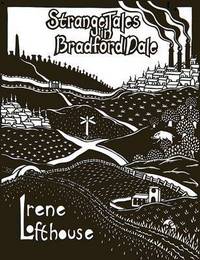
Strange Tales in Bradford Dale, by Irene Lofthouse. Gizmo Publications (www.gizmo.co.uk), 2015. 124 pp.   ISBN: 978-1-900827-54-6   £7.99 (Strange Tales Book 2) Available in many of Bradford’s Libraries.  You can check the catalogue here

strange-tales-in-bradford-dale

 What a delightful read is this book! It is clearly fiction, but so well grounded in Bradford history that I finished my read both pleasantly amused and historically richer. I learnt that a ‘cottar’ is a peasant farmer or a tenant renting land from a landlord, and that a ‘piecer’ is someone who pieces broken threads together. I also learnt that Bram Stoker, the author of Dracula, was the manager of actor Henry Irving who died at the Midland Hotel in 1905 leaving, some say, a ghost, and that a brownie, once asked its name, turns into a boggart and will plague you for ever!

This book, Number 2 in the Strange Tales Books series* consists of seven Bradford-based stories for 7-12 year olds. Here we find an alternative account of the killing of the Bradford Boar; child labourers in a mill befriended by a brownie; a nightmare ride in a haunted carriage; the city hall statues frolicking in City Park after midnight; a local tribe defeated by Romans from Olicana (but carrying on the head cult); a theatre rehearsal terrorized by ghosts; and twilight terrors in a Victorian cemetery.

Irene Lofthouse writes well: her style is well-suited to pre-teens and her stories are well told. More impressive for readers of this journal though, is that the stories are clearly Bradford-focused. Here we find Roger de Manningham and John Northrop, Spinkwell and Cliff Wood, a large cemetery with Egyptian portals, and City Park. In her endnotes the author admits being inspired by the Bradford Playhouse, Undercliffe Cemetery, the Bradford Beck and a real-life mounting block. Other end-matter includes Fun Activities such as protecting yourself against a boggart; drawing pictures of a stone head and a phantom carriage; a Wordsearch; a Did You Know? (six items); some websites; and a Glossary of special words such as Green Man, Scour, Tenterfield and Sphinx.  I particularly liked the author’s matching of language and personal names to the period covered by the stories. The Boar-scared children are Ranulf, Aleycia, Elfric, etc., good medieval names; the mill kids are Tom, Sarah, Zach and Edie, while today’s kids scared in the cemetery are Sienna, Fatima and Luca. Some of the quoted speech is in dialect, thus: “You do look nithered. Come t’fire an’ warm thissen.” (My 9 yr old grandson is fascinated by dialect!). And while today’s kids use their mobile phones and i-pods as torches in Undercliffe’s Egyptian vault, the youngsters in Cliff Wood use knives and a bow-and-arrow! Context and background are impressive.

How to get youngsters interested in history is ever a problem. Maybe Irene Lofthouse has the answer – though I would have liked to have seen more illustrations.      Bob Duckett

 *Book 1 was Strange Tales in the Dales (2015) and Book 3, Strange Tales in Caldervale (2016).

Review reprinted from the Bradford Antiquary, 2016, courtesy of the Bradford Historical and Antiquarian Society.