The Impact of German Butchers in Keighley

‘Meeting the Meat Demand’ with Karl-Heinz Wüstner.

Over the summer, the History Society was presented with the opportunity for a talk by Karl-Heinz Wüstner on German immigration to West Yorkshire. With all of our regular slots already filled (and the budget pretty much used up), our solution was to book Keighley Local Studies Library for an extra talk on the afternoon of Wednesday 1st October. The talk, entitled ‘Meeting the Meat Demand’ will start at 2.30pm and will finish around 4.30pm (time for the talk plus discussion at the end). There is a charge of £2 per person (fee applies to members and visitors).

Karl-Heinz Wüstner is a retired high school teacher from Ilshofen, Germany. As a local historian he has studied labour migration and conducted research on trade and craftsmanship in the Hohenlohe region of Germany for many years. He is a committee member of the Historical Society for Württemberg-Franconia and chairman of a local museum that exhibits painted furniture. He writes books and articles, and has given talks at numerous conferences and seminars.

Karl-Heinz Wüstner: “The continuing industrialisation of Yorkshire in the 19th century created many additional jobs in wool mills and factories. Industrial centres grew rapidly and the large number of newly arrived workers needed to be fed. German immigrants in particular took advantage of these circumstances. As butchers, they not only offered meat, but also produced a variety of tasty sausages, meatloaf, rissoles and many other products that could be eaten either cold or warm after brief heating. With the introduction of takeaways, also offering hot meals, they broke new ground in food supply and thus established new eating habits.

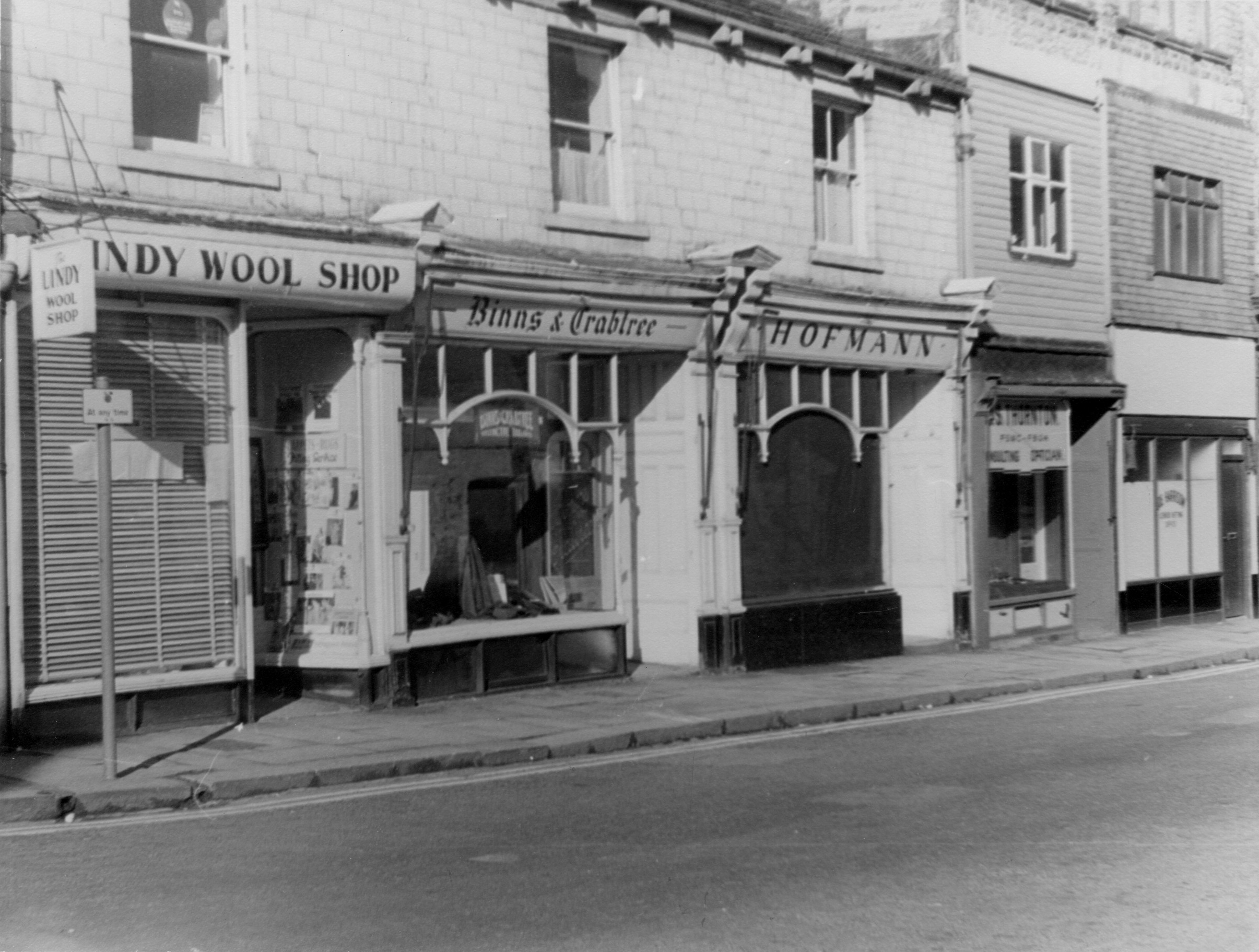
“Quite a number of such pork butchers settled in the up-and-coming town of Keighley. A whole series of butcher’s shops with more than thirty female and young employees dominated the streetscape. Names such as Andrassy, Pfeiffer, Hofmann and Schneider may still be remembered by some today.

“I will try to explain why the butchers and their families left their homeland and how they were able to succeed as immigrants. I will explore the important role they played in the development of the towns and cities, as well as their personal fates.” 

Article and Photos by Tim Neal, Keighley & District Local History Society.

“Bolshevism run mad.”

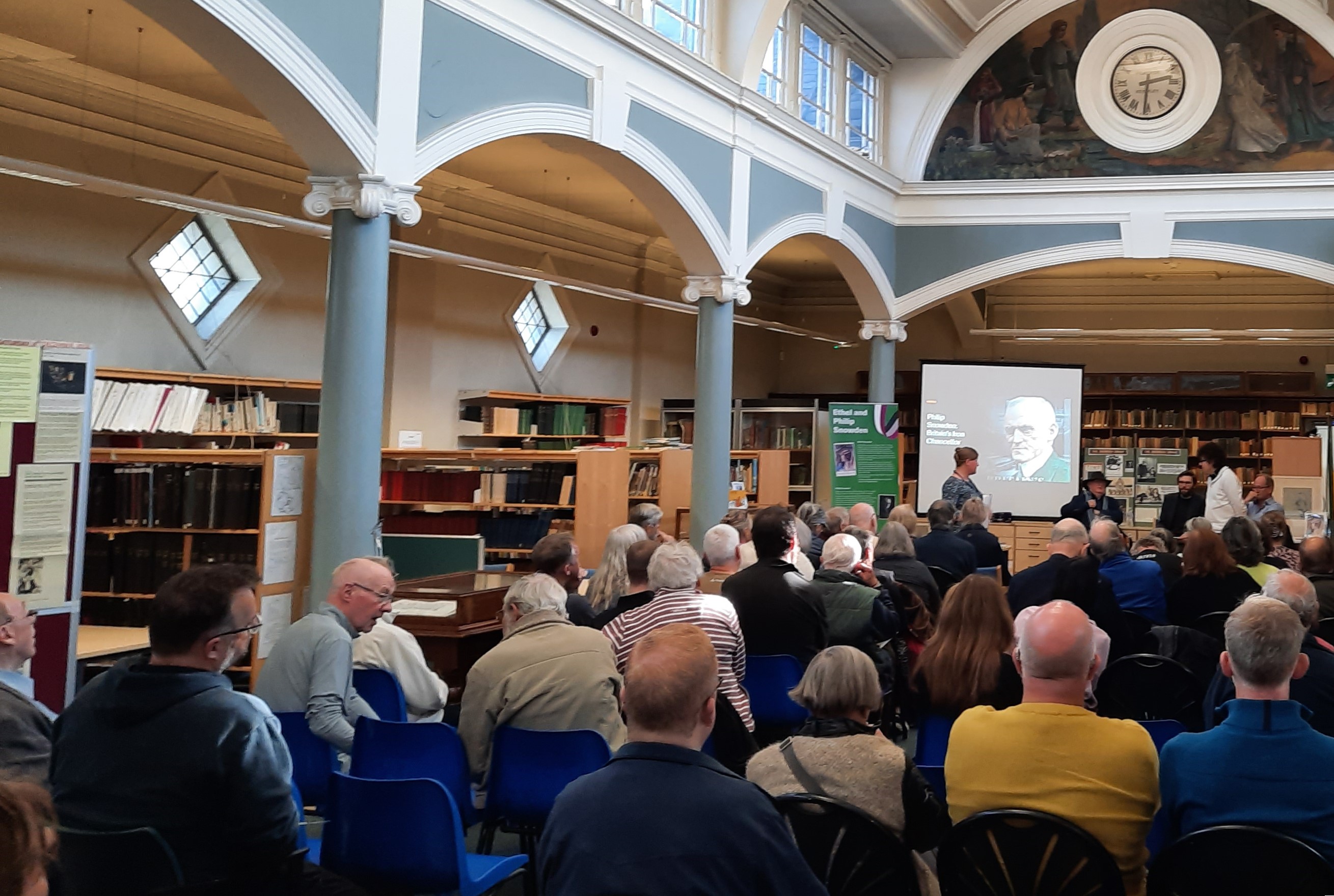
On Saturday, Keighley Local Studies Library was able to showcase one of its wonderful collections to another enthusiastic audience. This time it was the Lord Philip and Lady Ethel Snowden library and archive that we could highlight with the event of a book launch of a new edition of Philip Snowden’s vitriolic autobiography, edited by the author Alexander Clifford.

“Alex” Clifford is a history teacher as well as speaker and author of other historical works. He has written books on the Spanish Civil War and Hindenburg Ludendorff & Hitler, Germany’s generals and the rise of the Nazi’s.

Originally written in 2 volumes, Philip Snowden’s newly edited autobiography edition comes in a handy single volume format. The event itself consisted of a talk and photographic presentation by Alex Clifford about Philip Snowden’s life, values, interests and motivations and of course his controversial crossing from Labour to Conservative during the National Government of 1931 when he was expelled from the Labour Party.

The talk was followed by an expert panel discussion with questions from the audience to follow. We were privileged to have the well known authors and experts: Keith Laybourn and Andrew Thorpe: Professor Keith Laybourn is the president of the Society for the Study of Labour history and author of the leading biography of Philip Snowden. Professor Thorpe is Dean of the Faculty of Arts, Humanities & Culture at the University of Leeds and author of ‘The History of the Labour Party’.

The Event was chaired by Will Barber-Taylor who is Deputy Director of the Centre Think Tank, he is a political writer and podcaster who is currently producing a new documentary on Snowden. 

The audience responded well and there was a high calibre of questions from attendees who were clearly familiar with Snowden’s life and politics. The volatility of the times was also considered in the first quarter of the 20th century with the rise of “revolutionary socialism” as well as “evolutionary socialism”, World War 1 and the subsequent years of depression, testing times for any government and certainly any chancellor. Amongst the audience were a national newspaper journalist and a former government adviser.

Such events show the continued popularity of local history study and debate and help to highlight the value and importance of local study library collections that reveal the human experience and development of our communities.

We would like to thank all those who attended. Two new leaflets have been produced by library staff on the Snowdens and our collection in Keighley and will be in our guide section on this web site shortly.

A good number of copies of the new book were sold and there was a request for a similar event in the future, regarding another Keighley political figure in recent history.

“Britain’s Iron Chancellor, Philip Snowden, An Autobiography”, edited by Alexander Clifford (is available from all good bookshops, priced £25 and will be available soon in Keighley Local Studies Library for reference, later for loan (Pen & Sword Books Limited, Barnsley, 2024, ISBN 978 1 39902 495 2).

International Women’s Day

Wednesday 8th March is International Women’s Day and today we feature two ‘Women of Conviction’ active in local historical reforms: Frances Smith and Margaret McMillan.

Frances Smith was the first woman to winboth a municipal council election in Keighley and sit on the town’s Industrial Co-operative Society in the 1940’s and 50’s. One of her roles was chair of the council’s maternity and child welfare committee..

Margaret McMillan worked in deprived areas of Bradford in the 1890’s and agitated for reforms to improve the health of young children.

Frances Smith

Frances Maddocks was born at Hope St, Pennington, Leigh, Lancashire on the 1st August 1891. One of five children her father Edwin was a coal miner and her mother a silk winder. Her father premature death at the age of 44 from TB had a lasting effect on Frances. The family had to become resourceful. Aged only 9 Frances and her siblings sold fruit to the queues of people outside the local theatre and her mother took in boarders. Frances first job was as a Silk weaver and it was through seeking work in this industry that she moved to Keighley some time before the First World War.

In 1915 she married local man Harry Smith an iron Moulder and they went on to have one son Edwin in 1916. It is no longer possible to find out what stirred Frances’s involvement into the Co-operative moment or Local Politics but by 1943 she was actively involved in the movement and became the 1st woman to be elected to the board of directors of the Keighley Co-operative Society Ltd.

But Frances involvement in local issues did not stop there. By 1945 she had been working for the labour party for some years. Frances had forged a friendship with Ivor Thomas who in July 1945 took up his seat as Labour MP for Keighley on the labour parties winning of the general election. With his support, Frances was invited to stand as candidate for the 1945 municipal election. In November 1945 Frances won her seat with the biggest majority of the day. She signed the declaration book on 2nd of November 1945, and made history again by becoming the first woman to win a contested municipal election.
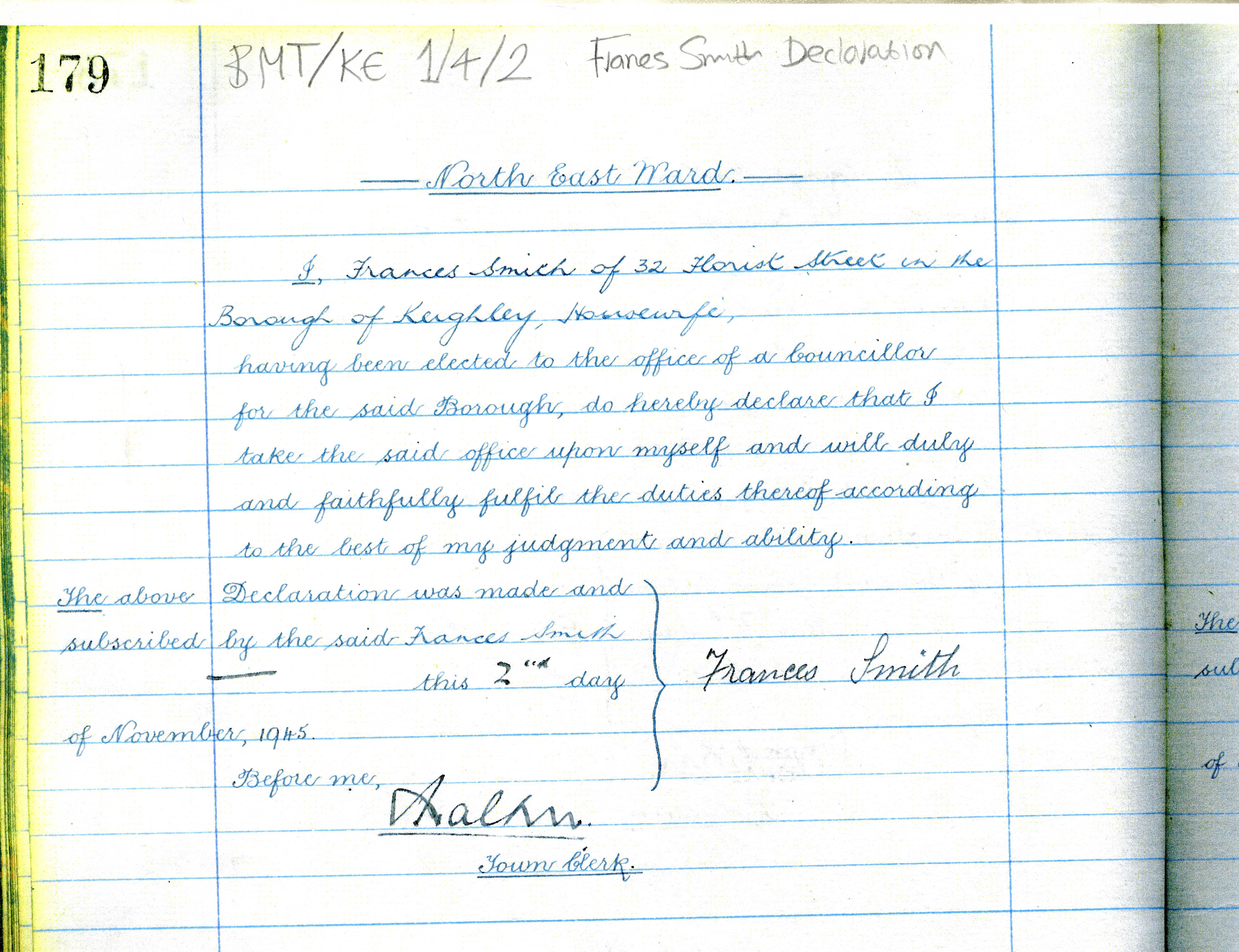
Frances wins the North east Ward Seat Municipal Election

For more information on Frances Smith see the full article ‘A Woman of Conviction: Councillor Mrs Frances Smith, First Lady of Keighley by Frances Gilbert and Angela Speight, published in Bradford Antiquary (2012) Volume 16 available at Bradford and Keighley Local Studies Library.

Margaret McMillan

Working in deprived districts of Bradford and Deptford, Margaret McMillan agitated for reforms to improve the health of young children, wrote several books on nursery education and pioneered a play-centred approach.She was born in New York in 1860. Her parents, were from Inverness but had emigrated to the United States in 1840. When she was four, an epidemic of Scarlet fever killed her father and sister. Mrs. McMillan returned to Scotland with her daughters Margaret and Rachel, where both attended the Inverness High School. Margaret went on to study Psychology and Physiology, followed by Languages and Music in Germany.

By 1888 both sisters had become active in local politics.In 1889, Rachel and Margaret helped the workers during the London Dock Strike. In 1892 they moved to Bradford. There they joined the Fabian Society, the Labour Church, the Social Democratic Federation and the Independent Labour Party.

With Bradford’s school medical officer, Dr. James Kerr, Margaret carried out the first medical inspection of elementary school children in Britain. They published a report and began a campaign for local authorities to install bathrooms, improve ventilation and supply free school meals for children, after seeing the success of Bradford Cinderella Club providing a warm meal to underprivileged children.

Their experiences in Bradford were to shape their later work in Deptford.

For further reading about Margaret and Rachel McMillan we have a good selection of books in Local Studies, please see the list below:

Select reading list of Margaret McMillan books in Bradford Local Studies Library

 Margaret Macmillan: portrait of a pioneer by Bradburn, Elizabeth. Routledge (1989), 9780415012546

All children are mine: inaugural Margaret McMillan lecture by Greenwood, Arthur London U.P (1952)

Margaret McMillan in Bradford, with reminiscences: fourth Margaret McMillan lecture by Lord, Miriam. London U.P (1957)

Our children: Margaret McMillan and the open air nursery school by Lord, Miriam. Lund Humphries

Margaret Mcmillan the childrens champion by Lowndes. Museum P (1960)

Margaret Mcmillan:founder of the open air nursery school by Margaret McMillan Memorial Fund

Camp school by McMillan, Margaret. George Allen & Unwin (1917)

Margaret McMillan: ‘I learn, to succour the helpless’ by Moriarty, Viv. Nottingham Educational Heritage (1998) 9781900219136

The young child and the life of today: third Margaret McMillan lecture by Niblett, William Roy. London U.P (1956)

Margaret McMillan, 1860-1931: reminiscences by Rachel McMillan College Association

Social and political change in England: Margaret McMillan and the battle for the slum child by Rees, Rosemary. Longman Resources Unit (1986) 9780582173637

Childhood, culture and class in Britain: Margaret McMillan, 1860-1931 by Steedman, Carolyn. Virago (1990) 9781853811234

Margaret McMillan: prophet and pioneer: second Margaret McMillan lecture by Stevinson, Emma.