The History Society and the Library

The Keighley & District Local History Society was formed in late 2004. It was created to focus on the history of the town and the surrounding area, looking at the industries and mills, the shops and streets, the parks and buildings, key players such as business people, mayors and politicians, and was designed to complement the Keighley and District Family History Society which already existed (and which continues today as Airedale and Wharfedale Family History Society).

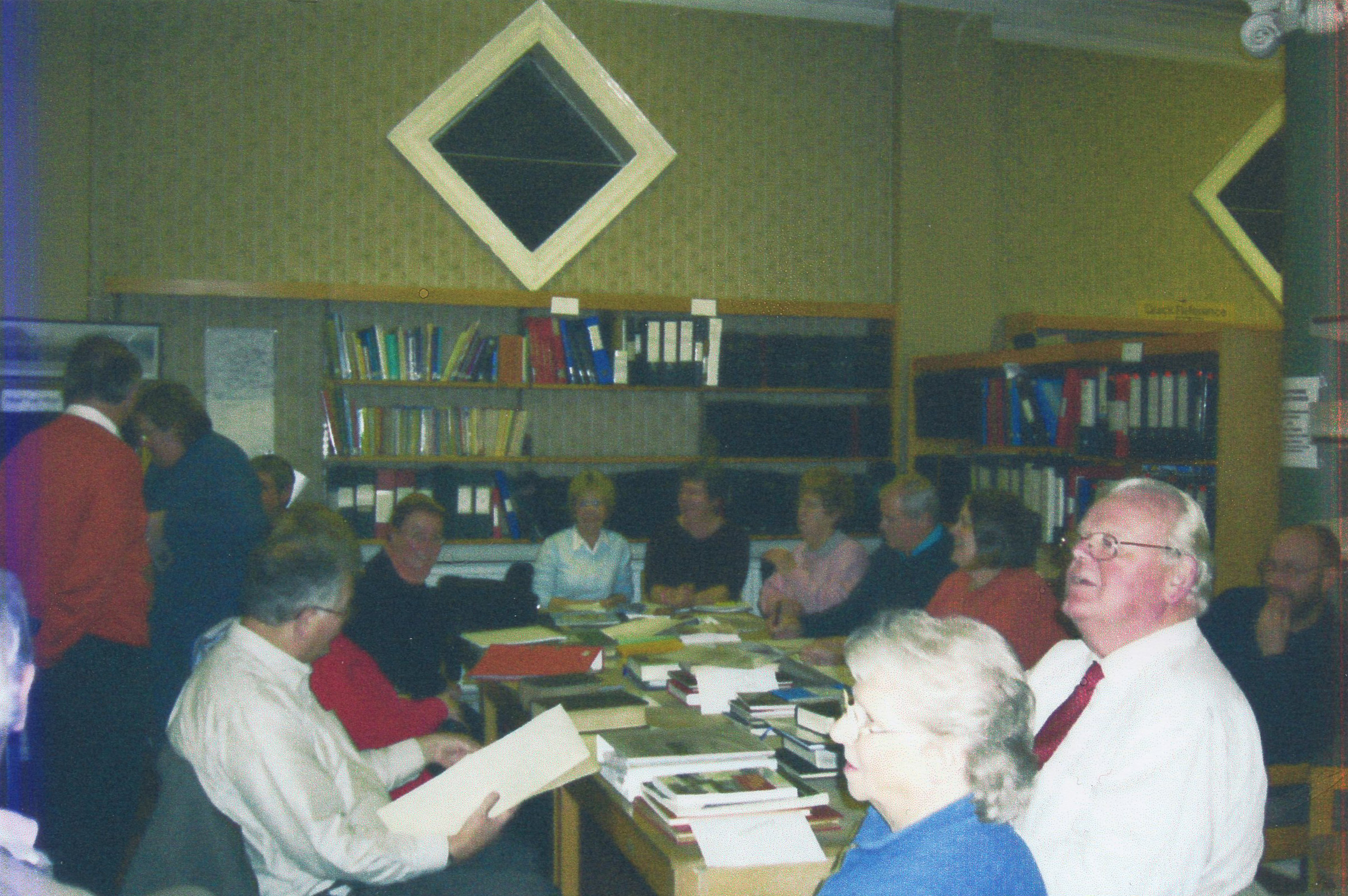
The history of the History Society is inextricably linked with that of Keighley Library, although there are no official or formal bonds. The need for the existence of the History Society emerged from discussions around how to celebrate the centenary of the Public Library, which was 100 years old in 2004. One of the key players in those discussions was Pauline Barfield, who was Senior Information Manager in the Local Studies Library at the time. Pauline was also the guest-speaker at the very first open meeting of the society, held in the Local Studies Library on Wednesday 15th December 2004, and was later made Honorary President of the society.

Another important crossover figure is the late Ian Dewhirst, who was Reference Librarian at the Library from 1967 to 1991. As well as being a driving force behind building the invaluable collection of locally focussed documents, photographs and paraphernalia that now form the backbone of the Local Studies Library’s collections, Ian also wrote over twenty books focussed on the history of the town and the wider Yorkshire area that brought awareness and knowledge to a broad and grateful readership. It was only natural that Ian was supportive of the idea of a local history society for the town. Although never formally involved in its running, Ian gave at least half-a-dozen talks to the Society before his untimely death in January 2019.

Ian Dewhirst talk 2009

With very few exceptions, the History Society has held open meetings on the second Wednesday of each month ever since it started. These have mainly been held in the Local Studies Library (and we are extremely grateful to the Library for facilitating this) – which is a very natural fit, committed as we both are to “preserving and sharing” the stories of the town and surrounding area. For various reasons (including when the Library was undergoing a major facelift for most of 2007) we held our meetings in other local venues. These have included the Swire Smith Hall of Keighley College (when it was on the other side of North Street to the Library), the service room of The Knowle funeral home, the Civic Centre, and St. John’s Church in Ingrow. Of course, along with the rest of the world, we had to move our meetings in 2021 onto Zoom as a result of the coronavirus outbreak, and we continue to offer this ‘innovation’ today as we broadcast the majority of meetings over Zoom live from the Library for those members unable to join us in person.

But the Library has always been our main home, and we have held around 200 hundred monthly meetings and other events there. Guest speakers over the years have included former town mayor Graham Mitchell, Haworth historian Steven Wood, principal curator of the Bronte Parsonage Museum Ann Dinsdale, Ian Walkden and Andy Wade from the Men of Worth Project, former Keighley News journalist Sharon Wright, postcard collector Kevin Seaton, textiles expert Pam Brook, art historian Colin Neville, local stalwart Charlie Bhowmick, Bradford historian Kathryn Hughes, and many many others. And the range of topics is way too expansive to even start listing.
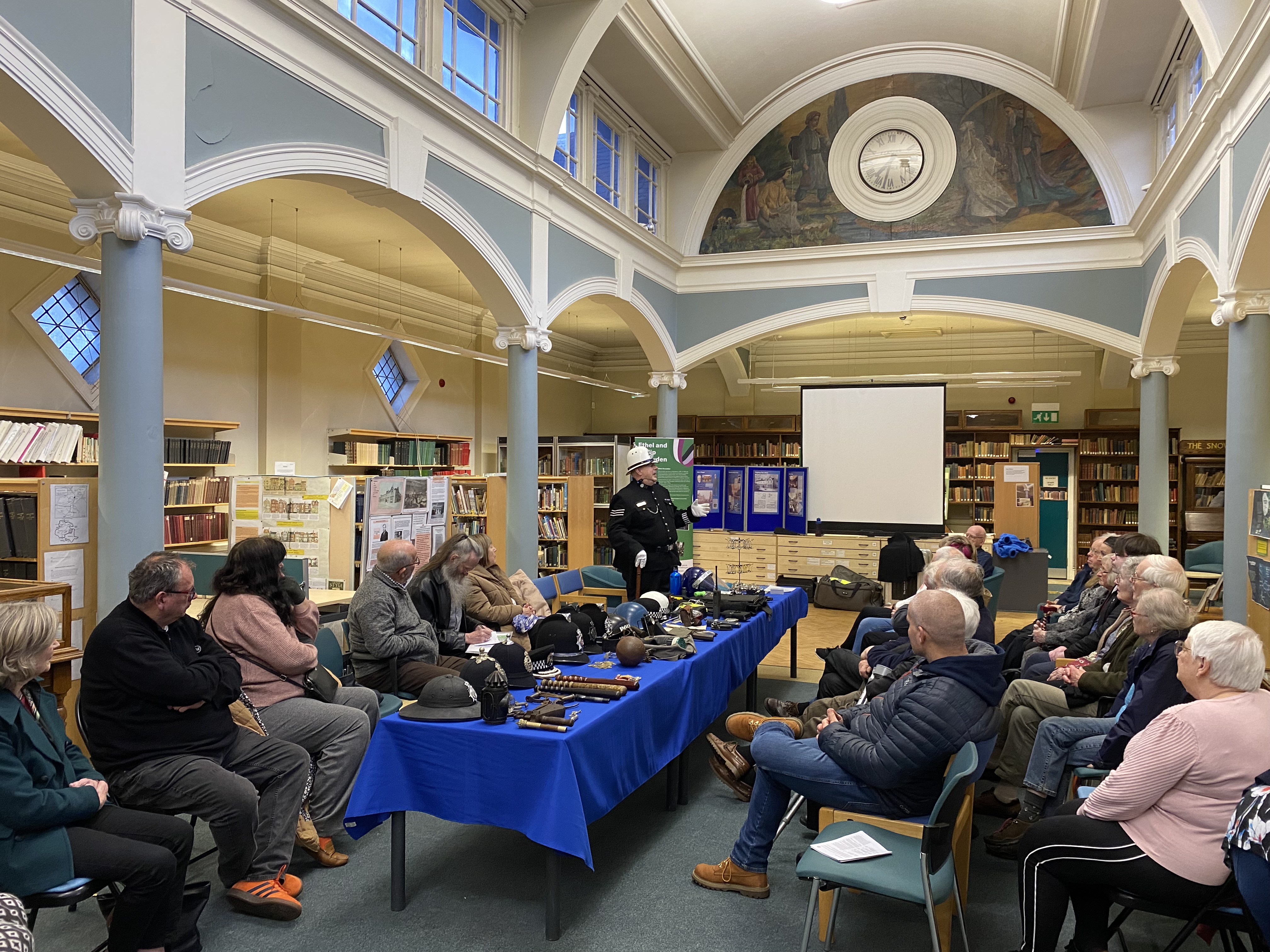
The success of the History Society is stronger now than it has been at any point in its twenty year history. We continue to meet on the second Wednesday of each month, mostly still upstairs in the Library. We have over 75 members who live both locally but also come from further afield – people keen to maintain links with a town that was important to them in their past. We try and spread the word about the fascinating history of the town at events like Keighley Show, the Heritage Open Days, Yorkshire Day celebrations, and other history-related celebrations.

Our single objective remains “to preserve and share” the history of the town and the surrounding area. People continue to be extremely generous and continue to loan or donate items that enable us to do this. We record and catalogue these items, from personal photographs, postcards, leaflets, publications – all sorts of items! – which we then seek to share via our digital archive on Flickr. Our Flickr site currently has over 25,000 items available to view by anyone, and continues to grow.

If you’d like to find out more about the History Society, please look us up on our website or our Facebook page – or better still drop into one of our meetings on the second Wednesday of the month in Keighley Library!
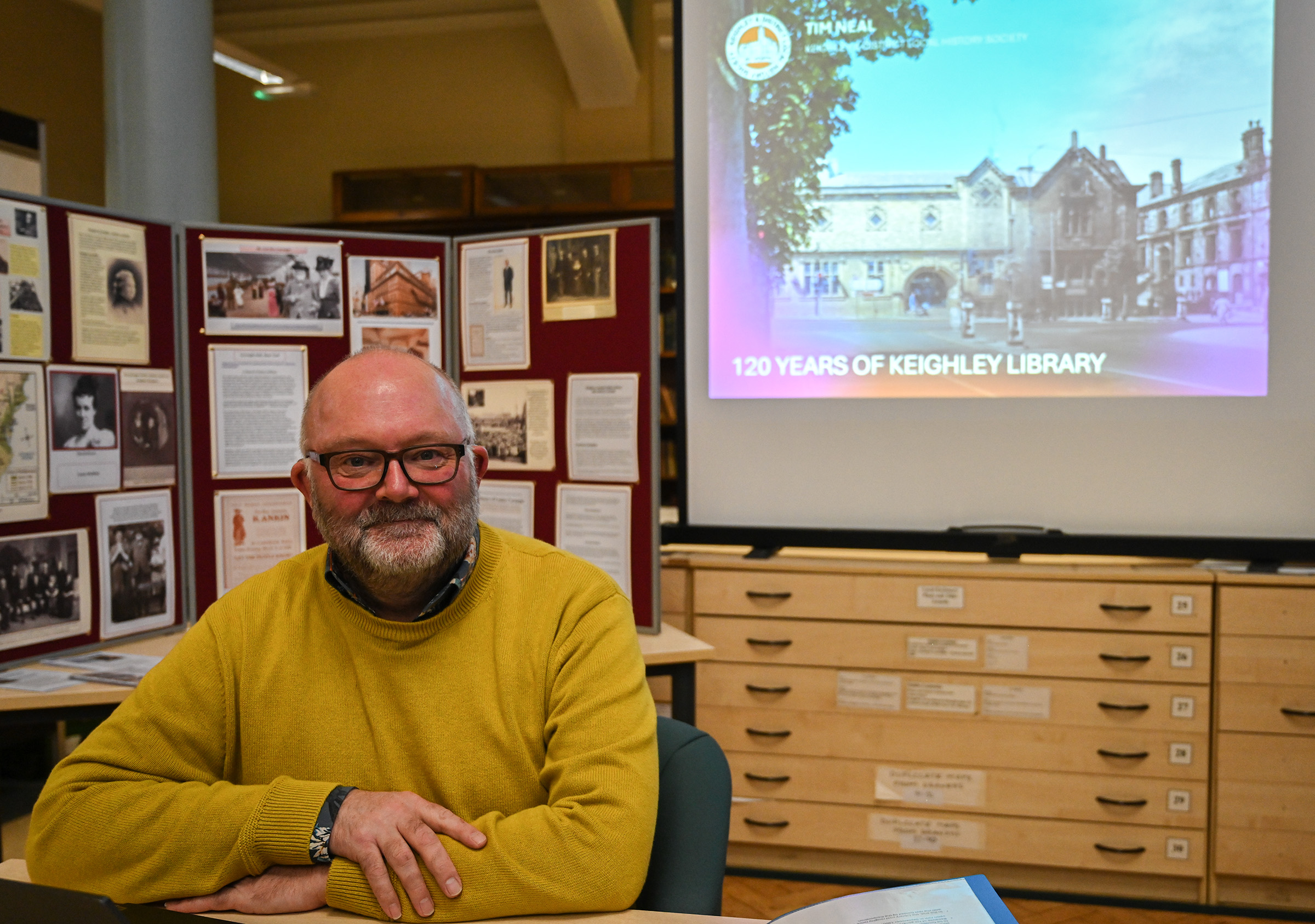
Tim Neal

Tim Neal
Keighley & District Local History Society
keighleyhistory.org.uk
facebook.com/keighleyhistorysociety
flickr.com/keighleyhistory

All the photographs are “courtesy of the Keighley & District Local History Society”. The one of Tim Neal on his own at his desk is by “Cath Muldowney Photography”
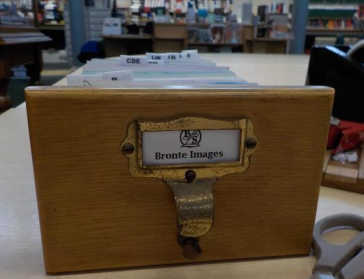
Brontë Images: 116 Years of Brontë Studies

CaptureBronte

To facilitate exploration of local history and the Brontë family, the Keighley Local Studies Library now has a catalogue file of all images that have appeared in its bound editions of the Brontë Society’s Transactions and Journals from 1898 through to 2014. This means that it is possible to find, for example, a facsimile of a letter written by Patrick Brontë, or a pen sketch of the Black Bull pub by Arthur North, given the name of the author or item.

This collection comprises over 1000 Brontë related images, including familiar ones that may be found on exhibition at the Brontë Parsonage Museum, as well as others of interest such as photographs of extended family members, charts of family genealogy, pictures of places that may have featured in their novels, andgeographical locations that hold the Brontë name (e.g. Brontë, Texas).

There are also pictures of Brontë Society members, who have appeared over the years,
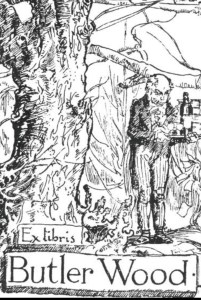
including Butler Wood, the Society’s first editor and Bradford’s Chief Librarian 1887-1925, international members as far away as China, and visiting dignitaries to the Parsonage Museum, such as James Roosevelt, son of U.S. President Franklin Roosevelt, whose family was connected to the Butterfields in Keighley.

Bronte Images BLOG copy

The Keighley Local Studies Library of Bradford Council is opened Monday-Saturday and is located at the Keighley Library, an historic Andrew Carnegie Library on North Street,
Keighley BD21 3SX.

Email: keighleylocalstudies@bradford.gov.uk
Phone: 01535 618215

Mary E. Adamson
Library Volunteer and Brontë Society Member

Treasure of the week no. 23: Billygoats, frogs, & pickle-pot : ‘The Old Inquirer’ and the ‘March of Reason’.

The Old Inquirer [The Rev. Wm. Atkinson] A volume of tracts.

B 042 ATK (Please quote this number if requesting this item.)

In my trawl through the basement of Local Studies Library I came across a volume of tracts by ‘The Old Inquirer’. The use of pseudonyms was quite common in the eighteenth and nineteenth century, especially for authors writing on controversial topics or opposing the views of other writers. The Old Inquirer did both. His spat with ’Trim’, the Headmaster of Bradford Grammar School in the years from 1787 to 1791 was very public, bad tempered, and yet clever – both Trim and the Old Inquirer were well educated and highly literate. The prose (and sometimes verse) is fun to read even if we don’t fully understand what it was they were arguing about! The Old Inquirer was a prolific writer: the volume I came across had 16 separately paginated tracts containing some 70 individual letters, essays and other items. He even had his own printing press!

To provide extracts from these writings would be far too ‘heavy’ for these ‘Treasures’. Instead I have extracted some of the verse he used to illustrate his opinionsand  which can be enjoyed just for themselves. They are indicative of the rumbustious satire of The Old Inquirer.

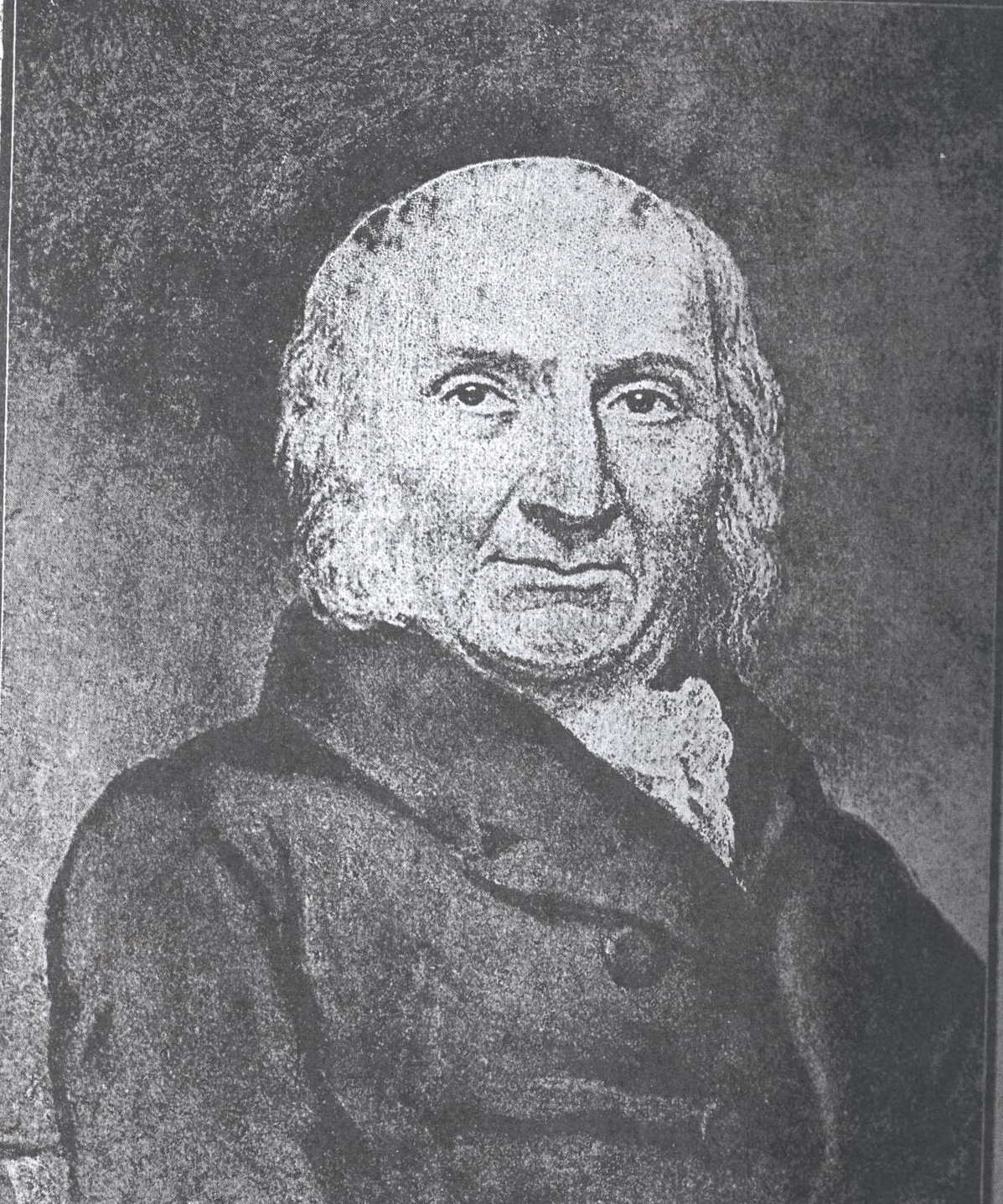
‘The Old Inquirer was the Reverend William Atkinson, M. A. , ‘Lecturer’ or ‘Afternoon Man’ at the Parish Church in Bradford (now the Cathedral) from 1784 till his death aged 89 in 1846, a period of 62 years. The ‘Afternoon Man’ was so-called because he was only required to be in attendance on Sunday afternoons. According to newspaper cuttings in the Local Studies Library, Atkinson was a man of herculean build and of singular strength of mind as well as body. He used to walk from his home in Thorpe Arch on Saturdays and walk back to his home on Mondays, staying over in Bradford for his Sunday lectures. So what did he do for those 62 years? Well, among other things, he wrote letters, essays and poems.

Rev William Atkinson MA

‘Rev William Atkinson’ from ‘Bradford Fifty Years ago, 1807’ by William Scruton

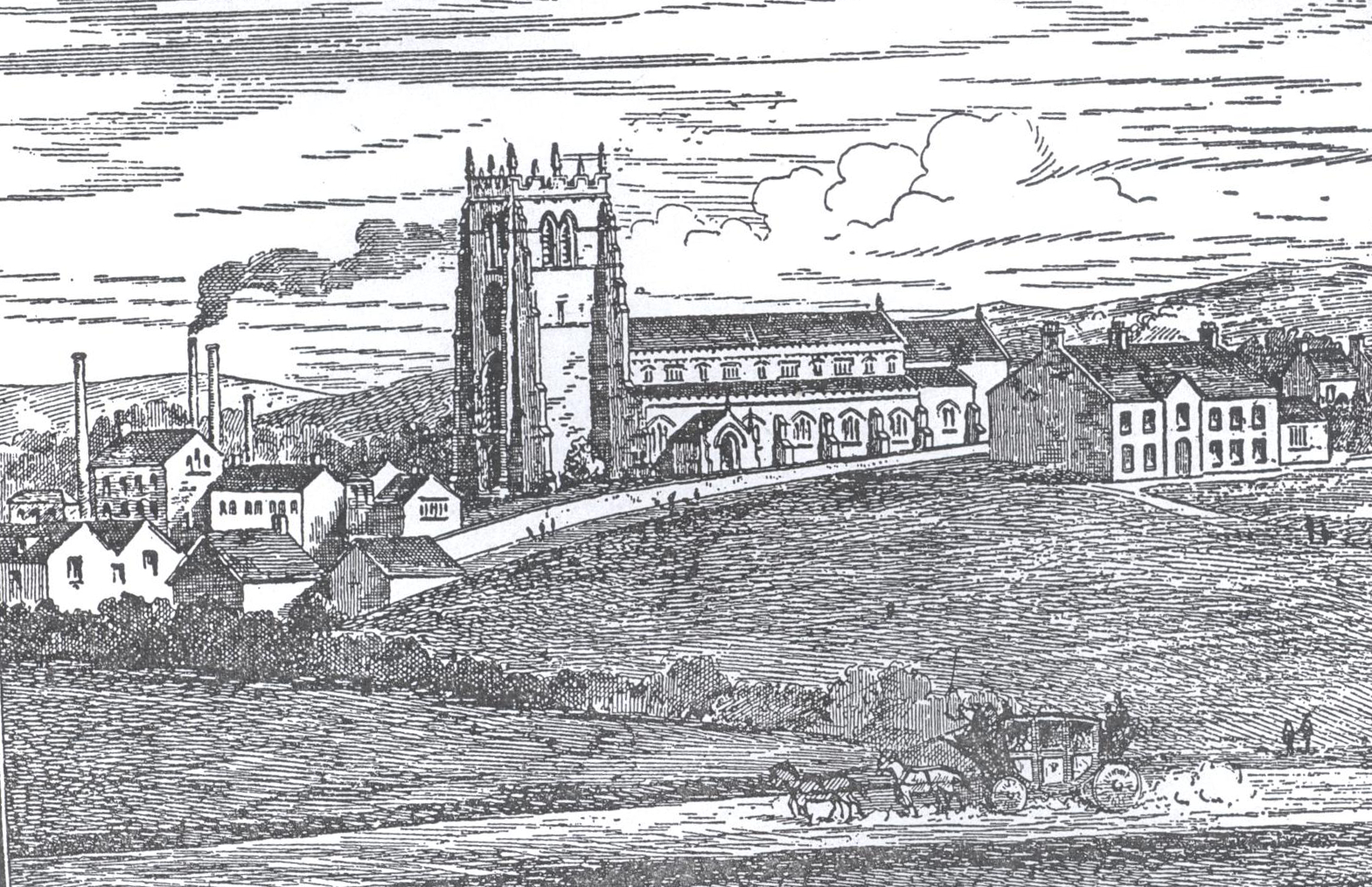
Parish Church and Vicarage 1810

‘Parish Church and Vicarage in the year 1810’ from ‘Pen and Pencil Pictures of Old Bradford’ by William Cudworth

The range of subjects he wrote on was wide: the exportation of wool;  tithes; political reform; dissenters from the Church of England; the Pope; press bias; agriculture; even banking. Anyone interested in understanding our history from 200 years ago would do well to read these tracts. Here, though, we just relish his gift for verse and satire, and be amused at the wit, boldness, and candour of the ‘Old Inquirer’. And maybe wish he was around today!

…  Fee fau fum,

I smell the stink of democratic plum;

And though I love Reform disclosed,

And would by no means clog them;

Yet meeting with bare r – ps exposed

I cannot help but flog them.

(A Letter to the Reforming Gentlemen. 1817, p. 1. Tract no. 5)

Their arms, their arms,

Are the Radical charms,

With which they’ll lay about them;

Order, order,

Says R. D. our Recorder,

They’d better be quiet without them.

(Free Remarks upon the Conduct of the Whigs and Radical Reformers in Yorkshire; with some Slight Allusions to the Court Party, 1819, p.1. Tract no. 7.)

How Johnny Bull

Is made the Gull,

Of Men who love his money,

The wasps who thrive,

Within his hive,

And live upon his honey. (p.12)

(Remarks on the Strictures in the Leeds Mercury upon the Rev. M. Jackson’s Coronation Sermon, &C. &c. &c., 1821. p. 12. Tract no. 7)

A Lily sprung in foreign land,

And grew to be a flower,

It was transplanted to this strand,

But flourish’d not an hour.

(As above, p. 16)

“Alas! No rest to mortal man is given,

Till they are safe arriv’d in heaven.”

(A Speech Intended to have been spoken at a Second Meeting of the Clergy upon the Popish Question, 1821, p 41. Tract no. 13)

The man in the moon,

Has ordered a spoon,

To give all there maniacs their pottage;

No, no, let them go

To the region below,

For the pickle-pot must be their cottage.

(As above p. 51)

I am the Prince’s Dog at Kew,

Whose Dog are you?

(A letter to the Reforming Gentlemen, 1817, p. 14. Tract No. 5)

Granting that he had much wit,

He was rather shy of using it.

(As above, p.13.)

Hallo, hallo, away they go,

Unheeding wet or dry,

And horse and rider snort and blow,

And stars on all sides fly!

Hold  Parsons, hold, on Peggy’s rig,

For stormy is the wind,

Or like John Gilpin’s hat and wig,

You’ll soon be left behind.

(A Letter to one suspected to have been written by a Stranger, assisted by the Jacobin priests of the West Riding, 1801, p. 43. Tract No. 1)

Your reasoning, with wondering stare,

Quoth Tom, is mighty high, Sir;

But pray forgive if I declare,

I doubt it is a lie, Sir:

We ne’er shall get, I really think,

Lord H….w..d’s land to us, Sir,

I’d rather have a pot of drink,

Than hang up like a truss, Sir:

If you think thus, my honest clown’

We’ll take another sight on’t –

Just turn the picture upside down,

And you will see the right on’t.

(Lucubrations in Prose and Verse written during the Awful Revolution in 1829, p. 12. Tract no. 16)

Jerry’s Song to his Tippling Wife.

Upon her cheek so fair,

The lily and the rose,

Of flowers a pretty pair,

Did all their sweets disclose.

But time has cropt that rose,

The lily too doth fade,

Such are the cruel foes;

In wedlock to a maid.

And has time cropt that rose?

Ah, no! it grows it grows,

Upon her well-fed nose,

You yet may see my pretty little rose.

(As above, p.13)

And what of the Frogs, Billygoats, and The March of Reason of the heading to this blog? See:

Tract number 14: A Rapid Sketch of Some of the Evils of Returning to Cash Payments, and the only remedies for them. To which are added The Leeds Mercury turned into a Frog, the Billygoats in Leading-Strings, and The March of Reason. 1823.

A full listing of Atkinson’s tracts can be found in the folder ‘Federer, Dickons and Empsall tracts in the Local Studies Library’. Listed under  B 042 ATK

Stackmole

Keighley’s Musical Heritage at its finest!

A sunshine summer day in the city could not be better celebrated than with upbeat rock ‘n’ roll bands,  superb singers, and a locally famous comedic host – Keighley Library had it all. The atmosphere was buzzing with a capacity crowd of over 200 pop fans, over 800 visitors to the library on the day (Saturday 9th June) and £213 raised for the charity St Martin’s House by the brave staff manning the very busy refreshment area.

The afternoon kicked off with an introduction to the 1950s like no other by local historian and former Reference Librarian of Keighley Library, Mr Ian Dewhirst MBE. He spoke of how rock ‘n’ roll music seemed to have passed him by in a flurry of 2 years of National Service and helping in his dad’s shop. He said, “The only song I liked was Peggy Sue by Buddy Holly, but he died and that was that!” After hearing the Doveston Brothers, however, Ian acknowledged that he must have absorbed more of this burgeoning pop culture because he did indeed recognise many of the songs. Ian’s continued funny and informative account of the fifties and sixties did not lack spice as he spoke of having to help in a newsagent’s with a top shelf collection. He mentioned no names but said that he was surprised at the identity of some of the local customers.  Not surprisingly, all this racey activity led to a request for information about sex from Ian, the teenager, when he and his dad were riding tandem through the countryside. His dad didn’t fall off the bike but apparently went very quiet and after a couple more miles said simply, “Both the man and the woman have to agree, Son,” which brought the house down.

The Doveston Brothers was just one of two of Keighley’s finest bands of this era. They had formerly played twice at the London Palladium and though they had not played for 45 years, their winning professionalism shone through with a brilliant set of 60s covers. Brian Eldee’s voice is still superb and the audience was treated to Everly Brothers’ favourites as well as more rock ‘n’ roll songs. As a special treat for Janet Mawson, who organised this event, Brian sang John Denver’s, Leaving on a Jet Plane. Later, it was hard to get her feet back on the ground to chat to people about her revamped exhibition on the 1960s but she had to manage it.  With even more unique photographs, music reports and personal anecdotes from local band members, Janet was in great demand all day to answer questions and introduce people.

The Doveston Brothers were beyond popular and set the bar super high for the next band, fast becoming seasoned Keighley library stars – The Presidents, but as we know from last year’s event, they could not possibly disappoint. Their playing was fab with the expected nifty guitar work and Bruce’s acclaimed harmonica.  Linda Russell’s voice soared into pop and ballad perfection to match Brian Eldee’s earlier performance. Both the bands added interest and humour between songs with conversation and funny anecdotes to further enrich the value of this fantastic first class, free entertainment.

Local children were not missed out in this poptastic extravaganza and Saturday Rhymetime became Jamba Samba with little ones, ears fully protected, enjoying Samba drumming with an expert in the art. “Happy” does not describe the expression on some of the children’s faces as they got to make an exceptional musical noise in one of the quieter places in the centre of Keighley. Complements about the event are still coming in.

It’s an underestimation to say that everyone had a great time on Saturday 9th June, many people have filled in the Visitors’ books to the effect that it was another event that brought back many happy memories and was a wonderful musical and social occasion for the local community, especially for many in the audience whose youthful years were represented in the music and the exhibition.  I am sure Ian Dewhirst would agree, that this is local social history at its finest because it is momentarily giving real life to the books, photographs and archives in our keeping. As we have already found out, this in turn enhances their usage and local interest in the subject. It’s certainly something that Keighley Local Studies is very proud to deliver on.

Now, that’s not all folks because the  locally acclaimed and revamped 60’s exhibition will run until September when a brand new display will be launched, assembled by hard working volunteer, Malcolm Hanson with Music of the 70s. A local historian, writer and former local band member of this decade himself, he has inside knowledge of the local music scene but is still collecting memorabilia from bands and fans.  Malcolm can be contacted for this at the following:

Email: Malcolm.b.hanson@gmail.com or call Malcolm on 01756 798730

This exhibition will be accompanied with more live music, this time from the 1970s to celebrate Heritage Day on Saturday 15th September 2018.

The next Keighley Musical Heritage event in Keighley Local Studies Library is: “Small Town Saturday Night”, A talk by Trevor Simpson on Saturday 14th July 2.00 pm. Trevor Simpson is the author of two books telling the story of a love affair with the local music scene in a northern town.  It is a story of rock ‘n’ roll at its peak in the 1950s and 1960s told with humour and shared memories. The talk will be accompanied with photographs and memorabilia from those decades. Don’t miss it!

Gina Birdsall, Keighley Local Studies

This slideshow requires JavaScript.

Visit to the Brotherton Galleries, Leeds University Library

On Monday, 21 May, a small group of FOBALs (Friends of Bradford Archives and Local Studies) and library staff were very fortunate indeed and saw the Brotherton Library at Leeds University and the archives of the Special Collections.  Wow! The library is a Grade II listed Beaux-Arts building, opened in 1936. The reading room was apparently modelled on the British Museum reading-room, in the round, but “just that little bit bigger”, our tour guide said with a twinkle in her eye. It has some Art Deco fittings including a large central light that is impressively lowered when the large surrounding windows fail to supply sufficient illumination, it’s almost Orwellian.  The actual collections are equally admirable, containing rare medieval gems, such as an illuminated medieval rolled manuscript on the history of the world in Anglo-French. Local materials include Brontë manuscripts and surprisingly, Bradford and Keighley mill records as well Independent Labour Party minutes from Bradford in 1893. Our excellent guide, Laura Wilson, Galleries, Learning and Assistant Engagement Manager (GLEAM) for the Special Collections at the Brotherton was appointed to enhance public access and promote the collections to the wider public and has already seen a great improvement in visitor figures since 2016.

This slideshow requires JavaScript.

Images from Opening Souvenir Booklet,  6th  1936, from the Brigg collection (BK10), Keighley Local Studies Library.

The Library owes its outstanding library of books and manuscripts to Lord Brotherton of Wakefield (1856-1930) and subsequently his family. Edward Allen Brotherton was actually born in Manchester. He left school at 15, worked in a hardware store and also a chemical laboratory and in the evening studied chemistry at Owens College, Manchester. He obtained a post in a chemical works in Wakefield and, by 1878, had become a partner in the firm of Dyson Bros. and Brotherton,  manufacturers of ammonium sulphate and based in Wakefield.  By 1902, it had become the largest private chemical company in the country as Brotherton & Co.  Edward Brotherton was mayor of Wakefield (1902-3) and Leeds (1913-14) and sat as MP for Wakefield as a coalition Unionist, from 1902 -1910, 1918-1922. He made a number of large donations to the University of Leeds, including the funding for a new library for which he laid the foundation stone in 1930, and at which, he announced the donation of his book and manuscript collection. Brotherton’s bibliographic interests began in 1922 through his niece by marriage, Dorothy Una Ratcliffe, Yorkshire poet (1887-1967). The present collection continues to be supported by his family and consists of some 35,000 books, 400 manuscripts, 4000 deeds and 30,000 letters and it continues to grow.

The Special Collections department has undergone a major refurbishment with top of the range, interactive and illuminating display cases to showcase this wonderful collection outside the constraints of the archive search room. There is a Treasures gallery to display, for example, Shakespeare’s First Folio or the miniature story books of the Brontës and a second gallery space with 2 exhibition changes each year, exploring a range of collection themes. This also represents a  renewed commitment to the original aims of Lord Brotherton to give everyone equal access to the beauty and knowledge to be found in the study of local and national heritage collections. The collection’s greatest strength is in English literature from the 17th century to the present but there are also mediaeval manuscript books of hours, early books in maths and science, papers of the transvestite adventurer the Chevalier d’Eon and of the regicide Henry Marten, as well as the Liddle collection of first-hand accounts of WW1 and WW2 experiences and a West Riding textiles and business collection, the Quaker archive collection and Feminist Archive North. The Brotherton also holds a Russian archive collection of papers of Russian émigrés to the West, since the 1917 Revolution, and papers of British people living and working in Russia before the Revolution. The current exhibitions looks at the culture of Romany Gypsies: Rights and Romance: Representing Gypsy Lives, items on the Great War and Cooks and their Books. There is also a case displaying samples of the library’s collection of manuscripts of Branwell Brontë that includes letters, pen and ink drawings and Angrian manuscripts.

Amongst the local materials that were brought out especially for our visit was a WW1 hospital register from Becket Park war hospital that contained photographs, names of patients, their injuries and even a column in their own hand on what they would like to do to the Kaiser which made for interesting reading – amongst some rather gory suggestions, one soldier wrote that he should simply be handed over to the women of England! Interestingly, the collection of textile records includes those of Bradford and Keighley mills, we were shown records of Bankcroft Mill, Oxenhope detailing conditions at the mill. The online catalogue for special collections of the Brotherton Library is searchable and you can get a fair idea of holdings by looking under location of individual mill or business, though the catalogue is still not yet fully comprehensive. Access to archives for study is by a period of notice and appointment, with careful handling on receipt in the search room.

Last of all we had a quick look in the Stanley and Audrey Burton Gallery in the same building that holds regular displays from the University Art collection and is also free to access, including works by Walter Sickert, Stanley Spencer and Jacob Epstein.

Although we were naturally impressed by the quality of the archives and their display and presentation to the public, we were also confident that our records held throughout Bradford libraries’ and museums’ collections and, from our particular point of view,  Keighley Local Studies Library archives, were in many ways their equal in terms of important local heritage. Keighley Library alone has its own collection of local textile mill records and local author manuscripts, including published works by Dorothy Una Ratcliffe. It also has a very fine WW1 collection, the locally renowned mill owning and philanthropist Brigg family records, an early 20th century poster collection, the Lord and Lady Snowden library and the important Brontë Library. In the future it is hoped that though space for more elaborate displays is at a premium, Keighley Library will be able to provide digital access to its records to reach an even wider audience.

The visit to the Brotherton Library was a memorable one, very informative and really enjoyable and for all of us I think, one that will be repeated in the future outside work.  Our thanks must go to our colleagues who generously covered that afternoon for us, to FOBALS (Friends of Bradford Archives and Local Studies) who organised this visit and to the staff at the Brotherton, especially Laura Wilson for her lively tour and expertise.

For further details, please check out the following:

https://library.leeds.ac.uk/special-collections

https://archiveshub.jisc.ac.uk/contributors/universityofleeds.html

www.bradford.gov.uk/libraries/library-services-online/digital-library/ for the Oxford English Dictionary entry for Lord Brotherton, including photograph

www.thoresby.org.uk  and http://femalewarpoets.blogspot.co.uk for Dorothy Una Ratcliffe

www.bradford.gov.uk/libraries/local-and-family-history/archives-and-collections-available-in-our-libraries

www.bradford.gov.uk/arts-and-culture/museums-and-galleries/museums-and-art-galleries/