Keighley Library has been blessed with a number of volunteers over the years and, in that time, they have seen many changes to the staff, service and building. However, Mr Jackson, as a Keighley resident himself, has virtually seen them all and embraced each one with his continued support of the library service and its staff for over twenty-five years!
Philip Jackson
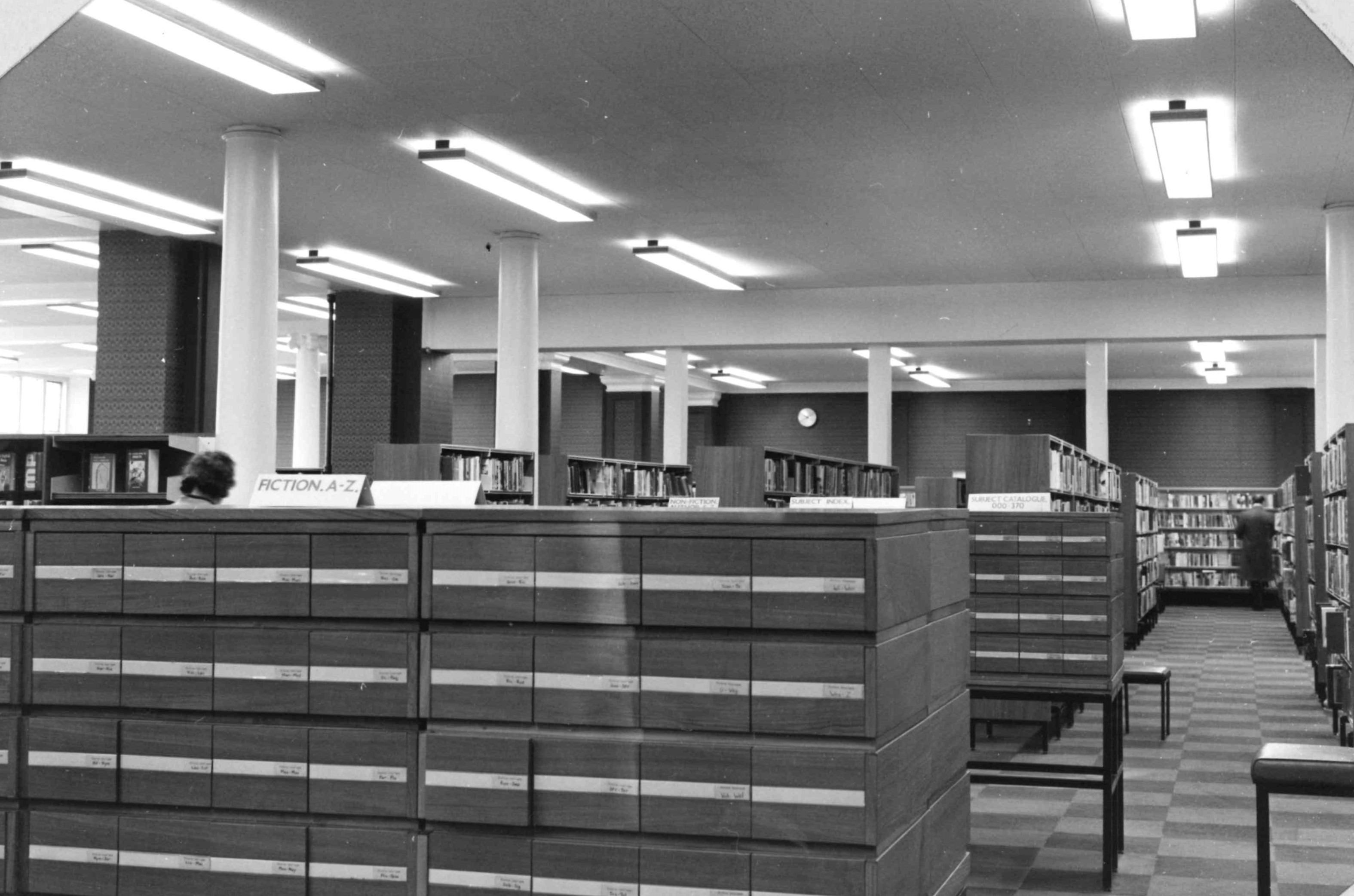
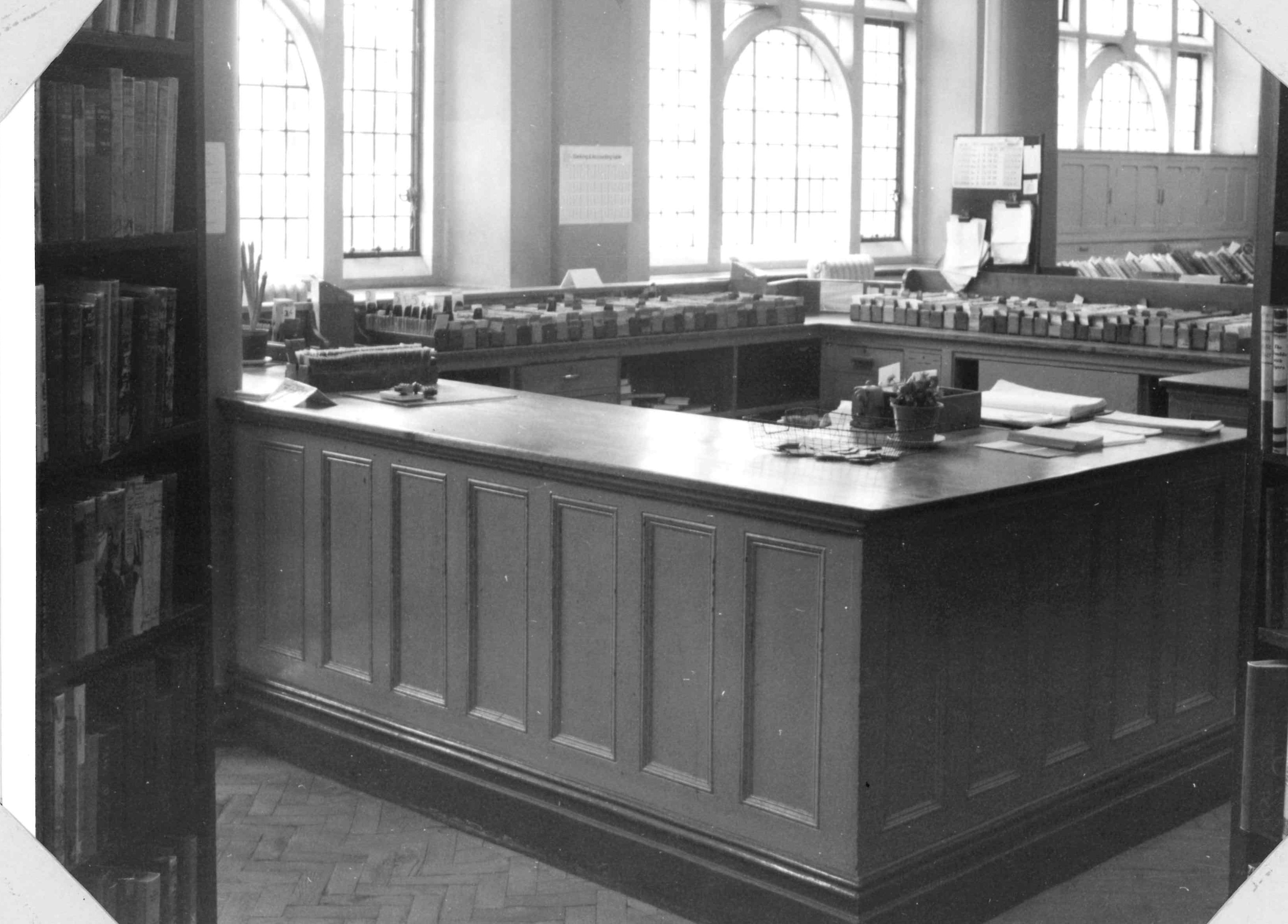
Information technology has had the greatest impact as drawers of index cards and library membership tickets (Browne issue system) were replaced by online catalogues. Nothing fazed, Mr Jackson was at the forefront as a volunteer, following his retirement, and soon began scanning photographs and submitting word processed transcripts and indexes in Excel. Over the years we have bound over 15 volumes of his work that have helped staff and family history researchers at home and abroad.
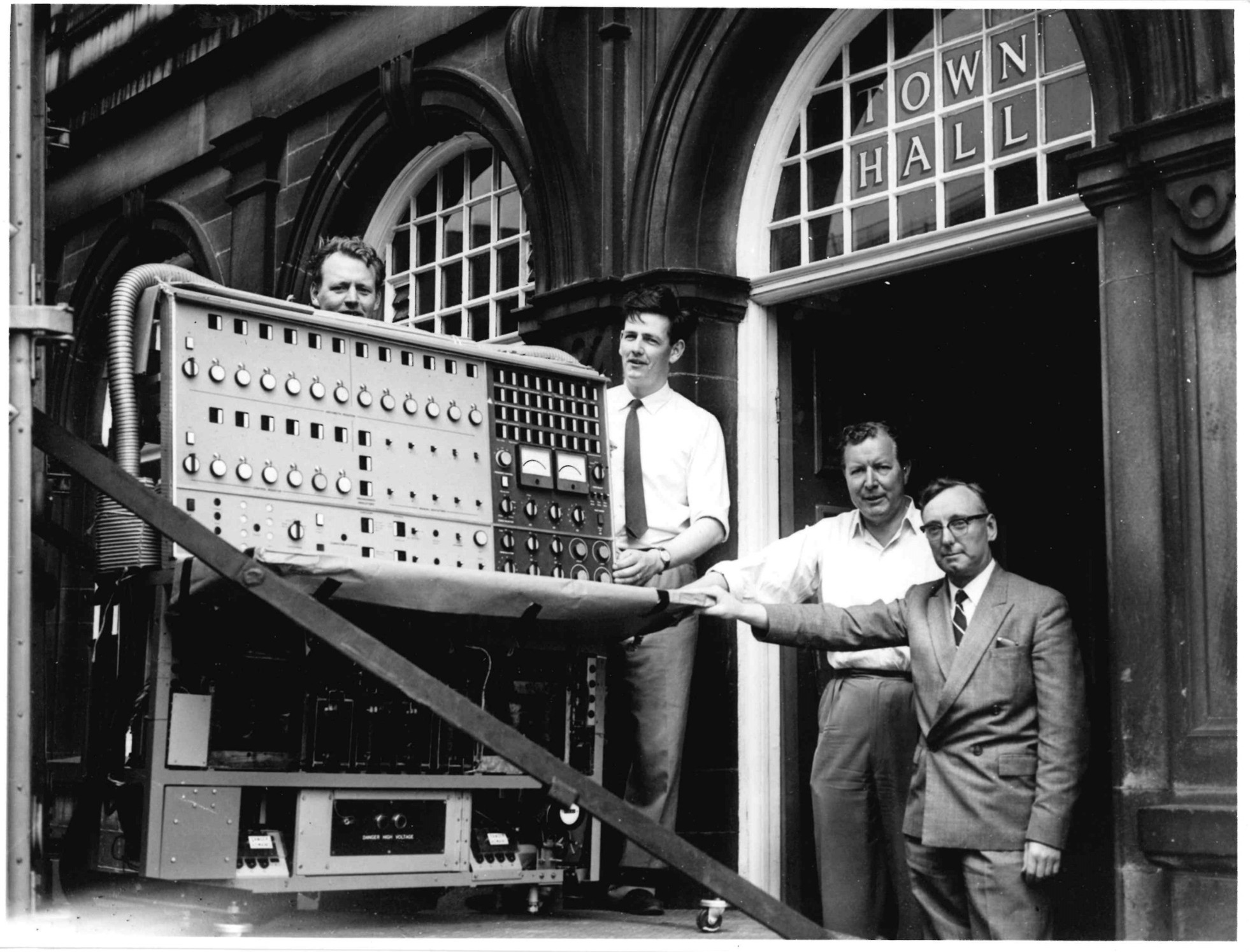
Moving the new computer control panel into the Town Hall, Keighley News, 26th June, 1965.
Mr Jackson cut the cake for us to celebrate Keighley Library’s 120th anniversary year and continues to attend events and support us and we thank him so much for such dedication.
Cutting the Cake
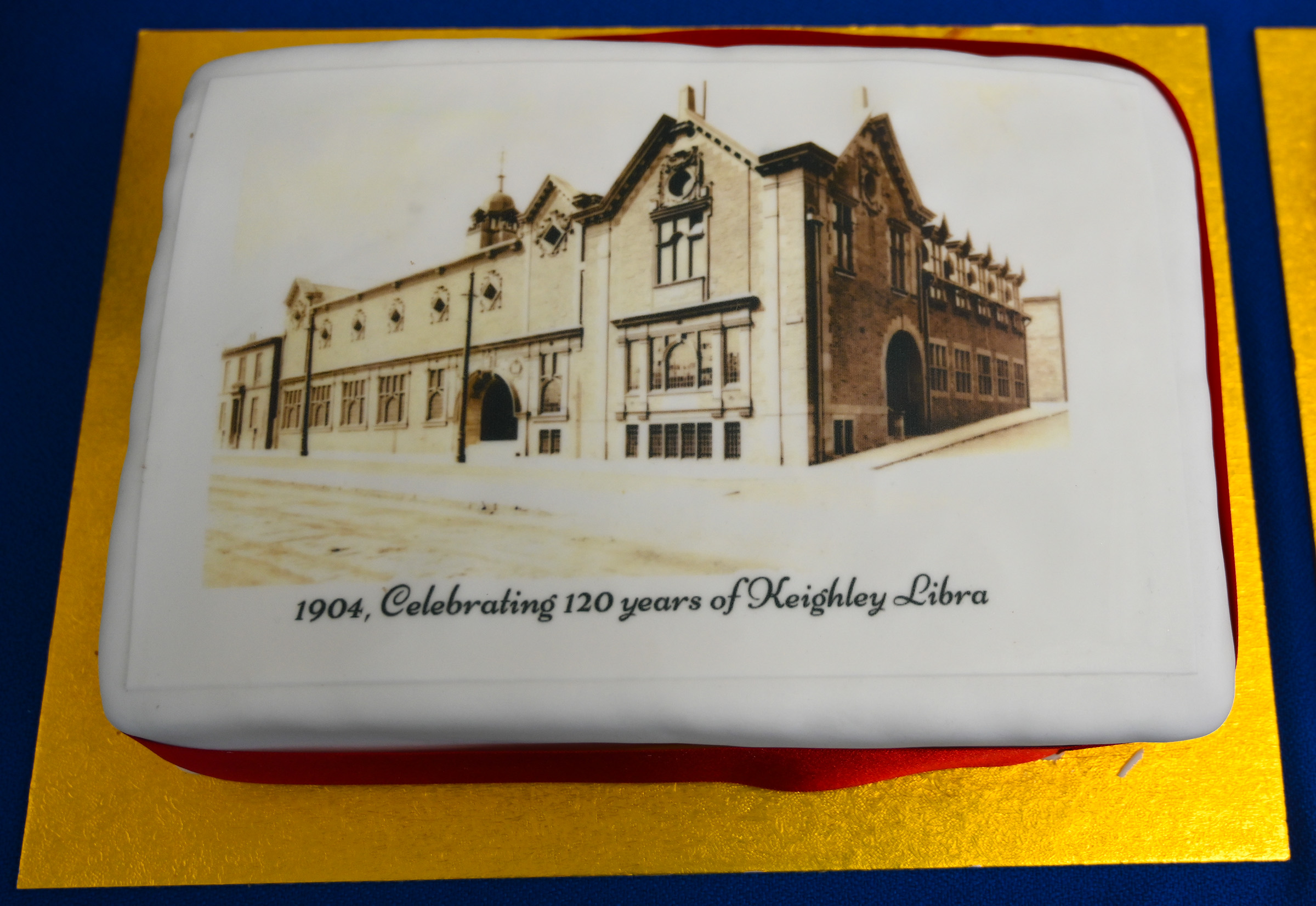
These photographs showing Keighley Library’s previous incarnations reveal a few of the changes over the last 100 years.
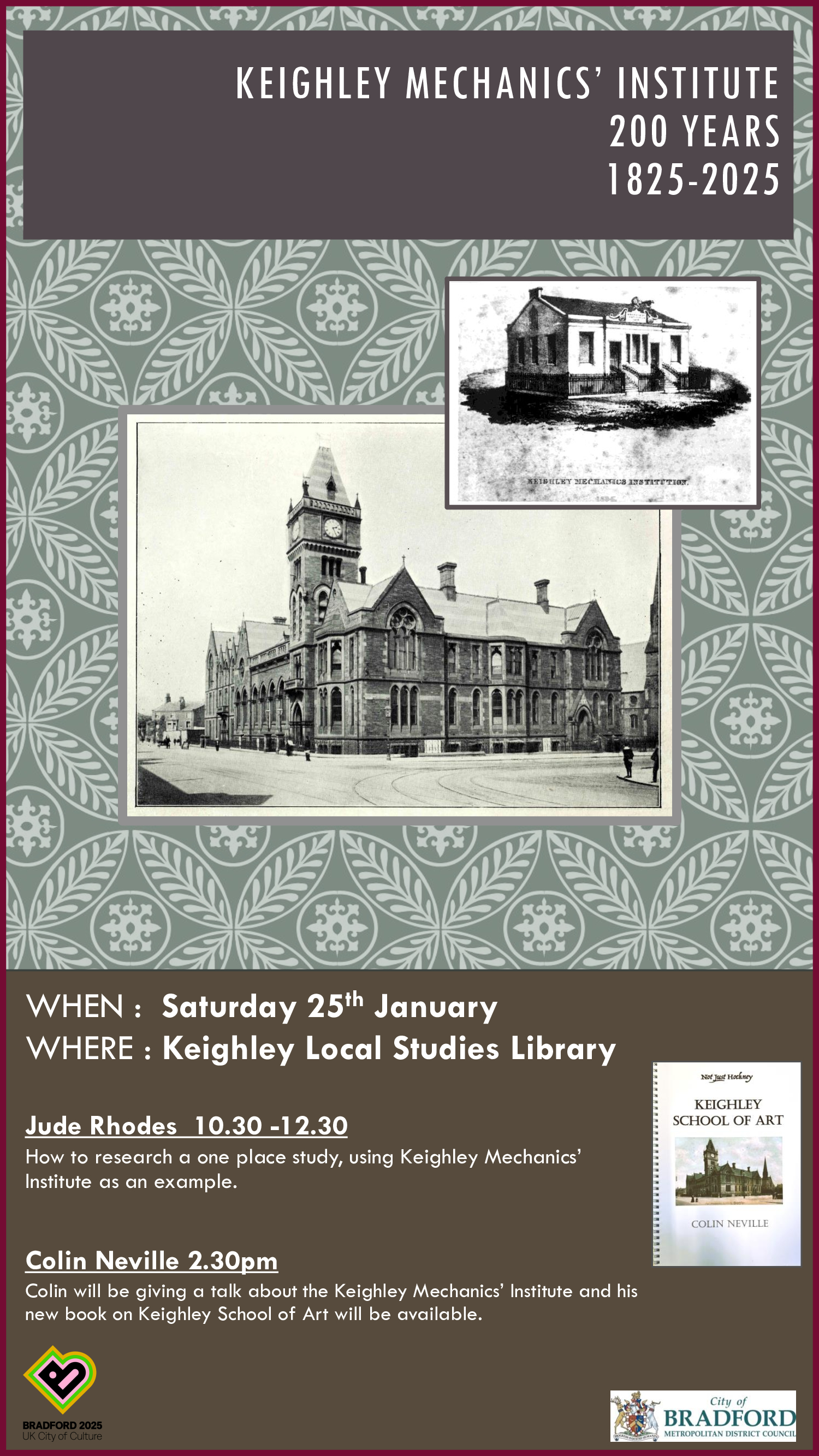
As part of the City of Culture celebrations, Keighley Local Studies Library is planning a day of events to celebrate the foundation of Keighley’s own Mechanics’ Institute, a cultural institution that had enormous reach in its heyday and was one of the first in England, following on the heels of the very first in Edinburgh in 1821 and Glasgow in 1823.
Founded formally by 4 working men at a public meeting held on 14 February 1825, join Jude Rhodes, lecturer in local history and genealogy and the Local Studies’ staff, as they take you through a one place study of this institution, its history, influence and far-reaching impact. We shall look at the characters whose lives the institution and its member influenced, including the Brontë family and later how it benefited scholars of Keighley’s Grammar School, including internationally famous historians: Lord Asa Briggs and Sir Herbert Butterfield. We shall also look again at the Institute’s associations with Andrew and Louise Carnegie and their ultimate gift of the Keighley Public Library to the town in the 1890s.
In the afternoon, Colin Neville, writer and editor of the popular “Not Just Hockney” web site, will take us through the Institute’s history, emphasising the role of the School of Art, the subject of his very latest book in his series on the history of art in the Bradford District. Colin will show how the art school became internationally renowned through its technical education, led by Sir Swire Smith, and how it produced artists, art historians and teachers such as Sir Augustus Spencer who became Principal of the Royal College of Art in London. Colin Neville’s latest book, “Keighley School of Art” will also be on sale.
Both events are free, just turn up on the day please. We look forward to seeing you and sharing our wonderful archives.
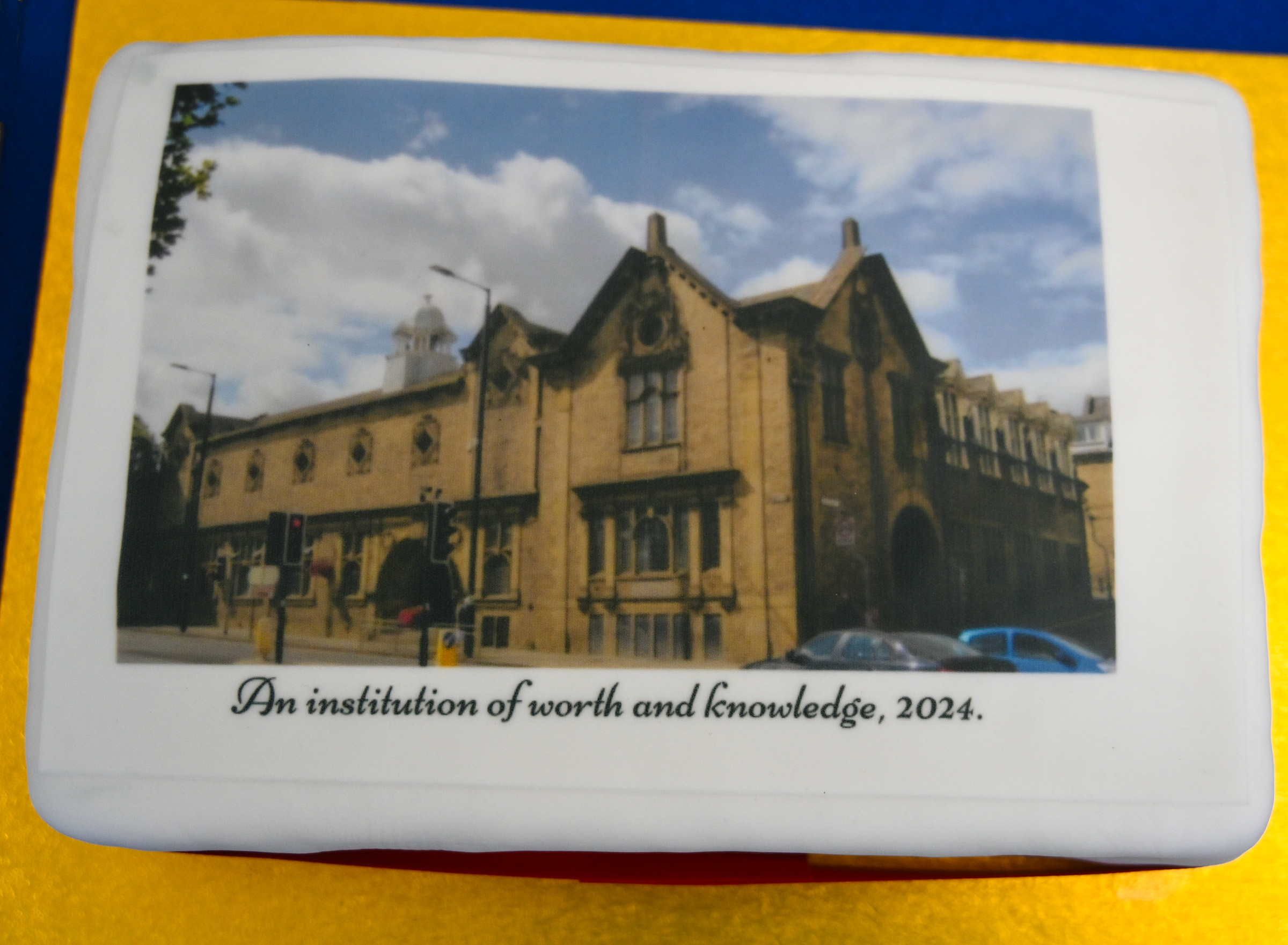
Keighley library’s celebrations got underway in earnest on Saturday 30th November with a day full of events. Mr & Mrs Carnegie were here to help celebrate our libraries milestone and St Andrew’s Day was a fitting day to celebrate our Scottish benefactors generosity in giving the gift of £10,000 in 1899 for the building of Keighley Library, the first library in England he financed.
Just some of the photos from the day. All photographs supplied by Cath Muldowney Photography.
Our two wonderful cakes were generously supplied by the Keighley Lions.
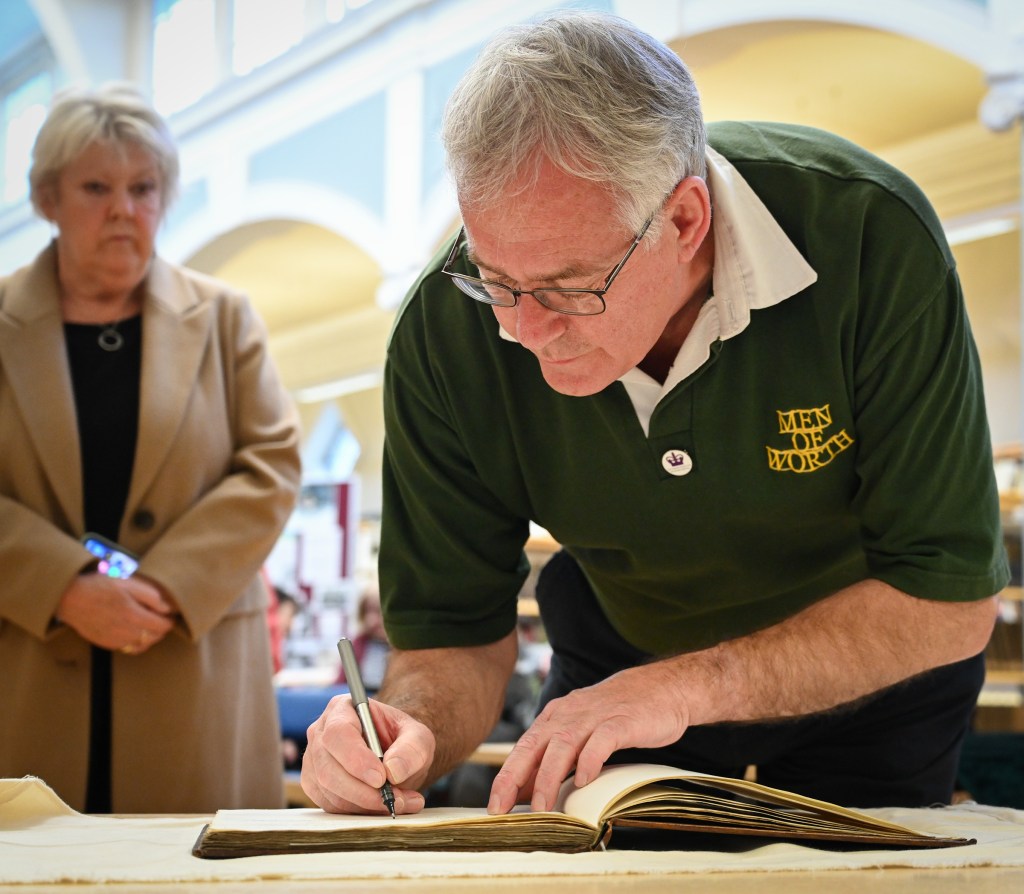
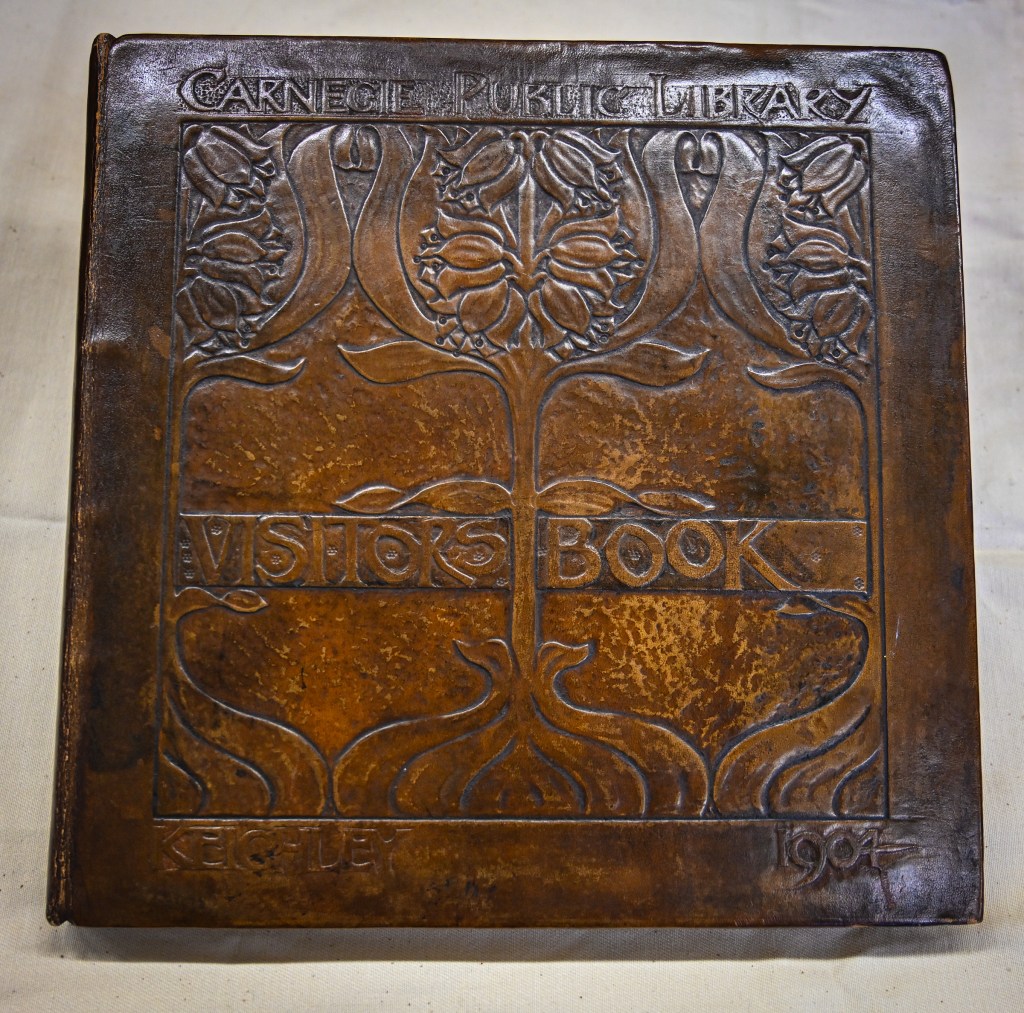
Many guests signed the original visitors book from 1904.
Mr Philip Jackson and Charlie Bhowmick MBE
The cake was cut by our longest serving volunteer Mr Philip Jackson aged 99. Mr & Mrs Carnegie ( John Ibbotson, Irene Lofthouse ) also lent a hand cutting the cakes.
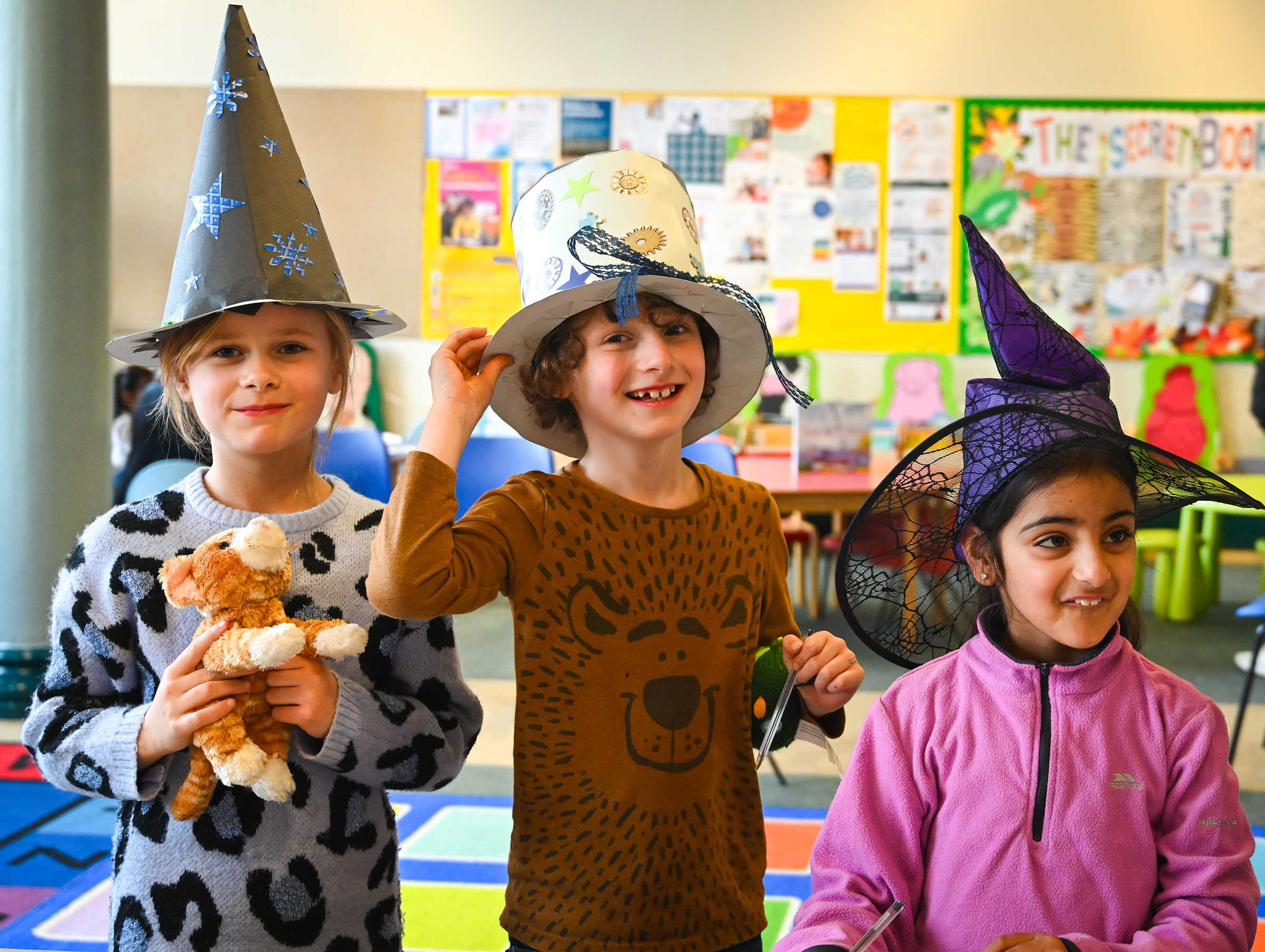
Children enjoyed making hats.
Tim Neal from Keighley & District Local History Society gave an excellent talk on the History of the Library.
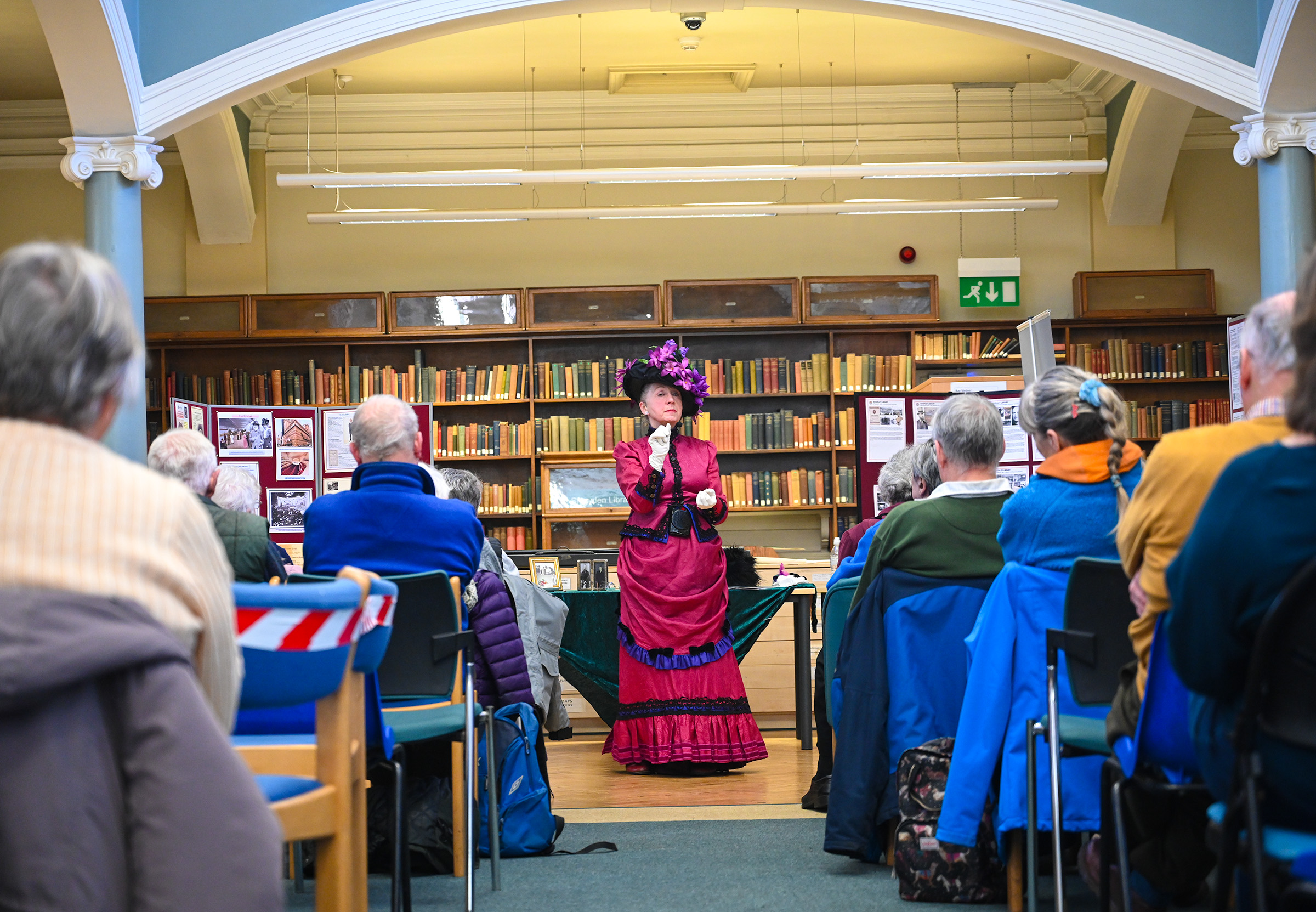
Irene Lofthouse as Mrs Carnegie.
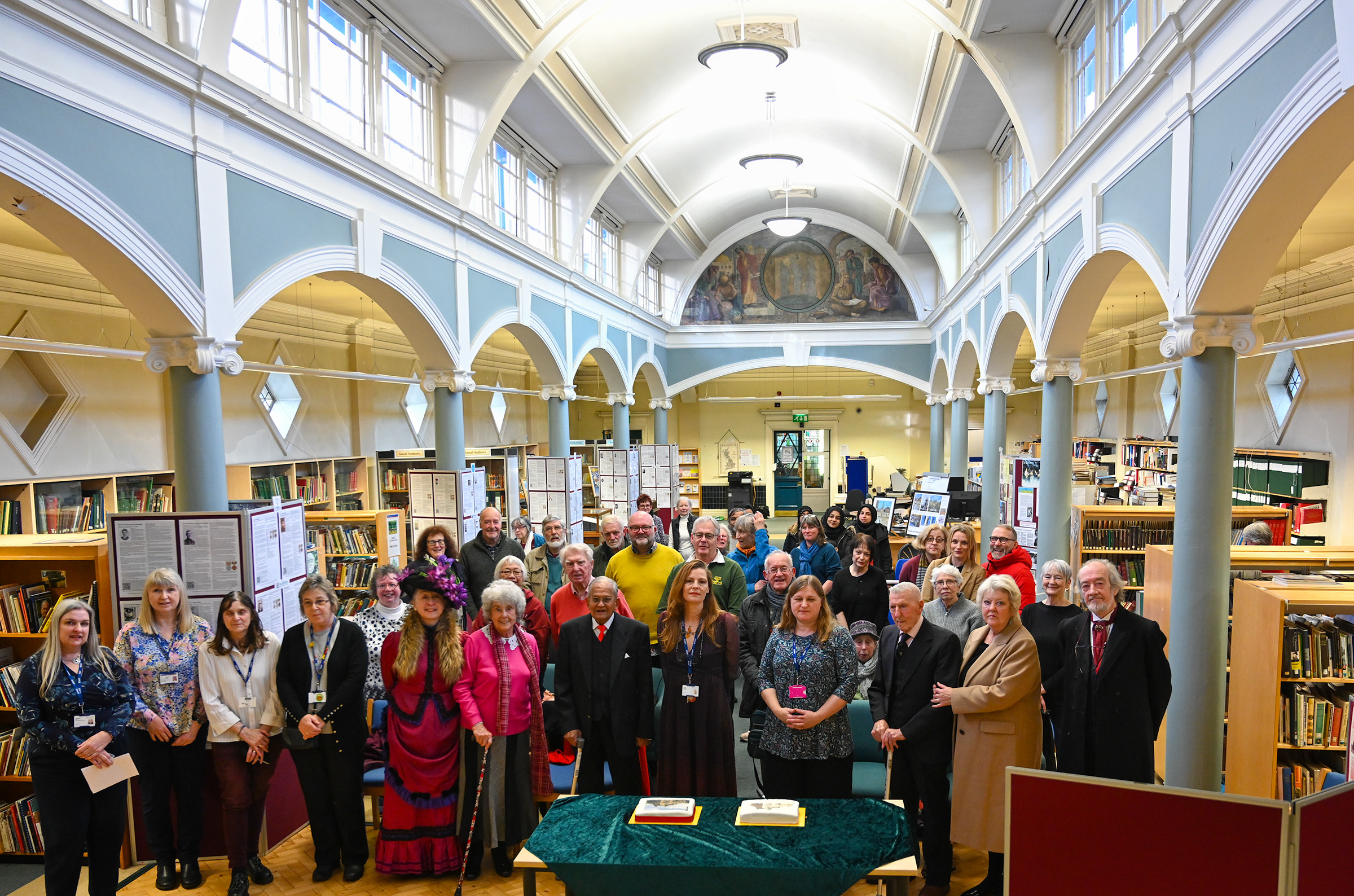
Library customers, staff and volunteers posed for a group photo.
Back-to-back housing was the topic of Jude Rhodes’ talk this week, the second in the series of illustrated presentations by this wonderful speaker and although these houses are still all around us in their later improved incarnations, back-to-back history continues to surprise us.
Back-to-backs were first mentioned in Bermondsey as early as 1706 and were built in Birmingham and Nottingham in the 1770s, Manchester and Liverpool in the 1780s. Leeds began to build them in 1787 and has the most back-to-backs in the country. Keighley’s own early workers’ housing was centred around West Lane at Westgate, including the Pinfold area, its terraced early back-to-backs include Leeds Street and Turkey Street, see illustrations.
The early back-to-backs houses usually consisted of a kitchen room with 2 bedrooms on the floor above and a cellar place for coal. Houses at the rear were usually accessed by tunnels from the street. They were popular for cheap rents and running costs but were unsanitary with shared middens and water supply, small windows and generally a lack of ventilation with subsequent damp. There was much overcrowding and Jude illustrated this with 40 Birmingham houses sharing 3 privies, that’s potentially 160 people. Piles of human and other waste were added to make “midden heaps” that were cleared into the rivers, becks or streams by the Night Soil Man or left to pile up in the yard before spilling into open sewers, basically ditches with water running through if the gradient was good, if not then waste was left to stagnate, producing poisonous and noxious fumes. Water from rivers, becks and streams could so easily carry typhoid and dysentery, such was the pollution before proper sewerage systems.
Bye-laws and the Public Health Act of 1875 tried to improve workers’ housing and improved back-to-backs were built. These were referred to as “byelaw terraced” housing. These houses had to meet minimum standards of build quality, ventilation, sanitation and population density. Significantly, this type of housing made up over 15% of the United Kingdom’s housing stock in 2011 and gentrification has taken place for some, as at Chimney Pot Park in Salford.
The overcrowding, insanitary conditions and deterioration of much early housing caused concern, not least amongst employers who required healthy workforces to fill their factories and mills. The Brigg family of Calversyke Mill in Keighley built better back-to-back housing in Lynum Street, however their hopes to build a model village like Sir Titus Salt in Saltaire was prevented due to the inadequacy of the water supply there. Later they sold extensive land around Guard House that enabled the building of Keighley’s first 136 Corporation houses at Guard House in 1928 with gardens, space, light and sanitation. James Lund of North Beck Mill built houses near his gift to the town of Lund Park and some of his houses, post 1878, remain in Calton and Chelsea Streets. Robert Clough of Clough Mills built houses in what is known today as the “Jewel Box” area of Keighley, called after the names of five streets: Opal, Diamond, Ruby, Pearl and Emerald. The list of house planning millowners goes on though not for model villages.
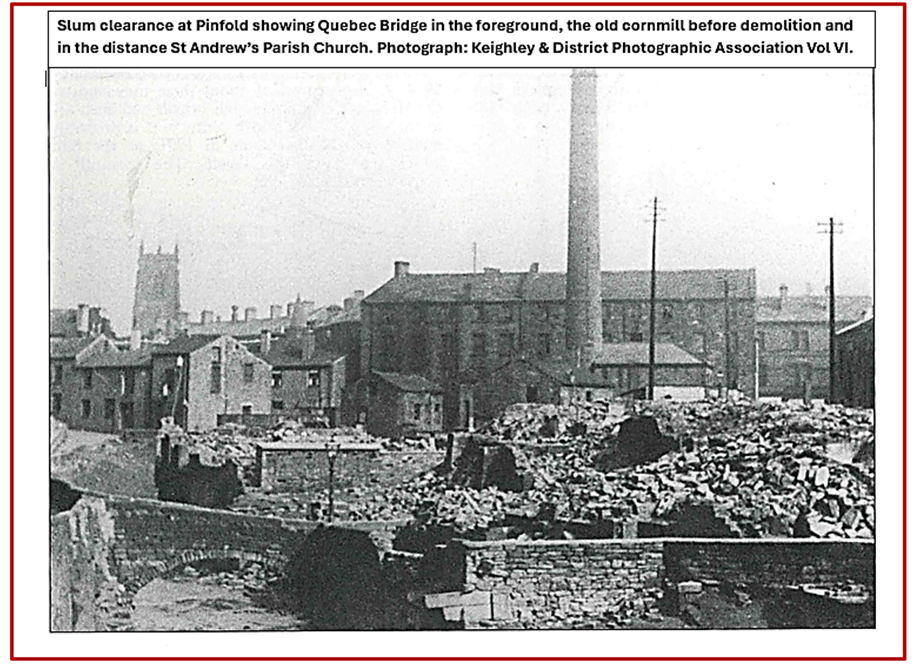
Slum clearance began in the 1930s and went through stages up to the 1970s. In Keighley, much early housing was cleared when the Housing Act of 1930 allowed for compulsory purchase of the proven inadequate housing for demolition. Jude highlighted the destruction of community in the process, however, and some members of the audience noted Parkwood in the 1960s. Not everyone wanted to leave their homes, improvement yes, not demolition and rehousing. Stories from the audience included a de-lousing procedure for inhabitants of “slum dwellings” before access to alternative housing was permitted. Dr Ian Dewhirst MBE in “A History of Keighley”, page 132, highlights the loss of “landmarks in the folk-geography of generations: the Bay Horse Inn and the Angel… the picturesque Quaker meeting-house in Mill Street; the pinfold where stray livestock had been impounded; hump-backed Quebec Bridge, scene of many a Saturday-night brawl…”
Time marches on sometimes leaving shock waves in its wake as in the final fact Jude noted, that her “all time dream home”, her former grandparents’ back-to-back in Leeds, where they struggled to live comfortably, is today not even affordable to her. How things change.
Jude Rhodes is an Associate of the Association of Genealogists and Researchers in Archives (AGRA), specialising in Yorkshire history. She is she explains, “passionate about using local history with family history, this provides the exploration of who our ancestors were, why they lived in a particular place and how they were part of their community at a given time”.
Thank you to all who attended, please find an earlier blog with future talks listed into next year. Please note these are free events and also a place booking is required for that on the 11th December 2024, Christmas Family Traditions and Crafts, contact Keighley Local Studies. Poster with details is with this blog.
Jude highlighted some resources and museums during her talk, here are some mentioned below revealing the back-to-back history experience:
For building plans, OS maps, photographs, town plans, Borough records, and at least 2 in depth studies on the housing of workers and employers, please see Keighley Local Studies Library, North Street, Keighley keighleylocalstudies@bradford.gov.uk
National Library of Scotland online collection of town maps and plans for England and comparative recent aerial photographs for study https://maps.nls.uk/os/
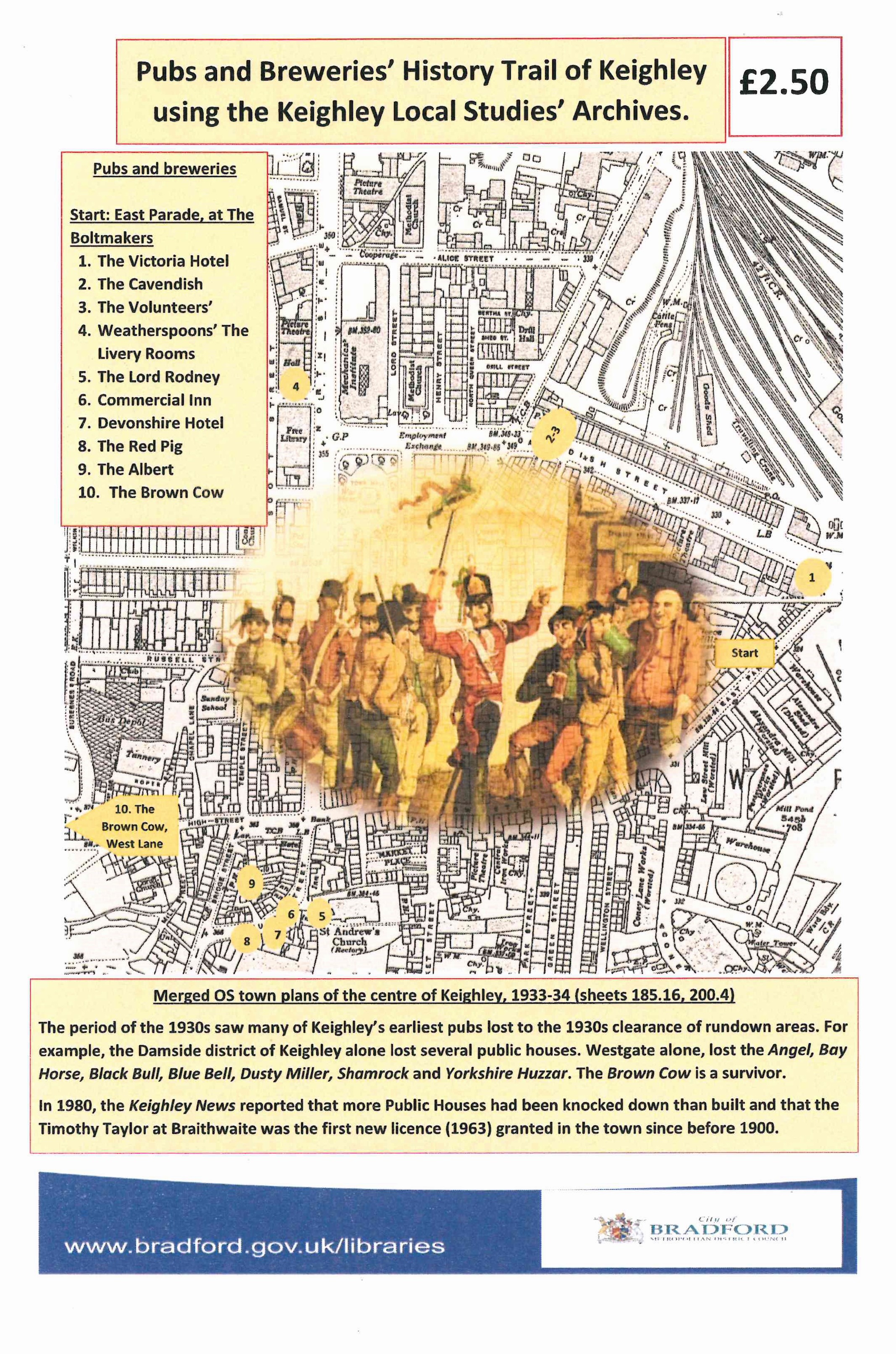
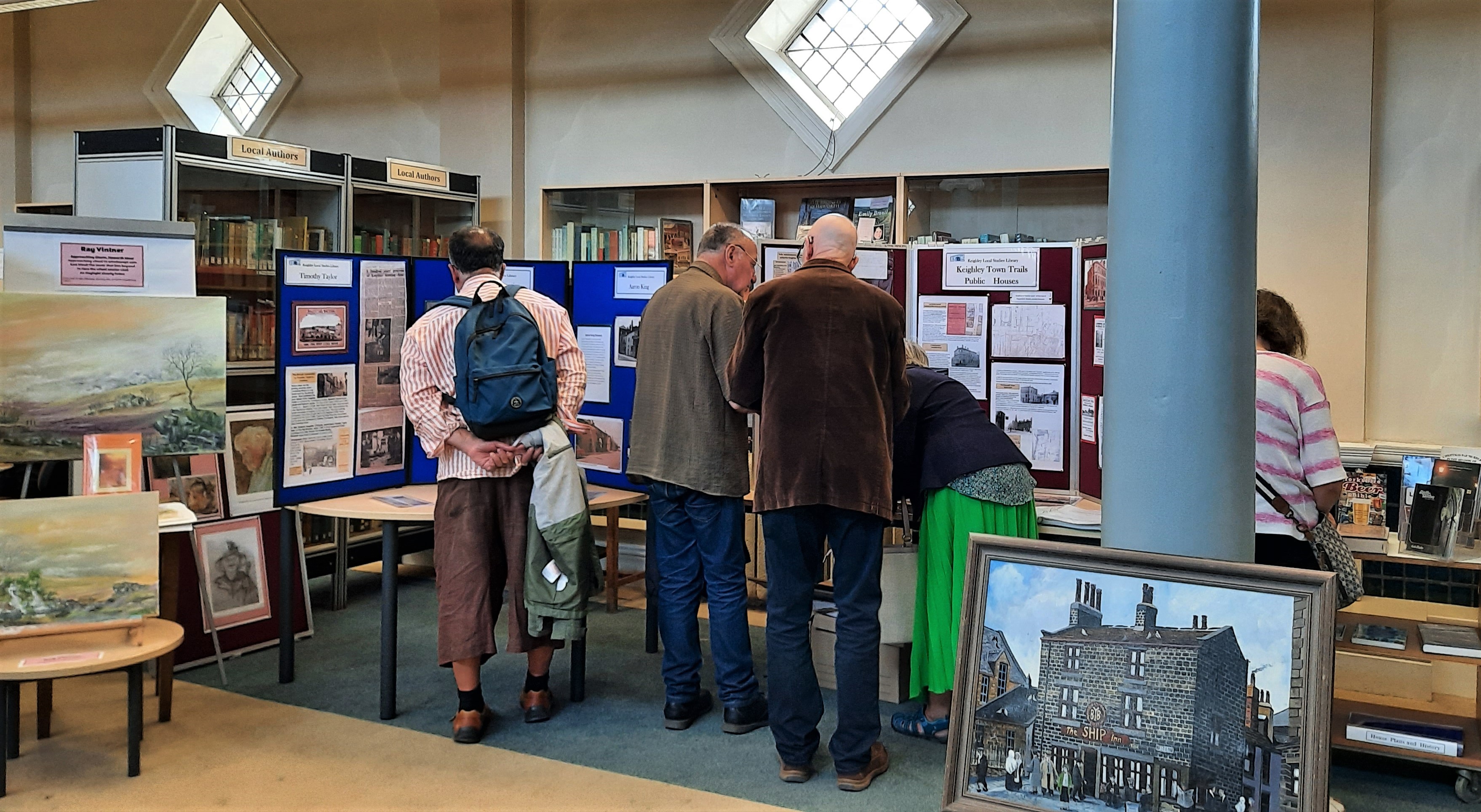
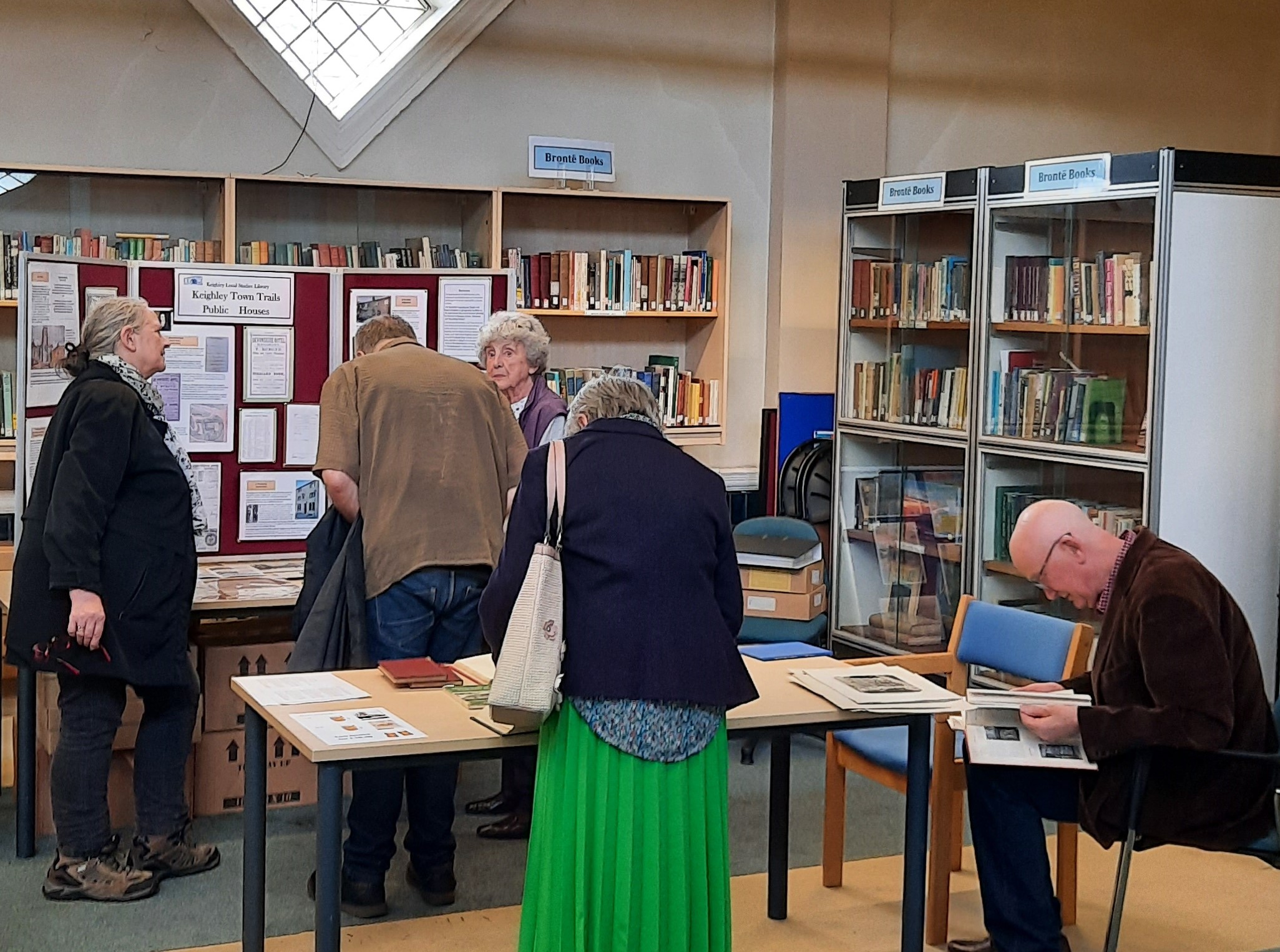
On Saturday 1st June, staff at Keighley Local Studies Library launched another in their series of Keighley Heritage Town Trails, this time: Pubs and Breweries’ History Trail of Keighley using the Keighley Local Studies’ Archives, price £2.50, limited publication only.
The trail consists of a walk around our town to look at 10 of the oldest pubs and how their histories, as with many old buildings, also help to tell the unfolding story of this unique place and of some of their associated characters, some of whom would contribute directly to Keighley’s development and achievements. In Keighley’s case there is the publican who founded Keighley’s Free grammar school in 1713 and so helped to launch the careers of some very high achievers from the subsequent Keighley Boys’ Grammar School, including two historians who changed the course of history writing: Sir Herbert Butterfield (who highlighted a Whig interpretation of history) and Lord Asa Briggs (champion of urban and social history, higher education, the Open University and code breaker at Bletchley Park).
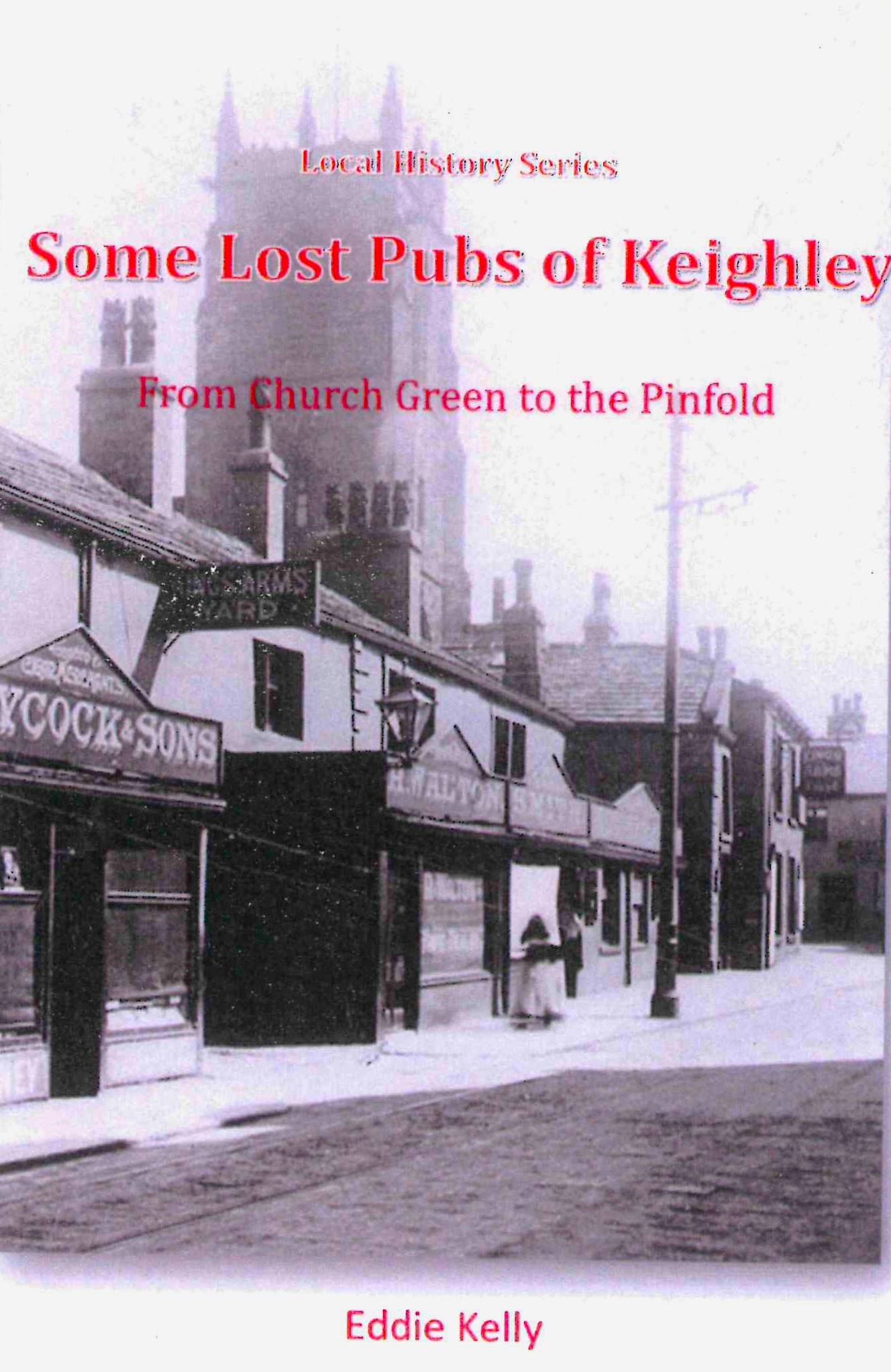
Staff were helped in the writing and production of the trail by our local specialist in pub history, Eddie Kelly. He gave generously of his time and in-depth research of Keighley’s history over many years. The Library already holds a couple of Eddie’s studies in the library that are very popular with researchers, and he also produced his own history for the occasion: Some Lost Pubs of Keighley, From Church Green to the Pinfold that was published for sale for £7.50, limited publication only, all proceeds to the Library service.
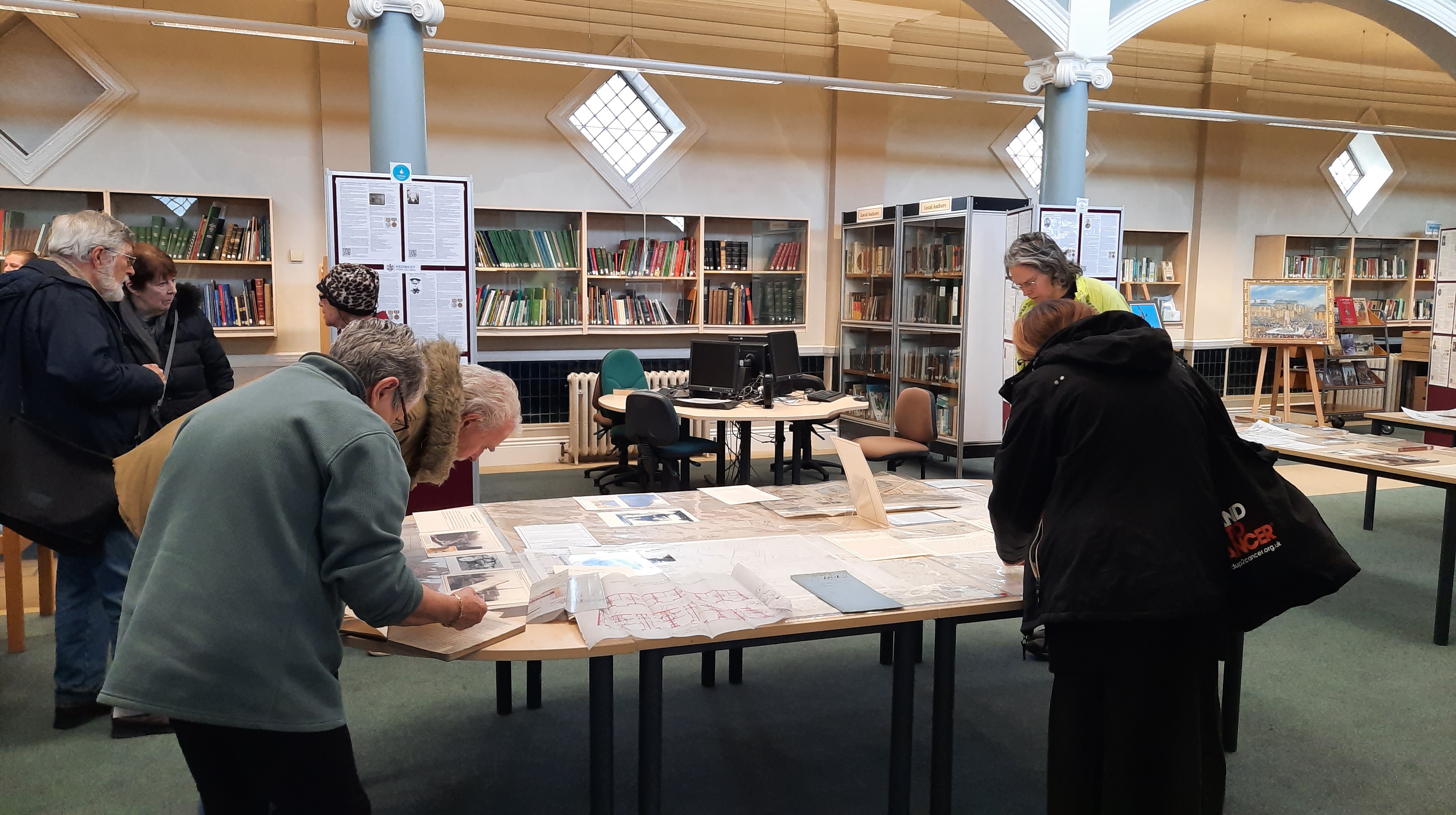
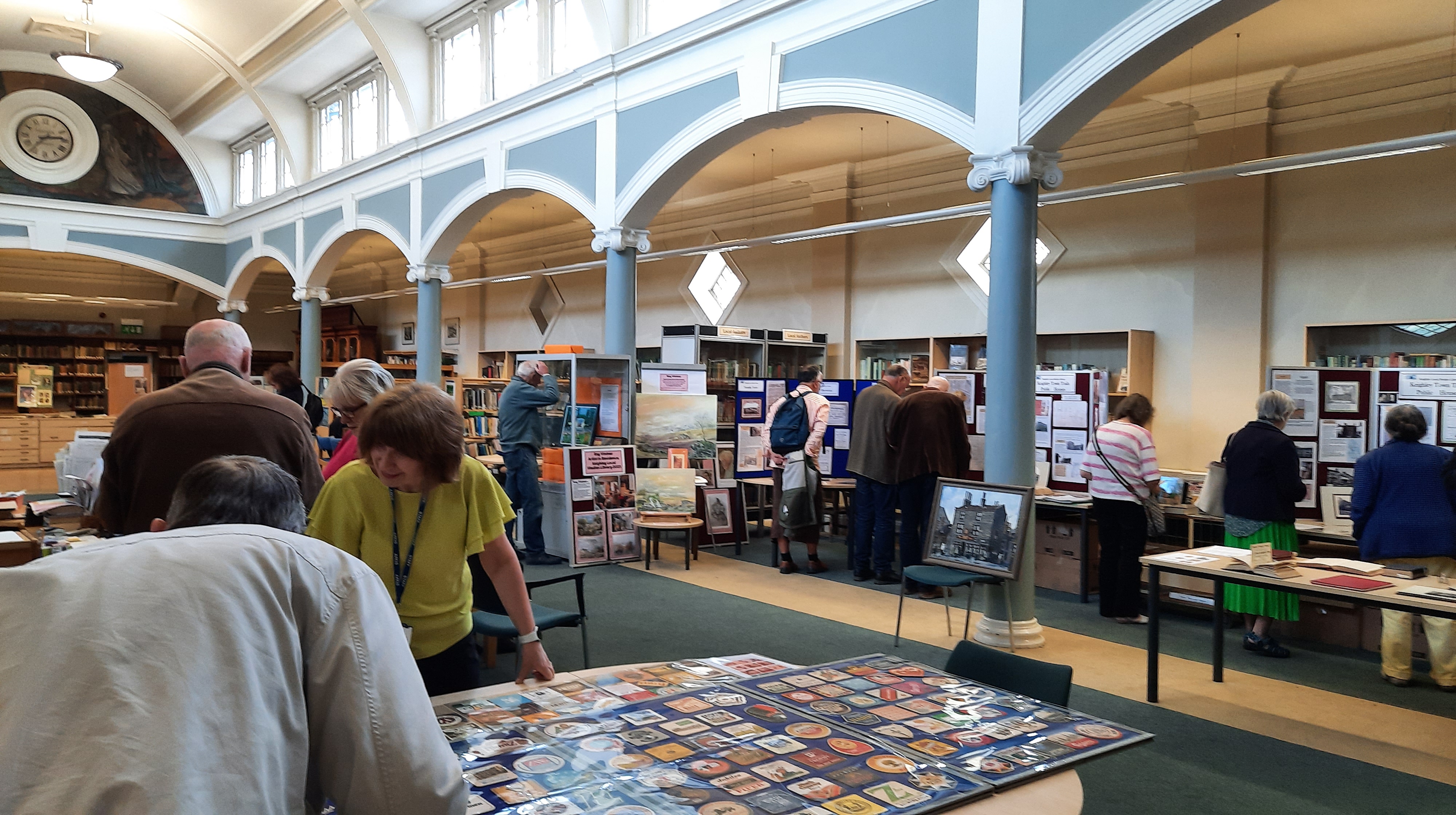
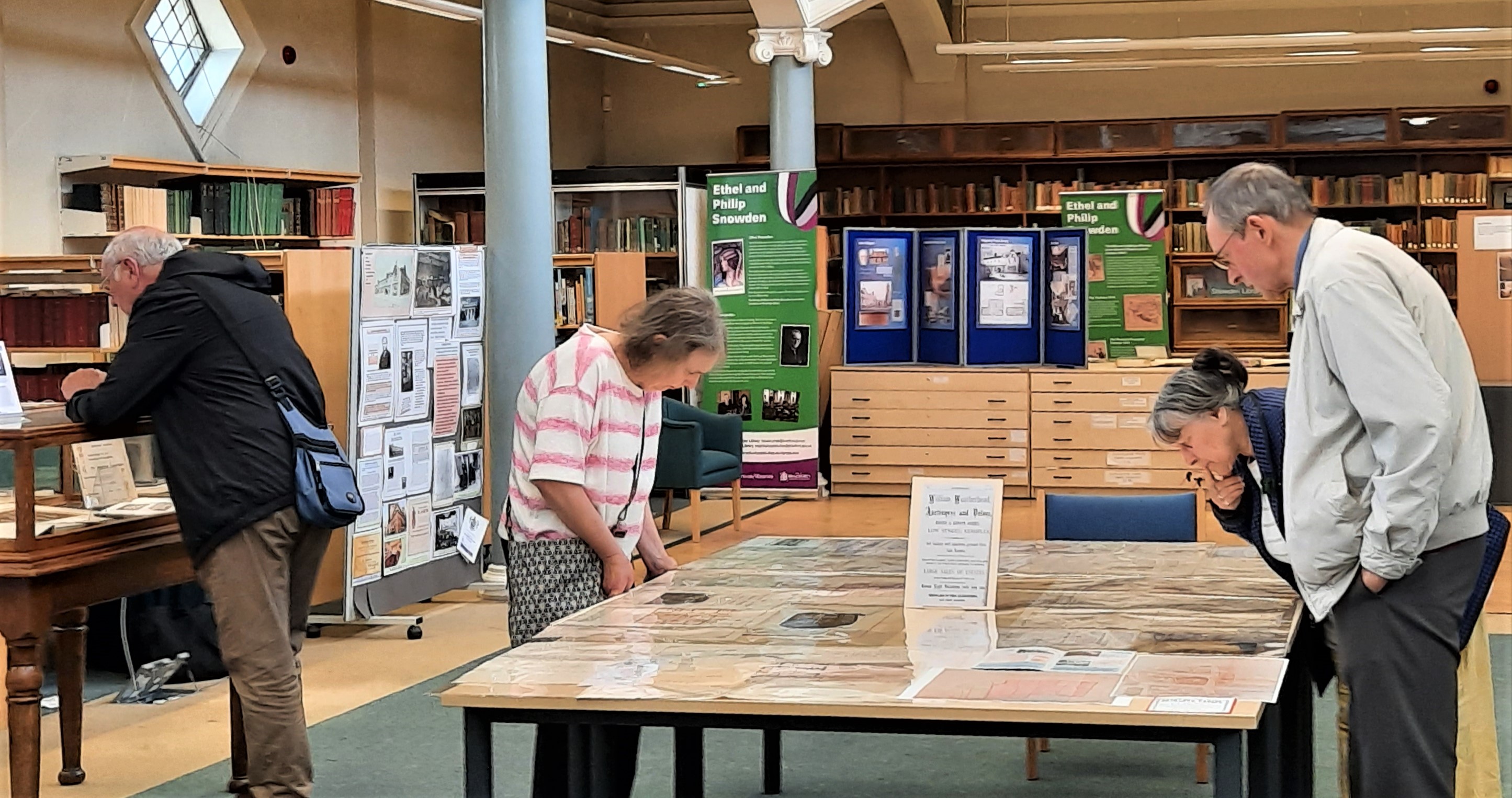
A large display accompanied the launch including records from Keighley Local Studies’ substantial archive such as photographs, business archives and local estate agent’s Weatherhead collection of sale plans. Town plans and trade directories were also on exhibited and a source that proved very useful: Keighley Year Books and Almanacks because in their descriptions of local societies, they include how many met and even held competitions in hotels and pubs, like the Gooseberry Growers’ Association that held their annual meetings and prize giving at the Wellington Inn in Hanover in the 1870s. As always, news cuttings were an important addition as well as local histories of pubs, hotels and inns, business guides and books on how to trace your publican ancestry. Some of the buildings that were researched have fine historic architectural features and consequently are listed by English Heritage, these descriptions were also made available such as for one of the oldest, Taylor’s on the Green, formerly more locally known as The Lord Rodney.
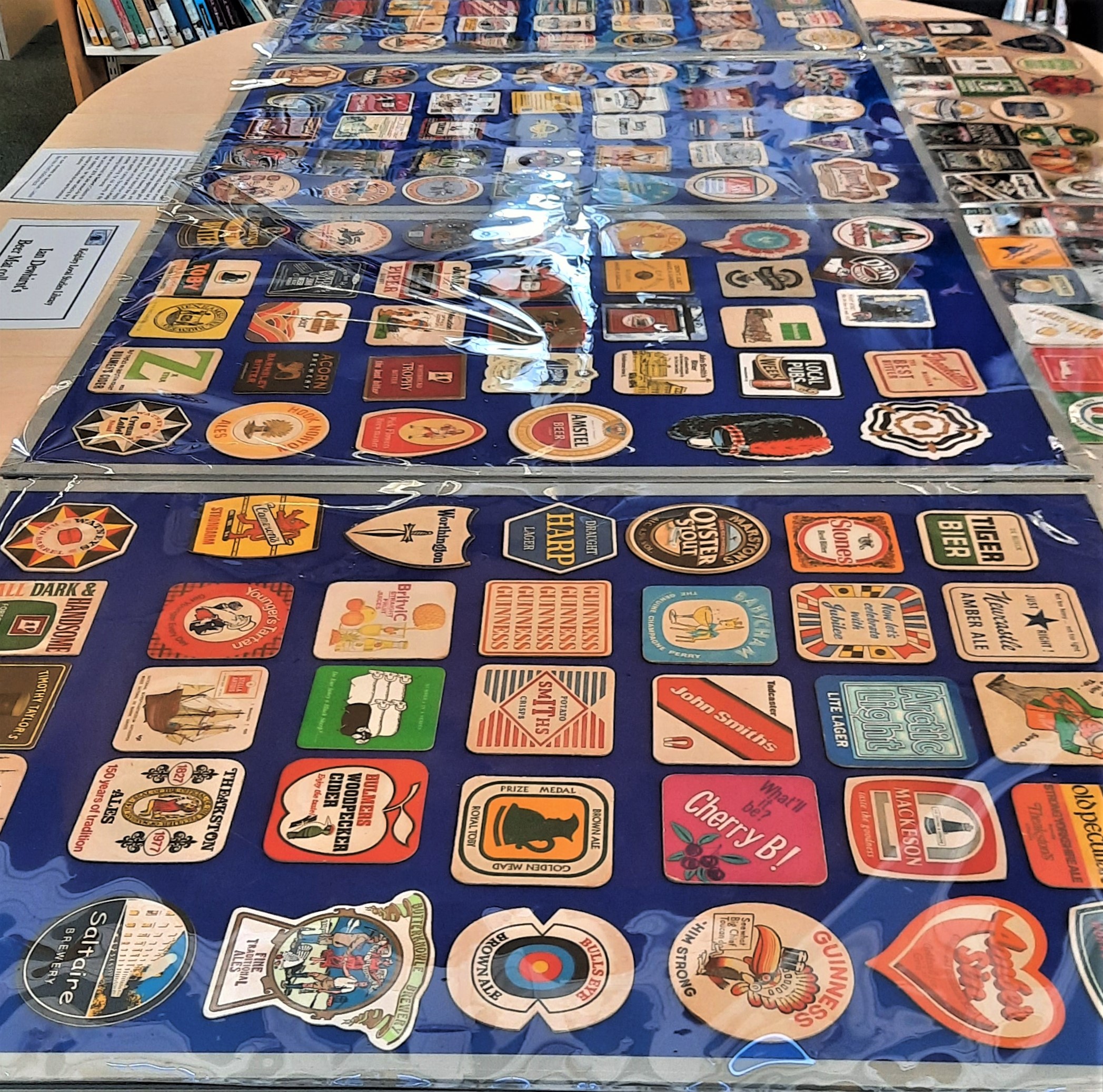
Attendees were also fortunate to see a large sample from a very fine collection of beer mats by no other than ex Keighley Reference Librarian and local historian, Dr Ian Dewhirst MBE that attracted a lot of attention and brought back many memories of changing fads and fashions in drinking in Yorkshire pubs over the last 50 years or so.
The turn-out was satisfyingly about right for an unusually dry, warm and sunny Saturday and copies of both trails were sold and some since. The basic display is up for another week or so but due to the limited publication of both, it has been decided to publish some sections of the Keighley Local Studies’ trail online each week on this blog. We hope that you will enjoy them.