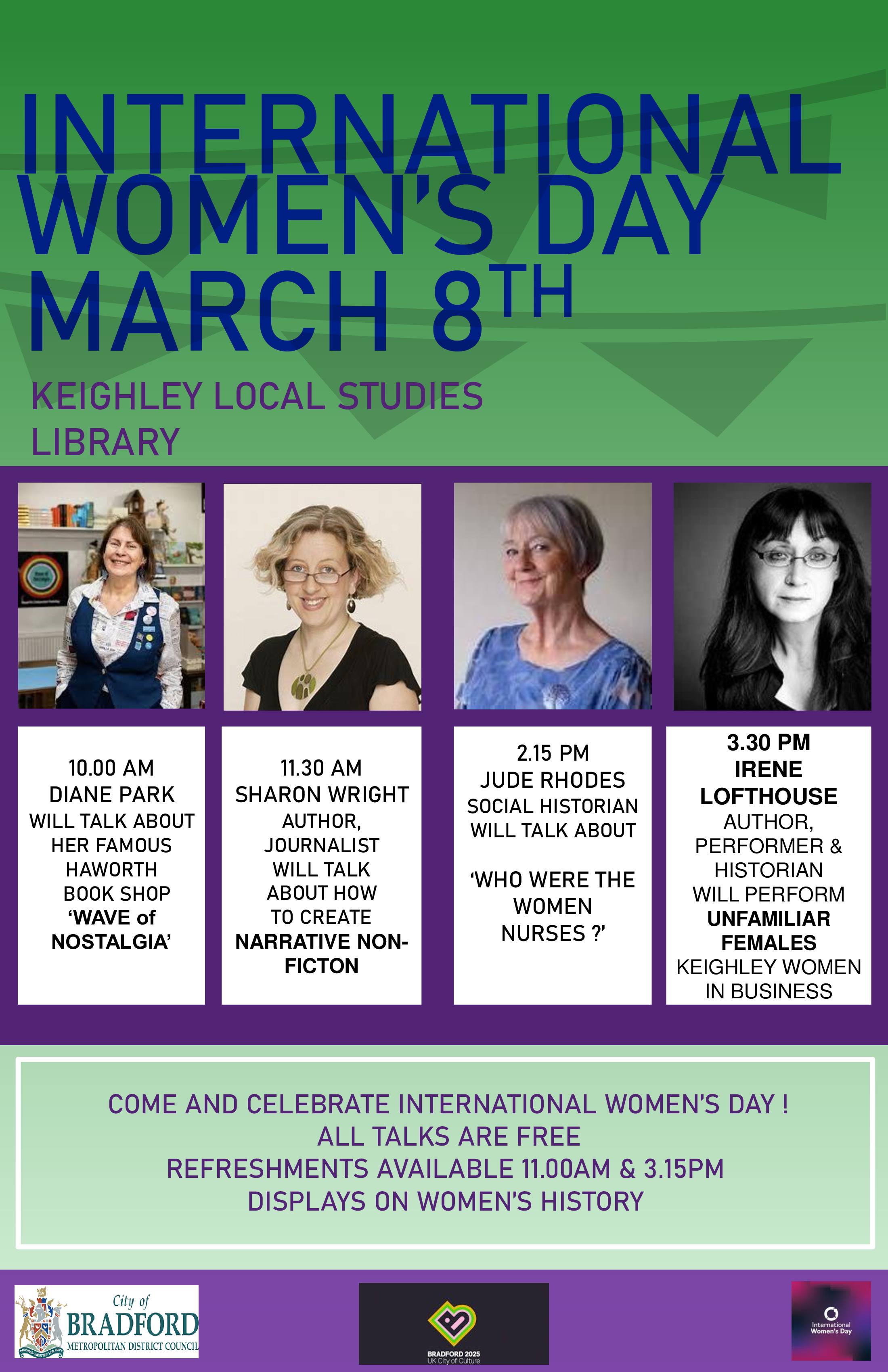
On Saturday, 8th March, it’s International Women’s Day and to celebrate it, Keighley Local Studies Library, first floor of Keighley Library, is hosting a day of talks by popular women speakers. All talks are free as part of Keighley Library’s 120 Years’ anniversary celebrations and there is no need to book, so please come along and help us to celebrate women, women’s work and achievements.
At 10am, Diane Park is going to talk about her strong women book shop in Haworth, Wave of Nostalgia, that is as popular as ever and has certainly raised awareness of women writers and artists. Sharon Wright, author, journalist and playwright will speak at 11.30am. Sharon is no stranger to highlighting the lives of women in history who have been neglected and has written about the unique and daring lives of women balloonists and shone a light at last on the life of the mother of the Brontë children, Maria Branwell, with Maria’s very first biography. Sharon will be talking about an increasingly popular genre in book shops and libraries alike, narrative
non-fiction. In the afternoon at 2.15pm, Jude Rhodes, local historian and genealogist, a speaker very much in demand in Yorkshire as well as Keighley Library will address the question – who were the women nurses? As a former practising nurse herself, now nurse tutor, we can look forward to Jude’s professional incite along the way. The day will continue its high note with the multi-talented local historian, actress, author and raconteur, Irene Lofthouse, who will speak about those women in Keighley who few might have heard of in their life time or since but who entered politics, ran businesses and generally helped to put Keighley on the map during a period when hearth and home was regarded as a woman’s only natural sphere outside a few caring professions.
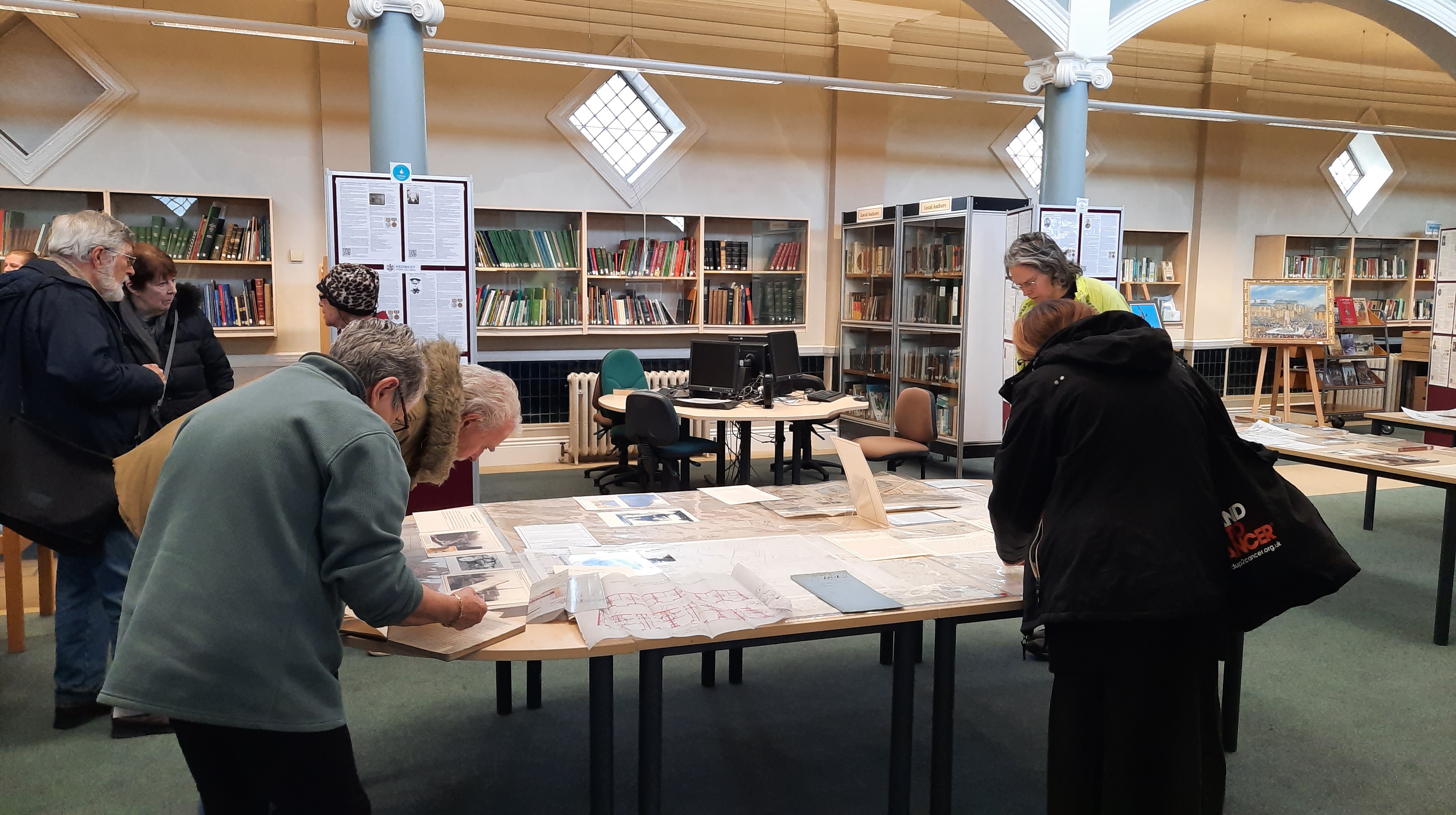
There will be accompanying displays of archive records, a sale of authors’ publications and a display by the Men of Worth about women serving as nurses and as land army personnel. Refreshments will be served mid- morning and mid- afternoon between speakers.
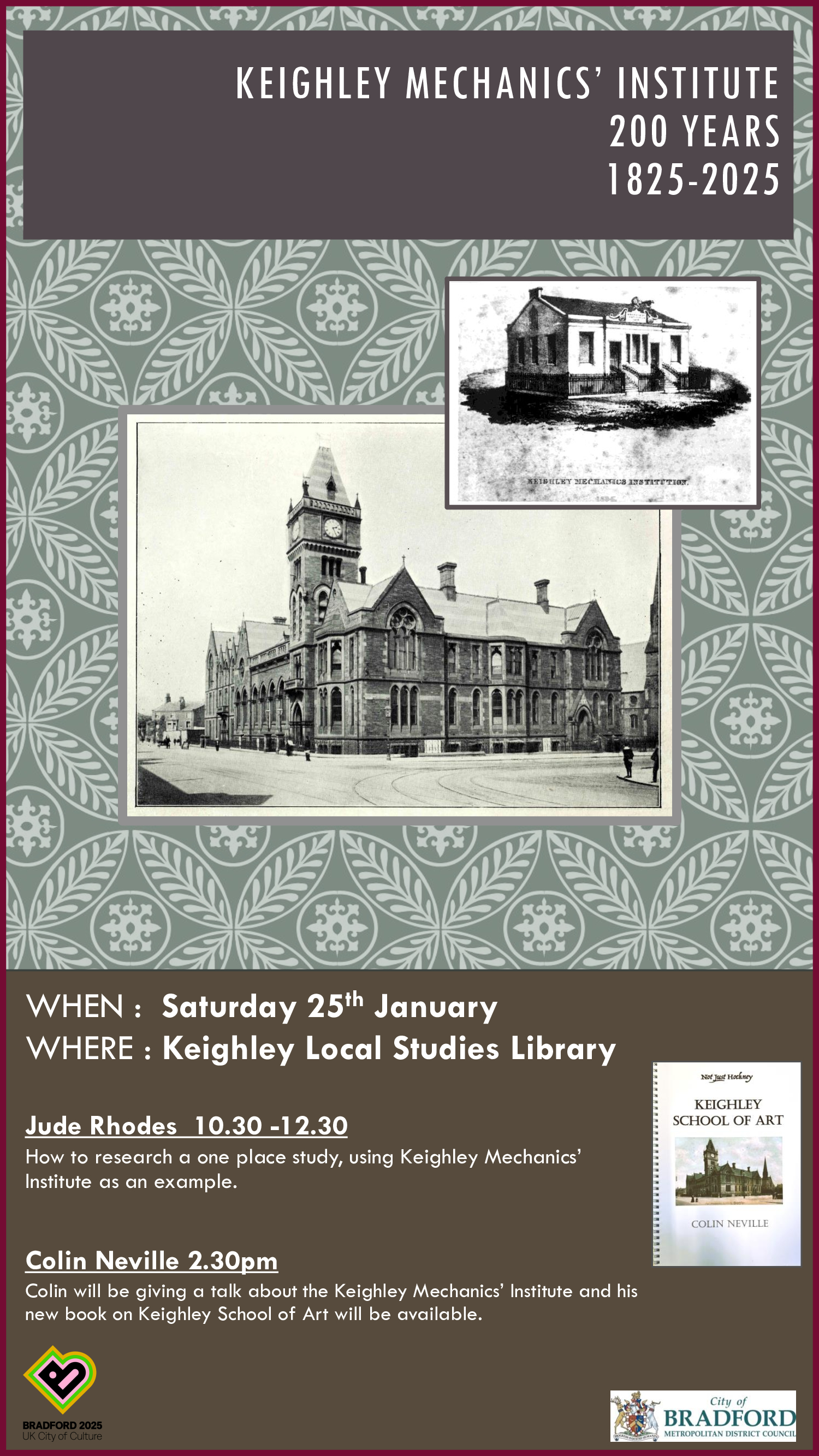
As part of the City of Culture celebrations, Keighley Local Studies Library is planning a day of events to celebrate the foundation of Keighley’s own Mechanics’ Institute, a cultural institution that had enormous reach in its heyday and was one of the first in England, following on the heels of the very first in Edinburgh in 1821 and Glasgow in 1823.
Founded formally by 4 working men at a public meeting held on 14 February 1825, join Jude Rhodes, lecturer in local history and genealogy and the Local Studies’ staff, as they take you through a one place study of this institution, its history, influence and far-reaching impact. We shall look at the characters whose lives the institution and its member influenced, including the Brontë family and later how it benefited scholars of Keighley’s Grammar School, including internationally famous historians: Lord Asa Briggs and Sir Herbert Butterfield. We shall also look again at the Institute’s associations with Andrew and Louise Carnegie and their ultimate gift of the Keighley Public Library to the town in the 1890s.
In the afternoon, Colin Neville, writer and editor of the popular “Not Just Hockney” web site, will take us through the Institute’s history, emphasising the role of the School of Art, the subject of his very latest book in his series on the history of art in the Bradford District. Colin will show how the art school became internationally renowned through its technical education, led by Sir Swire Smith, and how it produced artists, art historians and teachers such as Sir Augustus Spencer who became Principal of the Royal College of Art in London. Colin Neville’s latest book, “Keighley School of Art” will also be on sale.
Both events are free, just turn up on the day please. We look forward to seeing you and sharing our wonderful archives.
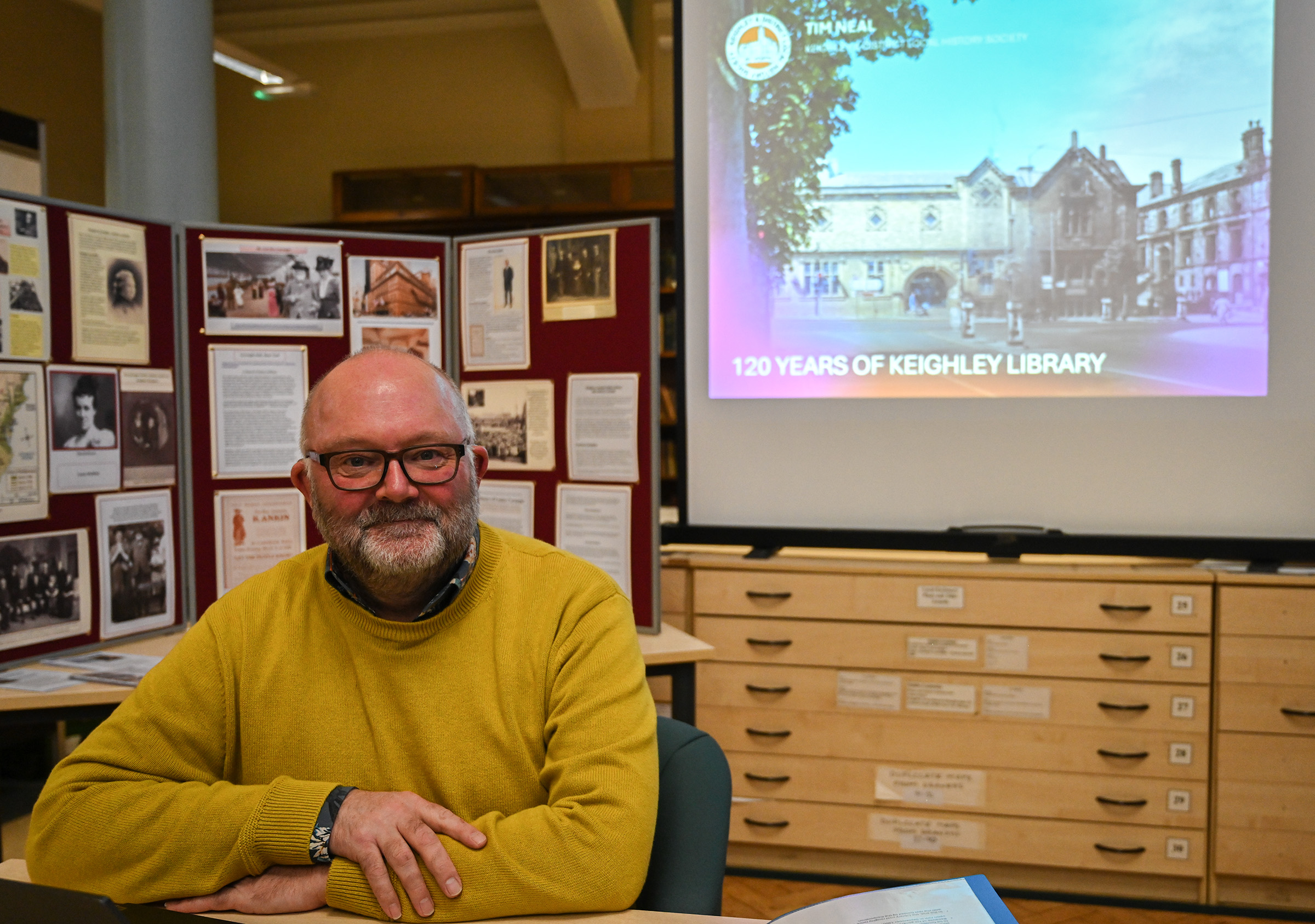
The Keighley & District Local History Society was formed in late 2004. It was created to focus on the history of the town and the surrounding area, looking at the industries and mills, the shops and streets, the parks and buildings, key players such as business people, mayors and politicians, and was designed to complement the Keighley and District Family History Society which already existed (and which continues today as Airedale and Wharfedale Family History Society).
The history of the History Society is inextricably linked with that of Keighley Library, although there are no official or formal bonds. The need for the existence of the History Society emerged from discussions around how to celebrate the centenary of the Public Library, which was 100 years old in 2004. One of the key players in those discussions was Pauline Barfield, who was Senior Information Manager in the Local Studies Library at the time. Pauline was also the guest-speaker at the very first open meeting of the society, held in the Local Studies Library on Wednesday 15th December 2004, and was later made Honorary President of the society.
Another important crossover figure is the late Ian Dewhirst, who was Reference Librarian at the Library from 1967 to 1991. As well as being a driving force behind building the invaluable collection of locally focussed documents, photographs and paraphernalia that now form the backbone of the Local Studies Library’s collections, Ian also wrote over twenty books focussed on the history of the town and the wider Yorkshire area that brought awareness and knowledge to a broad and grateful readership. It was only natural that Ian was supportive of the idea of a local history society for the town. Although never formally involved in its running, Ian gave at least half-a-dozen talks to the Society before his untimely death in January 2019.
Ian Dewhirst talk 2009
With very few exceptions, the History Society has held open meetings on the second Wednesday of each month ever since it started. These have mainly been held in the Local Studies Library (and we are extremely grateful to the Library for facilitating this) – which is a very natural fit, committed as we both are to “preserving and sharing” the stories of the town and surrounding area. For various reasons (including when the Library was undergoing a major facelift for most of 2007) we held our meetings in other local venues. These have included the Swire Smith Hall of Keighley College (when it was on the other side of North Street to the Library), the service room of The Knowle funeral home, the Civic Centre, and St. John’s Church in Ingrow. Of course, along with the rest of the world, we had to move our meetings in 2021 onto Zoom as a result of the coronavirus outbreak, and we continue to offer this ‘innovation’ today as we broadcast the majority of meetings over Zoom live from the Library for those members unable to join us in person.
But the Library has always been our main home, and we have held around 200 hundred monthly meetings and other events there. Guest speakers over the years have included former town mayor Graham Mitchell, Haworth historian Steven Wood, principal curator of the Bronte Parsonage Museum Ann Dinsdale, Ian Walkden and Andy Wade from the Men of Worth Project, former Keighley News journalist Sharon Wright, postcard collector Kevin Seaton, textiles expert Pam Brook, art historian Colin Neville, local stalwart Charlie Bhowmick, Bradford historian Kathryn Hughes, and many many others. And the range of topics is way too expansive to even start listing.
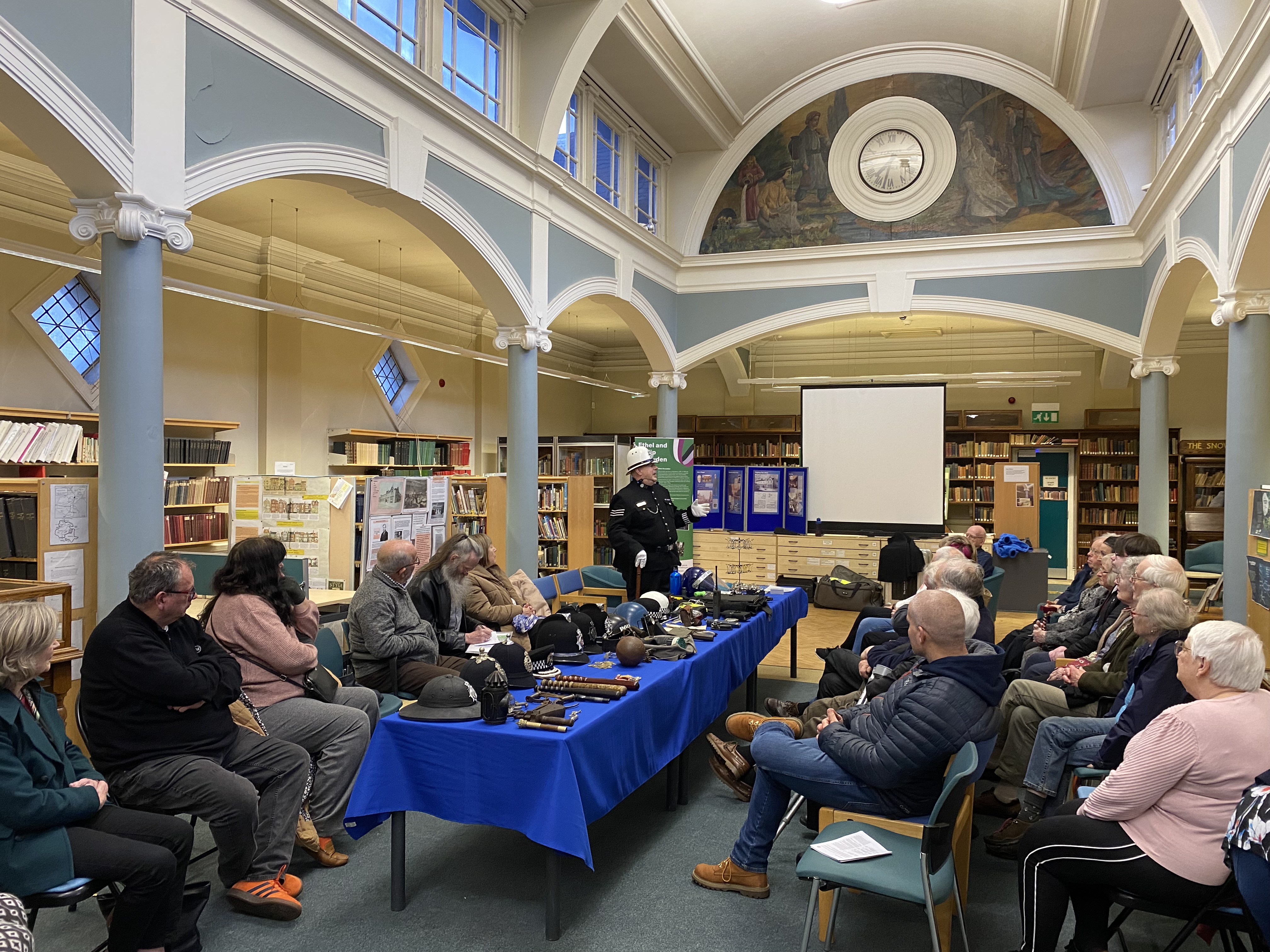
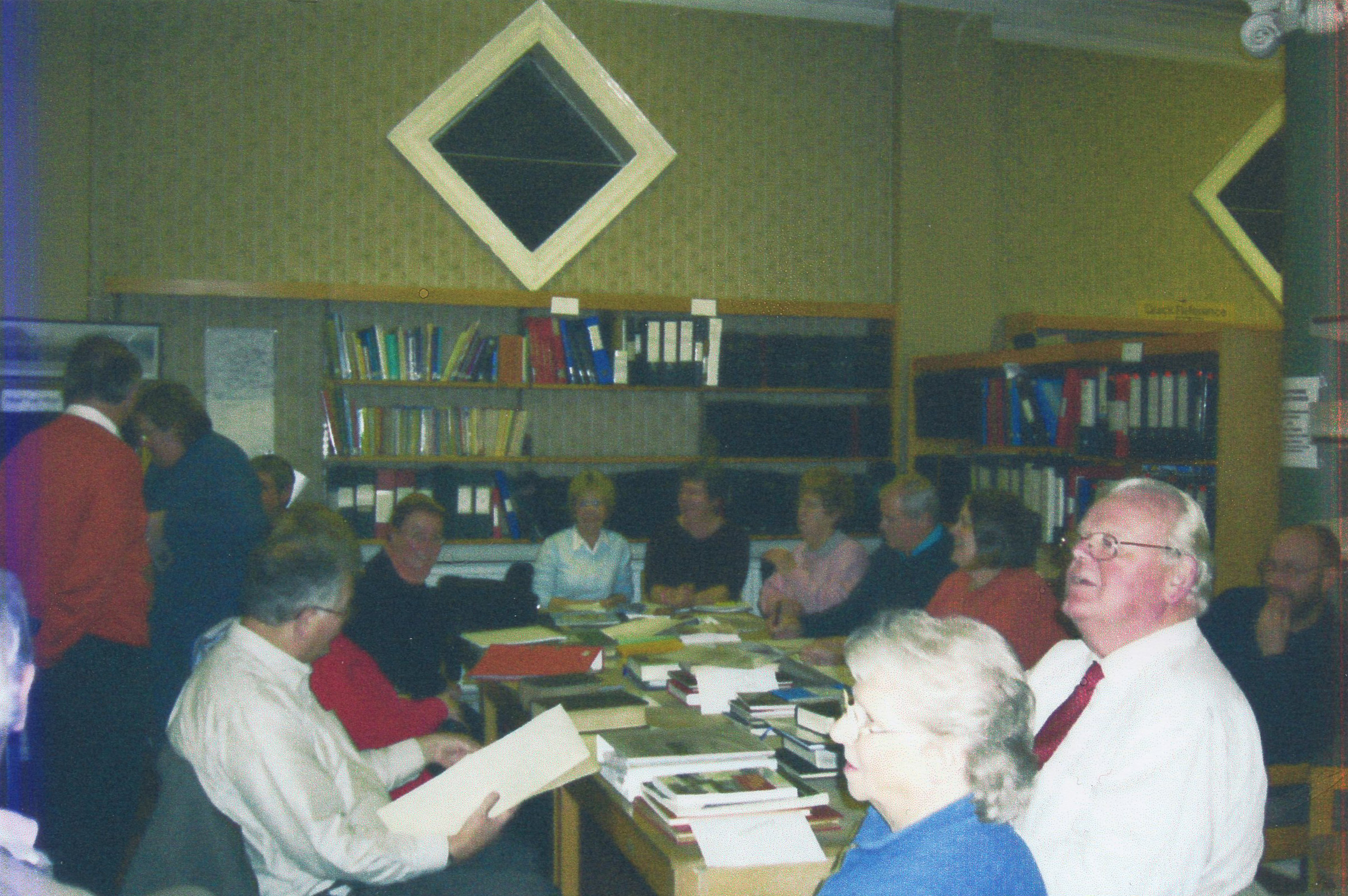
David Hardcastle Police talk 2004First Meeting December 2004The Committee at Keighley Show Sept 2009
The success of the History Society is stronger now than it has been at any point in its twenty year history. We continue to meet on the second Wednesday of each month, mostly still upstairs in the Library. We have over 75 members who live both locally but also come from further afield – people keen to maintain links with a town that was important to them in their past. We try and spread the word about the fascinating history of the town at events like Keighley Show, the Heritage Open Days, Yorkshire Day celebrations, and other history-related celebrations.
Our single objective remains “to preserve and share” the history of the town and the surrounding area. People continue to be extremely generous and continue to loan or donate items that enable us to do this. We record and catalogue these items, from personal photographs, postcards, leaflets, publications – all sorts of items! – which we then seek to share via our digital archive on Flickr. Our Flickr site currently has over 25,000 items available to view by anyone, and continues to grow.
If you’d like to find out more about the History Society, please look us up on our website or our Facebook page – or better still drop into one of our meetings on the second Wednesday of the month in Keighley Library!
All the photographs are “courtesy of the Keighley & District Local History Society”. The one of Tim Neal on his own at his desk is by “Cath Muldowney Photography”
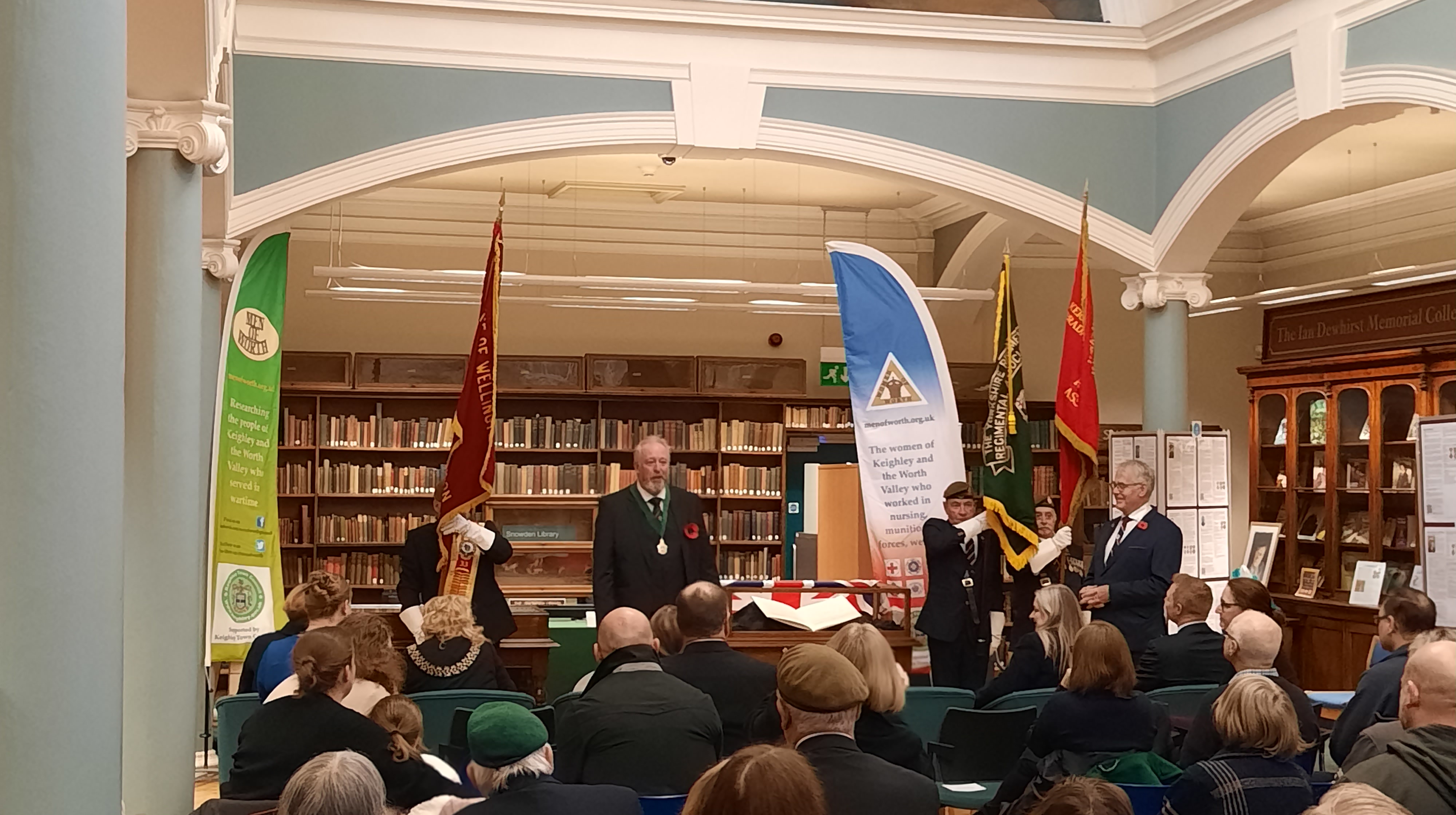
KEIGHLEY’S revised Great War roll of honour was formally unveiled during an event at Keighley Local Studies Library on 9th November. The names of 102 servicemen and one woman who gave their lives during the First World War had been missed from the original roll.
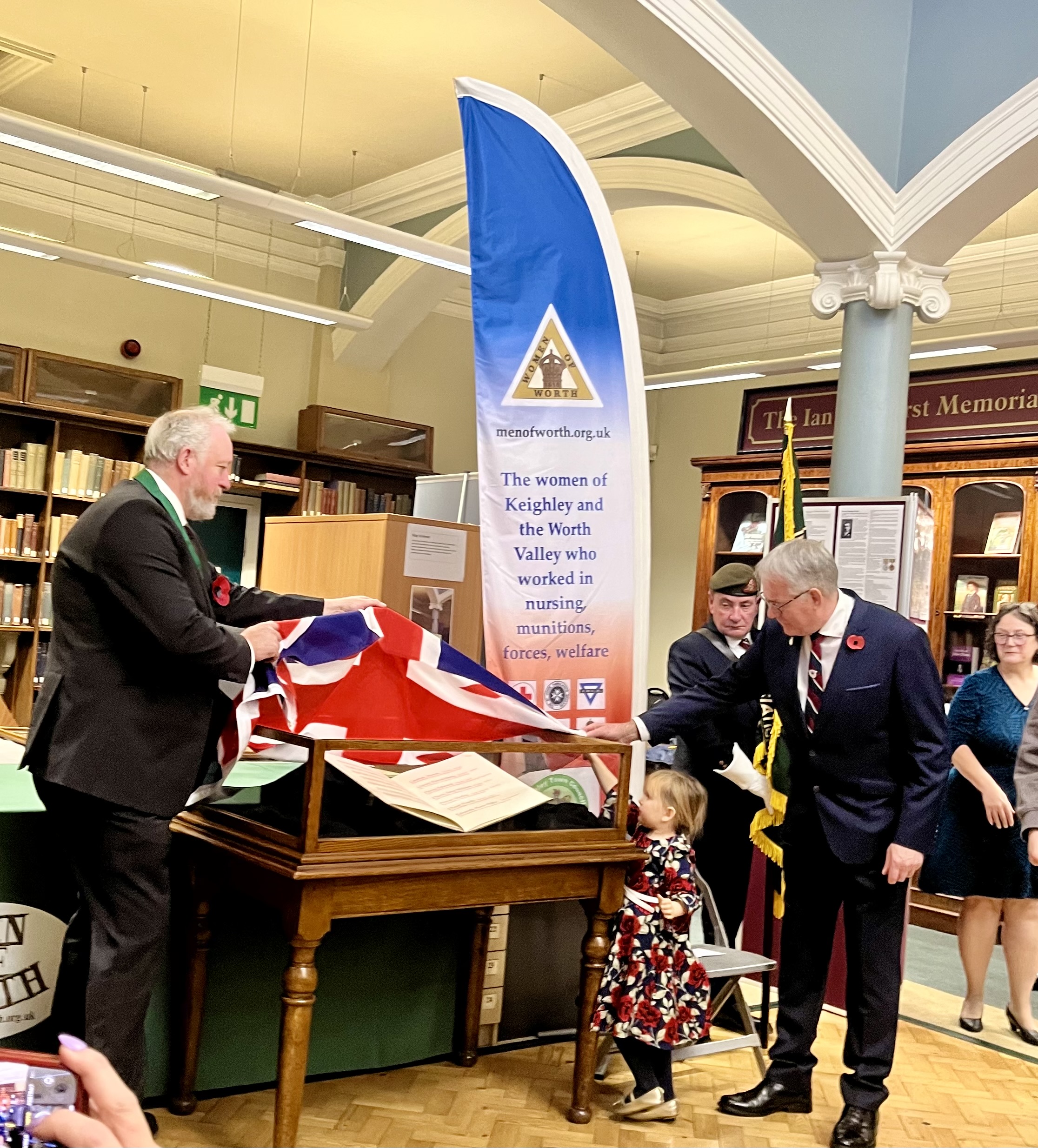
The unveiling was performed by three-year-old Libby Griffiths, Ryan Firth, 16, and Liam Firth, 14. All three are descendants of Private Jowett Coulton, who was born in Keighley and lived in the town before emigrating to Canada, where he enlisted in the army. He was killed in action in France.
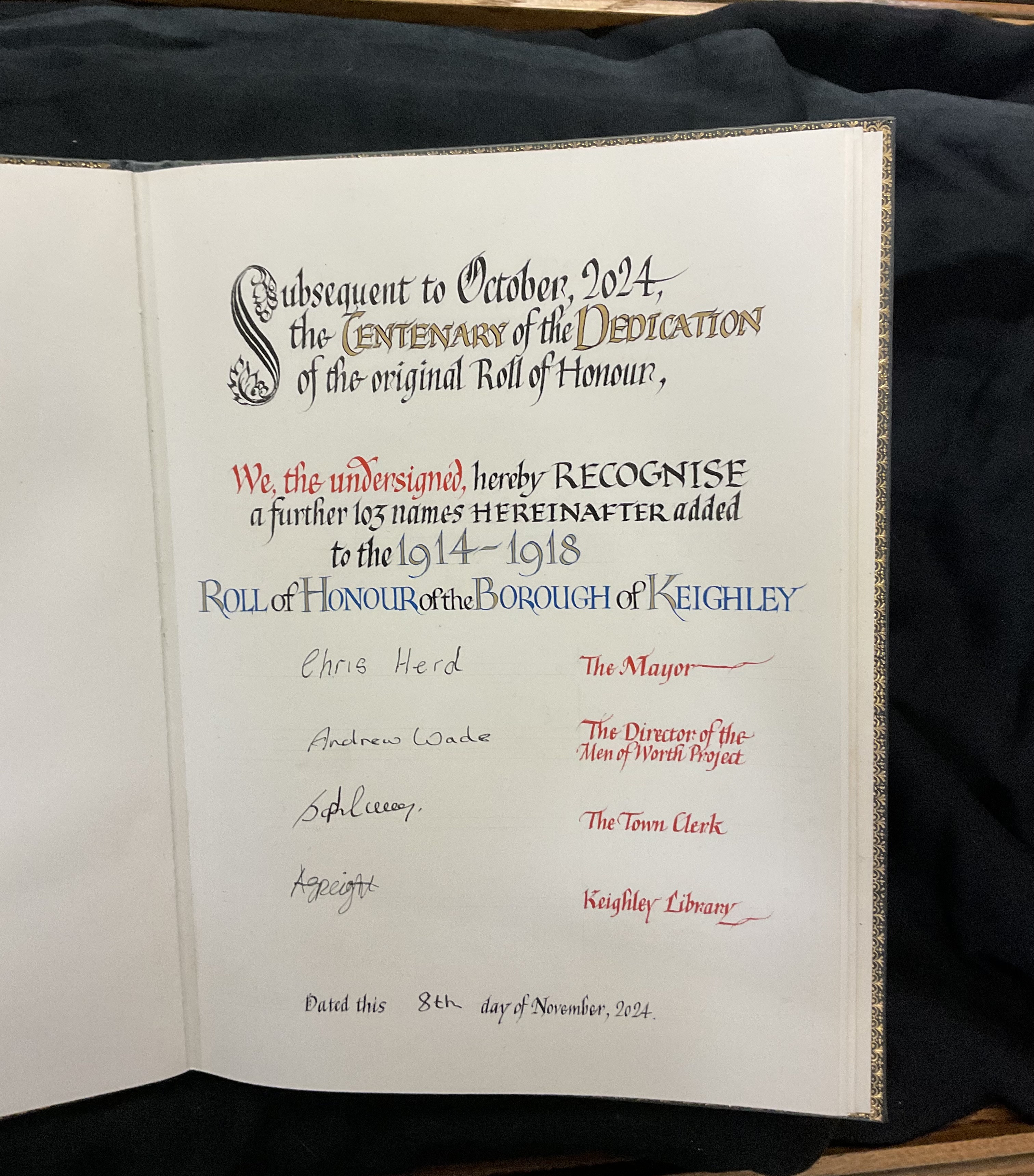
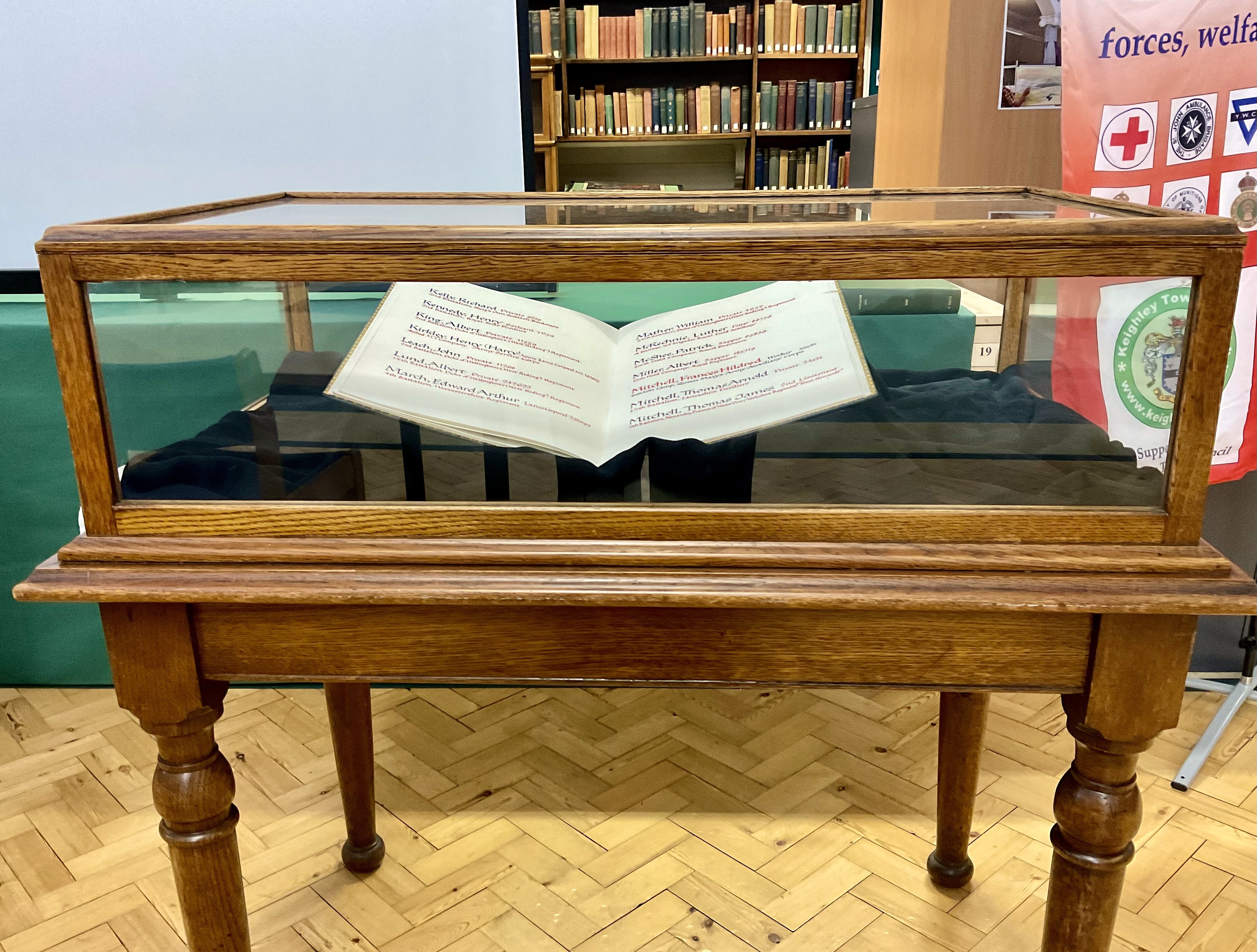
Libby Griffiths unveiling the Roll of Honour with Deputy Town Mayor Cllr Chris Herd and Andy Wade, of The Men of Worth.The signature page of the updated Roll with its 103 new names, signed by the parties involved in its creation. The Updated Roll of Honour on display upstairs in the Local Studies Library, Keighley Library.
The Men of Worth Project were awarded funding by the National Lottery’s Heritage Fund in early 2024 and this has been supported with funding from Keighley Town Council.
The purpose of the grant was to add more names to the Borough of Keighley Roll of Honour and to celebrate the centenary year of the original book and our wonderful Borough of Keighley War Memorial, which was unveiled in Keighley’s Town Hall Square on 7th December 1924, attended by several thousand people.
Lord Mayor of Bradford Councillor Bev Mullaney, Bradford Council Leader Councillor Susan Hinchcliffe, Director of the Men of Worth Project Andy Wade and Bradford Councillor Caroline Firth.
Other relatives of those honoured were present, together with guests including West Yorkshire Deputy Lieutenant David Pearson, MP Robbie Moore, Lord Mayor of Bradford Councillor Bev Mullaney, deputy town mayor Cllr Chris Herd, Bradford Council leader Cllr Susan Hinchcliffe, district and town councillors and standard bearers.
Head of Libraries & Archives, Christine May talks about the libarary’s history with the Roll of honour. Andy Wade of The Men of Worth talks about the project. Irene Lofthouse portrays Frances Hildred Mitchell, the first woman to be added to the Roll.
Cultural historian Irene Lofthouse adopted the guise of Frances Hildred Mitchell – the first woman to be recognised in the roll alongside the men. Frances was a Queen Mary’s Army Auxiliary Corps worker she died aged just 23, from influenza and pneumonia while still nursing in military hospitals a year after the war had ended.
Deputy Town Mayor Councillor Chris Herd with Standard Bearers
The new Roll of Honour and the original Roll of Honour are on permanent display upstairs in Keighley Local Studies Library and an exhibition by The Men of Worth Project on all those added to the new Roll of Honour is on display until December the 6th 2024.
December the 7th marks the 100 year anniversary of the War Memorial and Roll of Honour, at noon, an interpretation plaque will be unveiled at the town’s war memorial. For more information about the project please see the link below.
Back-to-back housing was the topic of Jude Rhodes’ talk this week, the second in the series of illustrated presentations by this wonderful speaker and although these houses are still all around us in their later improved incarnations, back-to-back history continues to surprise us.
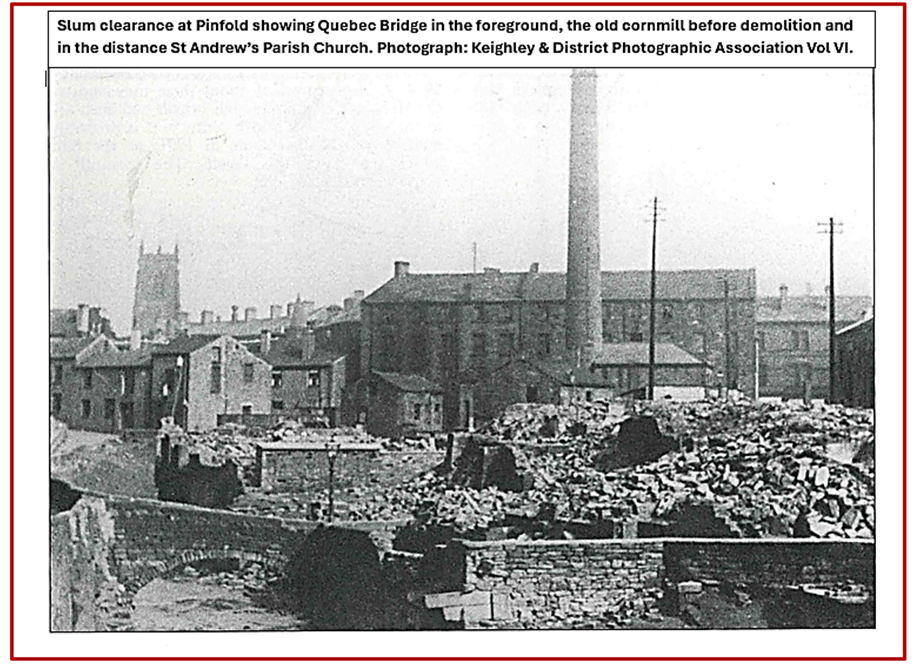
Back-to-backs were first mentioned in Bermondsey as early as 1706 and were built in Birmingham and Nottingham in the 1770s, Manchester and Liverpool in the 1780s. Leeds began to build them in 1787 and has the most back-to-backs in the country. Keighley’s own early workers’ housing was centred around West Lane at Westgate, including the Pinfold area, its terraced early back-to-backs include Leeds Street and Turkey Street, see illustrations.
The early back-to-backs houses usually consisted of a kitchen room with 2 bedrooms on the floor above and a cellar place for coal. Houses at the rear were usually accessed by tunnels from the street. They were popular for cheap rents and running costs but were unsanitary with shared middens and water supply, small windows and generally a lack of ventilation with subsequent damp. There was much overcrowding and Jude illustrated this with 40 Birmingham houses sharing 3 privies, that’s potentially 160 people. Piles of human and other waste were added to make “midden heaps” that were cleared into the rivers, becks or streams by the Night Soil Man or left to pile up in the yard before spilling into open sewers, basically ditches with water running through if the gradient was good, if not then waste was left to stagnate, producing poisonous and noxious fumes. Water from rivers, becks and streams could so easily carry typhoid and dysentery, such was the pollution before proper sewerage systems.
Bye-laws and the Public Health Act of 1875 tried to improve workers’ housing and improved back-to-backs were built. These were referred to as “byelaw terraced” housing. These houses had to meet minimum standards of build quality, ventilation, sanitation and population density. Significantly, this type of housing made up over 15% of the United Kingdom’s housing stock in 2011 and gentrification has taken place for some, as at Chimney Pot Park in Salford.
The overcrowding, insanitary conditions and deterioration of much early housing caused concern, not least amongst employers who required healthy workforces to fill their factories and mills. The Brigg family of Calversyke Mill in Keighley built better back-to-back housing in Lynum Street, however their hopes to build a model village like Sir Titus Salt in Saltaire was prevented due to the inadequacy of the water supply there. Later they sold extensive land around Guard House that enabled the building of Keighley’s first 136 Corporation houses at Guard House in 1928 with gardens, space, light and sanitation. James Lund of North Beck Mill built houses near his gift to the town of Lund Park and some of his houses, post 1878, remain in Calton and Chelsea Streets. Robert Clough of Clough Mills built houses in what is known today as the “Jewel Box” area of Keighley, called after the names of five streets: Opal, Diamond, Ruby, Pearl and Emerald. The list of house planning millowners goes on though not for model villages.
Slum clearance began in the 1930s and went through stages up to the 1970s. In Keighley, much early housing was cleared when the Housing Act of 1930 allowed for compulsory purchase of the proven inadequate housing for demolition. Jude highlighted the destruction of community in the process, however, and some members of the audience noted Parkwood in the 1960s. Not everyone wanted to leave their homes, improvement yes, not demolition and rehousing. Stories from the audience included a de-lousing procedure for inhabitants of “slum dwellings” before access to alternative housing was permitted. Dr Ian Dewhirst MBE in “A History of Keighley”, page 132, highlights the loss of “landmarks in the folk-geography of generations: the Bay Horse Inn and the Angel… the picturesque Quaker meeting-house in Mill Street; the pinfold where stray livestock had been impounded; hump-backed Quebec Bridge, scene of many a Saturday-night brawl…”
Time marches on sometimes leaving shock waves in its wake as in the final fact Jude noted, that her “all time dream home”, her former grandparents’ back-to-back in Leeds, where they struggled to live comfortably, is today not even affordable to her. How things change.
Jude Rhodes is an Associate of the Association of Genealogists and Researchers in Archives (AGRA), specialising in Yorkshire history. She is she explains, “passionate about using local history with family history, this provides the exploration of who our ancestors were, why they lived in a particular place and how they were part of their community at a given time”.
Thank you to all who attended, please find an earlier blog with future talks listed into next year. Please note these are free events and also a place booking is required for that on the 11th December 2024, Christmas Family Traditions and Crafts, contact Keighley Local Studies. Poster with details is with this blog.
Jude highlighted some resources and museums during her talk, here are some mentioned below revealing the back-to-back history experience:
For building plans, OS maps, photographs, town plans, Borough records, and at least 2 in depth studies on the housing of workers and employers, please see Keighley Local Studies Library, North Street, Keighley keighleylocalstudies@bradford.gov.uk
National Library of Scotland online collection of town maps and plans for England and comparative recent aerial photographs for study https://maps.nls.uk/os/