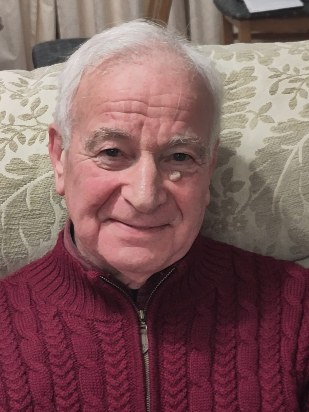
Thanks to the tireless efforts of David, a University of Bradford graduate and Riley enthusiast, there has been a recent revival of interest in the life of Willie Riley. Copeland’s work has included:
A Master of Philosophy thesis on Riley’s life and works: From Bradford Moor to Silver Dale.
- The establishment of a dedicated Willie Riley website.
- An introduction to the re-issued edition of Windyridge, which is now back in print.
Bradford Local Studies holds most of his fiction catalogue which can be perused in the Library.
The University of Bradford Library Special Collections holds an extensive archive of his work, including manuscripts, correspondence, and photographs, which are available for researchers and fans alike.
Willie Riley’s story reminds us that literary fame can be fleeting, but the power of a good story well told endures. His work offers a charming window into a bygone era of Yorkshire life, and its high time he was rediscovered.
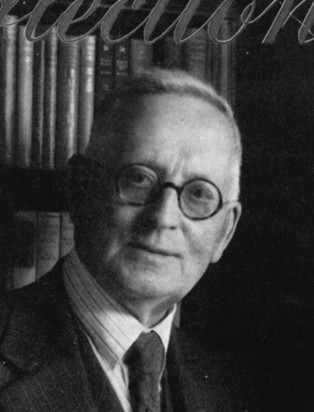
Born in Bradford in 1866, Willie Riley was a fascinating figure who went from a successful businessman in the textile and optical lantern slide industries to a best-selling author of over 30 novels. Though a household name in his time, particularly across Yorkshire, his work is now largely forgotten, making a revival of interest in this unique regional voice even more important, especially as it coincides with a renewed interest in the Yorkshire Dialect, with ‘Let’s Talk Tyke’ workshops and the appointment as President of The Yorkshire Dialect Society, Yorkshire-born British Library linguist and dialectologist Jonnie Robinson.
From Boardroom to Bookstore
Riley’s journey to becoming an author was unconventional. He started working for his father Joseph, in his ‘stuff business’, straight after leaving school in 1882.
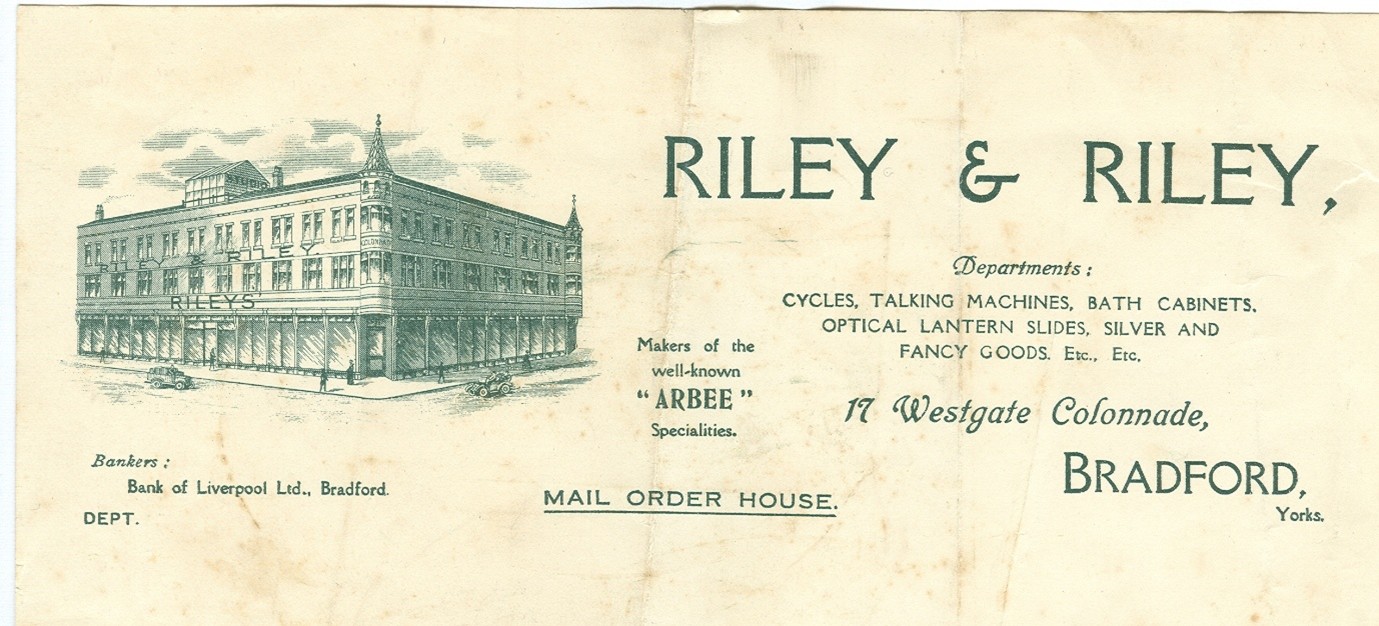
In 1884, Joseph created The Optical Lantern Business and Willie transferred to this part of the family business, which was a firm that sold and hired magic lantern equipment internationally. In 1889, Willie was made a partner in the company. The business thrived until World War I, when it collapsed.
(The National Science and Media Museum in Bradford has a collection of the Riley Magic Lantern Slides.)
However, even though he worked in the family businesses, his writing career had already begun as a personal project. In early 1911, to amuse his wife and two bereaved friends, the Bolton sisters, he began writing a story in weekly chapters. This heartwarming tale, full of the detail of Yorkshire life and set in a fictionalised version of the village of Hawksworth near Baildon, was eventually published as Windyridge in 1912.
Windyridge was an instant sensation, selling around half a million copies and remaining in print until his death in 1961. Its success even led to houses across the country being named after the fictional location.
Riley became a full-time writer after his business closed, producing a steady stream of novels, short stories, newspaper articles, and travel works, most of which were set in his beloved Yorkshire Dales. His work is characterised by:
- A deep love for Yorkshire: His stories used real places under disguised names, capturing the landscape and local character.
- Methodist faith: A dedicated local preacher for 75 years, his strong religious beliefs underlie all his writings.
- Heartwarming storytelling: His books offered a comforting escape, full of gentle humour and moral reflection.
Despite his immense fame during his lifetime (he died in 1961 at the age of 95), Riley’s popularity waned significantly after his death, and he became almost completely forgotten.
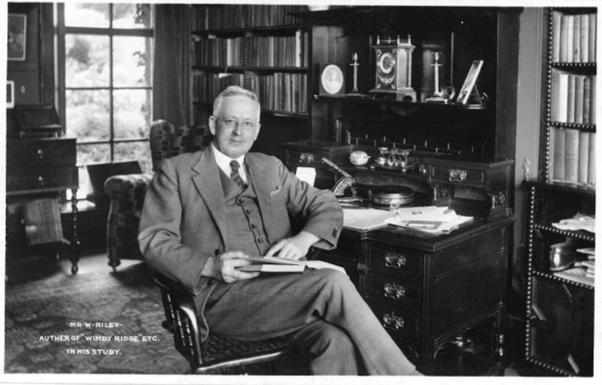
Part of the Bradford Local Studies Library Postcard Collection.
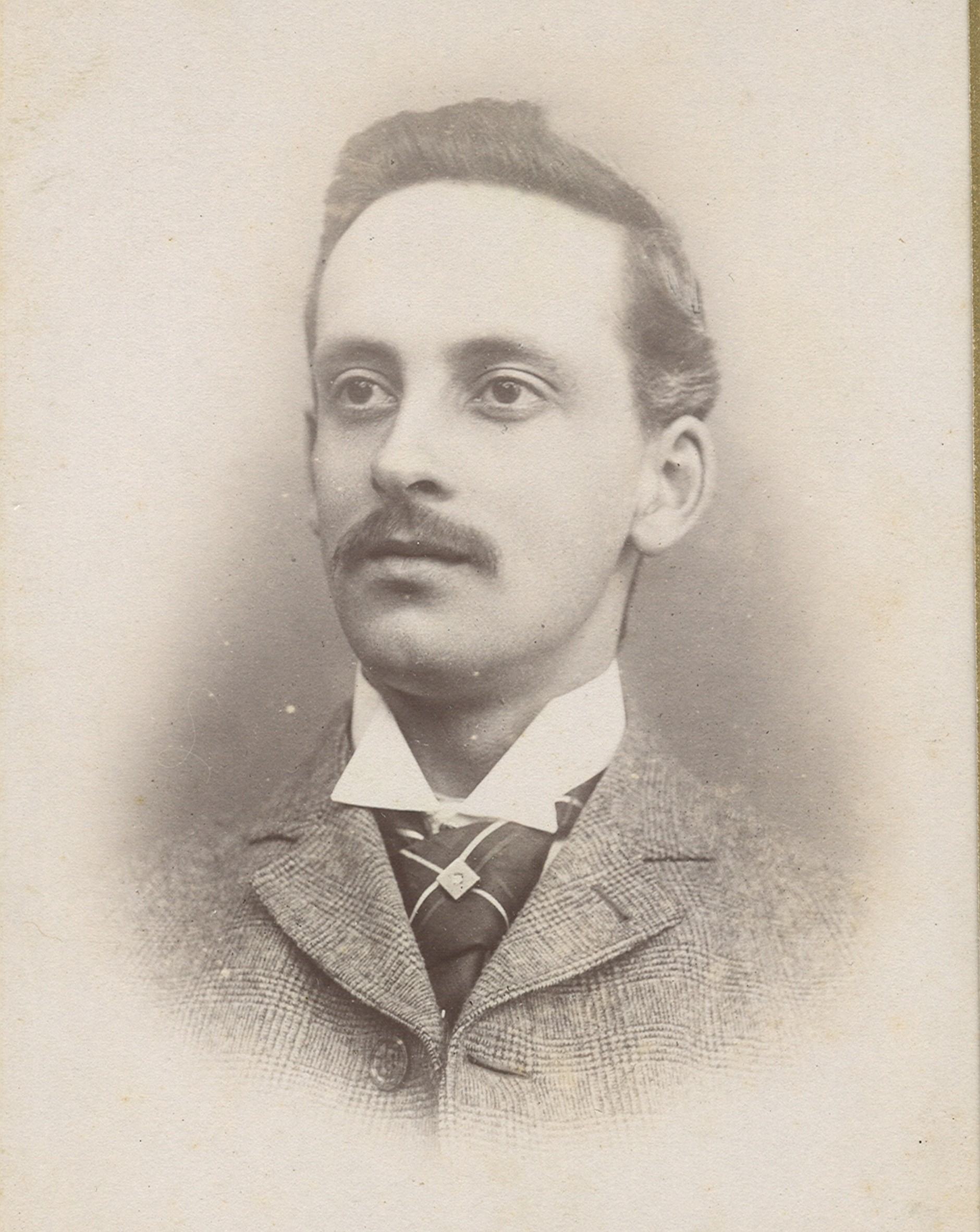
Ref: RIL 12_3p.5
Riley also contributed his Message of the Moors to the historical 1931 Bradford Pageant.
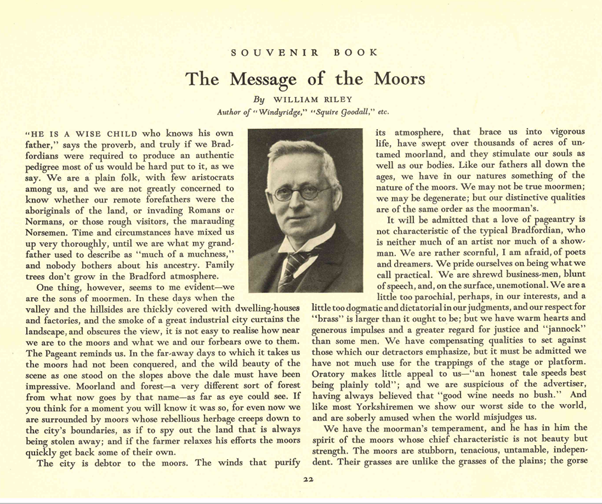
Copies also available to read onsite at Bradford Local Studies.
Thank you to
Bradford Local Studies Library.
David Copeland – https://www.willieriley.org.uk/
Julie Parry- Bradford University Special Collections
Written by Vicki Warner, Bradford Local Studies and Archives
Readers can access his collection of stories at Bradford Local Studies,to read in the library.
Please contact us on 01274-433688 or local.studies@bradford.gov.uk to book an appointment.