Keighley News 5th May 1945: Keighley Plan for VE Day

The second in our features to mark VE Day focuses on the Keighley News edition of 5th May 1945. The paper starts with all of the regular small advertisements, public information and local minutiae. The Hippodrome is showing ‘the great thriller Dr Jeckyll and Mr Hyde’ with The Picture House offering ‘Dark Victory’ starring Bette Davis.


It is not until page 5 that the article ‘Keighley Plan for VE day’ appears: ‘Service of Thanks and Decorations’.

Kly News 05 May 1945 service of thanks and decorations shortened version

Two proposals were approved by Keighley Town Council for recognising VE Day – a public thanksgiving service and an expenditure of £40 to cover the cost of decorations in the centre of the town.

The general mood of the time was that this was only one stage in the end of the war and that it would be a mistake to celebrate prematurely. ‘Mr E Rollinson said he felt there was a ground for a quiet sober rejoicing, but he did not want to see celebrations extend to junketings’. Alderman J Denby remarked that he had a son, a son-in-law and a nephew serving in India and the Far East and said he could hardly rejoice while they were still facing death and ‘Mrs McNulty said she thought there was ample cause for thanksgiving when VE Day came, but celebrations and rejoicings ought to wait until all hostilities ceased’.

Nevertheless at Keighley Borough Court, the Chairman Mr Frank Waller made an announcement affecting licensees on VE Day: Extensions from 10pm to 11pm on VE Day were granted to all licensees on applications being made to the Clerk but ‘no application will be granted for the afternoon break or for the day following VE Day’.

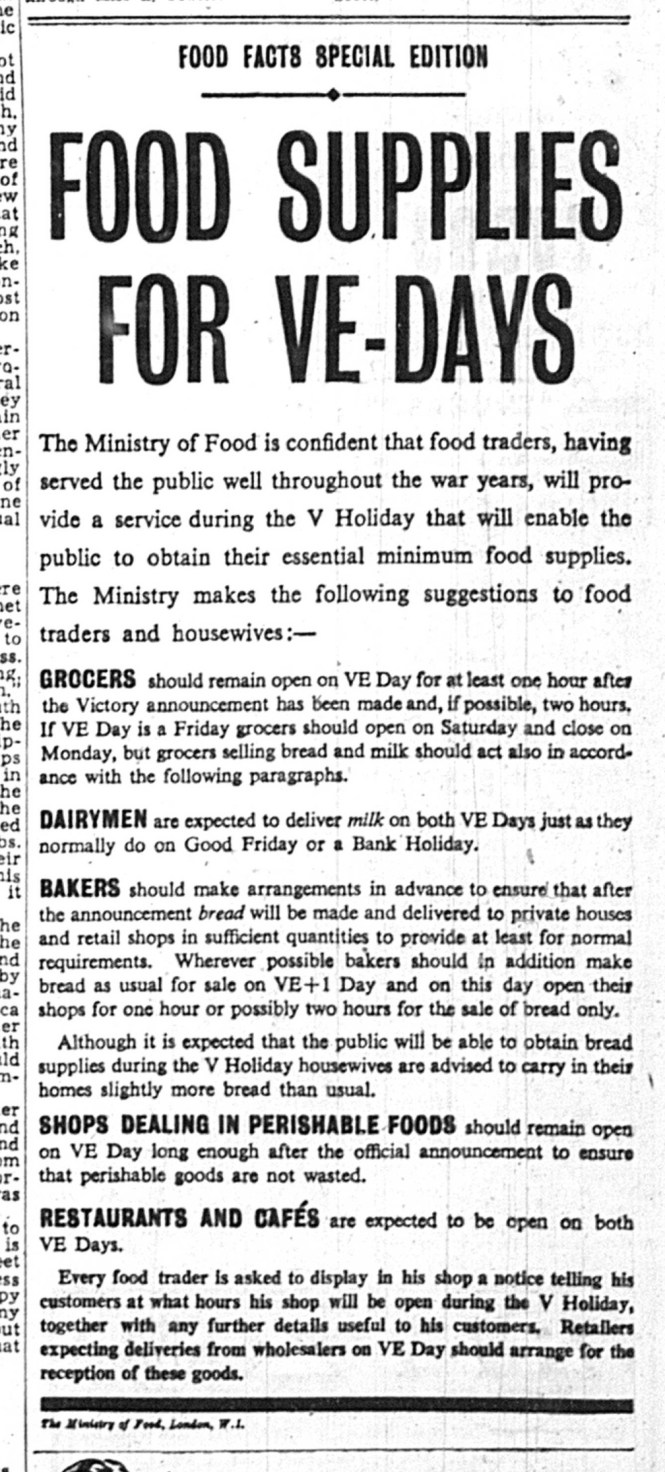
Kly News 05 May 1945 VE Day food 1

In Bingley a bonfire was planned on Druids Altar followed by an impromptu programme of children’s sports with tea and buns.

You can read the whole edition of the Keighley News from 5 May 1945 here (PDF)

Images Reproduced by kind permission of Keighley News.


VE Day Celebrations: Food in WW2

 This week we are featuring a series of posts about food during WW2, a subject very close to our hearts especially in these times of Covid-19.

Please join in by sharing with us your favourite wartime recipes and photographs of your home cooking to our Facebook page: https://www.facebook.com/bradfordlibraries

We start with an extract from the book ‘Ilkley at War’ by Caroline Brown.

Children’s War: Communal Feeding Centres

In the months before the outbreak of war, plans were made for the establishment of feeding centres to provide meals for large groups of evacuated children, schoolchildren and their teachers. The general view was that these canteens were providing a National Service because to cook for a greater number of people would amount to less cost per head. A mid-day meal was provided at 6d per head for children and 8d for adults. Householders who had received evacuees were not obliged to send the children to the communal feeding centres. The responsibility for these canteens was placed by the Ministry of Health upon the Urban and Rural District Councils on whose behalf the WVS organised the arrangements and provided the staff. The centres served a 3 course meal; a sample menu might consist of soup followed by fish pie and boiled beetroot or stewed steak and onions. The meal would be finished off with a pudding such as jam tart or queen pudding. Burley’s Communal Feeding Centre was organised in Salem Church Hall. At Menston a canteen at Kirklands, catering for 60 children, opened in October 1939.

Initially, a feeding centre had been established at Ilkley in the Winter Garden but the hall was in demand for a variety of other uses, including a reception centre for evacuees and a children’s clinic. There was some feeling locally that the arrangements for the evacuees were taking precedence over those for local people. In October 1939 some of these issues were raised at the meeting of the Ilkley Urban District Council including complaints that: ‘they were going to give clinic treatment on one floor with the smell of Irish stew coming from down below.’ The Winter Garden was abandoned as a feeding centre and later in the month Ross Bros. Garage on Wharfe View Road was requisitioned for communal feeding. The centre opened in November with provision for feeding over 300 schoolchildren, evacuees and teachers. There was also a canteen for adult evacuees and any government workers such as ARP, WVS and the Fire Brigade. In July 1940, the Dowager Marchioness of Reading, Chair of the WVS, inspected the Ilkley communal feeding centre and declared that it was the best feeding centre she had seen anywhere in the British Isles. On another occasion another appreciative comment was made by one of the diners at the centre: ‘You get plenty to eat and it is good but we don’t like tin plates. For sixpence it is a fine meal.’ However, the WVS kitchen workers were less happy with the experience and asked that more responsibility should be shouldered by the women evacuees: ‘few have as yet helped with the cooking, serving and washing up. Most of them appear to take things for granted and sit comfortably back with their cigarettes while their hostesses do the work.’

By July 1943, as a result of the easing of local Civil Defence duties, the feeding centres were closed to all but evacuees, school children and teachers and at the beginning of January 1945 the administration of the feeding centres was handed over to the West Riding Education Authority.

‘Ilkley at War’ by Caroline Brown, Tempus, 2006, 9780752441914. All rights reserved.


This slideshow requires JavaScript.

A walk with Sidney Jackson #1

Note from Bradford Libraries: please send us any photographs of observations or historical curiosities on your country walks and we will be happy to share and comment where possible.  You can share your images or thoughts via Twitter @bradfordlibs247 or via our Facebook http://www.facebook.com/BradfordLocalStudies/

When Sidney Jackson was keeper of Archaeology, Geology and Natural History at Cartwright Hall he edited a subscription journal called the Archaeology Group Bulletin. Although compiled over 50 years in the past it can still be read with interest today. I am impressed by the quality of both articles and the correspondence. Many contributors were concerned with local dry-stone walls and the interesting things that can turn up in or around them.

Loose rail posts preceded iron fences, and hinged gates, as a method of confining stock on farmland. Fig. 1 shows a drawing from the AGB.

Fig 1

Fig. 1

You can see how a wooden pole would fit into the slots to provide a barrier.  Both wooden poles and quarried stone posts were readily available in an area like West Yorkshire. You do occasionally still see residual loose rail posts today and I have provided an example (Fig.2) from Heaton Royds Lane, on the scenic route between Shipley and Heaton.

Fig 2

Fig. 2

Quite exciting objects can be collected to plug holes in field walls, and Fig.3 shows the base of a quern drawn by Sidney Jackson.

Fig.3

Fig. 3

Querns were stone devices used for grinding corn and were certainly employed in Britain from the Neolithic to the early Medieval period. They were ultimately replaced by wind or water mills which would grind everybody’s corn, at a price. It was suggested in the AGB that this quern base was from the Iron Age. I have never been fortunate enough to find one: in my experience old bricks or lumps of iron-making slag were more frequently used round Bradford.

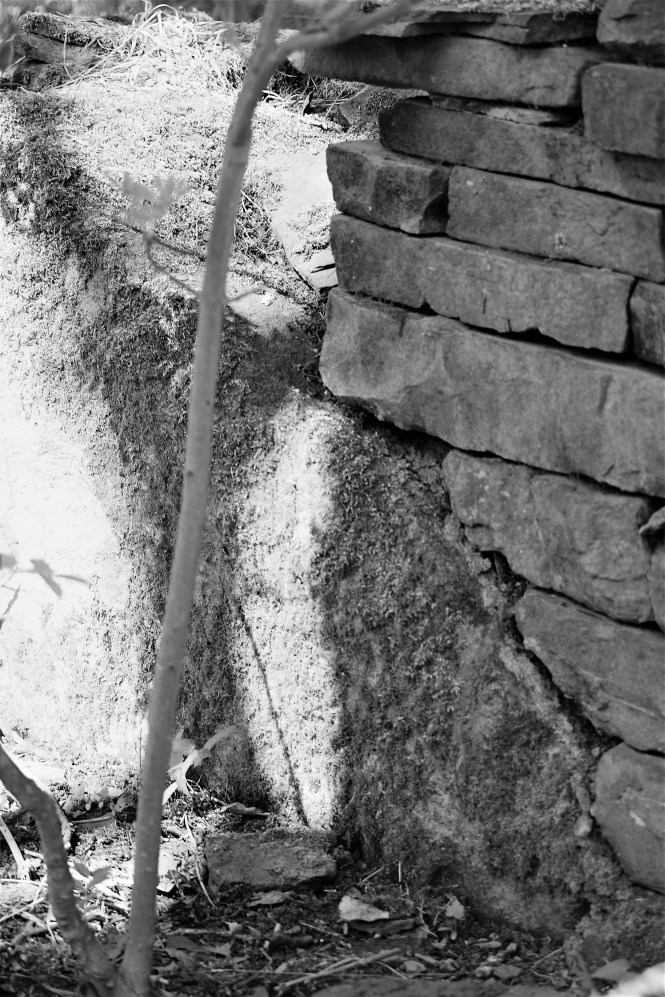
Fig.4 shows a situation I have found involving a dilapidated dry-stone wall on the margin of Heaton Woods.

Fig 4

Fig. 4

On the right you can see the end of some perfectly ordinary masonry, consisting in all probability of Elland Flags wall stone which was widely quarried in 18th and 19th century Heaton. This wall stone conforms to, ‘respects’ is the archaeological term, a huge earth-fast boulder. This is not an isolated phenomenon but there is a linear arrangement of such boulders with a more modern wall built over them. The boulders consist of rounded gritstone and don’t show any obvious signs of dressing. Presumably they were glacial erratics which are not uncommon in this area. Boundaries consisting of large earth-fast boulders, like querns, were a feature of the Iron Age but I’m not claiming that I have been that lucky!

Derek Barker

Treasure of the week no. 28: A pot of green feathers and problems in schools

‘A Pot of Green Feathers’ by T. G. Rooper and ‘Typical Merits and Defects of Schools’ by A. Watkins: Two Papers Read Before the Bradford & District Teachers’ Association, circa 1890. Printed by J. Toothill of Bradford. 40 pages.           

JND 1/19 (Please quote this number if requesting this item when we are open again.)

tres-28-image-web

fern-pic-web

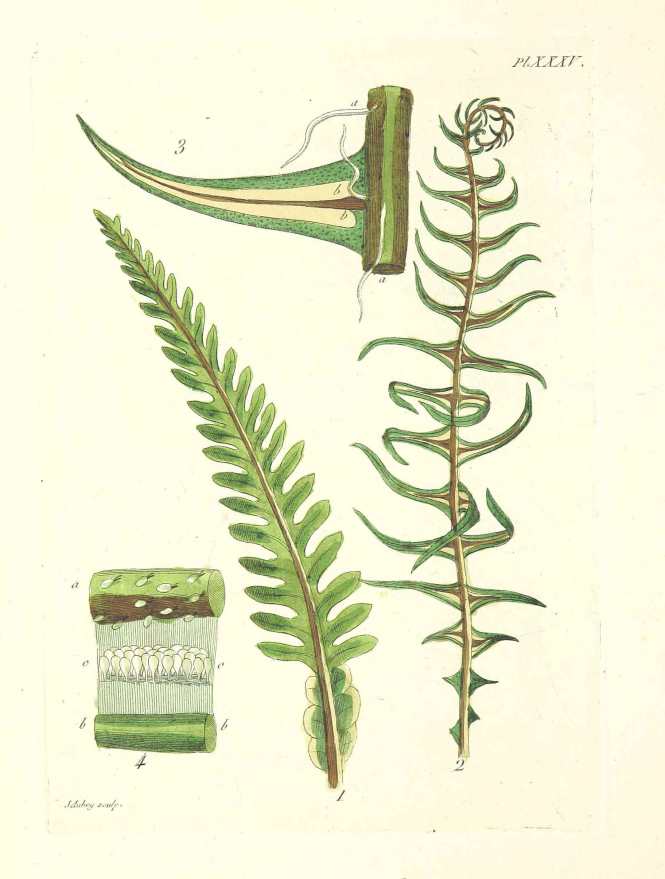
Image from ‘Oeuveres complètes de Jean Jacques Rousseau’ 1788 p. 144 https://www.flickr.com/photos/britishlibrary) Flickr Commons

A young child was shown a pot of beautiful fresh green ferns by a student teacher. The teacher asked the child to say what it was. “It is a pot of green feathers”, the child answered. “Poor little thing! She knows no better”, commented the student teacher to her supervisor.

Some time later the supervisor, Mr Roper, who happened to be an Inspector of Schools, addressed a meeting of Bradford teachers and referred to this incident. “Did the child really suppose that the ferns were feathers?” This got the inspector thinking and researching. The lecture was the result of his labours. Big questions emerged: What do we know of the outer world? Of what is not self? Of objects? How do we know anything of the outer world?

Quite what the meeting made of the inspector’s answers is not recorded. The account covers seventeen pages of closely argued, though lucid, text, and not for repetition here! But it is worth a read for those philosophically inclined, or concerned with educational psychology. Briefly, one learns by extending what one already knows – the child already knew about feathers but not ferns – hence the value of extending one’s experience.

There was a second inspector at this meeting, a Mr Watkins. The title of his talk was ‘Typical Merits and Defects of Schools’. I suspect the teachers would have felt on surer ground and a little nearer home with Mr Watkins. Those who study Victorian education will also profit. Here are uncovered the mysteries of disciplining children, of well-ordered schools, teaching children to concentrate, mechanical versus intelligent learning, reading, speaking, writing, and teaching methods. Exactly what student teachers needed to know!

There was a sting in the tail though: “I believe in having a high ideal, and by steady perseverance, every teacher should strive to reach as near perfection as abilities and circumstances permit.” Maybe Her Majesty’s Inspector of Schools Watkins would be visiting their school in the near future!

Finally, said Mr Watkins, “In conclusion, I feel sure that the inordinant length of my paper must have bored you.” Er … !

Historical Objects on Country Walks

Finding historical objects on country walks

It is well known that spending some time outdoors for daily exercise can have a positive effect on physical and mental wellbeing.

However, it is an often overlooked fact that observations on country walks can also provide fascinating insights into the natural history, geology and archaeology of an area.

We are pleased to share here the first in a series of articles by renowned local historian Derek Barker on the historical objects which may be seen on walks.

These articles will be based on the historic bulletins of Sidney Jackson (1902-1979), eminent expert in Natural History, Geology and Archaeology and curator in Bradford Museums until 1967.

Important note:

As long as government guidelines on social distancing are being followed people are allowed to leave their homes in certain circumstances. Woodlands, moorlands, public rights of way and other public green spaces remain open for individuals and households to take daily exercise.  Anyone venturing out should follow government advice.

Please use the link below for information and guidance from Bradford Council about the use of public green spaces at the current time:

https://www.bradford.gov.uk/emergencies/council-service-disruptions/public-green-space-and-rights-of-way-guidance/

Sideny & Marie Jackson

Marie and Sidney Jackson


Sidney Jackson ‘Jacko’ (1902 – 1979), despite being self-taught, was in charge of Natural History, Geology and Archaeology at Bradford museums (based at Cartwright Hall) for 28 years before retiring in 1967. I never met him, moving to Bradford in 1979 the year he died, but there must still be Bradford people in their late 60s and 70s who attended one of the memorable educational walks he provided for children. When I looked into this topic, some years ago, I found several of his former pupils were now in senior archaeological and scientific posts. Jacko attended Bradford School of Art in 1915-17 to train as a textile designer: later he was justly famous for the quality of his archaeological drawings. I have provided two examples: showing cup and ring marks, and loose-rail fence posts. He introduced the concept of the glass-fronted beehive to Cartwright Hall, an example of which is still to be found at Cliffe Castle Museum.

Carved stone heads, which he believed were often of ‘Celtic’ origin, were Jackson’s great interest. His card index lists over 650 from all over the country, but particularly West Yorkshire (378). His second love was for Iron Age querns which were once used for hand-powered corn grinding. I think we can be quite certain that few today could match his knowledge in the combined fields of natural history, archaeology and geology. Public enquiries on these subjects were frequently answered by return of post. There cannot be many people in modern Bradford appreciate what a cultural debt is owed to Jacko. Traditional archaeology and natural history are still represented at Cliffe Castle Museum, Keighley but with only a fraction of the prominence he would have considered appropriate. His successor, Stuart Feather, was responsible for the creation of Bradford Industrial Museum. Feather felt, and I feel, that the study of industrial history and archaeology was very suitable for Bradford, but I’m fairly certain his illustrious predecessor would not have agreed. Although not without his faults Sidney Jackson was a unique and irreplaceable man.

The extent to which archaeological inferences can be securely drawn from surface finds, rather than finds discovered in context by excavation, is still an important a question and one which was frequently explored in the excellent Archaeology Group Bulletin which Jacko edited. The journal was founded in May 1954 and appeared monthly until 1967. Copies are still available in Bradford Libraries, and the Yorkshire Archaeological & Historical Society transcribed the whole series for a CD-ROM. The AGB is an extremely good source of information about what might be called ‘country walk archaeology’. What was the function of that odd shaped piece of stone? Is that a prehistoric flint tool? Is that a Neolithic cup and ring mark? What is the likely date of that barn? Topics that have rather been abandoned by the professional but can still be of great interest to the amateur and to which I shall return in the future.

When the Local Studies Library re-opens you can learn more about the subject in ‘Mr Jackson at Cartwright: A Gentleman and Scholar’: The Bradford Antiquary (2012) 3rd series 16, pp. 75-87.

Derek Barker