A walk with Sidney Jackson #3

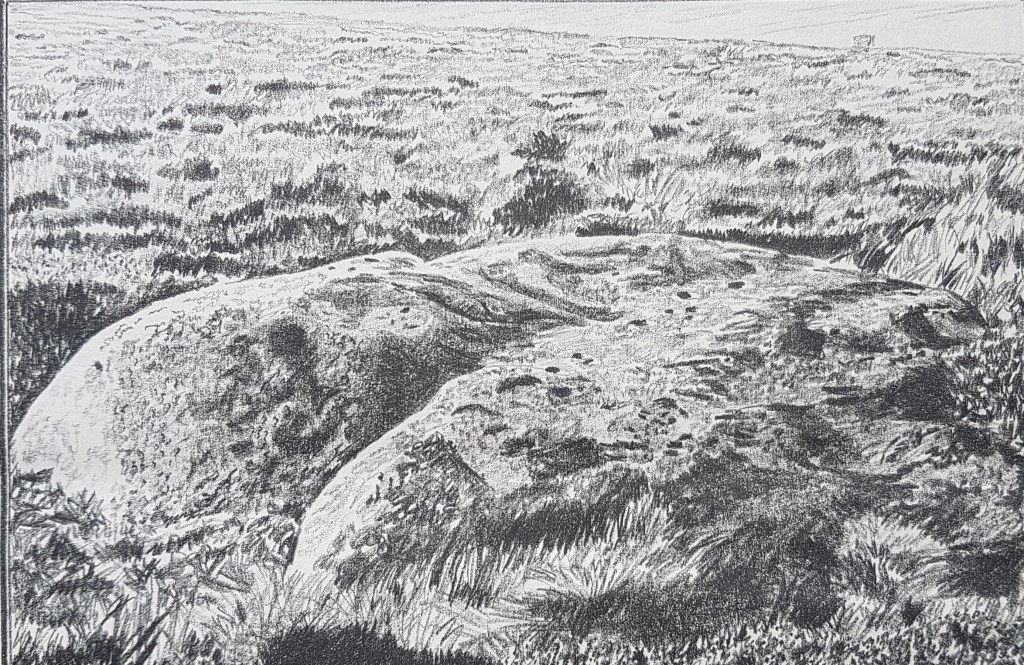
If you had participated on one of Sidney Jackson’s walks across an upland area near Bradford he certainly would have pointed out to you any cup and ring marked stones (petroglyphs or inscribed stones) that you passed. In this article I have included a beautiful drawing SJ made of such a stone on High Moor, near Keighley and two of my photographs of well-known examples on Baildon Moor. I must be honest and say that I am in a minority but I don’t share the enthusiasm that many people evidently feel for these objects. My main interest is in Industrial Archaeology so that I visit Baildon Moor for its treasure house of quarries and coal shafts rather than insights into pre-history. There is an inscribed stone quite near in Northcliffe Woods but its main value to me is to indicate that a glacial erratic gritstone boulder has been on the surface in this position for 4000 years.

Inscribed stones, which are still commonly called cup and ring marked stones, are founded all over upland Britain. There must be scores in the Bradford area alone and I have personally seen them as far north as Shetland. They are certainly found in most other parts of Atlantic Europe, and also in Italy and Greece. Whether they were ever found in lowland areas I am not sure. Perhaps in such locations they would not have survived several millennia of agricultural practices. The dramatic changes to the landscape means that stones found on bleak upland areas today might well have been created in warmer wooded conditions. Dating unreadable inscriptions clearly presents difficulties but inscribed stones are generally regarded as Neolithic or Early Bronze Age in date, say 4000-2000 BCE.

Creating them by ‘pecking’ out material from the naturally occurring rock faces would not have been too difficult but remember that we may not be seeing the stones in their original form. There would be a degree of subsequent natural weathering in any case. SJ reports moving one on Baildon Moor to protect it, and one of his correspondents reports using modern tools to make the marks more obvious. Please never undertake either of such actions. The meaning of the carvings is not known although there have been many speculations: territory markers, memorials, star-maps? Could they really have had the same meaning throughout the extensive areas of Europe in which they are found?

The meaning of the carvings is not the only mystery. The great archaeologist Sir Mortimer Wheeler spent part of his boyhood in Bradford. In his autobiography, Still Digging, he mentioned being taken by his father to see a cup and ring marked stone in Hirst Wood, Shipley. He even wrote to the Archaeology Group Bulletin in February 1964 to confirm his memory. This would have been before the Great War but it is disappointing to report that nobody, including Sidney Jackson, has ever been able to find it since. But the truth is out there.

Treasure of the week no. 30: Quit rents, happy money and Queen Elizabeth’s dole: Bradford charities get a visit from Arthur

The Charities of Bradford. Government Inquiry by Arthur Cardew, Barrister at Law. 1894.

(Information reprinted from the Bradford Observer newspaper by William Byles and Sons.)

JND 18/15 (Please quote this number when the Local Studies library reopens if requesting this item.)

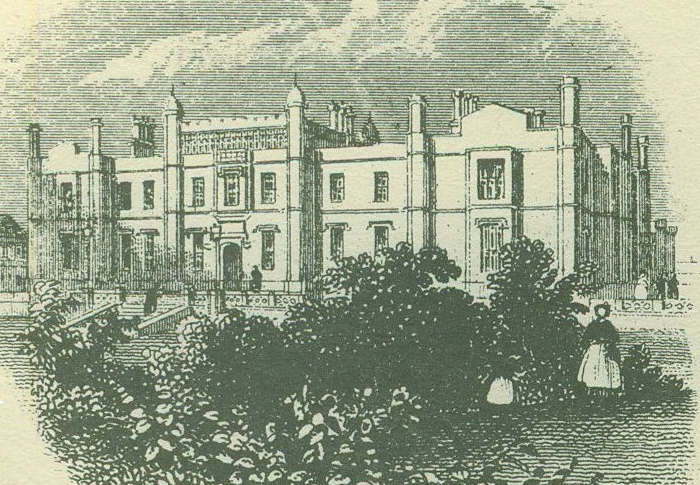
At ten o’clock on Tuesday, January 23rd, 1894, Arthur Cardew, Esq., Barrister-at-Law, Assistant Commissioner, opened an inquiry in Bradford’s town hall. This was on behalf of the Charity Commission who had been asked to look into all charities within the County Borough of Bradford, under the Charitable Trusts Acts 1853 to 1891, and the Charities Inquiries (Expenses) Act, 1892. The inquiry was instigated by the Bradford Council so as to ensure that local charities conformed to recent legislative changes.  Among those in the large attendance were the Mayor of Bradford (James Whitley), two aldermen (Smith Feather and William Lister), the Town Clerk, the Deputy Town Clerk, and two MPs (A. Illngworth and W .P. Byles).

The Town Council had originally thought to examine a few old-established and parochial charities, but the Charity Commission wanted all charities included so that the result would be a complete report valuable for future reference. [Like now!] The charities included large ones such as the Infirmary and the Grammar Schools which had from time to time had endowments given to them as sums of money to be invested and treated as capital. There were also many smaller charities. Over the years practice had varied and there had been occasional suspicions of financial malpractice and partiality. The Town Clerk took it that this inquiry was just to collect information and embody it in a report. The Commissioner assented. [The meeting must have breathed a sigh of relief to hear this, though some charity trustees were given a rough ride!]

Forty-eight charities were examined, ranging from the Grammar Schools, with benefactors such as John Crosse, Henry Brown, Titus Salt and S. C. Lister; the Bradford Infirmary; orphanages, convalescent homes, places of worship, and The Organists’ Charity. Information about their foundation, financial information and management were all investigated. For the information of researchers today, all 48 charities are listed here. Collectively they indicate how much education, health and social welfare in Victorian Bradford owe to charitable activity.

The term ‘Happy Money’ came from the fact that the collector of rents for ‘The Poors’ Estate and Quit Rent’ (No. 3 below) was Mr Henry Happy! Of interest to local historians is that one of the council officials much involved in this inquiry was Thomas Empsall, whose large collection of books on local history was acquired by Bradford Libraries after his death.

THE CHARITIES

  1. The Free Grammar School, including the scholarships of John Crosse, Henry Brown, Titus Salt, and S. C. Lister.
  2. The Girls’ Grammar School, including the scholarships of Henry Brown and Titus Salt.
  3. The Poors’ Estate and Quit Rents.
  4. Richard Pollard’s Charity.
  5. Mary Ann Jowett’s Charity.
  6. William Field’s, or the Black Abbey Dole.
  7. Thomas Farrand’s Charity.
  8. Elizabeth Wadsworth’s Charity for Bradford Township.
  9. John Appleyard’s Charity.
  10. The Rev. Dr. Jobson’s Fund.
  11. The Organists’ Charity.
  12. Susannah Stott’s Charity.
  13. The Bradford Lectureship.
  14. William Wilson’s Charity.
  15. Benjamin Illingworth’s Charity.
  16. Mechanics’ Institute: Brown’s Endowment.
  17. General Infirmary: Endowments of Musgrave, Semon, Leather, and Brown.
  18. Fever Hospital: Nutter’s Endowment.
  19. Eye and Ear Hospital: Semon’s Endowment.
  20. Woodlands Convalescent Home: Nutter’s Endowment.
  21. Orphanage for Boys: Nutter’s Endowment.
  22. Orphan Home for Girls: Nutter’s Endowment.
  23. Nutter’s Scholarship Charity.
  24. Tradesmen’s Benevolent Institution: Nutter’s Endowment and Brown’s Endowment.
  25. Tradesmen’s Home: Brown’s Endowment and Wright’s Endowment.
  26. Spinsters’ Endowment Fund: Brown’s Endowment.
  27. John Harrison’s Charity for the Blind.
  28. Samuel Broadley’s Charities.
  29. Bailey’s Endowment for Minister of Westgate Baptist Chapel.
  30. Endowment of Old and New Wesleyan Chapels at Bradford Moor.
  31. Endowment of Manchester Road Primitive Methodist Chapel.
  32. Endowment of Salem Congregational Chapel in Manor Row.
  33. Endowment of Kirkgate Wesleyan Chapel.
  34. Endowment of Eastbrook Wesleyan Chapel.
    34A. Holling’s Charity for Friend’s Meeting House.

Township of Allerton

  1. James Sagar’s Charity.
  2. The British School.

Township of Bowling

  1. Endowment of Dudley Hill Wesleyan Chapel and School.

Township of Horton

  1. John Ashton’s Charity.
  2. Elizabeth Rand’s Charity.
  3. Dixon’s Charity for Chapel Lane Chapel.
  4. Endowment of Great Wesleyan Chapel.

Township of Manningham

  1. Elizabeth Rand’s Charity.

Parish of Calverley

  1. Queen Elizabeth’s Dole.

Township of Pudsey

  1. Lipton’s Charity.
  2. Gibson’s Charity.
  3. Neville’s Charity.
  4. Simpson’s and Hay’s Charity
  5. Elizabeth Wadsworth’s Charity for Calverley Township.

Stackmole

A walk with Sidney Jackson #2

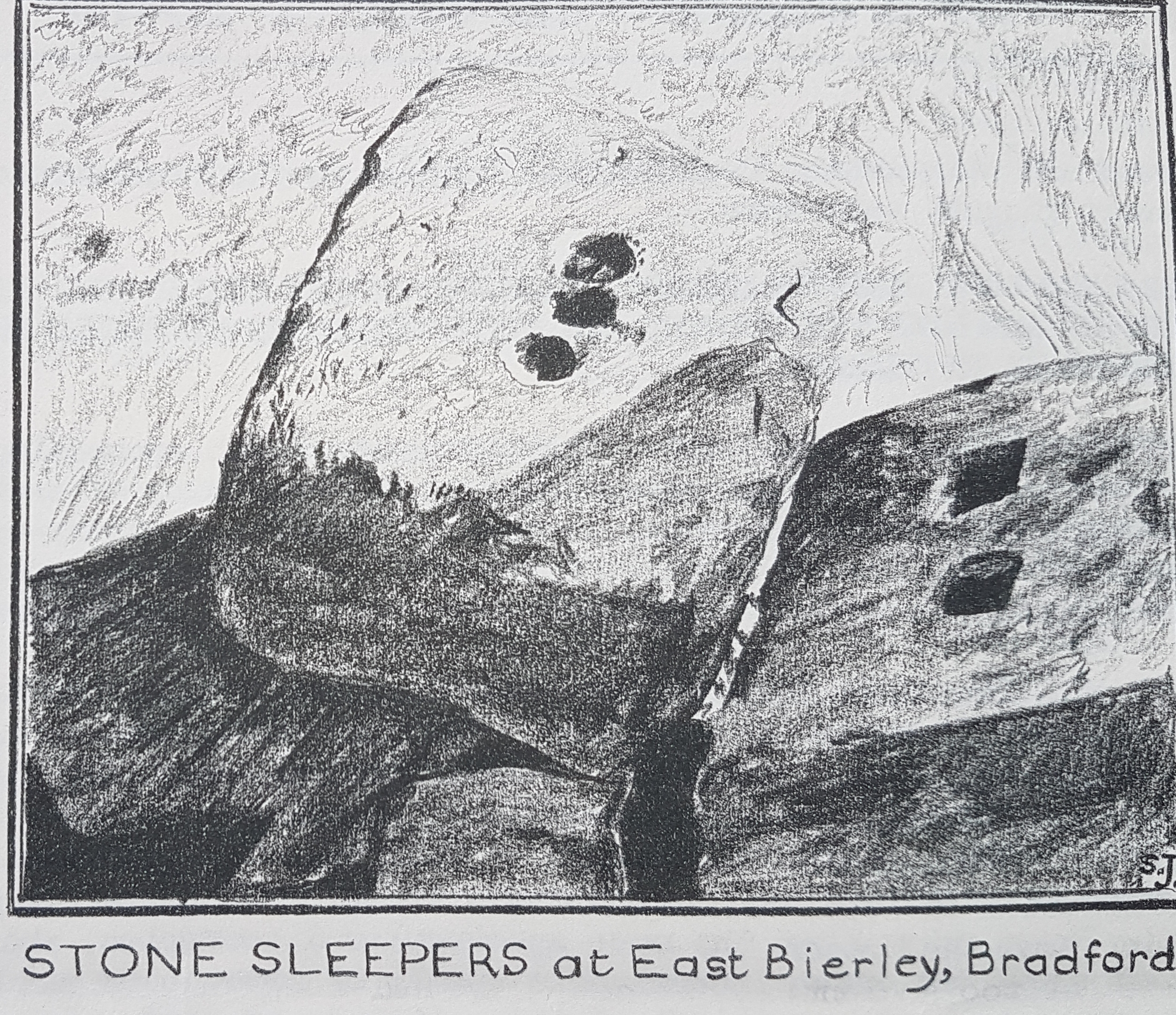
SJ would certainly have told us that during a walk you can never look too hard at the constituent parts of a dry-stone wall. Most readers will know that Bradford once had two great iron works at Bowling and Low Moor. The blast furnaces were fed by local iron ore found in the roof of the Black Bed coal seam, and coke made from the deeper Better Bed coal. As the mineral resources in the neighbourhood of the iron works were worked out great networks of tramways, or mineral lines, grew up to transport the precious commodities from further and further afield. Naturally the lines rested on sleepers which in this area are likely to have been made of stone. I have never been lucky to locate any of these myself but most of my walking is done in north Bradford where mining was uninfluenced by the iron works. In the Archaeology Group Bulletin of March 1964 SJ published his drawing of stone sleepers from East Bierley which seemingly had been found on a wall top. He gave approximate dimensions of 20 by 12 by 8 inches and described the rails themselves, long vanished of course, as being of cast iron and approximately one yard in length. Cast iron was brittle and consequently wrought iron, and then steel, were preferable for railway tracks.

Stone Sleepers

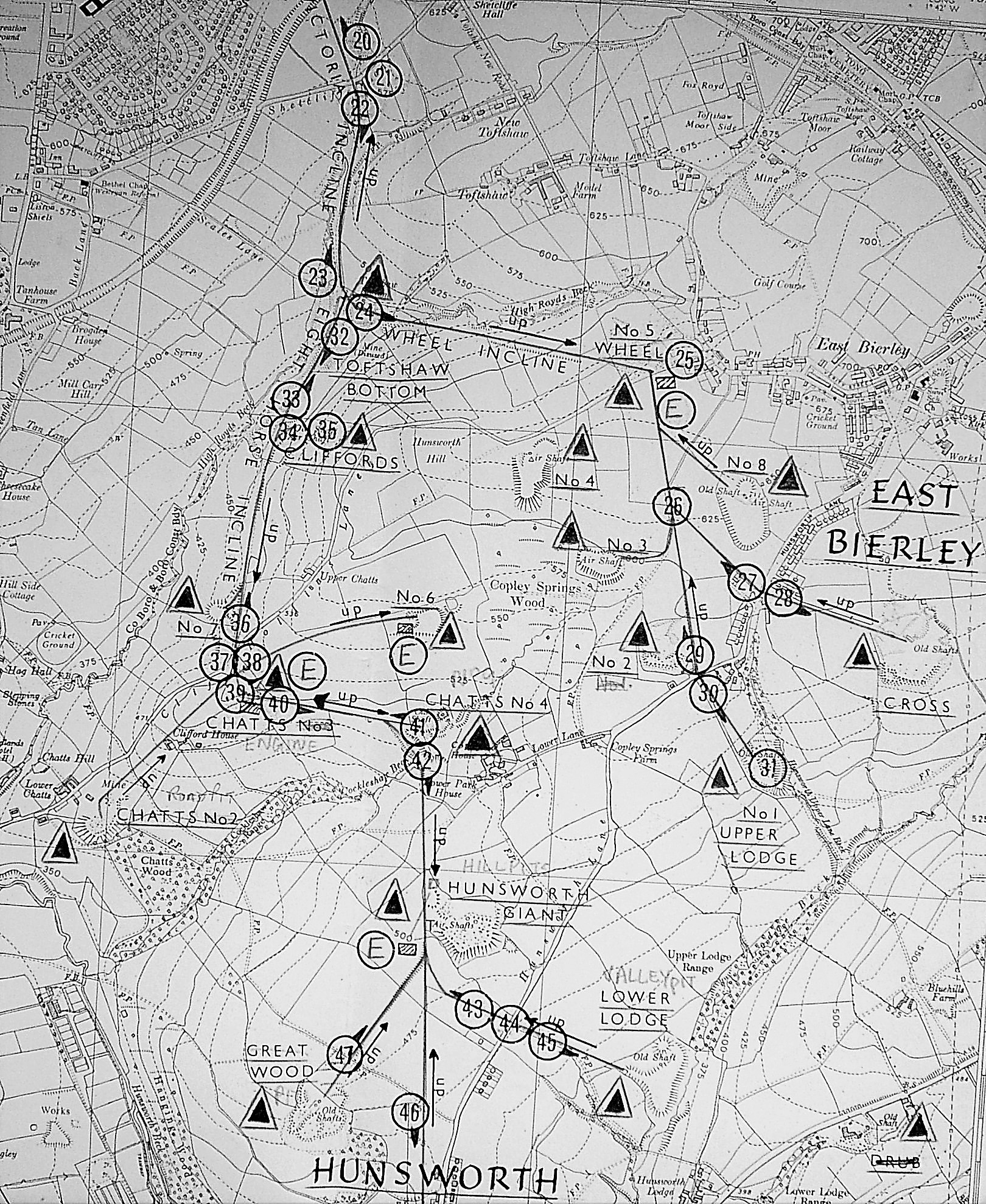
In the article it is suggested that pits at East Bierley supplied Low Moor ironworks but it seems that this wasn’t the case. At the time SJ wrote Derek Pickles was already working on his very detailed study of Bowling Iron Company’s mineral tramways, now curated by Bradford Industrial Museum.

East Bierley tramways

He recorded that ‘in 1839 the company leased 1200 acres of land in Toftshaw and Hunsworth from the Earl of Scarborough, and began to work pits in the area’. Bore hole reports available from the British Geological Survey suggest that Shertcliffe Coal was at 30m depth in this area, and was widely exploited. The fact that there were also ironstone miners and ironstone pits in East Bierley suggests that the ironstone containing Black Bed Coal seam was also being accessed about 67m below the Shertcliffe Coal. Derek Pickles reported that the Bowling Iron Company already had shafts of 95m depth to reach the Better Bed coal but when it ‘extended its operations into Hunsworth, Toftshaw and Tong much larger and deeper pits were sunk’.

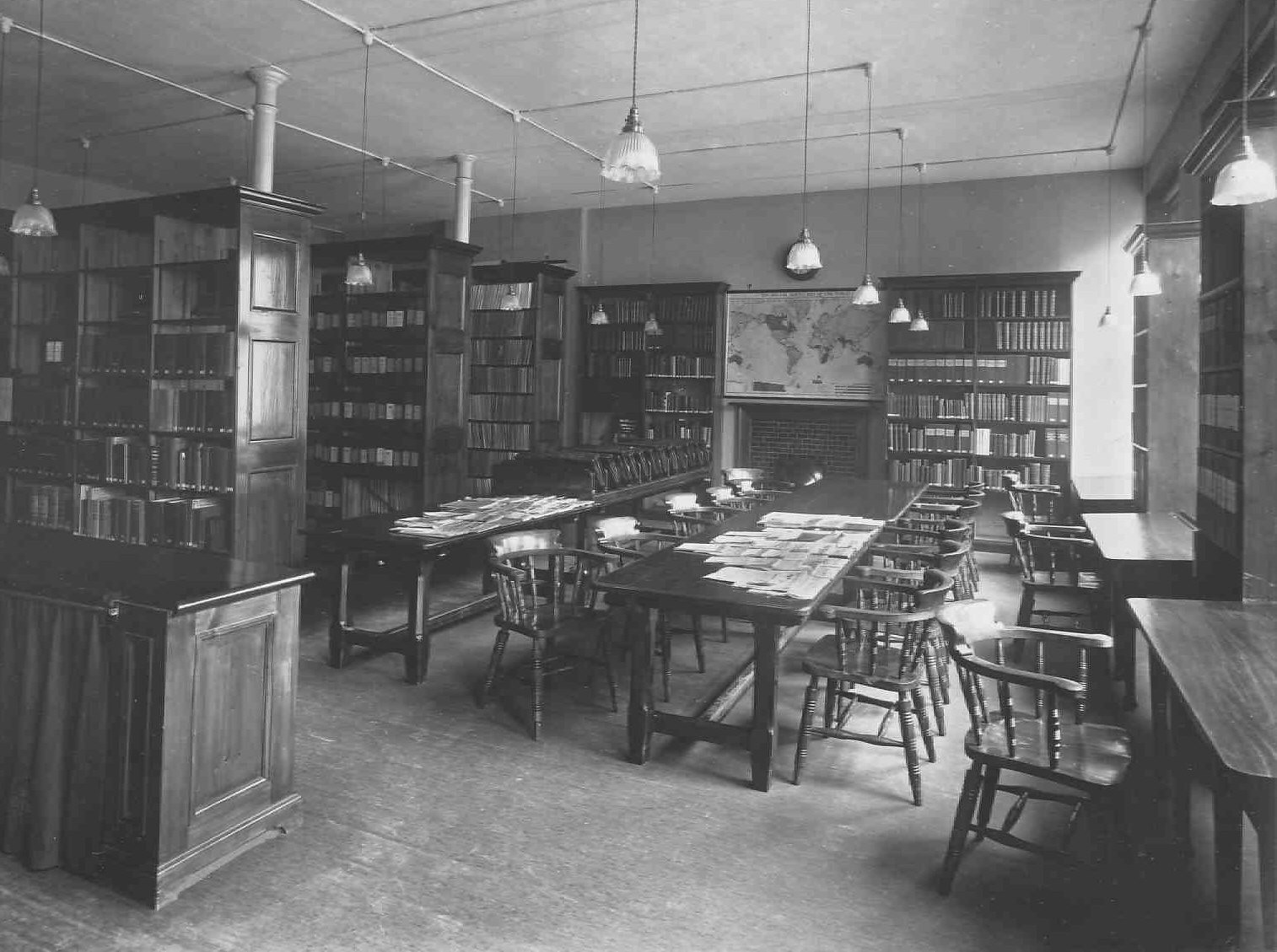
Treasure of the week no. 29: A free library for Bradford

Report of the Finance and General Purposes Committee as to the operation of the Free Libraries Act.1868.  Printed by M. Field of Bradford. 23 pages.

JND 1/12 (Please quote this number if requesting this item when we reopen again.)

At a meeting of Bradford’s Finance and General Purposes Committee, held on 6th March, 1868, it was ‘Resolved that the Report of the Sub-Committee on the proposed Free Library, now read, be and the same is hereby approved, and adopted, and that the same be presented to the Council at their next Meeting … . (W. T. McGowen, Town Clerk.)’ The Council did approve the report and Bradford’s ‘Free’ (i.e. ‘Public’) Library opened in 1872.

The Sub-Committee was appointed ‘to inquire into and report upon, the working of the Free Public Libraries Act, in those Towns in which the Act is now in force.’ The Chair was John V. Godwin, an active proponent of Free Libraries. The public library is now very much part of the social landscape, but before the Public Library Act of 1850 people had to pay a subscription to use a library, either by becoming a member of an organisation, such as the Literary and Library Society, or by using a commercial ‘circulating’ library. The move to provide libraries ‘on the rates’ was hotly contested, especially by the limited number of those wealthy enough to pay for them! So the acceptance of the report was a momentous event.

The Sub-Committee had contacted 13 of the 28 towns in England and Scotland which had adopted the Act. To a list of twenty-one questions, “replies were furnished in the most cheerful and courteous manner.” The report had three tables. One gave the dates when the Act was adopted, composition of the management body, whether both Lending and Consulting (i.e. Reference) libraries were established and what other libraries existed in their area. Second: the amount produced by the rates, cost of land, buildings and books, and how met. Third: Opening hours, number of volumes, issues, security and loss. There were also statistics on art galleries.

The libraries consulted were Bolton, Cambridge, Oxford, Blackburn, Liverpool, Sheffield, Cardiff, Birmingham, Airdrie, Manchester and Salford. Much can be learned from these tables about the concerns people had about how a ‘free’ library would work, and about the early history of public libraries. Particularly interesting are the occupations of users, and what sort of books libraries stocked. Liverpool had a reading room that held 600 people, and the most consulted reference source were Patent Specifications.

Stackmole


View more historical images of Bradford Libraries across the years here:

https://www.flickr.com/photos/bradfordlibraries/albums/72157630018371031


VE Day

In the small hours of the morning of 7 May 1945, General Alfred Jodl signed an  unconditional surrender. The lack of any official confirmation or announcement left some uncertainty about when VE Day would be held. Nevertheless, there was a steady demand for flags and flags went up on various prominent buildings. The 9 o’clock news of that evening announced that the next day 8 May was to be the VE Day holiday.

Although relief from the immediate threat was apparent, it was fully realised that this was only one stage in the end of the war. Many people celebrated with bonfires and for the younger children it was the first time they had seen a bonfire.

At 3.00pm people gathered to hear Mr Churchill’s announcement. The King’s speech came at 9.00pm.

In Bradford there was a parade in the morning followed by a service of thanksgiving at the cathedral. In the evening the Town Hall was illuminated with a sign 1939 – 1945 and an illumination of Churchill.

In Keighley a battalion of the Durham Light Infantry who had been stationed in the district for some months held a thanksgiving service in Victoria Park. After the service a wreath was laid on the cenotaph in Town Hall Square by two officers of the battalion.

In the afternoon drenching rain sent everybody indoors but the weather cleared towards the evening.

In Ilkley a bonfire was lit in the Holmes field at 10.00pm by four men who had recently returned from prisoner of war camps. Before the fire was lit, the chairman of the UD Council, Mr Milnes, speaking from a loud-speaker van said: ‘Generations to come will read the records of our country’s achievements with wonder and admiration…after nearly six years of bitter struggle and achievement, it is fitting that on this day of victory we should rejoice that bloodshed has ceased in Europe and in this country, but our rejoicing should be tempered by the  knowledge that our men are still fighting in the East, and neither must we forget on this day all those who have suffered and those who will not return.’ (Ilkley Gazette)

Take a look at this fascinating short film from the British Film Institute here:

V.E. Day Civic Service, Bradford 

https://player.bfi.org.uk/free/film/watch-ve-day-civic-service-bradford-1945-online

Images thanks to Keighley News and Ilkley Gazette

Caroline Brown