Brief Guide to Tracing Your Black British Ancestry


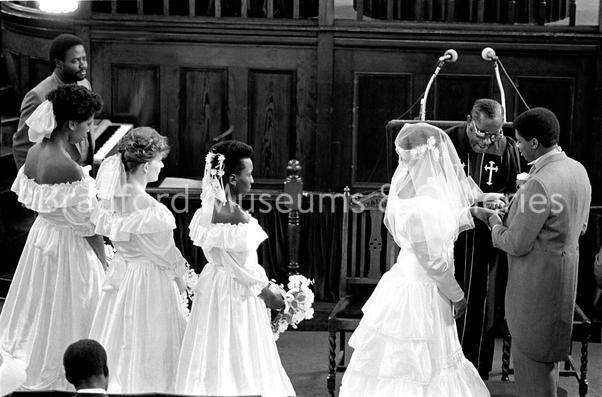
New Pentecostal Church of God,
©Bradford Museums Photo Archive

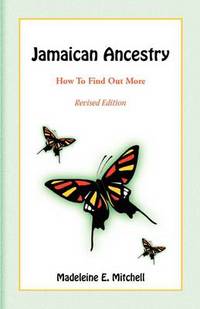
To mark Black History Month, here is a selection of online guides to tracing your family history. Bradford Libraries of course hold book stock for loan covering the basics of family history research, the sort of records you might come across and dedicated guides to aspects of Black history and Black family history, such as Madeleine E. Mitchell’s Jamaican Ancestry How to Find Out More, (Heritage Books, 2008) ISBN 978-0-7884-4282-7.

Background historical information

Black people have been in Britain from at least Roman times and increasingly more research is being done into their history and valuable contribution to the development of British society and culture. Here are a couple of sites you may find useful:

https://blackpresence.co.uk/ 

The website was launched in 2003, and funded by the New Opportunities Fund. It is one in a series of online exhibitions produced by Pathways to the Past web resource. It was established to provide an historical context for lifelong learners using the archives in their own research. It includes resources such as digitised records and artworks from the National Archives’ collections and elsewhere.

https://everygeneration.co.uk 

The Every Generation website was launched by Patrick Vernon after mentoring young black people in Brent and Hackney. He was inspired to create this online resource for young people and families for genealogical research and to explore Black British identity.

BBC articles for Black History Month on great men and women

https://www.bbc.co.uk/newsround/41775249

https://www.bbc.co.uk/newsround/41433196

BBC iplayer programmes:

https://www.bbc.co.uk/iplayer/episodes/b082x0h6/black-and-british-a-forgotten-history  TV series with David Olusoga

https://www.bbc.co.uk/programmes/b07yvszg  Radio 4 series with Gretchen Gerzina

More suggestions are available on the Bradford Council’s page:

https://www.bradford.gov.uk/libraries/children-and-young-people/black-history-month/

Family History – making a start

If your family has a long heritage in Britain then please follow the guides’ link below to a leaflet that includes an outline of some of the records you may come across in your research. Please note that census records did not identify ethnicity until 1971 so although early censuses do identify the country of birth in some cases from 1841, your search will be by address and surname. All are accessible through Bradford Libraries’ Ancestry from home service. You can start with the 1939 Register and then work through 1911 back every 10 years to 1841.

https://www.bradford.gov.uk/libraries/local-and-family-history/local-studies-guides/

Free online guides are also available on this site on all aspects of general and particular British family history research. Follow this link and type in your search needs:

https://www.nationalarchives.gov.uk/help-with-your-research/research-guides/

Further areas of research

This leaflet highlights some of the background history to migration from the 1940s.

https://www.nationalarchives.gov.uk/pathways/citizenship/brave_new_world/citizenship4.htm

Passenger lists for African-Caribbean heritage during the period c1948-1960

The British Transport Collections include some of the migration records of British citizens from Caribbean countries to the UK from this period and these are held at the National Archives, Kew. The National Archives also has a series of guides that you can read online and/or print off to read.

These include the UK inbound passenger lists up to 1960. However, these are currently available to all Bradford Library card holders from their own home. Follow the instructions below to access Ancestry and/or the more restricted access to Findmypast.

Ancestry includes the ‘Windrush’  inbound passenger lists and other inbound lists 1878-1960. UK outbound lists from 1890-1960.

To access Ancestry Library you will need a Bradford Libraries membership card.
Go to https://capitadiscovery.co.uk/bradford/ and log in to your library account with your card number and pin.
Remember to input just the numbers. Next, click on the special link to Ancestry Library Edition.

Findmypast  includes UK outbound lists from 1890-1960. Access is limited to a certain number of searches per month.  To access please email public.libraries@bradford.gov.uk

A guide for National Archive records that relate to aspects of the slave trade, slavery and unfree labour in the British Caribbean and American colonies:

https://www.nationalarchives.gov.uk/help-with-your-research/research-guides/british-transatlantic-slave-trade-records/

https://www.nationalarchives.gov.uk/help-with-your-research/research-guides/empire-commonwealth-records-held-by-other-archives/

Personal Accounts of Research for Black Ancestry

One man’s journey to uncover his routes back from his Liverpool family:

https://www.bbc.co.uk/news/extra/3k9u8lh178/Searching_for_my_slave_roots

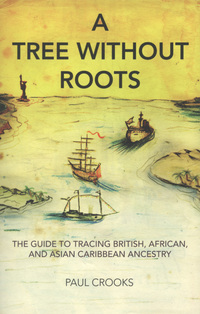
African-Caribbean heritage: two free online talks this month with Paul Crooks

If you would like to pursue this topic more informally, Manchester Library is hosting two family history talks, free online, by the author and family historian, Paul Crooks who pioneered research into African Caribbean genealogy during the 1990s. Join him as he explains how he traced his family history from London back 6 generations through to slavery in a Jamaican sugar plantation and how he researched his father’s history using the Passenger lists above mentioned. The events take place on the 19th and 20th October and are online, you register using your email and do not have to be a member of Manchester Libraries.

http://www.librarylive.co.uk/event/ancestry-talks-with-paul-crooks/

Paul Crook’s books are available in Bradford Libraries, please follow this link and you can use the click and collect service

https://capitadiscovery.co.uk/bradford/items?query=paul+crooks

Family Research War Records

You can search for war records on the Ancestry and Findmypast web sites. You may also wish to look at the following:

https://www.nam.ac.uk/explore/commonwealth-and-first-world-war

https://www.forces-war-records.co.uk/blog/2017/03/29/finding-the-commonwealth-soldier-in-your-family-tree

https://www.archives.gov/research/alic/reference/military/blacks-in-military.html  American soldiers

Bradford Museums’ and Libraries’ Records

Belle Vue Studio collection: a unique collection based in Bradford’s Museums and Galleries. The studio became a popular destination in the 1950s for those coming to work in Bradford from other parts of the world. Digitisation of the photos is almost complete: https://www.migrationmuseum.org/tag/bradford-heritage-recording-unit/

See also Bradford Museums Photo Archives:  https://photos.bradfordmuseums.org/

Leading fireman , Alfa Kalay of the Green Watch
©Bradford Museums Photo Archive

http://www.bradfordhistorical.org.uk/everyone.html

Bradford’s Oral History collection is housed in Bradford Local Studies Library. It consists of 800 tape recorded interviews with local people’s memories including subject areas such as textiles, health, war, immigration to Bradford.

Further links for tracing immigrant and ethnic ancestors: 

https://www.londonancestry.co.uk/

https://www.familytreemagazine.com/premium/immigrant-ethnic-websites/

The BBC continues to be involved with black history and family history research. Here is a useful link:

http://www.bbc.co.uk/history/familyhistory/next_steps/genealogy_article_01.shtml

The British Library houses the Oriental and India Office Collections, relating to all the cultures of Asia and North Africa and European interaction with them.

https://www.bl.uk/visit/reading-rooms/asian-and-african-studies-reading-room

UKIRA    http://www.asiamap.ac.uk/  UK Information Resources on Asia provides collection descriptions of resources held in university, special and public libraries; also access to holdings of newspapers in any language published in Asia, Middle East and North Africa, and information on the range of linguistic expertise in Asian languages available across the UK.

The National Archives holds the records of the Colonial Office, Commonwealth and Foreign and Commonwealth Offices.

https://london.ac.uk/senate-house-library/our-collections/research-strengths-of-our-collections/commonwealth-studies

SOAS Library & Information: housed at the School of Oriental and African Studies of the University of London, this is one of the world’s most important academic libraries for the study of Africa, Asia and the Middle East.

https://thecommonwealth.org/about-us/history Site covering the history of the Commonwealth including a photo archive

http://www.mundus.ac.uk/index.html   The Mundus Gateway is a guide to collections of overseas missionary materials held in England, Northern Ireland, Scotland and Wales.

General Archive Research links

http://discovery.nationalarchives.gov.uk/   the A2A database contains catalogues of archives held across England and dating from the 1900s to the present day.

AIM25: provides electronic access to collection level descriptions of the archives of over fifty higher education institutions and learned societies within the Greater London area.

ARCHON: the Archon Directory includes contact details for record repositories in the UK. The Archon Portal provides information about archival resources and projects. The site is hosted and maintained by the National Archives.

A good web site with some current free tips on getting children involved in their family’s history.  This site also has free genealogy layout forms to help you organise your research as you go.

We hope that this guide proves useful to you, please follow this link to find out what else is on in Bradford and Bradford Libraries and Museums  to honour Black History Month.

https://www.bradford.gov.uk/libraries/children-and-young-people/black-history-month/

Gina Birdsall and Angela Speight, Keighley Local Studies

Follow the Vets’ Film Trail through our region.

Once again our region has been chosen to feature as the backdrop to heritage filming. Bradford and Yorkshire are key areas chosen for some great television and film productions. The most recent is the remake of the popular classic All Creatures Great and Small , based on the hilarious and uplifting best seller books by James Herriot about the novice vet from Glasgow who settles into a veterinary practice in the Yorkshire Dales in the 1930s.

The current village of Darrowby is essentially Grassington and Mrs Pumphrey’s  palatial home is Broughton Hall Estate near Skipton but Bradford District makes its appearance in the use of the wonderful Worth Valley railway line, Oakworth and Keighley Worth Valley stations for all things rail related.

Of course Bradford District is no stranger to filming from films such as Room at the Top and Billy Liar of the 1950s/60s to Wuthering Heights, Jane Eyre, the Railway Children and Peaky Blinders. The list is a long one and starting earlier through the decades. Bradford’s City Hall, its centre, and local towns and villages have become firm location favourites for heritage sites and atmospheric shoots. Heritage buildings like Little Germany’s former 19th century wool merchant district have been used for a Hindi horror movie in 2013, when the streets doubled as 1920s London,  and most recently for Gentleman Jack, Downton Abbey and the Netflix history of football in the North of England, The English Game.  The model village of Saltaire too is a popular venue for period streets, shop fronts and terraced housing and The English Game crew made full use of these as a film location. Also on football, let’s never forget the Ripping Yarns’ episode Golden Gordon (1979), also filmed locally, about the trials of footy fan Gordon Ottershaw in his support of the worst team of 1935, Barnestoneworth United, starring Michael Palin. The diversity of the townscape has also attracted Bollywood film makers, Bombay Stores was used for the film Karachi, a comedy drama, in 2015:

https://www.thetelegraphandargus.co.uk/news/12929558.bradfords-starring-role-in-new-bollywood-film/

If you would like to follow some inspirational tours of award winning filming in our region check out the site for Filmed in Yorkshire:   https://filmedinyorkshire.co.uk/  and see where it takes you in our very own district. Why not plan your own trail, taking in your favourite films and TV series.

James Herriot’s Vet novels and non-fiction about the glorious dales are still available for loan in Bradford Libraries, just click and collect:

https://capitadiscovery.co.uk/bradford/items?query=james+herriot&offset=10

Books on cinema and film are also available for loan, such as Made in Yorkshire by Tony Earnshaw and Jim Moran that includes in-depth accounts of more than 30 films and looks at the history of filming in this beautiful county.

Of course no conclusion can be reached without a reminder of the National Science and Media Museum https://www.scienceandmediamuseum.org.uk/  and also that Bradford has been internationally recognised as the world’s first UNESCO City of Film, a permanent title,  and in part attained because of such popularity as a location hotspot. If you would like to find out more about this accolade, what it means to you and your area and also subscribe to a newsletter that will keep you right up to date with local films and filming please follow:

https://www.bradford-city-of-film.com/

For the future, Bradford can look forward to the development of a diversity of film talent as a result of Screen Yorkshire’s successful initiative Beyond Brontës to help young people (18-24) from diverse backgrounds to establish careers in the creative industries. In June 2020, the first group of trainees successfully completed the scheme. The following link gives full details of the initiative and the kind of training and experience that the students gained. There is also a video link as well:

Gina Birdsall, Keighley Local Studies

Nature Cure – Bradford Parks and Woodland

Another lockdown may loom but the Bradford District is blessed with some beautiful countryside, moorland walks and has parks and woodlands to stroll and commune with the natural world. Take a look at this excellent site listing all the grounds available in our area. https://bradforddistrictparks.org/parks/

Each has its own history and development, click on the links provided to find out more about your own local area. There are photographs, useful location maps and information about new environmental policies and change as well as funding bids. Did you know that 6 of our parks have green flag awards and that 10 are listed on English Heritage’s Register of Parks and Gardens of Special Historic Interest in England including: Bowling Park, Lister Park, Peel Park and Horton Park?

The need for public parks began in the nineteenth century and the park movement was inspired by the need to get people taking ‘rational recreation’. Many people worked long hours in the mills in Bradford and the Temperance movement was keen to advance the healthy living option of fresh air and exercise as opposed to the pub.  With all the hours that people worked, there was little time for travelling to the most fun areas regionally or to the seaside so the development of local parks was a benefit to all. Birkenhead Park in Merseyside is generally thought to be the first publicly funded civic park. It was opened in April 1847 and was designed by Joseph Paxton of Crystal Palace fame. The following gives a short history of the public park:

https://historicengland.org.uk/whats-new/debate/recent/public-parks/the-victorian-legacy/

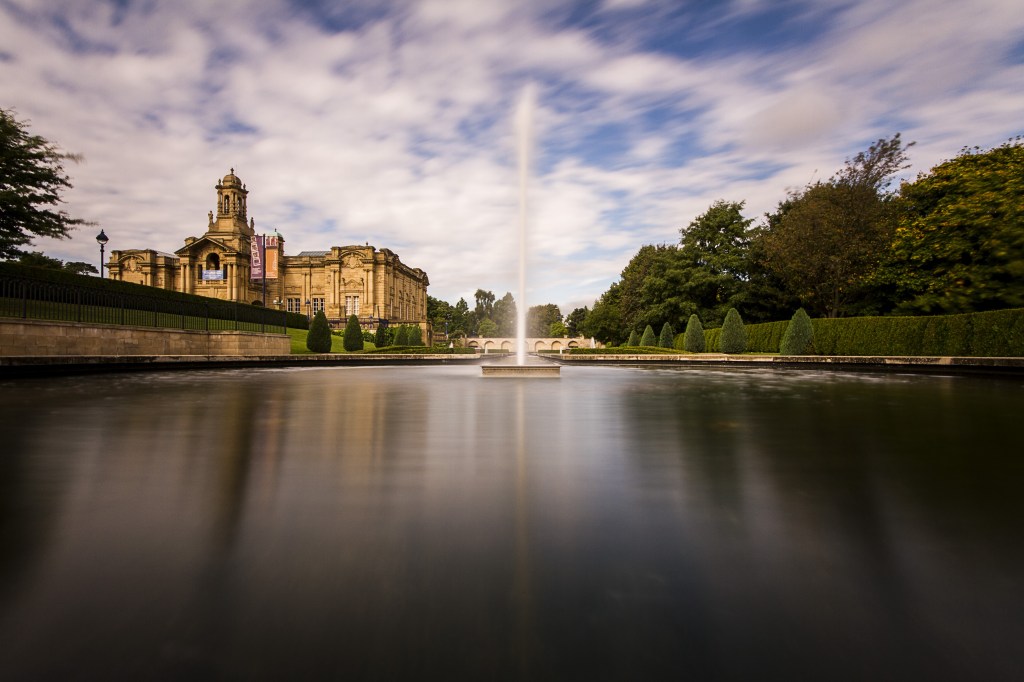
The history of private and public gardens has also influenced plants and garden design in public parks and vice versa. The following links can help you to  trace influential developments and follow the plant hunters as they discovered plants such as the fern and find out about the origins of flowers and shrubs such as the rose and the rhododendron and new species. Don’t forget that Bradford’s own Lister Park has its own botanical garden as well as the Mughal garden and that Cliffe Castle in Keighley has just undergone restoration of its formal and ornamental gardens and glasshouses and has an aviary as well as parkland.

https://www.nationaltrust.org.uk/lists/gardens-through-the-ages

https://www.english-heritage.org.uk/learn/histories/gardens-through-time/

https://www.kew.org/read-and-watch/adventure-and-discovery-around-the-world-with-plant-hunters

https://www.bbc.co.uk/news/science-environment-42239463

If you want to know more about current plant science and current studies, Kew also has online films and reports. https://www.kew.org/read-and-watch and the Natural History museum site will help you to trace the natural history of the garden in their “try at home” sections: https://www.nhm.ac.uk/our-science.html

Gina Birdsall, Keighley Local Studies

The Brontës and their reading: what the Brontës read and their Home School experience

4 – Where did the Brontës get their books?

In part one of an examination of Brontë reading, we looked at some of the books that edified, influenced and comforted the Brontës throughout their lives. We touched on a couple of sources of books and journals, however, this is still a subject of some speculation, especially considering that the Brontës, even after publication, would never have had much spare money to subscribe widely to journals or to purchase many books.

Keighley and Haworth Mechanics’ Institutes

Both Juliet Barker and Bob Duckett, library historian, note that the parsonage library was small and of mainly classical subjects and natural history. Both give excellent accounts of book and journal sources. Both have successfully argued that the Brontë girls did not directly borrow works from Keighley’s Mechanics’ Institute, though it is likely that as a member himself, Patrick was familiar with its library (the Institute’s archive, including catalogues and annual reports, is available to view in Keighley Local Studies Library from c1835). However, Patrick was the first President of the Haworth Mechanics’ Institute and Charlotte was an active supporter.

Mechanics Institute

Circulating Libraries

It is generally agreed that Charlotte used the circulating libraries in Keighley, based on evidence from Mrs Gaskell and on Charlotte’s association with Thomas Hudson of High Street library and bookshop and Robert Aked in Low Street, printer and circulating library service. The latter also printed Haworth Church hymn sheets and printed Patrick’s works such as The Sign of the Times (1835). Both Patrick and Charlotte ordered books from John Greenwood’s of Haworth and by 1853, there were 5 booksellers in Keighley, 21 in Leeds and 8 in Halifax.

c1849 OS map

Local Families

Bob Duckett identifies local families such as the Greenwoods of Old Oxenhope who lent books to the Brontës. He has also written extensively about the Heatons and their library at Ponden Hall, often the stopping place for the Brontës on their walks, especially perhaps Emily who may have used some Heaton family history for Wuthering Heights. We do know that Charlotte and her sisters also visited the home of Dr John and Marianne Milligan. They lived in South Street. Mrs Milligan was from Haworth herself and married the Keighley surgeon and workhouse doctor to the Union (from 1838). Dr Milligan was a book collector and became vice president of the Mechanics’ Institute. He lectured on health and disease in manufacturing communities and the effect of poverty. Keighley Library now has a small collection of his former library.

A Curiosity for you

As there is much online on this topic, we would like to leave you amongst the bookshelves of Eshton Hall near Kildwick, the home of Frances Mary Richardson Currer (1785-1861), daughter of Rev. Henry R. Currer. Miss Currer was very wealthy, a bibliophile and a generous philanthropist and a member of Keighley’s Mechanics’ Institute. It is also speculated that she was at one time the anonymous benefactor of Patrick Brontë. She was patron of the Cowan Bridge School, also a neighbour of the Sidgwicks of Stonegappe where Charlotte was a governess in 1839. It is probable that she was the source of the name “Currer” Bell used by Charlotte as her pseudonym. Did any of the Brontës ever visit Eshton Hall’s magnificent library?

https://theoxfordculturereview.com/2016/02/14/the-long-view-so-very-conspicuous-frances-currer-the-forgotten-bibliomaniac/

http://www.kirkbymalham.info/KMI/winterburn/eshtonhall.html
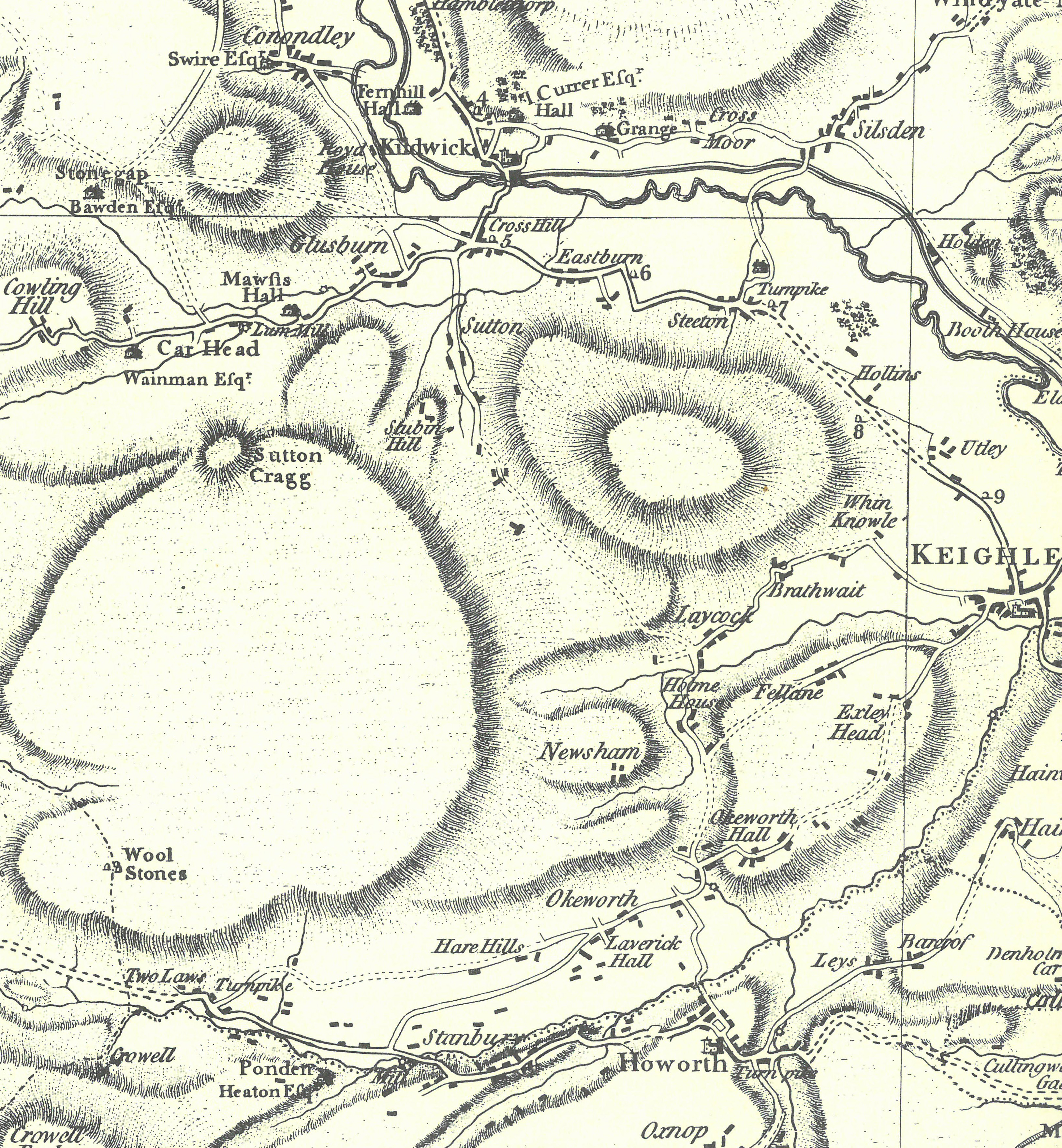
Jeffreys map 1771

References

The Brontës. Juliet Barker (Phoenix, 1995)

‘Where did the Brontës get their books?’ Bob Duckett in Brontë Studies, Vol 32, Part 3, Nov. 2007 (Brontë Society, 2007)

‘The Rev. Patrick Brontë and the Keighley Mechanics’ Institute.’ Dr Ian Dewhirst. Brontë Society Transactions, Vol. 14. No. 5 (Part 75). 1965

Free online leaflets and fact sheets on the Brontë family are available at:

https://www.bradford.gov.uk/libraries/local-and-family-history/local-studies-guides/

The most useful for this study are:

The Brontë Collection. Angela Speight (Keighley Local Studies Library, 2017)

Keighley & the Brontë Connection and Haworth & the Brontë Connection, both guides to resources in Keighley Local Studies Library. Gina Birdsall (Keighley Local Studies Library, 2017) These include details of further publications by renowned Brontë expert and author Ann Dinsdale, Prinicpal Curator, Haworth Parsonage and Steven Wood, author and specialist local historian on all things Haworth.

Newspapers and Magazines

Newspapers and magazines played a large part in the lives of the Brontës. The most predominant influence was that of Blackwood’s.

Blackwood’s Magazine.

Blackwood’s Magazine was a monthly journal published by William Blackwood of Edinburgh from 1817. It contained comment and satire on contemporary politics and literature with extensive and detailed reviews on new works of politics, travel, history and fiction. This magazine appears to have influenced them greatly and inspired their own works of imagination and illustration.

https://onlinebooks.library.upenn.edu/webbin/serial?id=blackwoods

Newspapers and other journals

The Brontës could not afford many subscriptions. Patrick subscribed to Fraser’s, the Leeds Mercury and the Leeds Intelligencer and it was Rev. Jonas Driver of Haworth who leant the family Blackwoods and John Bull.

However, newspapers and journals were not just read by the Brontës but were, particularly for Branwell, a source of publication for his poetry and those of his local poet friends. As well as reading Bell’s Sporting Weekly, he sent poetry of to the Bradford Herald, the Halifax Guardian, the Leeds Intelligencer and the Yorkshire Gazette. The latter was a York newspaper produced by the bookseller and stationer, Henry Bellerby who also ran a public library from his Stonegate shop from which Branwell also borrowed books (The Brontës, p464).

The Brontës may well have had access to the Keighley & Haworth Argus and The Keighley Visitor, as both were connected to a bookseller, Mr Thomas Duckett Hudson, and a printer, Mr Robert Aked, with a circulating library used by Charlotte. Whether or not the Brontë sisters generally read any of the journals in which their own poetry and novels were to be reviewed is not clear for this blog. Such reviews, however, appeared in the Athenaeum, the Critic, the Atlas, the Britannia, the Spectator and the Dublin University magazine. For information on other related journals look at Juliet Barker’s The Brontës and articles from the Brontë Studies published by the Brontë Society referenced at the end of this blog.

https://blog.britishnewspaperarchive.co.uk/2020/04/06/new-titles-6-april-2020/

https://www.bradford.gov.uk/libraries/library-services-online/digital-library/

Local outdoor and indoor visits (or just online) during  relaxing lockdown

Haworth Parsonage and village. https://www.bronte.org.uk/

If you have never visited this wonderful, still atmospheric place or not been for some time then you have missed out. Continually upgraded, with wonderful exhibitions and packed full of Brontë artefacts and manuscripts, it is quite breath-taking in its scope. Treat yourself and follow in the footsteps of the Brontës and the literary curious such as Virginia Woolf, Simon Armitage and Kate Bush. You will be informed and inspired. On a good day, take a picnic. It is Anne Brontë’s bicentenary in 2020 so look out for any continuing events/exhibitions about this brilliant writer who, uniquely for the time, tackled alcoholism and domestic abuse in marriage. https://www.telegraph.co.uk/books/classic-books/time-celebrate-anne-wildest-bronte-sister/

Scarborough the fair

Scarborough is a great Yorkshire seaside resort and has strong Brontë associations, being a favourite place of Anne Brontë as well as her final resting place. Follow this link for the history of the Brontë connection:

https://storiesfromscarborough.wordpress.com/2016/03/30/anne-bronte-scarborough-connections-part-i/

Other useful related links:

The Lakes and the Romantic poets  https://www.visitcumbria.com/william-wordsworth/

Mrs Gaskell in Manchester https://elizabethgaskellhouse.co.uk/

John Ruskin in the Lakes and Sheffield: https://www.visitcumbria.com/john-ruskin/ and

https://www.guildofstgeorge.org.uk/projects/ruskin-in-sheffield

Conclusion

The bookish interests of the Brontës were wide ranging. They were acquainted through the sisters’ London contacts with some of the great literati of the early 19th Century, they were aware of the political concerns (the aftermath of the French revolution) and changes of this internationally and locally turbulent time (industrial changes and the Chartist movement), also influenced by their father Patrick’s work as vicar and his involvement with religious debate, parish health, welfare and education, not to mention Branwell’s own wide variety of local friendships, some literary , such as the Gargrave poet Robert Story, John James, local historian (History of Bradford) and Joseph B. Leyland, a Halifax sculptor who was lauded in London for his talent.

It’s sad to think that none of the Brontë siblings ever had the opportunity of a university education and it’s likely that all the sisters at one time or another would have echoed these words extracted from a letter written by Branwell to his close friend Joseph Leyland:

“I used to think that if I could have for a week the free range of the British Museum – the Library included – I could feel as though I were placed seven days in paradise, …” (The Brontës, p. 230)

NOTE:  Keighley Local Studies Library is currently closed so we apologise for the limited references for this introduction. In his article referenced below, Bob Duckett lists other in- depth studies of the books read by the Brontë family.

References

The Mother of the Brontës. When Maria Met Patrick, Sharon Wright (Pen and Sword History, 2019)

The Brontës. Juliet Barker (Phoenix, 1995)

Classics of Brontë Scholarship. Selected & introduced by Charles Lemon (The Brontë Society, 1991), various studies included

Portrait of a Governess, disconnected, poor and plain. Brontë Parsonage Museum (The Brontë Society, 1991), brochure

Why not join the Brontë Society and get your own copies of Brontë Studies with up to the minute scholarship and discussion on all things Brontë: https://www.bronte.org.uk/about-us/our-history


Gina Birdsall and Angela Speight, Keighley Local Studies Library

Treasure of the week. No. 33: The wild man of Cottingley : the wandering life of Jack Lob

‘A Sketch of the Life and Vagaries of ‘Jack Lob’ of Cottingley, near Bingley; a wandering beggar’, pages 10-16 in Interesting Interludes in the Singular Life of William Sharp, alias ‘Old Three Laps’. Printed by Thomas Harrison of Bingley, c. 1856. (Reference: JND 116/4)

mr-william-busfield-ferrand

The life of Jack Lob was a continual struggle for existence; want of instruction, deprived of his parents when young, and isolated from the working classes by his own indolence and partial insanity, he wandered from one place to another wherever he could pick up a penny of a crust of bread. In the cold nights of winter, in frost and in snow, he crept into old barns, mistrals, pig styes, under hay stacks, and into hedge row bottoms, with an empty stomach and scanty clothing.

John Robinson, better known by the name of Jack Lob, was born at Coppy Coppice, near Cottingley. His father was a soldier but died when John was young. “He was rather short, his physiognomy exhibiting a want of intelligence, having the appearance of an Ourang Outang or wild man of the woods.”

His friends persuaded him to take work in the various coal pits, where he could find employment as a drawer up of coals, but his long habits of vagrancy and mendacity led him to fall back again to his old course of begging, for he said he liked liberty with all its privations better than labour.

He was once confined, as he called it, in the Bastile, or Thackley Workhouse, where his wants were amply supplied but one night escaped though the closet seat. Efforts were made to find him and bring him back, but he managed to evade the vigilance of the parish officers.

Some exploits of this wandering and homeless man are recounted in this tract, giving us, today, something of the flavour of a problem still with us. On his death, local landowner, William Ferrand, without being asked. generously made up what was necessary.

Stackmole