Captain Sir Tom Moore

We were all saddened to hear of the passing of Captain Sir Tom Moore earlier this month.  A truly remarkable man, whose determination and show of ‘true Yorkshire grit’ during an incredibly difficult year, proved a beacon of hope to us all during lockdown. Raising over £32 million for the NHS he was an inspiration to us all.

A ‘Son of Keighley’, Sir Tom was presented with the Freedom of the Borough last summer on a visit back to his hometown, where a plaque was unveiled in his honour. Here is a look back at Captain Sir Toms’ Keighley origins.

Tom was Born on the 30th of April 1920, to Wilson ‘Wilfred’ Moore, a Mason, and Isabella Hird, a Headmistress.    

Tom’s paternal grandfather, Thomas Moore, came to Keighley in the 1870s after his marriage to Hannah Whitaker. Originating from a farming family in the Yorkshire Dales, seeing no prospect in farming, Tom set out to become a Stone Mason. Having trained in Bradford, Thomas took up building work in Keighley and an early job of his was the building of the impressive wall which surrounds the Cliffe Castle estate. Tom became quite successful and contributed to building many prominent buildings in and around the town. These include, Keighley Town Hall, shops down Cavendish Street, as well as the family home ‘Club Nook, at Riddlesden. Most notably Keighley’s War Memorial, The Cenotaph, situated in Town Hall Square was also Thomas’s firm’s work.
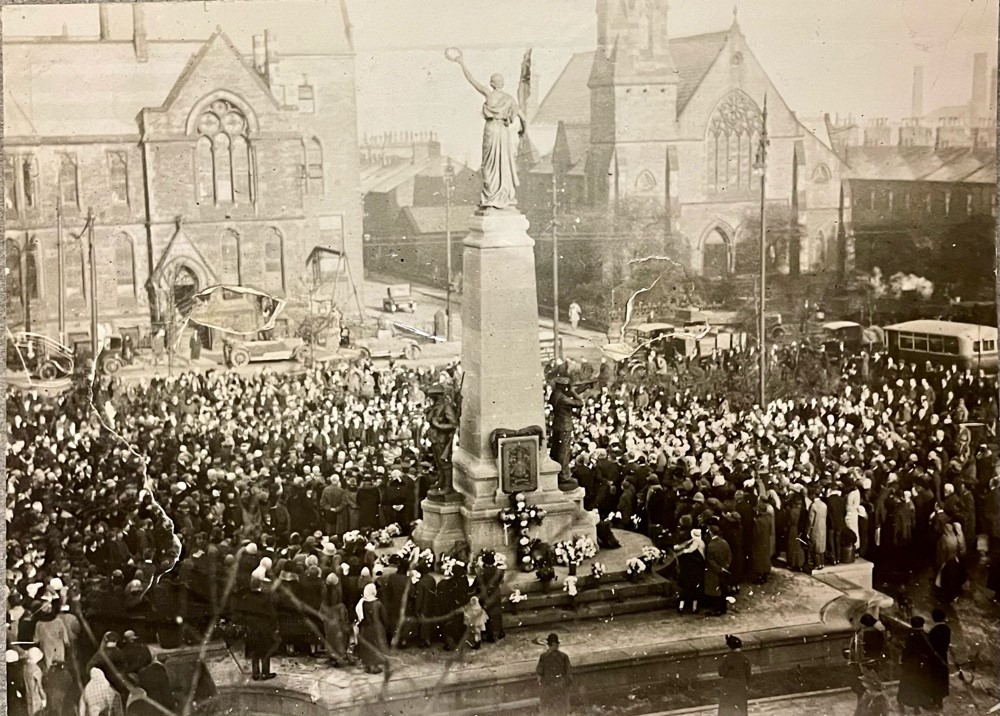
Keighley War Memorial unveiling 1924 (Keighley Photographic Society vol)
W. N. Hird The family shop

Tom’s grandfather on his mothers’ side, John Hird, worked as a barber in the family hairdressing and barbers on Church Street.
During his early childhood Toms’ family lived at 14 Cark Road, a small but modern terrace near to the Town Centre. However on the death of his grandfather Thomas, Wilfred inherited the family home and moved to ‘Club Nook’. Situated in Riddlesden on the edge of Rombald’s moor, it was an idyllic spot for a young Tom, who enjoyed the outdoors and spent much time up on the moors with his pet dog.
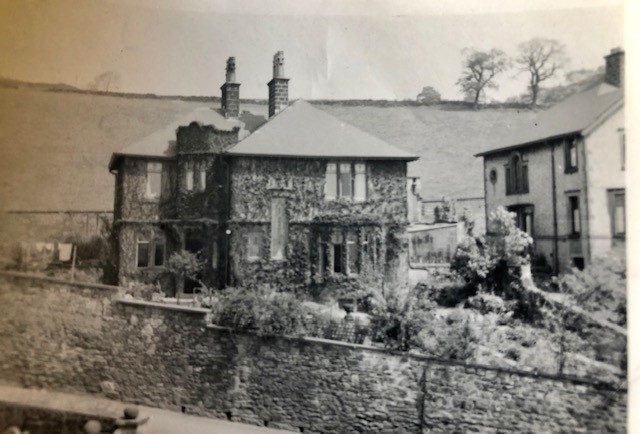
Club Nook – the family home

An active and bright lad, Tom entered ‘Keighley Grammar School’ in 1933.

Keighley Boy’s Grammar School. (Keighley Boys Grammar School Archive BK 211)

Although he did not consider himself academic, Tom did well at school and was a member of the debating club of which, Sir Asa Briggs, notable Historian, was also a member.

Tom’s love of machines was spurred by Tom’s Uncle Billy, a motorbike trials rider in his spare time. As a child Tom would watch his uncle take part in races and help him work on his bikes. Tom got his first motorbike at the age of 12, a Royal Enfield, which he proudly restored to working condition himself with no help. This love of motorsports stuck with him and Tom himself took part in motorcycle racing in adulthood. One of Tom’s old bikes from the 1950’s, a Scott Flying Squirrel, was even found at the Bradford Industrial Museum.

Photography was another family pursuit enjoyed not just by Tom’s father Wilfred, but Tom himself, both were Members of the Keighley Photographic Association.

Page from Keighley Photographic Association membership book 1935-1945 (BK83)

Wilfred once had aspirations to become a professional photographer but a complete loss of his hearing unfortunately put an end to any idea of a career.  An excellent photographer, he contributed to the Keighley Photographic Association, with many fine images of Keighley and the surrounding area, some of which appeared in the Keighley News at the time.

Having gained a good education Tom left school at 15 matriculating in, French, English, History, Maths, Chemistry and Physics. He took up an apprenticeship with the Keighley Water Engineer for three years, then at 18 he started a course at Bradford Technical College to study Engineering.  When War came in 1939, Tom a young man of 19 was still studying, but war service was mandatory for all men aged 18-49, so Tom’s War Service started just after he had turned 20, when he was conscripted and joined the 8th Battalion of the Duke of Wellingtons Regiment.  Tom was soon selected for officer training. Having achieved the rank of Second Lieutenant Tom was posted to India. As part of his service he ran a training programme for army motorcyclists. In 1945 now promoted to temporary Captain, Tom returned to England to become a Tank training instructor.         

Post war Tom returned to Keighley to work as a sales manager for a roofing materials company in Yorkshire. A successful career in business ensued and he went on to become general manager of Cawoods Concrete Products Ltd, manufacturing concrete pipes, Cambridgeshire. 

Tom married Pamela in 1968 and the couple went on to have two children, Lucy and Hannah. Sadly Tom lost his wife to Dementia in 2006. So in 2008 Tom went to live with his daughter Hannah and her family in Marston Moretaine, Bedfordshire, where he lived until his death.

His visit back to his hometown in August last year for the unveiling of his plaque was met with much excitement and delight. Here are some of the picture of Captain Sir Tom’s visit. 

The Autobiography, ‘ Tomorrow Will Be A Good Day: My Autobiography by  Captain Tom Moore’ is available with proceeds going to supporting  the  ‘Captain Tom Foundation’  set up in his name.

Copies are also available free to borrow at Bradford Libraries https://www.bradford.gov.uk/libraries and also via ebook on Borrow Box, the free online ebook and audiobook available through your library membership.      

Keighley Local Studies Library was asked if we could help provide details of photographs for the documentary on Sir Tom’s life, showing the Keighley of Tom’s childhood. The documentary about his life ‘The Life & Times of Captain Sir Tom’ is still available through the ITV hub. https://www.itv.com/hub/the-life-times-of-captain-sir-tom/10a0447a0001

Written by Angela Speight, Keighley Local Studies, with thanks to Eddie Kelly, Gina Birdsall, Rachel Shearer, Amy Moore for providing photographs.

A walk with Sidney Jackson #8

Never take dry-stone walls for granted, although any walker in this area will see plenty of them. A great many miscellaneous materials will be built into the walls, often as small repairs. Since my own main interests are in industrial archaeology and geology I am on watch for bricks, iron-making slag, fragments of carved stone, fossils and glacial erratic boulders. I have never been lucky enough to see a ‘rack stone’, three of which are included in SJ’s drawing here.

In the March 1965 edition of the Archaeology Group Bulletin he explains that they obtain their name because their notched shape resembles the rack in a rack-and-pinion arrangement.

Such stones seem to have been reasonably common even if I have never encountered one. They can be built into cottages and boundary walls. The ones pictured were considered to have originally been fragments of a single stone over 6 feet long. SJ states that they were original part of a grain drying kiln but doesn’t explain exactly how they functioned. As I understand it the corn grains were dried on a heavy wool cloth suspended by poles over a low fire. The poles seemingly sat on groves cut into stones placed near the fire, and I assume the rack stones were upright Were there multiple levels of drying? I have seen Iron Age and Roman corn driers but these seemed to employ a stone drying floor, so I will not claim to understand exactly how the rack stones functioned. Can anyone help?

At first sight Bradford seems an unpromising place to grow wheat and barley, with oats being a more plausible grain crop. But in Heaton alone I know of three malting kiln sites and the survival of the place name ‘Whetley’ suggests that wheat was also grown. Corn driers must once have been quite common since the cool, damp, climate in northern upland Britain must have made outdoor drying of wheat prior to storage difficult. But as a child in sunny Sussex, nearly 70 years ago, I well remember ‘stooks’ assembled in the cornfields where the drying took place.

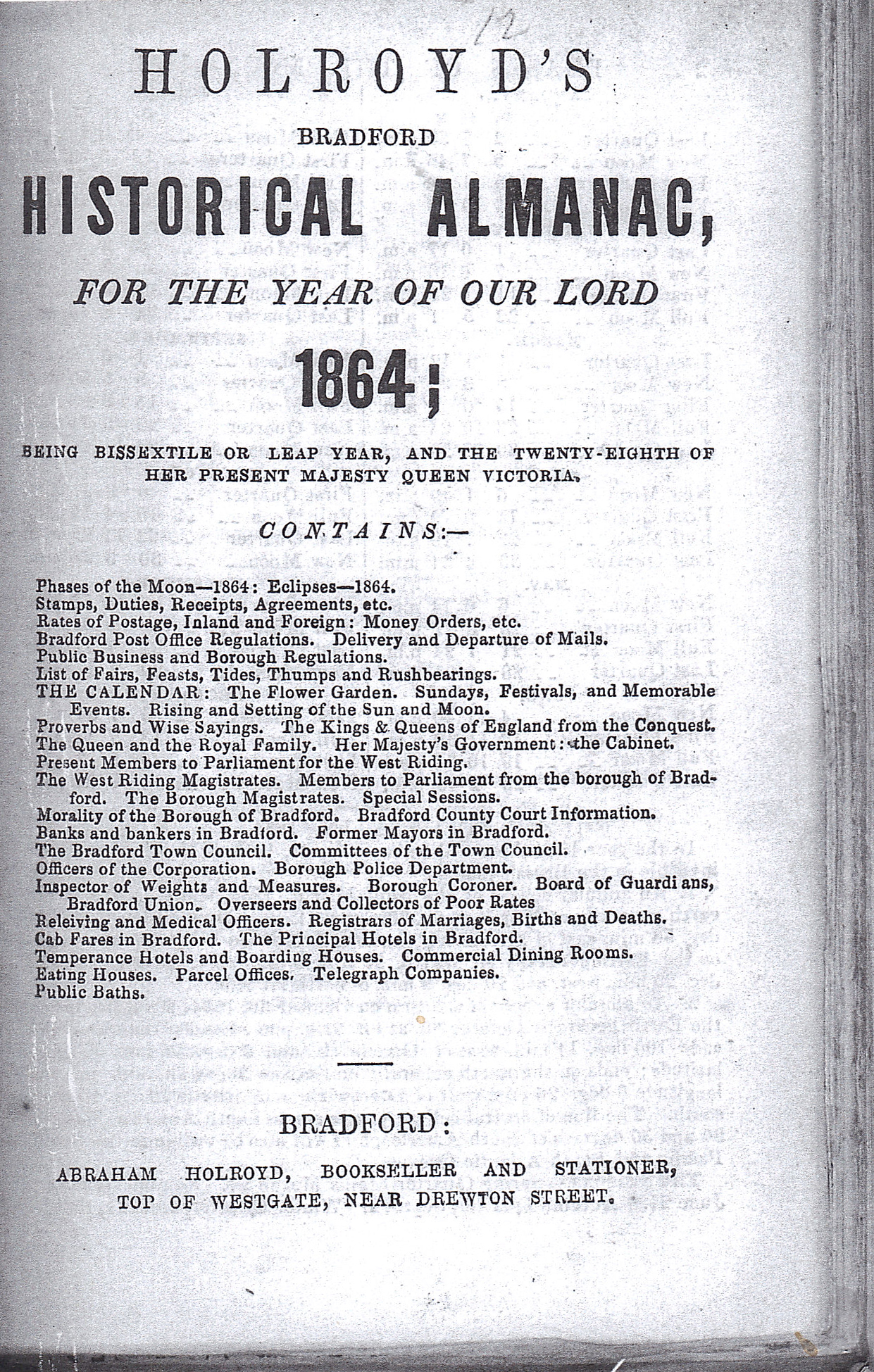
Treasure of the Week no. 34: Holroyd’s almanac for 1864 – and the morals of Bradford. From Cab Fares and Public Baths to Thumps and Rushbearings

In the basement of Bradford’s Local Studies Library are collections of nineteenth century pamphlets (and some of earlier date). Ranging from sermons and programmes of royal visits, to reports, articles, obituaries and regulations, they are a treasure trove of local history. What follows is an account of one of these treasures.

Holroyd’s Historical Almanac for the Year of Our Lord 1864. Published by Abraham Holroyd, Bookseller & Stationer, Bradford. 32 pages (Reference: JND 130/11)

Almanacs (or ‘almanacks’) were popular in the mid-to-late nineteenth century. These annual compilations of local information, often produced by local newspapers, contained a rich mixture of facts: astronomical, calendar, national, local, political, legal, administrative and sometimes hints and anecdotes. The following from the contents pages of Holroyd’s 1864 Almanac is typical:

Phases of the Moon -1864; Eclipses – 1864
Stamps, Duties, Receipts, Agreements, etc.
Rates of Postage, Inland and Foreign
Money Orders, etc.
Telegraph Companies
Delivery and Departure of Mails
Bradford Post Office Regulations
Parcel Offices
List of Fairs, Feasts, Tides, Thumps and Rushbearings

THE CALENDAR with page per month noting:
The Flower Garden
Sundays
Festivals, and Memorable Events
Rising and Setting of the Sun and Moon

The Kings & Queens of England
The Queen and the Royal Family
Her Majesty’s Government: the Cabinet
Present MPs for the West Riding.
MPs from the Borough of Bradford
The West Riding Magistrates
The Borough Magistrates
Special Sessions
Morality of the Borough of Bradford
Bradford County Court Information
Public Business and Borough Regulations
Banks and Bankers in Bradford
Former Mayors in Bradford
The Bradford Town Council
Committees of the Town Council
Officers of the Corporation
Borough Police Department
Borough Coroner
Inspector of Weights and Measures
Board of Guardians, Bradford Union
Overseers and Collectors of Poor Rates
Relieving and Medical Officers
Public Baths
Registrars of Marriages, Birth and Death
Cab Fares in Bradford
Proverbs and Wise Sayings
The Principal Hotels in Bradford
Temperance Hotels and Boarding Houses
Commercial Dining Rooms
Eating Houses

All human life is here, or a lot of it. Anyone wanting to know what life was like in the past would do well to quarry these yearly almanacs. Absent in this one are descriptions of the towns and village covered by the publication, but we learn that there were three temperance hotels in Rawson Place; that Bradford’s MPs were Henry Wickham and W. E. Forster; that hackney cab fares were a shilling for up to a mile, thence six pence a mile and that the Post Office opened at 7 a.m. (7.30 in winter).

Ah! But what about the ‘Morality of the Borough of Bradford’ as noted in the Contents above? Well:

Number of Constables 119
Known Thieves 91
Receivers of Stolen Goods 5
Prostitutes 151
Suspected Persons 114
Vagrants 491
Houses of Bad Character 5
being Public Houses 20

Brothels 58
Tramps’ Lodgings 45
Crimes Committed 247
Apprehensions 170
Committed for Trial 84
Burglaries 3
Breaking into shops 29
Highway Robbery 4
Laceny 173
Offences against the Person 5
Drunkeness 162

The meaning of some of these headings will have changed over the last century and a half, and also how crimes are allocated to headings, but it is clear that the Borough police force and the courts had plenty to do.
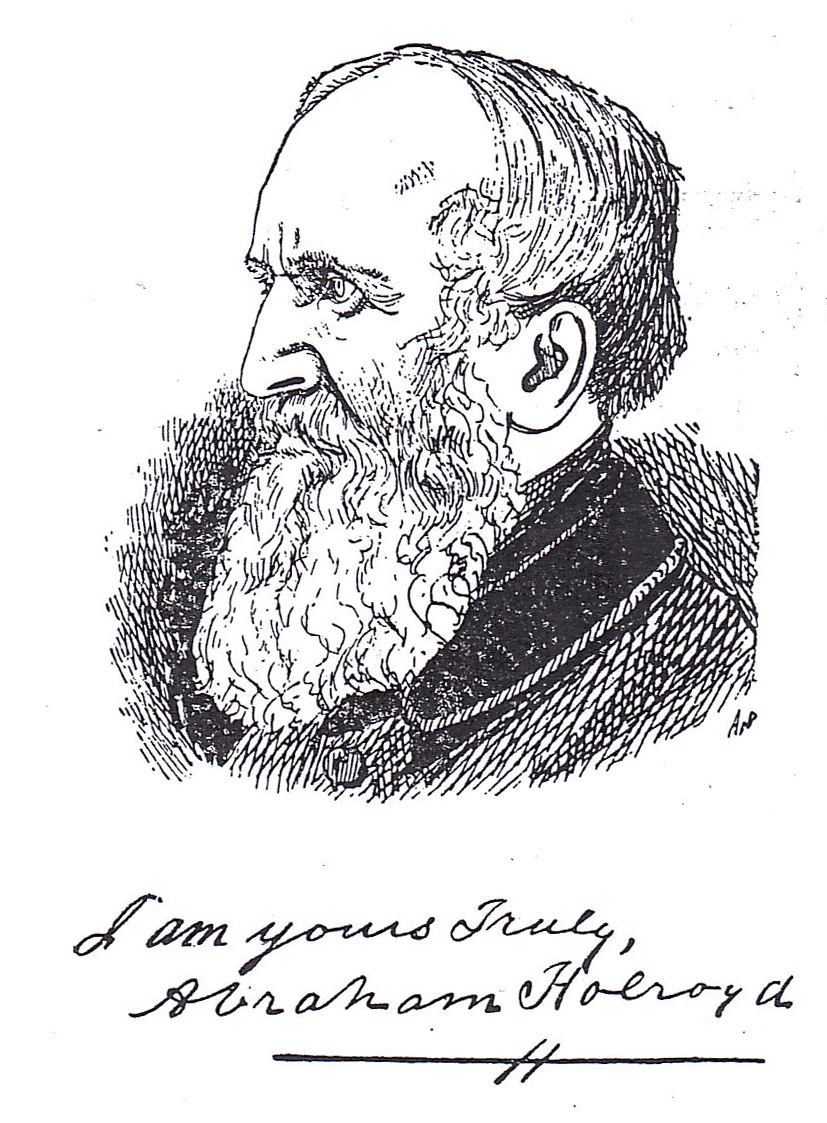
Compiler of the Almanac, Abraham Holroyd, was born in Clayton in April 1815, one of four children. His parents were both handloom weavers and the family were very poor. Self-educated, Abraham joined the army and saw service in Canada, hunting down rebels. He bought himself out of the army, settled in New Orleans, and married. After eight years in North America, Holroyd returned to England, setting up in business as a stationer and bookseller in Bradford’s Westgate. With the assistance of Titus Salt, Holroyd published a number of books on local history and become well-known in literary circles. He died in 1888.
We conclude this peek into 1864 Bradford with some entries from October:

  1. Sudden death in Bolton Road, Bradford, of John Howard, the pedestrian’
    Fire at Bank Mill, Morley, occupied by Mr. James Bradley; damages £2000.
    Luke Knowles, 24, carter, of Bingley, drowned by falling into the Bradford Canal at
    Spinkwell Locks.
    Gale on the East Coast and loss of life.
  2. Mortality of Bradford for the week ending this day, 90.
    William Frankland, 7. Of Lidget Place, Great Horton, killed by being run over by a
    contractor’s cart, in Beckside Road.
    Opening of a new school at Low Moor, erected by the Low Moor Company.
  3. Opening of new Independent Chapel and schools at Little Horton.
    18 John Egan, labourer, killed by being run over on the Midland Line, near Shipley.
    A resolution passed at the West Riding Sessions at Wakefield, pointing out the evils
    caused by the great increase of grocers’ drink licences, and asking that the
    magistrates should have the same control over those licences as they have over
    others.
    Laying of the memorial stone of a new United Methodist Free Church at Morecambe.
  4. Death of Professor Wheatstone, the inventor of the electric telegraph.
  5. Samuel Waite, lately manager of Messrs. W. H. Smith & Son’s bookstall at Keighley
    Station, sentenced at the West Riding Sessions to six month’s imprisonment for
    embezzling the moneys of his employers.
    Heavy gales and floods throughout England and Scotland.
  6. Opening of the winter campaign of the Liberation Society by a large meeting in St.
    George’s Hall, Bradford; addresses by Messrs. R. W. Dale and J. G. Rogers.
  7. Further gales and floods in the North and Midland Counties; great loss of life and
    destruction of property.
  8. Mortality at Bradford for the week ending this day, 102.
    The body of Henry Taylor, shoemaker of Cleckheaton, found in Bowling Tunnel
    Laying of the memorial stone, by the Rev. J. G. Miall, of the new Greenfield
    Congregational Chapel, Lumb Lane, Bradford.
  9. Visit of the Royal Italian Opera Company to Bradford.
  10. Explosion of an ammonia still at Messrs. T. Illingworth & Co’s chemical works, Frizinghall.

Stackmole

‘Gentleman Jack’ and a first same-sex wedding ceremony

In this LGBTQ+ History Month, we celebrate the life and love of one of Yorkshire’s greats, Anne Lister of Shibden Hall and the first person in the Yorkshire area to have a same-sex wedding ceremony in 1834.

Anne Lister (1791-1840) was part of the famous mill owning Lister family of Bradford and as such was related to Samuel Cunliffe Lister of Manningham Mills.  Anne, however, lived at Shibden Hall, Halifax where that branch of the Lister family had lived since 1615.

Anne was not born at Shibden but moved there as a child to live with her aunt and uncle. She became co-owner in 1826 and, following the death of her brother, inherited the estate in 1836. She became a keen businesswoman, undaunted by the sometimes openly hostile male chauvinism in her local business and political world, and was an adventurous traveller abroad.  She was also the only woman co-founder of the Halifax Literary and Philosophical Society.

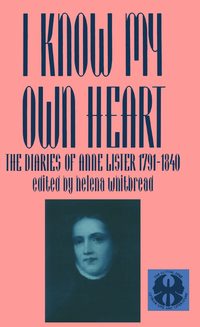
Anne Lister assiduously wrote diaries and journals, 24 in number. They listed her daily social, political and business life and travelling exploits but at least one sixth of them were handwritten in code. This coded text later revealed the extent of Anne’s romantic affairs and sexual encounters with women, when they were finally decoded from a mixture of Greek letters, numbers and symbols. Apparently, it was not until the women’s liberation movement of the 1970s and 1980s that it was felt that uncensored editions of her sometimes explicit diaries could be published (Gentleman Jack:  a biography of Anne Lister by Angela Steidele, p.Xi)

Diary extracts and samples of code can be viewed on the excellent web pages of the West Yorkshire Archive Service, that hosts a full exhibition about this remarkable woman, please follow this link:

http://wyorksarchivestreasures.weebly.com/the-diaries-of-anne-lister.html

In 1832, Anne Lister struck up more than her earlier acquaintance with Anne Walker (1803-1854) who, through inheritance with her sisters, had become joint owner of the neighbouring substantial Crow Nest Estate in Halifax. The two Annes became lovers and exchanged rings on 27 February 1834. However, it was on Easter Sunday, 30th March 1834 that they sealed their union when they took communion together in Holy Trinity Church, Goodramgate, York. This building now displays a commemorative rainbow plaque.

https://www.yorkpress.co.uk/news/16377725.rainbow-plaque-unveiled-holy-trinity-church-goodramgate-york/

Anne Walker and Anne Lister lived together as a married couple at Shibden Hall and also travelled a great deal. It was on one of their journeys in Georgia in 1840 that Anne Lister died. She was only 49 years old. Sadly, Anne Walker, who had always suffered with mental health problems had a severe relapse and was removed to York from Shibden Hall in 1843 having been declared of ‘unsound mind’.  Although she returned to Shibden, she later moved back to her family’s estate Cliffe Hall in Lightcliffe,  where she had been born. She died there in 1854.

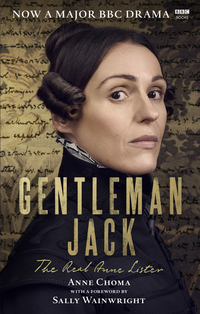
There is a wealth of material online about Anne Lister, her life and diaries,  Anne Walker, Shibden Hall and about the making of the most recent television series Gentleman Jack, filmed in Halifax and using Bradford popular film locations, and now into the filming of a second series. Bradford Council also has a number of events to celebrate LGBTQ+ History Month.  Please follow the links below.

Gina Birdsall, Keighley Local Studies

Events in Bradford this month:

https://www.bradford.gov.uk/arts-and-culture/whats-on-in-bradford-district/lgbtqplus-history-month-2021/

To borrow (hard copy or ebook) the acclaimed book that the TV series inspired, Gentleman Jack A Biography of Anne Lister: Regency Landowner, Seducer & Secret Diarist by Angela Steidele, translated by Katy Derbyshire (Serpent’s Tail, 2019)

https://capitadiscovery.co.uk/bradford/

The diaries:

http://wyorksarchivestreasures.weebly.com/the-diaries-of-anne-lister.html

https://www.bbc.co.uk/programmes/articles/3QT2z16RXhfxSDn1mrbRNVp/the-real-diaries-of-anne-lister

Shibden Hall:

https://museums.calderdale.gov.uk/visit/shibden-hall

Filming the series in Yorkshire:

https://www.thetelegraphandargus.co.uk/news/18938555.gentleman-jack-filming-bingley/

A Walk With Sidney Jackson #7

We are very pleased to continue with the series of articles by local historian Derek Barker.

Derek wrote in his introduction:

‘When Sidney Jackson was keeper of Archaeology, Geology and Natural History at Cartwright Hall he edited a subscription journal called the Archaeology Group Bulletin. Although compiled over 50 years in the past it can still be read with interest today. I am impressed by the quality of both articles and the correspondence.’

A walk with Sidney Jackson #7

Sidney Jackson inhabited a totally different world to that of present-day archaeologists. A world in which boy-scouts could excavate caves, and amateur collectors amass large numbers of ancient objects. A world where cruck-built barns, querns, and lengths of Iron Age walling would occupy the thoughts of museum curators for months on end, and the museum service of the City of Bradford would actually spend good money to identify the rocks, potsherds, clay pipe bowls, and coins brought back by its citizens from summer holidays, or turned up in their allotments.

However, in many respects, SJ’s views on investigating and exploring the past were quite modern. In the November 1966 edition of the Archaeology Group Bulletin he tried to promote the concept that those who wished to be involved in archaeology should first learn what could be seen above ground. Members of the public had approached him when they wished to be involved in ‘digging’. SJ tried to explain that dry stone walls in this area were very worthy of study. Many dated from the application of Enclosure Acts to areas of local common land. But some include earth fast boulders or orthostats which might have been as old as the Iron Age. The materials subsequently built into such walls has included: querns, carved heads, mortars, bricks, iron making slag, fossils, and a variety of glacial erratic cobbles. All are well-worth identifying and may well contribute more to our knowledge than yet another Roman coin of a common series.

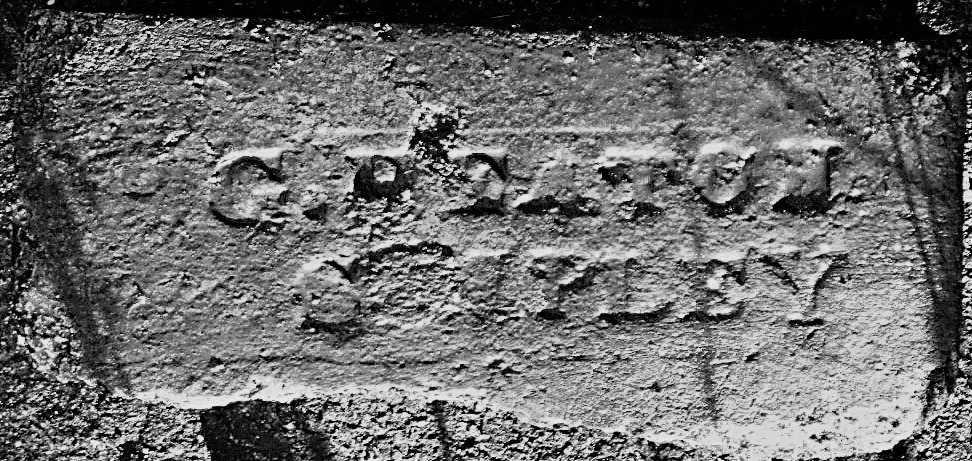
Although even SJ had his limitations. He once hurriedly arranged a party to excavate a stone circle noted in the woodland between the Hirst Wood and Nab Wood Cemetery, Shipley. His group removed the brambles and other plants growing over the small boulders that formed the circle, but it was soon evident, from the looseness of the boulders, that they had not been in position since prehistoric times. Eventually they came to a hearth made of bricks imprinted with ‘G. Heaton, Shipley’, and it was then pointed out the corners of what had been a square or rectangular hut. It seemed that children in playing on the site had used material from this building to make a small circular enclosure.

While the result of the afternoon’s work was a disappointment to the participants for those of us interested in Victorian industry for several years it was the single piece of evidence that George Heaton, who operated a coal mine at the Shipley end of Heaton Woods (c.1845- c.1875), made bricks too and marked them with his own name. Eventually one of the bricks was spotted at Goitside confirming Sidney Jackson’s observation, but I have never seen another. Derek Barker, Local Studies Library Volunteer