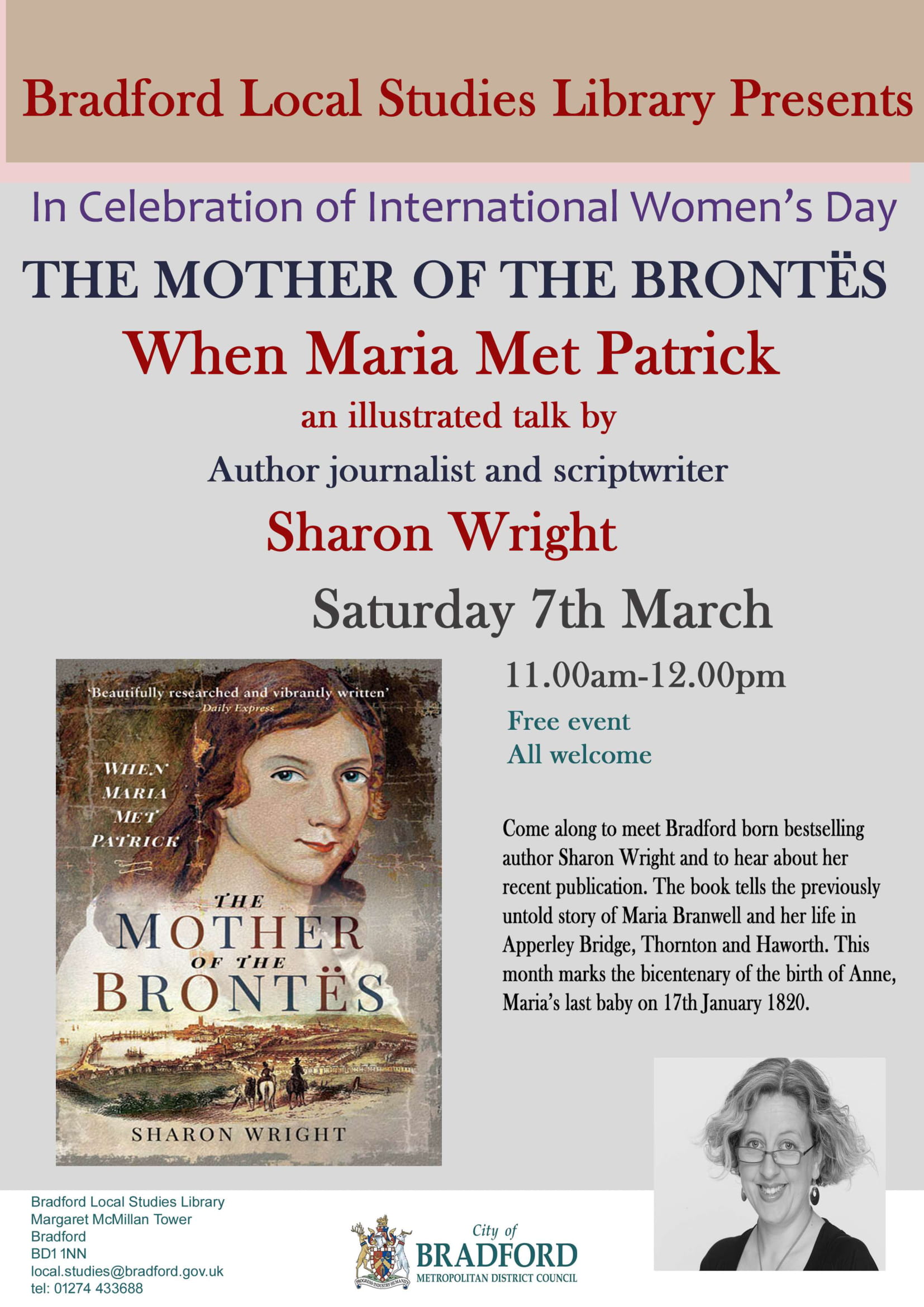
In this first article in our new series, we take a look at the books used and of the bookish backgrounds of the educators: Maria and Elizabeth Branwell (Mother and Aunt) and Patrick Brontë, Rev. of Haworth Parsonage.
1: Home Tutors
Maria (1783-1821) and Elizabeth Branwell
Born into a prosperous merchant family, prominent in the affairs of Penzance when Britain was a great sea power in the world, the two sisters did not lack education, access to books or knowledge of current affairs through newspapers, most important no doubt, given the family’s close dependence on their developments abroad. Within Penzance society, the girls also became quite the socialites, mixing regularly in company before the close deaths of their parents and elder brother.
Amongst the books noted by Sharon Wright (Mother of the Brontes, 2019) are works of poetry, The Lady’s Magazine, gothic literature, such as the 1794 blockbuster, The Mysteries of Udolpho byAnn Radcliffe, also remarked upon by Jane Austen in Northanger Abbey. They were also members of the Penzance Ladies’ Book Club which subscribed to magazines, reviews and the latest bestsellers. As Sharon Wright notes, when Maria met Patrick on a visit to Yorkshire, she was an educated gentlewoman with an independent income and good social connections.
After humble, rural beginnings Patrick, with a single-minded devotion to learning, became very well educated with a charity scholarship to study Theology at St John’s College, Cambridge, graduating in 1806. Such an education for the Church would have included a thorough grounding in the Classics, Greek and Latin histories such as Tacitus Agricol and poetry, e.g. Virgil’s Georgics. Such was his proficiency that Juliet Barker notes his prize books of Samuel Clarke’s 1729 edition of Homer’s Iliad and Richard Bentley’s 1728 edition of the works of Horace (The Brontës, p.10).
Rev. Patrick Brontë
If you have lacked an education in the classics which many of us have, Natalie Haynes on Radio 4 has done much to revive interest in them outside the public school system, check her enthusiastic and entertaining programmes now available on BBC iPlayer at: https://www.bbc.co.uk/programmes/b077x8pc/episodes/player
Patrick, Maria and Elizabeth were all from backgrounds steeped in folk tales, myth and legends. Patrick coming from a rural Irish background and Maria and Elizabeth from a Cornish one, as Sharon Wright says, “ghosts and smugglers, legends and liturgy.” Emily Brontë, especially, also spent time working alongside the servants such as Tabby Aykroyd and they, rather like grandparents, would have had a fund of local knowledge on the Haworth area, local family stories and folklore.
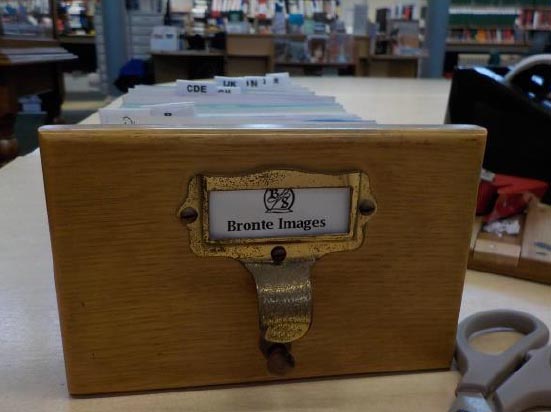
Brontë images index at Keighley Local Studies Library
Look out for our next article which will feature the Brontë’s Home School.
At this time of continued lockdown for popular public spaces such as libraries and archives, it’s good to know what’s online and apparently many of you are still keen to pursue your local history research or are inspired to make a start in this fascinating area. Following the posting in the recent newsletter, it’s clear that many of you are particularly interested in tracing your house history or maybe just that of a particularly interesting building in your area.
A general overview of the property location is probably the best initial way to start and, for the Bradford MDC area, check out the sites recommended for local mapping. Local authorities have also addressed conservation area issues and free access to Bradford’s conservation area assessments can be found at www.bradford.gov.uk just search ‘conservation area assessments’ for a list available online. These reports include maps and details of building materials with some local history, your street or property may well be highlighted. If not, you will at least get a reasonable idea of the age and development of your local area. If your property is a listed building, then look at the listed building sites recommended on the leaflet.
Photographs can reveal the age of your property and building/land additions, as well as the development of the local surroundings and land usage. They sometimes even show you who once lived there if you are very lucky. As well as the sites noted on the leaflet, many local history sites are a wonderfully rich source of postcards and photographs available online.
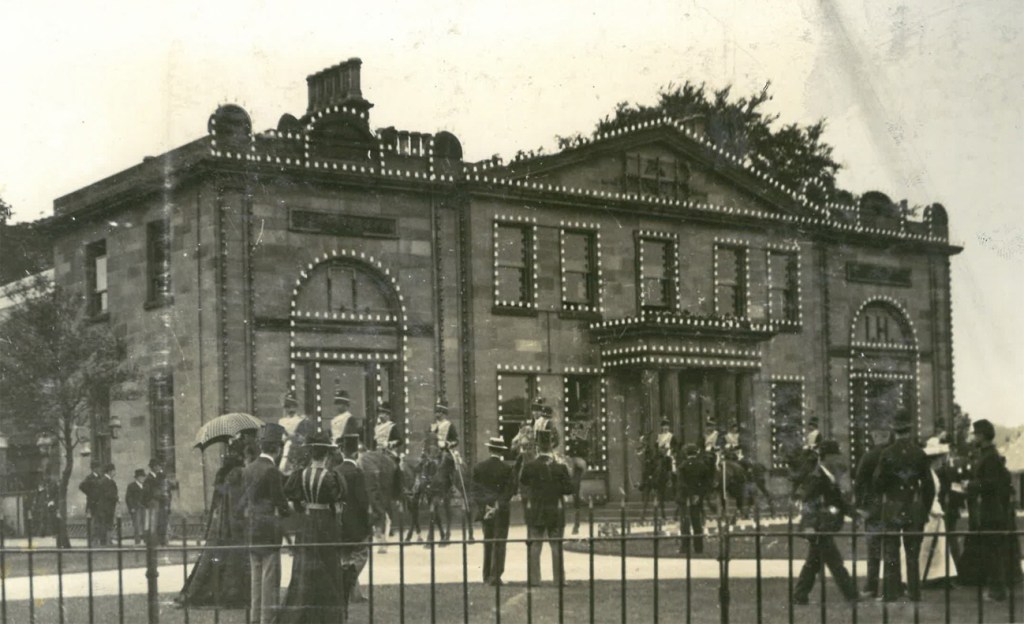
Photograph of the Hall from the Keighley Photographic Society Collection showing the opening of the Mansion House with a day of celebrations, 6th July 1893, the official handing over of Eastwood House and grounds (Victoria Park) to the public.
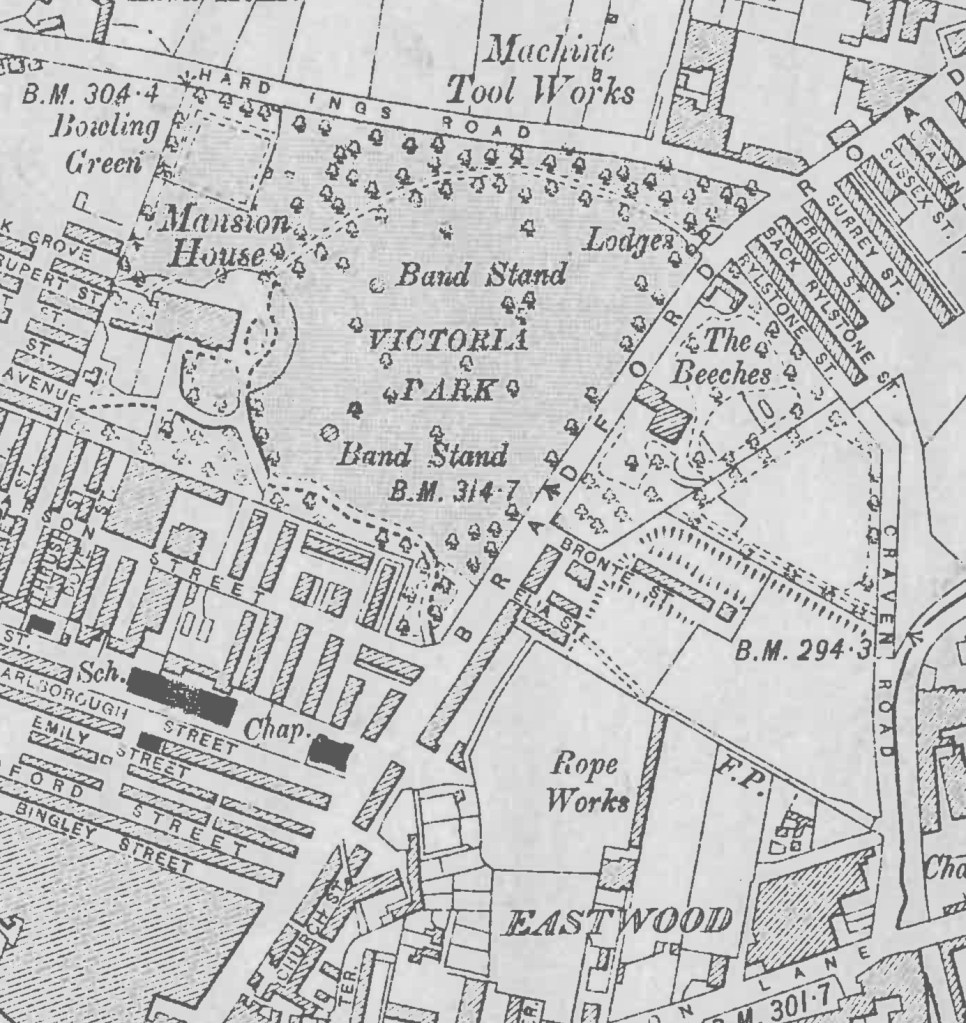
Maps of Yorkshire that show historical details such as wapentake, parish and riding divisions can be found on sites such as https://www.genuki.org.uk/big/eng/YKS/ and the National Library of Scotland web site and that of the Ordnance Survey have free access to old maps and township plans for the mid 19th and early 20th Century.
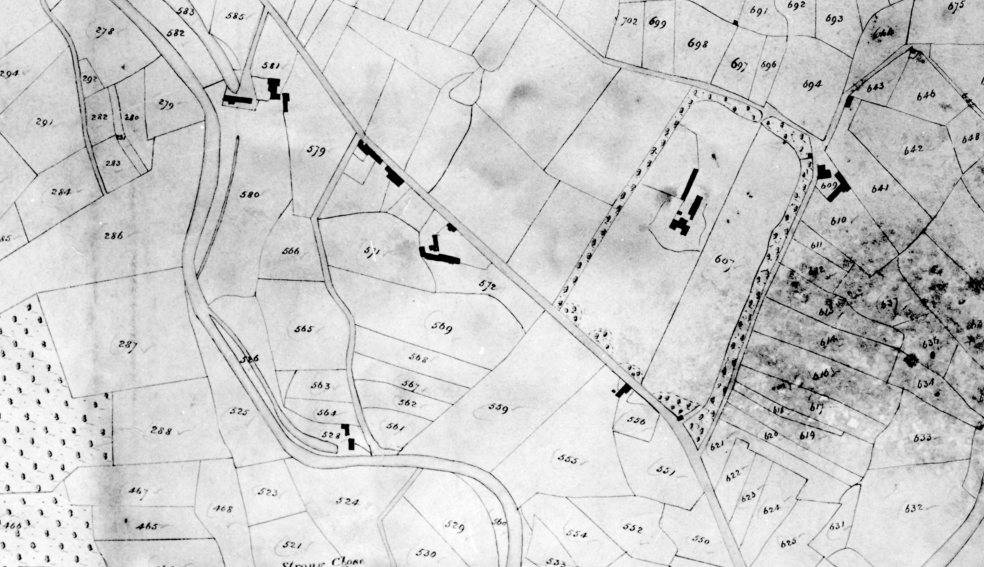
Station Rd Cullingworth 1840’s’Eastwood Tithe 1842
People and trade
If you are not living in an ancestral pile, then you may wish to start looking at who lived in your property. Believe it or not, quite a few customers have come into libraries simply to research supernatural phenomena or to try and discover more about family papers found under floorboards or left in attics.
The first port of call would be Ancestry or Findmypast, available freely in all Bradford Libraries but fortunately during this lockdown period, Bradford Libraries is providing free access to Ancestry for all customers with a library card, follow the instructions below. On here you can use the census records 1841-1911 and the special 1939 England and Wales register is also available on the web site free of charge.
To access Ancestry Library you will need a Bradford Libraries membership card. Go to https://capitadiscovery.co.uk/bradford/ and log in to your library account with your card number and pin. Remember to input just the numbers. Next, click on the special link to Ancestry Library Edition.
Maybe the former inhabitants or your property were involved in trade or your house was a former shop or even church. Trade directories are useful as they list local traders and in some editions their introductions give a useful overview of the township as a whole and of its main families, religious buildings, prominent houses and other services and amenities and local farms. These supplement the census records and although you will usually get a more comprehensive collection in your local studies library or record office, you can find a few relevant directories online. Check out this handy leaflet produced by Bradford Libraries’ staff: https://bradfordlocalstudies.com/wp-content/uploads/2015/03/trade-directories-new1.pdf and try the addresses shown on the leaflet.
You may also want to look at www.millsarchive.org if you live in a mill conversion and you can try www.gracesguide.co.uk for local industry and engineering research.
Probate and Wills
Once you have names for owners/occupiers you can then trace death years through your free access to Ancestry, looking at births, marriage and death certification years and/or any church or chapel records to verify identities, with many available on this site. Click on the Search tab on the home page and look at UK record listings, if applicable, for your chosen subject area or click on the card catalogue for a full listing of all types of available records that are included. If you are lucky with this search, you may well then be able to trace probate and will records on the National Archives’ web site. There are also appropriate leaflets explaining such records in more detail on this site: www.nationalarchives.gov.uk
Conveyancing documents and title deeds
These can be difficult to trace outside of lockdown and would involve, for the Bradford area, a trip to Wakefield District Archives, Registry of Deeds, www.archives.wyjs.org.uk for the period before 1970 in most instances and contacting The Nottingham (West)District Land Registry, www.landregisteronline.gov.uk for property built after 1974. However, records are not accessible freely online so the next best thing for properties built before 1970 is the available study of tithe maps. The location manorial records such as tenancy lists, rentals, survey maps and estate documents to search outside lockdown can be discovered at www.nationalarchives.gov.uk/mdr and for enclosure awards by searching local archive catalogues online. It’s also worth noting that land registration was not compulsory until 1990 and that voluntary registration began only in 1863. The National Archives has information guides for tracing deeds, see:
Tithe maps produced after the Tithe Commutation Act of 1836, together with the Tithe Award, give information about the township at the time and the tithes due from it to the Church. From the related apportionments you can get the owner/occupiers’ name, description of land and premises, extent and use of land. Some local tithe maps are available at http://tithempas.leeds.gov.uk
Other tax records
For other land tax and window tax (from 1696) assessments see the National Archives web site. Also see Hearth Tax online at https://www.roehampton.ac.uk/research-centres/centre-for-hearth-tax-research/ . When searching these you need to know the wapentake for your house location. Bradford was in Morley, Bingley in Skyrack and Keighley was in East Staincliffe, for a full listing see the following: https://www.genuki.org.uk/big/eng/YKS/ . Genuki holds a lot of information that will prove very useful in your research , including a number of links to other useful sites.
Local Newspapers Online
Yes, they are available online and many are on the 19th Century newspapers from the British Library through Bradford Libraries digital library now available to all Bradford Libraries’ card holders from home. You may even find a report of a relevant court case or an obituary. Local publications include The Bradford Observer 1834-1875, The Leeds Mercury 1807-1900 and The Northern Star 1838-1852. The text is searchable in a variety of ways including keywords or topics.
You can access it from home via the Bradford Libraries website. Go to https://www.bradford.gov.uk/libraries, click on Digital Library and scroll down to ‘Nineteenth Century Newspapers’. You will then need to enter your library ticket number without any letters.
Here’s hoping this short outline has been of help and inspires you to further explore this subject area online and in fact all the information available for local historical research on the Bradford Libraries’ web site.
New TV Programme
If you would like to simply enjoy watching someone else do the work, the award-winning history format, A house Through Time, is returning to BBC2 this month with David Olusoga, historian and presenter.
By the nineteenth century, stagecoaches in England had been a vital part of its
infrastructure for nearly two hundred years. Though the steam train, at least in the south, was replacing the need for coaches by the 1830’s, they still remained an important mode of transportation and mail in the north.
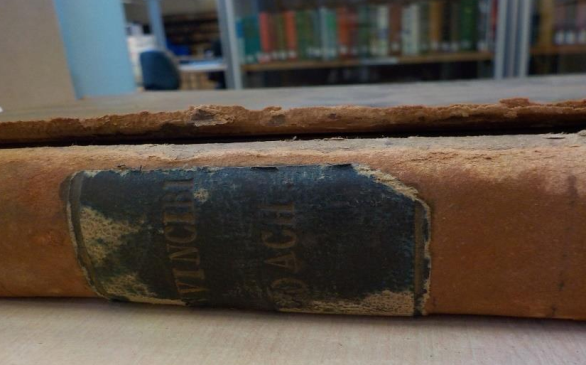
Through donation, the Keighley Local Studies library has been fortunate to obtain the
records for the Keighley stage coach covering the years for 1841-1843. Opening the ledger a curious researcher will find the lined and long dried inked pages remarkably preserved. Within its leaves, a pink piece of blotting paper remains where the clerk left it when it was closed nearly two hundred years ago.
The ledger for the stagecoach Invincible reveals that Keighley ran an active stagecoach
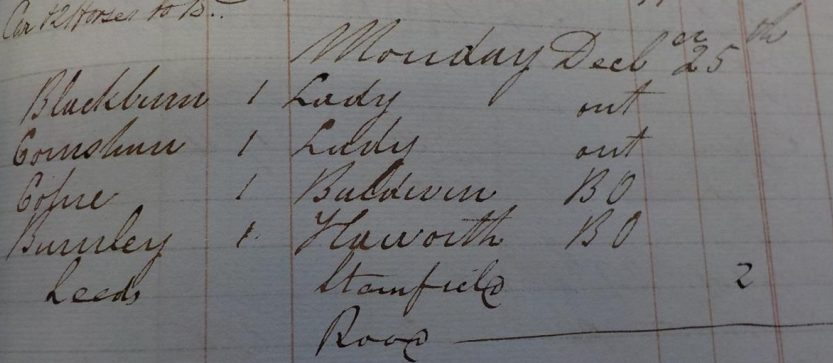
business running every day of the week, except Sundays, including Christmas Day. One can imagine a jolly Dickensian coachman bundling his Keighley passengers into the Christmas coach and on to their holiday destinations. It is left to us today to wonder who they were, but there are clues in the ink:
25 December 1841 ‘Burnley, Wilde Ballet’…1842 ‘Leeds, Firth in’…1843 ’Blackburn, 1, Lady out.’
A look at the William White’s History, Gazetteer, and Directory of the West-Riding of
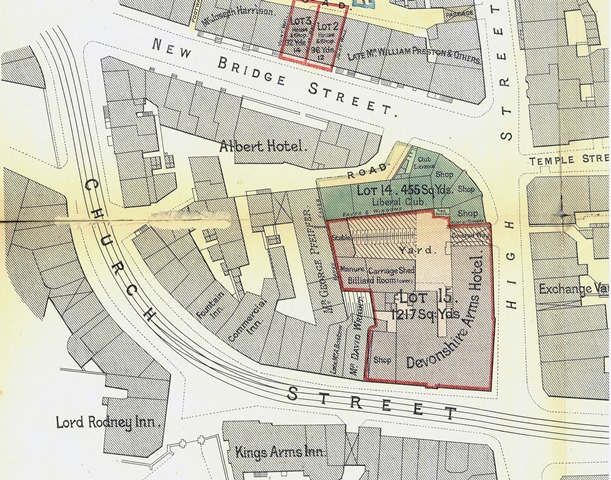
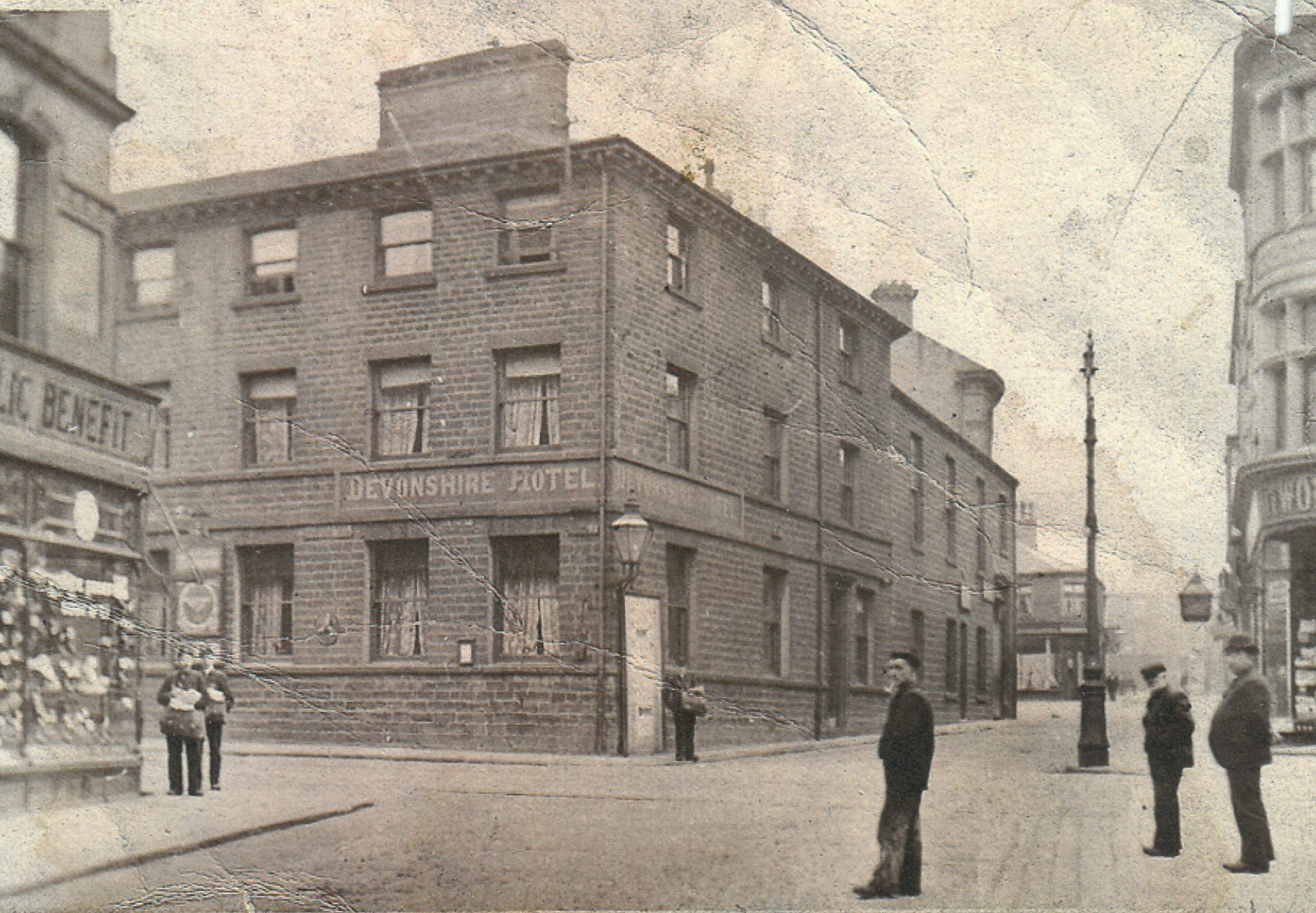
Yorkshire, Vol. I reveals that in 1837, Keighley was running seven coaches: Union, Invincible, Airedale, Alexander, Tradesman, Wonder and Cars (690). All of these coaches had different departure points. The Union and Invincible, which the ledger is for, departed from the Devonshire Arms Inn.
In order to learn about one’s family history, or lay groundwork for a period drama or novel, one might check records such as birth certificates, marriage licenses, censuses, or diaries, but what about stagecoach records? The study of such a resource would give valuable historical information about who may have lived and traveled through an area, where they traveled to and from or even where they sent their mail. This opportunity is not often possible because very few have survived until the 21st century; however, this rare insight is available at the Keighley Local Studies Library.
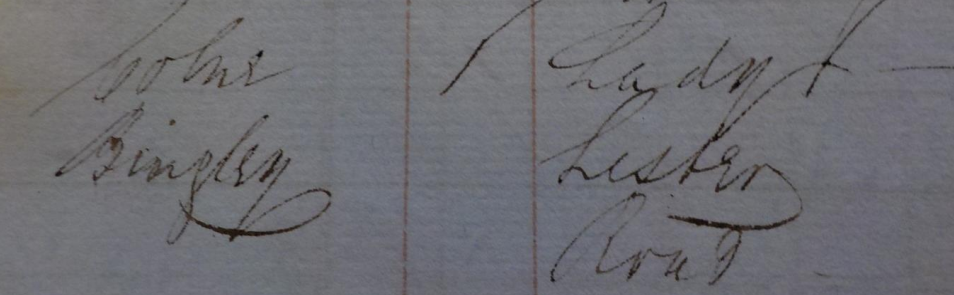
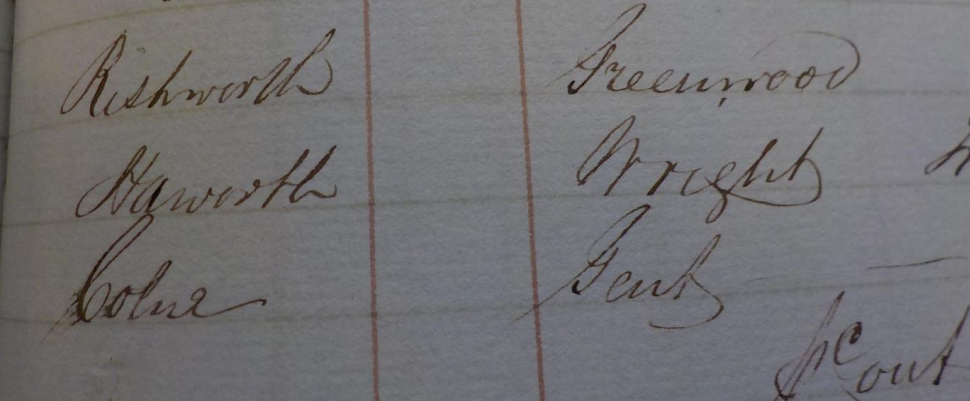
A perusal of its leaves reveal names still familiar in Yorkshire, such as Hargreaves, Ibbotson, Firth and Laycock, and those not as locally known, as Lomax, Mulligan, Brookslaw, and Critchley. There are surnames that we associate with the Brontës – Nichols, Earnshaw, Taylor, Greenwood, and Heaton – and names with famous or infamous associations, such as Grimshaw, Turpin, Shuttleworth and Dickenson. And what Lister rode to Bingley on Saturday the 12th of November, 1842?
The titles and labels of the passengers given by the ledger keeper are also of interest. The
‘Sheriff for Colne’ rode on 30th of June 1842. If the passenger was known, or perhaps
prominent, they might be titled, as Mr. Butterfield or Mrs. Hinchcliff were; but, if they were not, they might be labeled simply as ‘Lady’ , ‘Gent,’ ‘boy,’ or even ‘poor woman’ or ‘poor old man’.
The stagecoach places of originations or destinations to and from Keighley are impressive. These include the expected Yorkshire towns and villages, such as Cross Hills, Skipton, Harrogate and Wakefield, as well as Barrowford, Chorley, Colne and Preston in Lancashire. Haworth is also mentioned (e.g. Monday 1st November 1841), but, alas, we are left to ponder who the passengers may have been. The places listed take in the cities of Leeds, York and Lancaster and extend as far west as Liverpool and east as far away as Scarborough. There is even a mystery destination called ‘Dolly’s’ the location of which is yet to be discovered (10 May, 23 June, 30 June 1842).
Keighley appears to have been quite a transportation hub in its day!
Miriam Adamson, Keighley Local Studies Library volunteer
Thank you to Irene Lofthouse for her wonderful portrayal of Andrew Carnegie’s most trusted confident, his wife Louise Carnegie, in Keighley Local Studies library on Saturday 12th October, given to a packed audience. This event in our historic Carnegie library marked Libraries week and 100 years since the death of Andrew Carnegie in 1919.
Here are some photographs of the event and a short biography of Mrs Carnegie.
Louise Whitfield was born in Manhattan on March, 7, 1857. Her parents, John and Fannie, descended from families that emigrated from England in the 1600s… Louise’s father was a textile merchant. As he prospered he moved the family from Chelsea to Gramercy Park (where one of Louise’s playmates would be Teddy Roosevelt) and finally to a comfortable brownstone uptown on West 48 Street and Fifth Avenue—two blocks away from the Windsor Hotel. Andrew met John Whitfield through a mutual friend and enjoyed his company. He made frequent visits to the Whitfield home; during one of those visits, he met Louise.
Louise Carnegie
They shared a love of riding horses and he invited her often to Central Park. During these rides, she let it be known she didn’t want to marry someone who was already successful, but rather help a husband to succeed. He let it be known that he had no intention of holding on to his fortune, but rather wished to give it all away…
…Louise realized that Andrew would not marry while his mother was alive; four years after their meeting, the engagement was called off. But not the friendship. After nearly a year of corresponding, they decided to renew their engagement, but kept it a secret from Andrew’s mother.
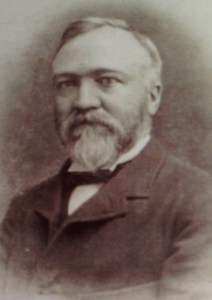
Andrew Carnegie
In the fall of 1886, Andrew contracted typhoid fever; inconceivably a week later, his brother Tom became ill with pneumonia. While Andrew’s condition fluctuated, Tom’s rapidly deteriorated and he died on October 19 at the age of 43, leaving behind a wife and nine children. Margaret, already ailing, could not bear the news of the illnesses of her two sons and died three weeks later on November 11 at the age of 77. She was not told of Tom’s death and Andrew was not told of his mother’s death for nearly three weeks until he was fully recovered.’ https://www.carnegiehall.org/Blog/2013
The couple married in 1887 and, unusual for the time, they signed a pre-nuptial agreement, in which Andrew stated that he wanted to give away the bulk of his fortune. They were married for 32 years, had one child named Margaret, and Louise was an influential member of the board of The Carnegie Corporation until her death in Manhattan on June 24, 1946, at the age of 89.
Outstanding community benefits for the time
Significantly, the Carnegie Institute in New York City hosted events and meetings for the American Women’s Suffrage Movement. Similarly the Carnegies’ libraries were accessible to both sexes, all classes and all ethnicities. In fact, the Carnegie Library in Washington was the first public building that was non segregational.
Keighley’s Carnegie Public Library
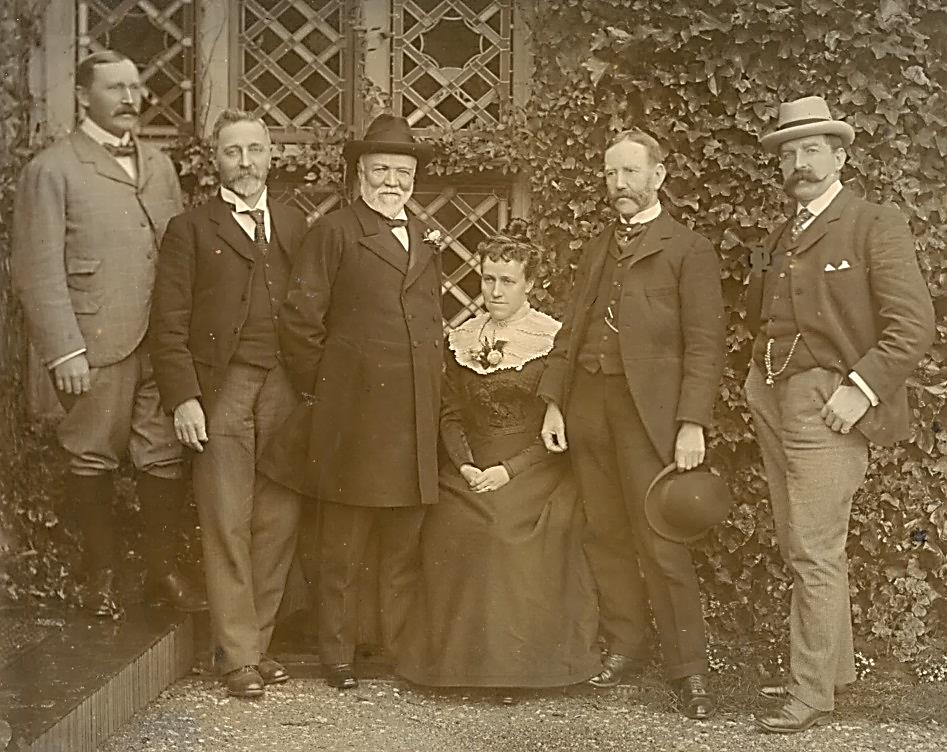
Mrs Louise Carnegie was also ever present as a guiding hand with the arrangements undertaken with Sir Swire Smith for the gift of £10,000 for the building of Keighley Carnegie Public Library. This was the first library in the whole of England ever to be financed by Andrew Carnegie. The money was gifted to the people of Keighley by the Carnegie family because of the wonderful achievements of Keighley’s students, from all backgrounds, studying at Keighley’s Mechanics’ Institute. In the above photograph, Mrs Carnegie is seated with Andrew on her right and Sir Swire Smith, the champion of Keighley Mechanics’ Institute on her left. Mrs Louise Carnegie later attended the ceremony with her husband for the conferring of the Freedom of Keighley to Mr Carnegie and it was she who distributed the prizes to the students on that day, 25th September 1900.
The Carnegie Corporation of New York
Andrew Carnegie established this in 1911,
“to promote the advancement and diffusion of knowledge and understanding,” it is one of the oldest and most influential of American grant-making foundations
“The Corporation has devoted unremitting effort toward the two issues Andrew Carnegie considered of paramount importance: international peace and the advancement of education and knowledge.” https://www.carnegie.org/about/our-history
The Carnegie UK Trust
Established in 1913 by Scottish-American philanthropist Andrew Carnegie:
“We have sought to deliver this mission in a number of ways over the past 100 years – investing in libraries, public space, further education, social work, children’s rights, rural development and many more…”