TREASURE OF THE WEEK. No. 5 – BRADFORD’s MECHANICS’ INSTITUTE


In the basement of Bradford’s Local Studies Library are collections of nineteenth century pamphlets (and some of earlier date). Ranging from sermons and programmes of royal visits, to reports, articles, obituaries and regulations, they are a treasure-trove of local history. What follows is an account of one of these treasures. To consult any of these items please ask the staff. Card catalogues of these collections are located in the Local Studies Library.

Brief History of the Bradford Institution 

JND 193/5 (Please quote this number if requesting to consult this leaflet) 

Pamphlet volume JND 193 is titled ‘Bradford Tracts 1875-1885’. It contains 38 items ranging from booklets of 76 pages to several leaflets of only four. Item number 5 is one of the latter, well, just three pages actually. Yet it contains much useful information on the history of an important Bradford institution, the Mechanics’ Institute.

The Institute was founded on the 14th February, 1832, though an earlier attempt had been made in 1825. There were three objectives:

  1. The provision of an extensive and well-selected library for the use of all members and subscribers [Bradford’s public library was not founded for another 40 years];
  2. The supply of popular and attractive instruction through the medium of public Lectures;
  3. Foundation of Classes under well-qualified masters, in which every facility should be afforded for pursuing the various branches of useful knowledge.

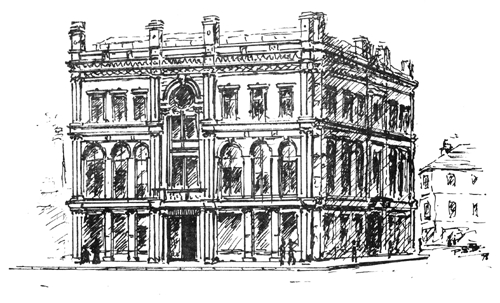
The growth of the Institute was rapid. Purpose-built premises were opened in 1840 at the junction of Well Street with Leeds Road, with an extension added in 1852. A much larger building was opened in 1871 bounded by Tyrrell Street, Bridge Street and Market Street.

The building, which stands upon an area of 1,000 square yards, contains elementary class-rooms for study of the sciences and higher branches, capable of seating upwards of 700 students, a School of Art … for 200 pupils; a large Reading Room supplied with telegraphic intelligence, 20 daily papers, 37 weekly papers, and 40 monthly and quarterly periodicals; a well-selected Library containing 12,000 volumes; a Lecture Hall seating 1,500. 

This fine building was demolished as part of the post-war re-development of Bradford.

There are many other sources of information about the ‘BMI’, but one feature of particular interest in this slim leaflet is a list of the classes operating in 1876, together with the teachers and average attendances. The classes were:

Reading
Writing
Arithmetic
Elementary Grammar
Elementary Geography
Phonographic Shorthand
Grammar and Composition
Elocution
Singing
Harmony
Bookkeeping
French
Italian
German
Plane and Solid Geometry
Machine Construction
Building Construction
Mathematics
Acoustics, Light and Heat
Magnetism and Electricity
Inorganic Chemistry
Organic Chemistry
Geology
Animal Physiology
Elementary Botany
Biology
Art

There were sub-divisions of some of these classes, and some exclusively for females.

(The Library of the Bradford Mechanics’ Institute still exists, one of only two in the country – the other is at Epworth – and is located on Kirkgate.)

Stackmole

Local Studies Library Volunteer

TREASURE OF THE WEEK. No. 4. THE PARIS UNIVERSAL EXHIBITION

In the basement of Bradford’s Local Studies Library are collections of nineteenth century pamphlets (and some of earlier date). Ranging from sermons and programmes of royal visits, to reports, articles, obituaries and regulations, they are a treasure-trove of local history. What follows is an account of one of these treasures. To consult any of these items please ask the staff. Card catalogues of these collections are located in the Local Studies Library.

 JND 290/13 (Please quote this number if requesting to this pamphlet.)

 The Paris Universal Exhibition, 1878. Report of Henry Mitchell.

paris-exhibition

 In Treasures Of The Week Number 1, we featured an account of Sir Henry Mitchell and reported that in 1878 he was Vice-President of the jurors selected to adjudicate upon worsted yarns and fabrics at the Paris Exhibition of 1878. The report he made of that Exhibition influenced in the establishment of the Bradford Technical College. The 13th item in Pamphlet Volume Number 290 of the J N Dickons Collection is a copy of that Report. The full title is:

The Paris Universal Exhibition, 1878. Report of Henry Mitchell, Vice-President of the Jurors appointed to adjudicate upon Worsted Yarns and Fibres; (President of the Bradford Chamber of Commerce, President of the Bradford Technical School, etc.) together with the Reports of the Artisans and others who were sent out to report on the textile fabrics, products and machinery engaged in the Worsted Trade, and on some of the French Technical Schools.

The Report is 73 pages long and was printed by William Byles and Son of Bradford.

In addition to Mitchell’s extensive Introduction, the other contributors were:

  • Thomas R. Ashenhurst, Head Master of the Bradford Technical School (‘French Technical Schools’);
  • William Bottomley of Saltaire (‘Report on the Worsted Fabrics’);
  • Mitchell Stead, Weaving Overlooker (‘Report on the French Technical Schools and the Exhibition’);
  • A Spinning Overlooker (‘Report on the Exhibition and the French Technical Schools’)
  • Peter Greenwood, Spinning Overlooker (‘The Worsted Yarns and Machines, and the Technical Schools’);
  • James Speed, (‘Worsted Yarns, Machines, and the French Technical Schools’);
  • William Deighton and Z. Hoyle, (‘Report on the Exhibition Generally’);
  • James Newsome, Overlooker, Saltaire (‘Report on the French Textiles and Machinery’);
  • John Dufton, Pattern Dyer, Messrs E. Ripley & Son, Bowling Dye Works (‘Report on the Dyed Fabrics’);
  • Jonas Whitley, Wool Merchant, Bradford (‘Report on the Wools in the Paris Exhibition’).

Even without going into detail, we can see from the many reports by experienced textile workers, including Mitchell himself, how seriously the exhibition was taken, and how much attention was paid to technical education.

Mitchell was knighted in 1885 for his services to textile education and now has a building named after him. But his fellow reporters are now probably forgotten, except here!

Sir Henry’s report was received with much attention by the commercial world, and there is no doubt the practical suggestions and conclusions there laid down have yielded very useful results. (Quote from JND 290/4)

A particularly interesting slice of history in the making.

Stackmole (Local Studies Volunteer)

TREASURE OF THE WEEK. No. 3   FUDGE; or, The Bradford Oracle

In the basement of Bradford’s Local Studies are collections of nineteenth century pamphlets (and some of earlier date). Ranging from sermons and programmes of royal visits, to reports, articles, obituaries and regulations, they are a treasure-trove of local history. What follows is an account of one of these treasures. To consult any of these items please ask the staff. Card catalogues of these collections are located in the Local Studies Libraries. 

JND 187/12 (Please quote this number if requesting this booklet) 

FUDGE; or, The Bradford Oracle. A School Board Discussion. c.1880. 20 pages.

fudge100

The striking title ‘Fudge’ and the delightful Shakespearean quote on the title page: ‘I am Sir Oracle, and when I ‘ope my lips let no dog bark’, immediately whet the appetite. What on earth is this? Presented in the form of a dialogue between Smith, a retired Bradford merchant, just returned after ten years’ absence abroad, and Fudge, President of the Board School, at the date of this pamphlet (not stated but probably c. 1890) a relatively new institution, this slim pamphlet gives a spirited exchange on the subject of the cost and success (or otherwise) of the newly established Board Schools. No date, printer or author given, but a manuscript note (probably by journalist and historian William Cudworth) reads: Mr. Hanson (Fudge) is tolerably well drawn in some parts of this brochure but here and there is a little too much politeness and suavity of manner accorded.

08-10-2016-172142

This text is in the form of a play script, with the scene set in Market Street near the School Board Office.  It opens:

SMITH, Why bless me if that isn’t Fudge, looking as wise as Solomon! Weighed down with all the cares of Bradford! (aloud) Mr. Fudge (F. does not or will not hear, but continues his onward shuffle) Mr. Fudge!

FUDGE. Ha! Who’s that? (sees Smith) Oh Smith, is that you? Pardon my abstraction. How are you after your long absence?

  1. Very well, thanks, and right glad to see the old place again. How have you been? You seem quite bent with age or the rheumatics. Which is it?
  2. Ah, well my dear friend, I’m not a young man any more it is true, but care, care, that’s killing me!
  3. I’m sorry for it. Why what’s up?
  4. Well you know that for the last forty years I have been devoted in all manner of ways to the great cause of education, but the last three or four years of daily strife in its behalf has indeed subdued my natural hilarity, and imparted to me an appearance partaking somewhat I fear in a cross between a philosopher and an undertaker.
  5. Nay, nay, you are still in spite of your cares, a fine and handsome-looking man, Fudge. You’re not on the Scholl Board, I suppose!
  6. (In indignant surprise) Not on the School Board, my dear Sir! To be sure I am! Whatever can you be dreaming of? Why whatever would become of the Board, what of education at all, if I were not a member? Education, sir, particular Higher Grade Education, is, I humbly submit, my forte!
  7. Oh, I beg a thousand pardons. You see I’ve been so long abroad, and only occasionally had the luxury of seeing an English Paper.
  8. And what paper was that, my dear Sir?
  9. Oh, the Standard.
  10. Ah, no wonder you are behind hand. Had you consulted the Daily News, sir, or better still the Bradford Telescope, or the Woollen Observer, you would have been up to the mark.
  11. (takes out pocket book) Daily News or Bradford Telescope.
  12. Good! Mind not the Standard or Night Wail.

After this opening skirmish the discussion turns a touch political, with Fudge extolling the virtue of the new Board Schools compared with the Denominational and Voluntary Schools (which the Board Schools were replacing) and boasting of the money spent on producing superior scholars, while the retired merchant Smith querying both the cost and the attainments of the pupils. Clearly Fudge, as the name implies, believes only what he wants to believe, while the realist Smith is highly sceptical.

The dialogue reflects much of the opinion of Bradfordians of the time, yet can be read today, not only as a window on events over a century ago, but for some pointers today! It is certainly well constructed and fun to read. Who, I wonder, was the author?

Stackmole (Library Volunteer)


TREASURE OF THE WEEK. No. 2 – A RAMBLE ON RUMBOLD’S MOOR

In the basement of Bradford’s Local Studies Library are collections of nineteenth century pamphlets (and some of earlier date). Ranging from sermons and programmes of royal visits, to reports, articles, obituaries and regulations, they are a treasure-trove of local history. What follows is an account of one of these treasures. To consult any of these items please ask the staff. Card catalogues of these collections are located in the Local Studies Library.

JND 245/4 + 5 (Please quote this number if requesting these booklets)

C.F. and W.F. A Ramble on Rumbald’s Moor among the dwellings, cairns & circles of the Ancient Britons in the spring of 1868. Part II Counterhill & Castleberg.
20 pages. (Wakefield: W.T.Lamb, Printer and Publisher.)

C.F. and W.F. A Ramble on Rumbald’s Moor among the rocks, idols & altars of the Ancient Druids in the spring of 1869. Part III. 26 pages. (Wakefield: H.Kelly, Printer and Publisher.)

What delightful titles have these two pamphlets! Sadly the first of these three ‘parts’ is missing, though since only one hundred copies were printed this is no surprise. This, their age, and the fragile nature of the paper they were printed on, must make any remaining copies pretty scarce.

Our first pamphlet opens: “Who, after rambling among British dwellings, cairns and circles on that part of Rumbold’s Moor which extends from Burley Wood Head to Ilkley, could hear reports of Roman Camps on Counterhill and Castleberg, and not wish to visit them?” As indicated by the titles, these slim volumes give an account of early relics of past peoples, though an account of Addingham fills much of the first volume. A newspaper cutting inserted into the second volume here makes the point that the authors “drew attention to the sculptured rocks … recently discovered on Ilkley Moor.”

And who were C.F. and W.F.? A newspaper cutting inserted into the second volume here gives the authors as Charles Forest and William Grainge.

tres-2-ramble-on-rumbalds-charles-forest

Charles Forest

Some of the early historians, or ‘antiquarians’ as they were often called, have a bad reputation for making unsubstantiated assertions and promoting theories in the face of contradicting evidence, but not C.F. and W.F., according to the newspaper account, an obituary of Forest. It makes the point that he was careful in his research, and the text of these pamphlets bears this out, for the authors were often critical of other antiquarians.

There are a number of line drawings. These pamphlets are an early account of these remarkable relics on the moors. Though do take care if using them, else these scarce ‘relics’ will crumble to dust, unlike the relics they describe!

Stackmole

Treasure of the Week #1 – Sir Henry Mitchell

In the basement of Bradford’s Local Studies Library are collections of nineteenth century pamphlets (and some of earlier date). Ranging from sermons and programmes of royal visits, to reports, articles, obituaries and regulations, they are a treasure-trove of local history. What follows is an account of one of these treasures. To consult any of these items please ask the staff. Card catalogues of these collections are located in the Local Studies Library.

 JND 290/4 (Please quote this number if requesting this item.)

Sir Henry Mitchell of Bradford – A Biography. c.1880. 8 pages

henry-mitchell

Sir Henry Mitchell

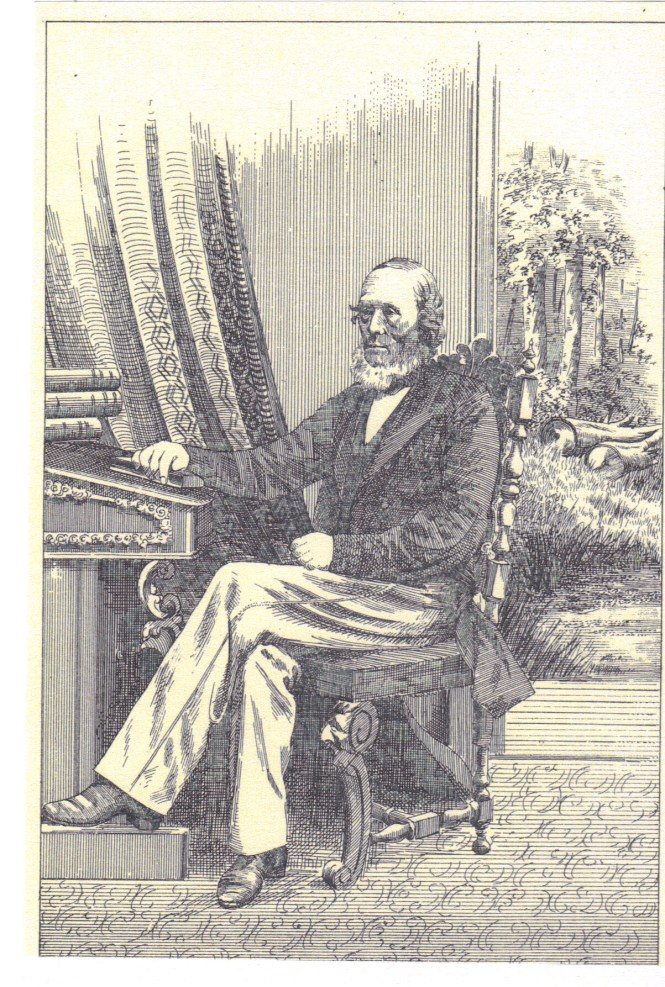
The fourth of the seventeen pamphlets bound together in volume number 290 of the J N Dickons Collection is a slim eight-page account, plus portrait, of Sir Henry Mitchell of Bradford. The pages are taken from a book of which neither title, nor author, nor publisher, nor date (1880s?) is noted. Two other biographies accompany Mitchell on JND 290 from the same anonymous source. One is on The Worshipful Mayor of Bradford, Mr Angus Holden, and the other is on Lawrence Game, a prominent lawyer and MP for East Leeds (number 3 and 5).

Opposite the Local Studies Library at the bottom of the Manchester Road is Sir Henry Mitchell House, currently the base of some of Bradford Council’s staff, but few people know who Sir Henry Mitchell was, or did. But in the book store in the depths of Margaret Macmillan Tower, is the answer. Although brief, the account is concise and fact-filled, lucid and fulsome.

Henry was born in 1824 at Esholt and aged fourteen he commenced learning the different processes of wool sorting, combing, spinning and weaving. In 1842 he was  appointed Manager for Messrs William Fison & Co., of Bradford, of which  W E Forster, M.P. was a partner. 1848 finds Mitchell as a Buyer for Messrs A & S Henry & Co. of Bradford, becoming a partner in 1852. In the next few years Mitchell becomes a leading figure in the commercial life of Bradford. He was elected a member of Bradford Town Council in 1870 and was a councillor for 21 years, being made an Alderman in 1874. He was also an influential and active member of the Bradford Chamber of Commerce, being elected President on four occasions. In 1876 he was the English Judge for woollen and silk fabrics at the Philadelphia Centennial Exhibition. Two years later he was Vice-president of the jurors selected to adjudicate upon worsted yarns and fabrics at the Paris Exhibition of 1878.

Education as well as textiles was a passion in Mitchell’s life. He was a member of the first School Board elected for Bradford, Vice-President of the Bradford Mechanics’ Institute, and a Governor of Bradford Grammar School. But his greatest work was in connection with the Bradford Technical College.

‘He saw clearly that if England was to retain her supremacy in the production of worsted fabrics, it was necessary that a higher and more systematic training should be adopted on the part of those whose lot it would be to carry the trade forward in the face of foreign competition; and he set his heart upon the establishment of a Technical College in Bradford which should at least equal anything of the kind attempted abroad.

The College was erected at a cost of £40,000, of which Sir Henry subscribed £10,000. The College was opened by The Prince of Wales in June 1882, with Mitchell appointed President. He was made an Honorary Member of the Worshipful Company of Clothworkers in honour of his work in promoting textile education, and a member of the Board of Governors of the City and Guilds of London Institute.

Respected by workers and employers alike, Mitchell was employed to arbitrate in trade disputes, notably in the great dyers’ strike. He was chairman of the local Conservative Party, but resisted frequent attempts to persuade him to stand for Parliament. He was a prominent member of the Wesleyan Church in Bradford. He was knighted in 1885 and made a Freeman of the Borough in 1889, the year of his death.

Stackmole