New Map Website

Bradford Libraries are pleased to announce the launch of a new website, focusing on the hidden histories within maps and plans in the Local Studies Library

Maps and plans, especially when used in conjunction with other documents, are one of the most valuable sources of information for the local historian and geographer.

In this continuing series of regular posts, the author of our ‘Map of the Week’ feature, local historian Derek Barker, explores the hidden history within a selection of the maps and plans from the collection at Bradford Local Studies Library, focusing in particular on the 19th Century.

You can visit our new website here

Family History Organisations to Merge

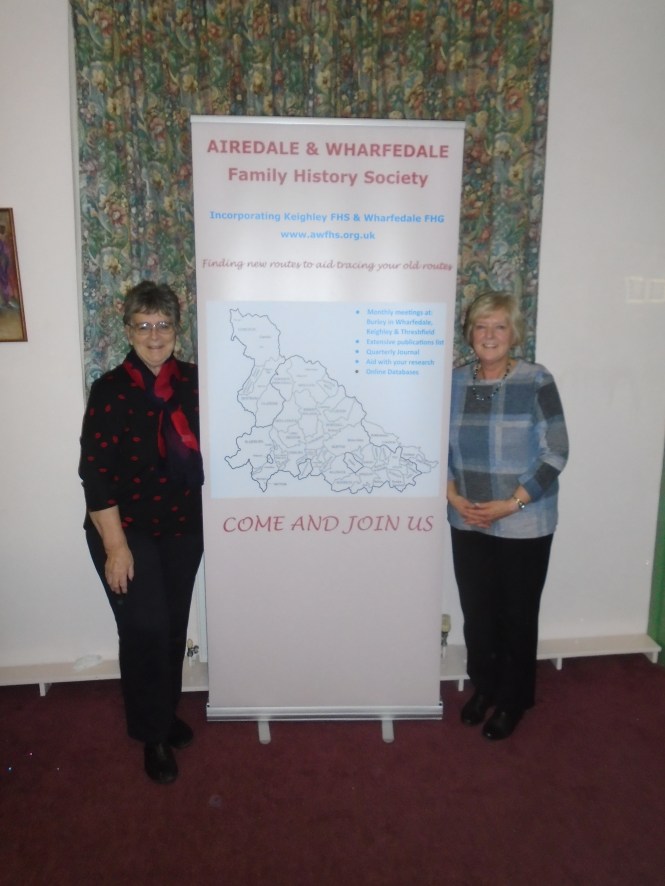
We are pleased to pass on the post below with the news from the recently merged society now known as the ‘ Airedale and Wharfedale Family History Society’.

We commend all of the extensive work done by the societies in the past and look forward to working with the newly formed society in the future.

Two Yorkshire family history organisations, Wharfedale Family History Group and Keighley Family History Society, both of which have been in existence since the nineteen eighties are to merge.  From 1st January they will be known as the Airedale and Wharfedale Family History Society.  The society will have three branches – Burley in Wharfedale, Keighley and Threshfield.

The two organisations have had overlapping areas of interest and the new society will take in Wharfedale, Airedale, the Forest of Bowland and all towns and villages to the borders of Lancashire and Cumbria.  Their list of publications which will number close to five hundred encompasses parish registers and memorial inscriptions – valuable aids for anyone in search of their roots.

The society’s aims are:

  • To provide good lively informative monthly meetings at our soon to be three branches.
  • Attract new members
  • Offer assistance for those new to the hobby.
  • Provide new research aids, particularly those less obvious and less  financially rewarding to warrant the interest of the major websites.

Although a lot of family history research can be carried out on the internet, due to the complexities of the records it is very easily to come to a standstill or end up in the wrong tree!  Local knowledge of available sources can supply invaluable aid to the researcher at a much lower cost and with more accurate results.

The society website can be found at www.awfhs.org.uk.  This includes a list of the publications and several databases, details of the society meetings, articles and news.

The first meeting of the new society is on Thursday January at the Salem Hall in Burley in Wharfedale starting at 7.30.  This will be a research evening, an ideal opportunity for visitors and new members to come and meet the team.  Visitors and new members are always welcome at our meetings.

good news pic

Parkwood School Then and Now!

What a joyful way to spend a Thursday afternoon, listening to the sound of children singing, making music and having a right good time! On Thursday 19th July, Gina Birdsall and I were invited to Parkwood School to watch them perform their end of year show. This kind invite was extended to us, due to our help with their World War One Project.

Last month some of the Year 5 pupils came into to Keighley Library to look, first hand at some of our archive material. The children had the opportunity to study and discuss photographs and original documents covering issues such as: food rationing, refugees, entertainment, and the experiences of injured soldiers at the Keighley War Hospitals, using material from the Brigg collection (BK10) and the Herbert France Collection (BK424) and with help from other local groups.

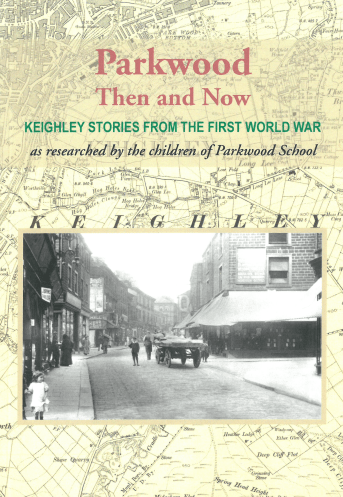
Gertie and Paul, from Whitworks Adventures in Theatre (WAT) who focus on bringing history to life using drama, writing, local stories and primary sources with children in school and community groups, worked with the children as part of their Heritage Lottery Funded Project:  ‘Park Wood Then and Now’, the children’s hard work has been put into a wonderful booklet which we were pleased to receive copies of for the Library.

parkwood

The school show saw the culmination of the children’s hard work over the year. We were treated to the Year 5 pupils singing two songs from the World War 1 era ‘It’s a long way to Tipperary’ and ‘Pack up your troubles’. The children’s enthusiasm was infectious and by the end of the show everyone was joining in.

Angela Speight

Visit to the Brotherton Galleries, Leeds University Library

On Monday, 21 May, a small group of FOBALs (Friends of Bradford Archives and Local Studies) and library staff were very fortunate indeed and saw the Brotherton Library at Leeds University and the archives of the Special Collections.  Wow! The library is a Grade II listed Beaux-Arts building, opened in 1936. The reading room was apparently modelled on the British Museum reading-room, in the round, but “just that little bit bigger”, our tour guide said with a twinkle in her eye. It has some Art Deco fittings including a large central light that is impressively lowered when the large surrounding windows fail to supply sufficient illumination, it’s almost Orwellian.  The actual collections are equally admirable, containing rare medieval gems, such as an illuminated medieval rolled manuscript on the history of the world in Anglo-French. Local materials include Brontë manuscripts and surprisingly, Bradford and Keighley mill records as well Independent Labour Party minutes from Bradford in 1893. Our excellent guide, Laura Wilson, Galleries, Learning and Assistant Engagement Manager (GLEAM) for the Special Collections at the Brotherton was appointed to enhance public access and promote the collections to the wider public and has already seen a great improvement in visitor figures since 2016.

This slideshow requires JavaScript.

Images from Opening Souvenir Booklet,  6th  1936, from the Brigg collection (BK10), Keighley Local Studies Library.

The Library owes its outstanding library of books and manuscripts to Lord Brotherton of Wakefield (1856-1930) and subsequently his family. Edward Allen Brotherton was actually born in Manchester. He left school at 15, worked in a hardware store and also a chemical laboratory and in the evening studied chemistry at Owens College, Manchester. He obtained a post in a chemical works in Wakefield and, by 1878, had become a partner in the firm of Dyson Bros. and Brotherton,  manufacturers of ammonium sulphate and based in Wakefield.  By 1902, it had become the largest private chemical company in the country as Brotherton & Co.  Edward Brotherton was mayor of Wakefield (1902-3) and Leeds (1913-14) and sat as MP for Wakefield as a coalition Unionist, from 1902 -1910, 1918-1922. He made a number of large donations to the University of Leeds, including the funding for a new library for which he laid the foundation stone in 1930, and at which, he announced the donation of his book and manuscript collection. Brotherton’s bibliographic interests began in 1922 through his niece by marriage, Dorothy Una Ratcliffe, Yorkshire poet (1887-1967). The present collection continues to be supported by his family and consists of some 35,000 books, 400 manuscripts, 4000 deeds and 30,000 letters and it continues to grow.

The Special Collections department has undergone a major refurbishment with top of the range, interactive and illuminating display cases to showcase this wonderful collection outside the constraints of the archive search room. There is a Treasures gallery to display, for example, Shakespeare’s First Folio or the miniature story books of the Brontës and a second gallery space with 2 exhibition changes each year, exploring a range of collection themes. This also represents a  renewed commitment to the original aims of Lord Brotherton to give everyone equal access to the beauty and knowledge to be found in the study of local and national heritage collections. The collection’s greatest strength is in English literature from the 17th century to the present but there are also mediaeval manuscript books of hours, early books in maths and science, papers of the transvestite adventurer the Chevalier d’Eon and of the regicide Henry Marten, as well as the Liddle collection of first-hand accounts of WW1 and WW2 experiences and a West Riding textiles and business collection, the Quaker archive collection and Feminist Archive North. The Brotherton also holds a Russian archive collection of papers of Russian émigrés to the West, since the 1917 Revolution, and papers of British people living and working in Russia before the Revolution. The current exhibitions looks at the culture of Romany Gypsies: Rights and Romance: Representing Gypsy Lives, items on the Great War and Cooks and their Books. There is also a case displaying samples of the library’s collection of manuscripts of Branwell Brontë that includes letters, pen and ink drawings and Angrian manuscripts.

Amongst the local materials that were brought out especially for our visit was a WW1 hospital register from Becket Park war hospital that contained photographs, names of patients, their injuries and even a column in their own hand on what they would like to do to the Kaiser which made for interesting reading – amongst some rather gory suggestions, one soldier wrote that he should simply be handed over to the women of England! Interestingly, the collection of textile records includes those of Bradford and Keighley mills, we were shown records of Bankcroft Mill, Oxenhope detailing conditions at the mill. The online catalogue for special collections of the Brotherton Library is searchable and you can get a fair idea of holdings by looking under location of individual mill or business, though the catalogue is still not yet fully comprehensive. Access to archives for study is by a period of notice and appointment, with careful handling on receipt in the search room.

Last of all we had a quick look in the Stanley and Audrey Burton Gallery in the same building that holds regular displays from the University Art collection and is also free to access, including works by Walter Sickert, Stanley Spencer and Jacob Epstein.

Although we were naturally impressed by the quality of the archives and their display and presentation to the public, we were also confident that our records held throughout Bradford libraries’ and museums’ collections and, from our particular point of view,  Keighley Local Studies Library archives, were in many ways their equal in terms of important local heritage. Keighley Library alone has its own collection of local textile mill records and local author manuscripts, including published works by Dorothy Una Ratcliffe. It also has a very fine WW1 collection, the locally renowned mill owning and philanthropist Brigg family records, an early 20th century poster collection, the Lord and Lady Snowden library and the important Brontë Library. In the future it is hoped that though space for more elaborate displays is at a premium, Keighley Library will be able to provide digital access to its records to reach an even wider audience.

The visit to the Brotherton Library was a memorable one, very informative and really enjoyable and for all of us I think, one that will be repeated in the future outside work.  Our thanks must go to our colleagues who generously covered that afternoon for us, to FOBALS (Friends of Bradford Archives and Local Studies) who organised this visit and to the staff at the Brotherton, especially Laura Wilson for her lively tour and expertise.

For further details, please check out the following:

https://library.leeds.ac.uk/special-collections

https://archiveshub.jisc.ac.uk/contributors/universityofleeds.html

www.bradford.gov.uk/libraries/library-services-online/digital-library/ for the Oxford English Dictionary entry for Lord Brotherton, including photograph

www.thoresby.org.uk  and http://femalewarpoets.blogspot.co.uk for Dorothy Una Ratcliffe

www.bradford.gov.uk/libraries/local-and-family-history/archives-and-collections-available-in-our-libraries

www.bradford.gov.uk/arts-and-culture/museums-and-galleries/museums-and-art-galleries/

 

Celebrating Women’s Suffrage in my Mother’s Family’s Home City!

It was an emotional occasion when I visited the Bradford Local Studies Library on March 10 to join with others in learning about and celebrating women’s suffrage in my mother’s family’s home city!

I had travelled from Shropshire to hear Helen Broadhead’s illustrated talk on The Bradford Suffragettes and to look at some of the records held by the Library. It was particularly moving to see the historic 1918 Electoral Registers containing the names of my maternal grandmother, great grandmother and great aunts as first time registered electors for Parliamentary Elections. Also listed for the first time were my grandfather and great uncles. All of them qualified either in their own right or through their husband’s property occupation qualification. It felt momentous and of course it was.

I wanted to learn from Helen what sort of activities my grandmother Maud Brear might have taken part in, since, before her marriage in 1912, Maud had been an active supporter of the WSPU in Bradford.

Maud

Maud Brear on her wedding day Aug 1912 at Tong Parish Church to Edward Williamson combing overlooker at Joseph Dawson’s Mill.
Maud who worked at Cawthra’s Mill until her marriage, made her own outfit including the hat. She had taken dressmaking and millinery evening classes. 
They set up home together in Blanche Street, Laisterdyke, where Maud lived until her death in 1963.

She was not one of the heroines who were arrested or imprisoned, not an organiser or a speaker at meetings, probably not one of the activists who poured purple dye into the Chellow Dene reservoirs or daubed the green, white and purple of the suffragette’s flag onto the green of Bradford Moor Golf Club (No Votes No Golf!) or set light to letter boxes; but, rather, a young woman who felt sufficiently strongly to risk the disapproval of her neighbours and employers and support events as a rank and file member. One such event, her most daring, was to join a march in the centre of Bradford with a girl friend. She carried hidden in her clothing a brick wrapped in a Votes For Women poster, intending to lob it through the window of Hulme’s Department Store (later Brown Muffs).  Until recently I believed that she HAD thrown the brick, running away to evade the police; but barely ten years ago my mother put me right. In fact when she saw the police presence in the area, Maud lost her nerve, quietly put down her brick and quickly walking away! So a myth was exploded!  But clearly the window smashing action was pre-meditated, probably organised by the local branch of the WSPU and at least for a while she was prepared to contemplate risking arrest. We have not yet found a newspaper report of the march so further research is needed to confirm my grandmother’s story.

Almost certainly Maud attended some of the many rallies and meetings organised in Bradford and the surrounding area.   So she probably heard Emmeline and Adela Pankhurst speak at the Shipley Glen mass rally on “Yorkshire Suffrage Sunday” in 1908. Her fiancée’s family were Pudsey ILP members and friends of the future ILP MP for Bradford Fred Jowett, so she possibly was at the meeting in Pudsey in 1908 where Adela Pankhurst and other speakers were barracked and pelted with rotten oranges!   On many of these occasions Maud was joined and encouraged by her brother Fred, listed in the 1901 Census as  ‘a hewer in a coal mine’, a life long socialist who  ‘took the Daily Worker all his life’. She took up the wider causes of the women’s movement of vegetarianism and healthy living, attending lectures and reading pamphlets. She retained a thirst for knowledge and education all her life.

Yet hers wasn’t a good beginning. Born in Bradford in 1885, starting as a half timer aged 11 in a woollen mill, the first 15 years of Maud’s life were hard in the extreme. Her mother Hannah, born in Bradford in 1863, was a worsted spinner and single mother at the age of 17. She had a further 2 children: a single parent and juggling work and child-care, she was frequently moving. A disastrous marriage to a petty thief, more often in than out of prison, left her with a fourth child. But she soon found herself abandoned altogether, with 4 children and no support.  So bad was it that she had to turn to the Bradford Union Workhouse and suffered the humiliation of it being reported in the local paper. Up till now my husband and I had painstakingly uncovered the details of the family using online resources but at this point we enlisted the help of Local Studies Library staff member Sarah Powell who searched the records of the Bradford Union and concluded that Maud probably received Out Relief: there being no record of Hannah and her children being admitted to the Horton Workhouse. Sarah was also able to also confirm our fears that Hannah’s mother had not been so lucky and had entered the Union on at least four occasions eventually dying in the Horton Workhouse.

Hannah went on to have two more children alone before eventually finding stability and ‘respectability’. The 1901 Census lists what appears to be a typical working class family unit of husband and wife and their six children aged 3-20.  But Hannah had reinvented herself. The ‘’head of the household’ was not the father of the six children and Hannah was not his wife (divorce being unaffordable for working class women, she was still married to the thief). And they all took the surname Brear!!  The 25 years from 1901 until her death in 1926 were the most stable of her life. My great grandmother became a respected member of the Cutler Heights working class community in Tong: acting as unofficial midwife, medical herbalist and layer-out of bodies for her neighbours. The 1911 Census records her as head of the household and a ‘widow’. How wonderful, therefore, to see her name recorded in the Electoral Roll of 1918 qualifying in her own right through renting a house valued in 1910 at £6 !!

Hannah Brear

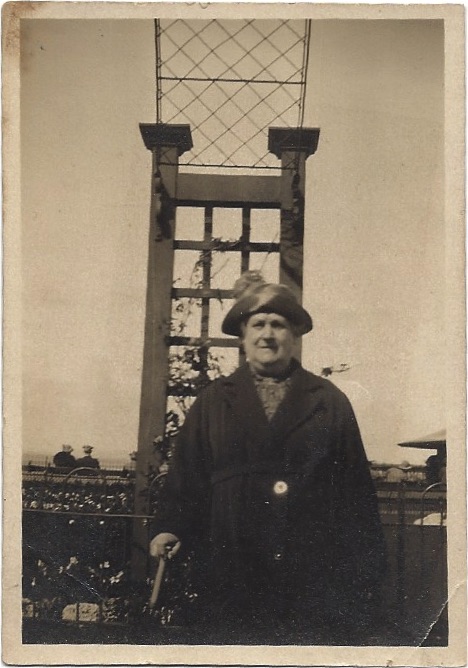
Hannah Brear   1920’s.  She died in 1926 aged 63

Thank you to the staff of the Local Studies Library who are friendly, welcoming, efficient; generous of their time, expertise and resources. Not easy in these days of ‘austerity’.

Ann-Marie Hulme