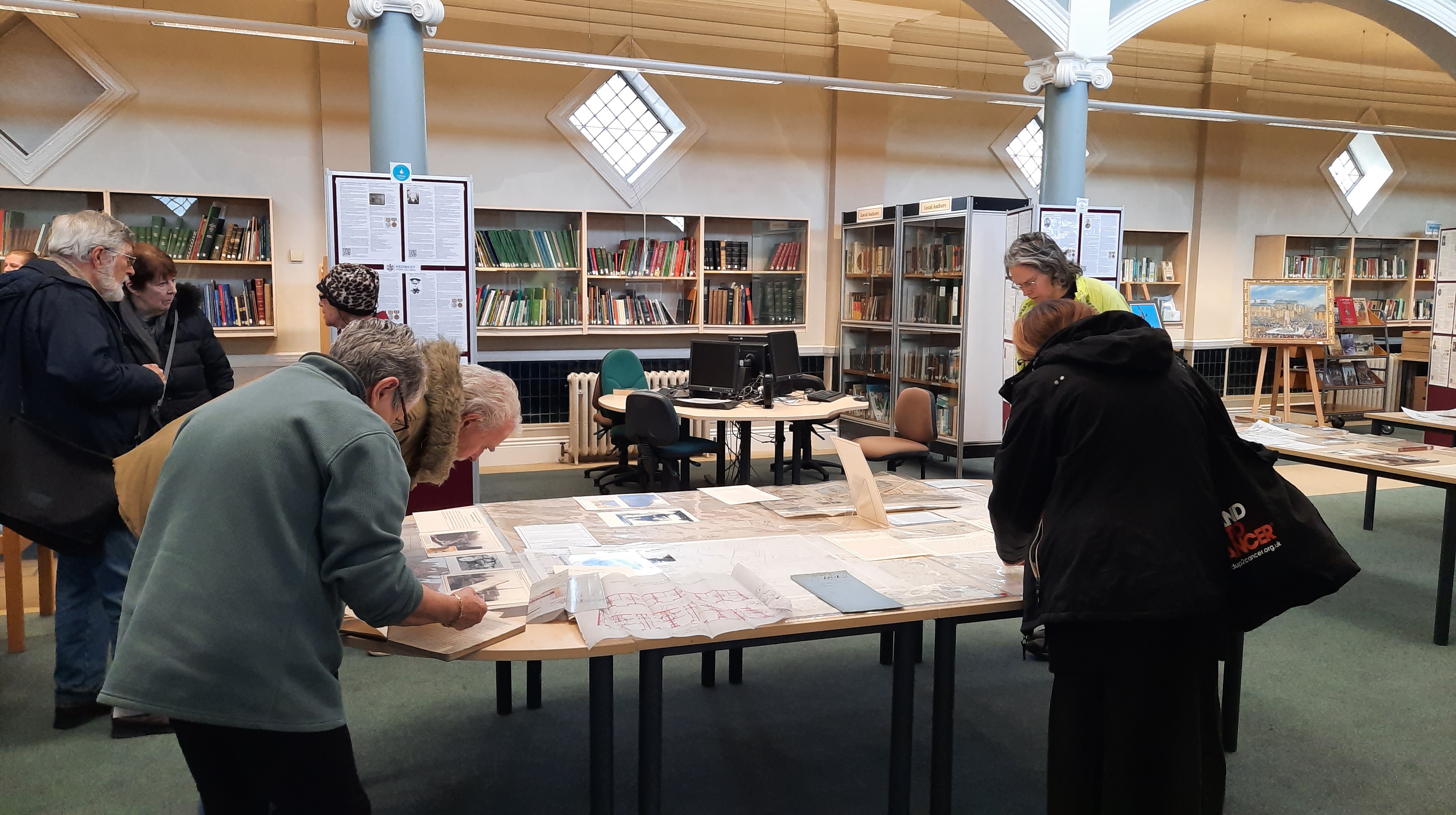
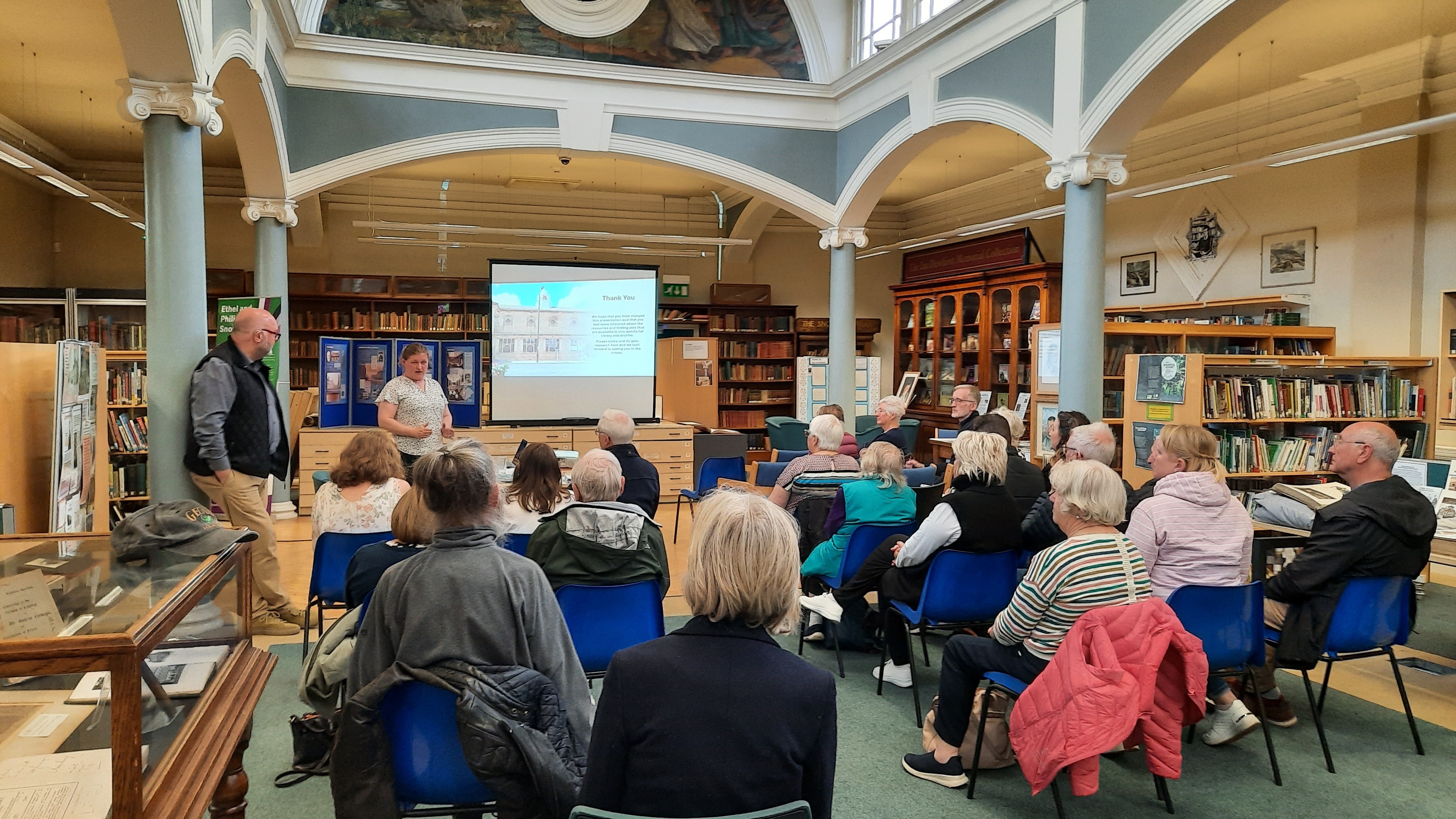
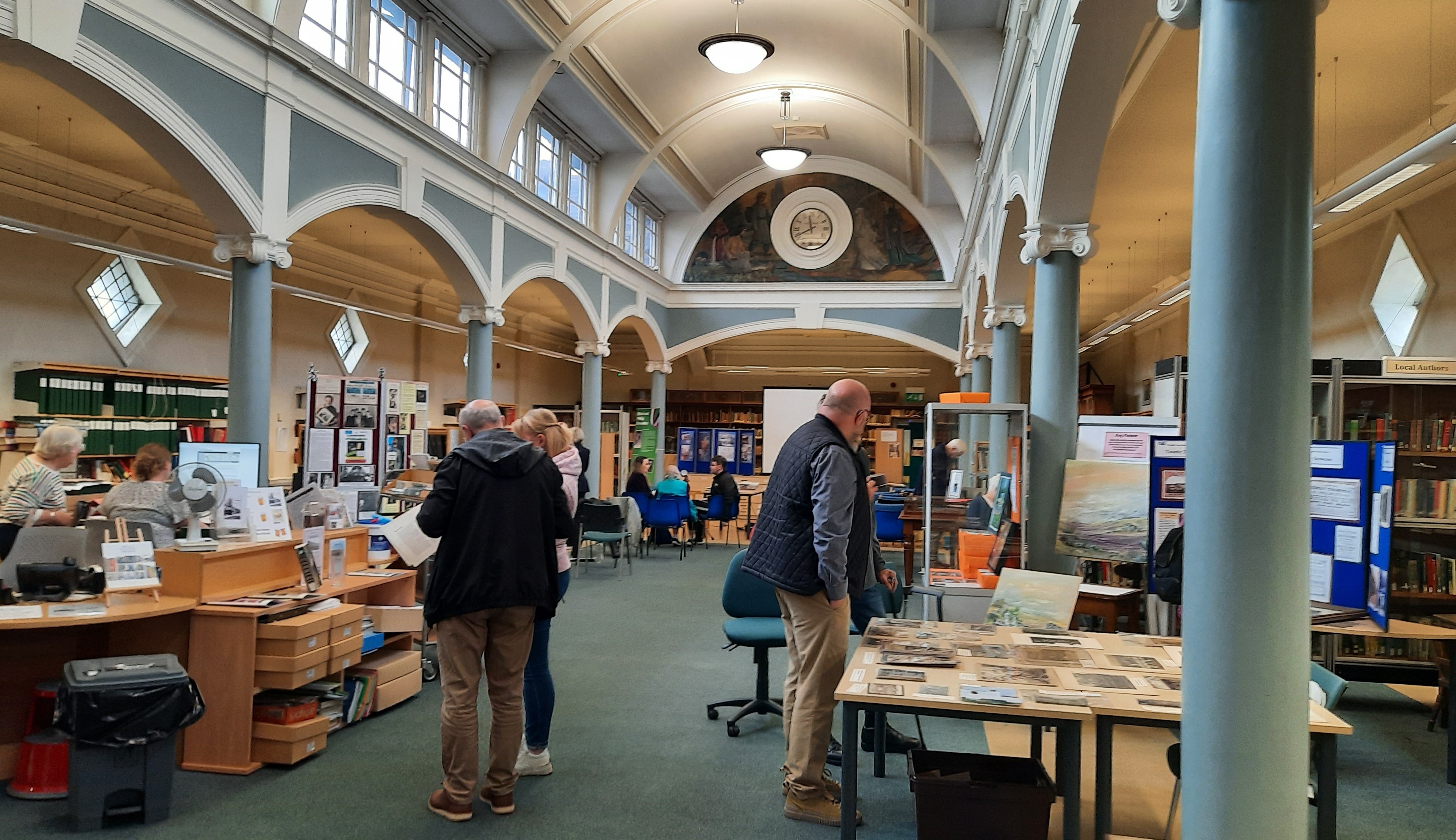
For the last two years, Keighley Local Studies has put on a series of lectures on family and local history by Jude Rhodes, professional genealogist, local historian and accomplished speaker. Jude has covered topics as diverse as back-to-back housing, nursing history and one place studies and a history of mental health and asylums. Each talk has been fully illustrated with a power point presentation and library staff have put out displays of related original documents, gathered from the wonderful Keighley Local Studies’ archive that covers the Keighley district.
By popular demand, Jude is back with us starting in September on a topic close to our hearts, please come along, refreshments are provided. Details on the attached poster.
Keighley Local Studies has a full programme of talks and events for Autumn/Winter, and details of these will be available on this site, on social media and in the library shortly, please look out for them.
Back-to-back housing was the topic of Jude Rhodes’ talk this week, the second in the series of illustrated presentations by this wonderful speaker and although these houses are still all around us in their later improved incarnations, back-to-back history continues to surprise us.
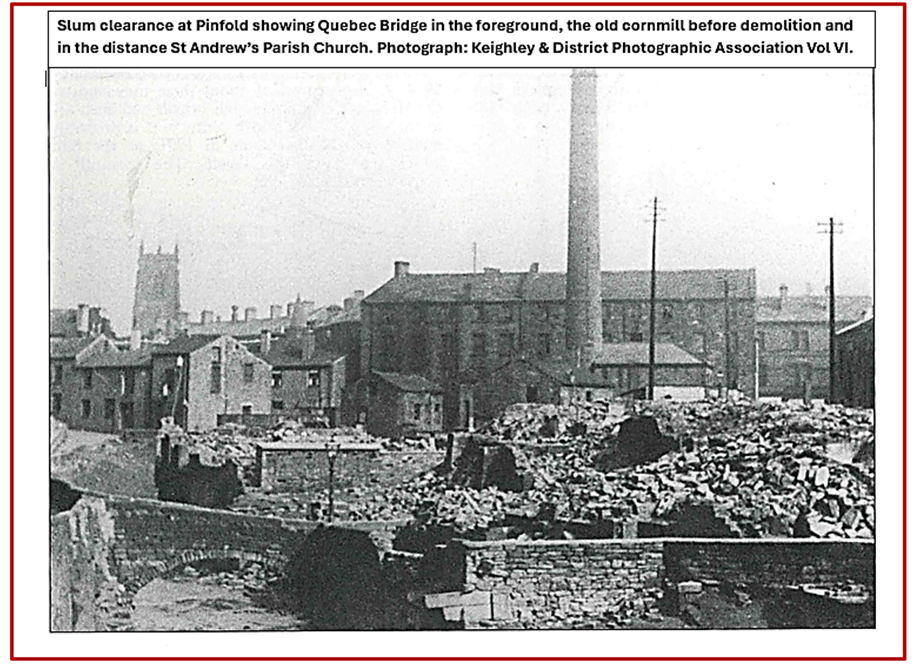
Back-to-backs were first mentioned in Bermondsey as early as 1706 and were built in Birmingham and Nottingham in the 1770s, Manchester and Liverpool in the 1780s. Leeds began to build them in 1787 and has the most back-to-backs in the country. Keighley’s own early workers’ housing was centred around West Lane at Westgate, including the Pinfold area, its terraced early back-to-backs include Leeds Street and Turkey Street, see illustrations.
The early back-to-backs houses usually consisted of a kitchen room with 2 bedrooms on the floor above and a cellar place for coal. Houses at the rear were usually accessed by tunnels from the street. They were popular for cheap rents and running costs but were unsanitary with shared middens and water supply, small windows and generally a lack of ventilation with subsequent damp. There was much overcrowding and Jude illustrated this with 40 Birmingham houses sharing 3 privies, that’s potentially 160 people. Piles of human and other waste were added to make “midden heaps” that were cleared into the rivers, becks or streams by the Night Soil Man or left to pile up in the yard before spilling into open sewers, basically ditches with water running through if the gradient was good, if not then waste was left to stagnate, producing poisonous and noxious fumes. Water from rivers, becks and streams could so easily carry typhoid and dysentery, such was the pollution before proper sewerage systems.
Bye-laws and the Public Health Act of 1875 tried to improve workers’ housing and improved back-to-backs were built. These were referred to as “byelaw terraced” housing. These houses had to meet minimum standards of build quality, ventilation, sanitation and population density. Significantly, this type of housing made up over 15% of the United Kingdom’s housing stock in 2011 and gentrification has taken place for some, as at Chimney Pot Park in Salford.
The overcrowding, insanitary conditions and deterioration of much early housing caused concern, not least amongst employers who required healthy workforces to fill their factories and mills. The Brigg family of Calversyke Mill in Keighley built better back-to-back housing in Lynum Street, however their hopes to build a model village like Sir Titus Salt in Saltaire was prevented due to the inadequacy of the water supply there. Later they sold extensive land around Guard House that enabled the building of Keighley’s first 136 Corporation houses at Guard House in 1928 with gardens, space, light and sanitation. James Lund of North Beck Mill built houses near his gift to the town of Lund Park and some of his houses, post 1878, remain in Calton and Chelsea Streets. Robert Clough of Clough Mills built houses in what is known today as the “Jewel Box” area of Keighley, called after the names of five streets: Opal, Diamond, Ruby, Pearl and Emerald. The list of house planning millowners goes on though not for model villages.
Slum clearance began in the 1930s and went through stages up to the 1970s. In Keighley, much early housing was cleared when the Housing Act of 1930 allowed for compulsory purchase of the proven inadequate housing for demolition. Jude highlighted the destruction of community in the process, however, and some members of the audience noted Parkwood in the 1960s. Not everyone wanted to leave their homes, improvement yes, not demolition and rehousing. Stories from the audience included a de-lousing procedure for inhabitants of “slum dwellings” before access to alternative housing was permitted. Dr Ian Dewhirst MBE in “A History of Keighley”, page 132, highlights the loss of “landmarks in the folk-geography of generations: the Bay Horse Inn and the Angel… the picturesque Quaker meeting-house in Mill Street; the pinfold where stray livestock had been impounded; hump-backed Quebec Bridge, scene of many a Saturday-night brawl…”
Time marches on sometimes leaving shock waves in its wake as in the final fact Jude noted, that her “all time dream home”, her former grandparents’ back-to-back in Leeds, where they struggled to live comfortably, is today not even affordable to her. How things change.
Jude Rhodes is an Associate of the Association of Genealogists and Researchers in Archives (AGRA), specialising in Yorkshire history. She is she explains, “passionate about using local history with family history, this provides the exploration of who our ancestors were, why they lived in a particular place and how they were part of their community at a given time”.
Thank you to all who attended, please find an earlier blog with future talks listed into next year. Please note these are free events and also a place booking is required for that on the 11th December 2024, Christmas Family Traditions and Crafts, contact Keighley Local Studies. Poster with details is with this blog.
Jude highlighted some resources and museums during her talk, here are some mentioned below revealing the back-to-back history experience:
For building plans, OS maps, photographs, town plans, Borough records, and at least 2 in depth studies on the housing of workers and employers, please see Keighley Local Studies Library, North Street, Keighley keighleylocalstudies@bradford.gov.uk
National Library of Scotland online collection of town maps and plans for England and comparative recent aerial photographs for study https://maps.nls.uk/os/
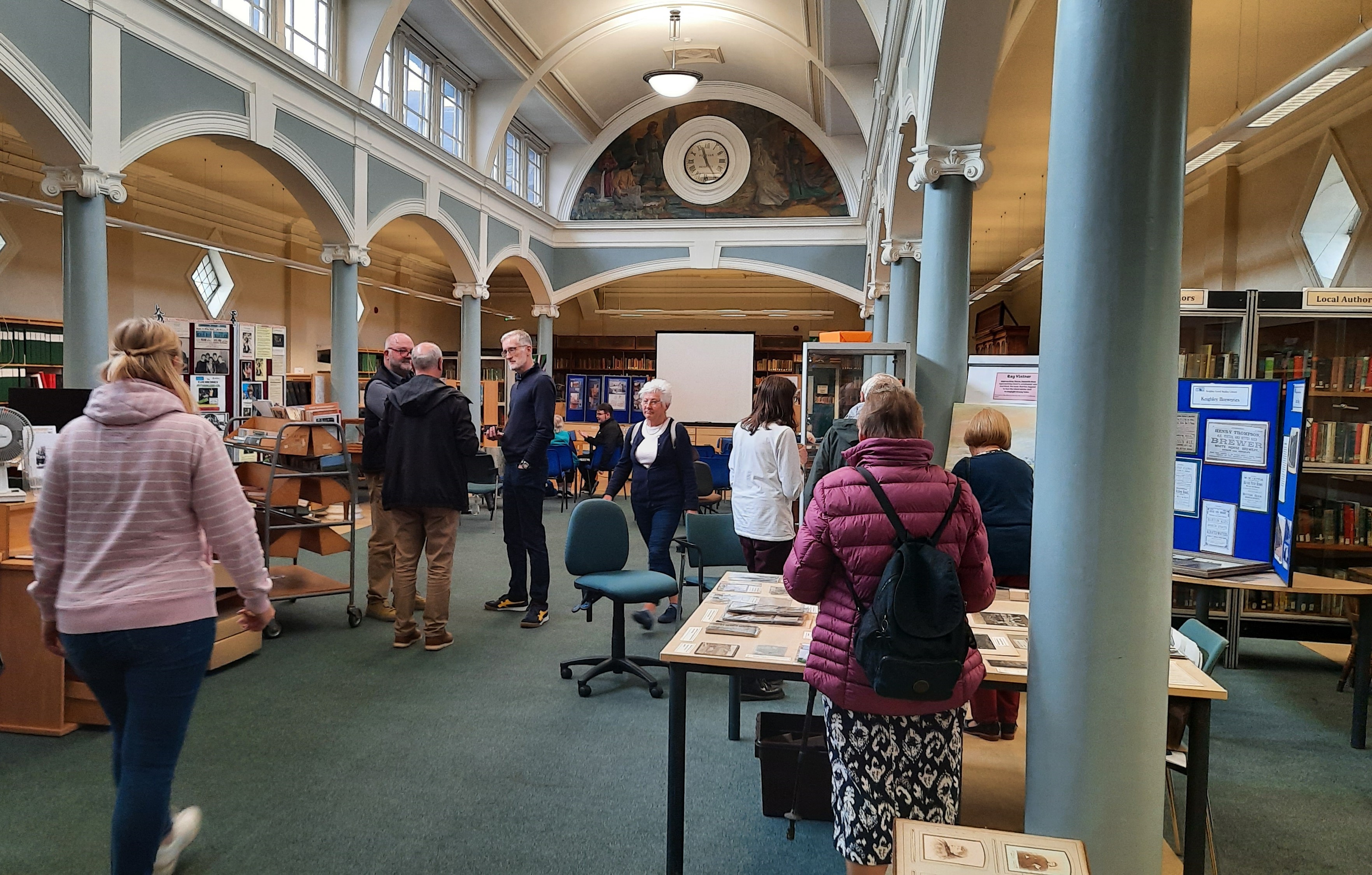
On Saturday 13th July, Keighley Local Studies Library hosted members of the Keighley & District Local History Society in a full morning session examining the extensive photograph collection and the many other family and borough collections of records that include photographs and all kinds of images that reflect the development of the town and its community. The session started with an illustrated talk and presentation led by Angela Speight, assisted by Gina Birdsall.
Angela then answered some of the members’ questions about the Local Studies Library. Next was a chance to look around the many displays of records put out in the library. Staff even did some non-photographic research too.
Keighley’s collection was started over a hundred years ago with the deposit of around 150 images of the changing town of Keighley, produced as a survey by the Keighley & District Photography Association. This survey produced by Keighley photographers is now recognised by academic researchers into local history photography as one of the finest and unique for its forward- looking approach and its focus on the town’s development rather than nostalgic scenes, (please see earlier blog on this site by Professor Elizabeth Edwards).
Following that donation, members of the Association continued to donate photographs and were supported in this by library staff such as Reference Librarians Dr Ian Dewhirst MBE and Stewart Cardwell, himself a member of the Association. Both Ian and Stewart published books to showcase the collection and to promote interest in the medium of photography as a vibrant source of social history. Ian went on to write a weekly column in the Keighley News called “Down Memory Lane”, that was always illustrated with a photograph or an image of some kind. Over the years, many local people have continued to donate photographs and family collections, even including family albums.
The archive also holds a range of local business collections that show product illustrations and photographs of shop floors, staff at work, on works’ trips and celebrating national events such as Coronations. Our school archives have recently been boosted by the gift of the Schools’ Heritage Group collection and Janet Mawson is currently putting together a display based on the largest collection of images donated for a Keighley school, Highfield School. Janet is also working on a first for the library service, a heritage school reunion on 24th August, to mark the receipt of the archive, also as part of the Keighley Library’s commemorative events for the library’s 120th anniversary and as a fitting tribute to one of Keighley Library’s biggest fans, the recently late David Kirkley who was a founder member of the Schools’ Heritage Group.
The Library’s biggest and oldest collection that Angela Speight has been cataloguing is BK 36 that includes thousands of photographs and postcards including an incredible collection that staff believe was from a local photography business in the town as it has pages of numbered photographs with a corresponding numeric index.
We also learned something new about one of our collections, a set of double shot photographs mounted on card were identified by the Local History Society as a set of early Stereoscopic cards that show many Keighley scenes from the 1890s. The cards would be placed in a stereoscope so creating a 3D image of the scene, bringing it to life for the viewer and was a popular form of entertainment in the Victorian era.
Members of the Keighley & District Local History Society seemed to really enjoy the morning and staff even heard the words “excellent” and “brilliant”, and what more could you want from fellow local historians. A big thank you to all who attended and to Tim Neal for helping to organise the visit.
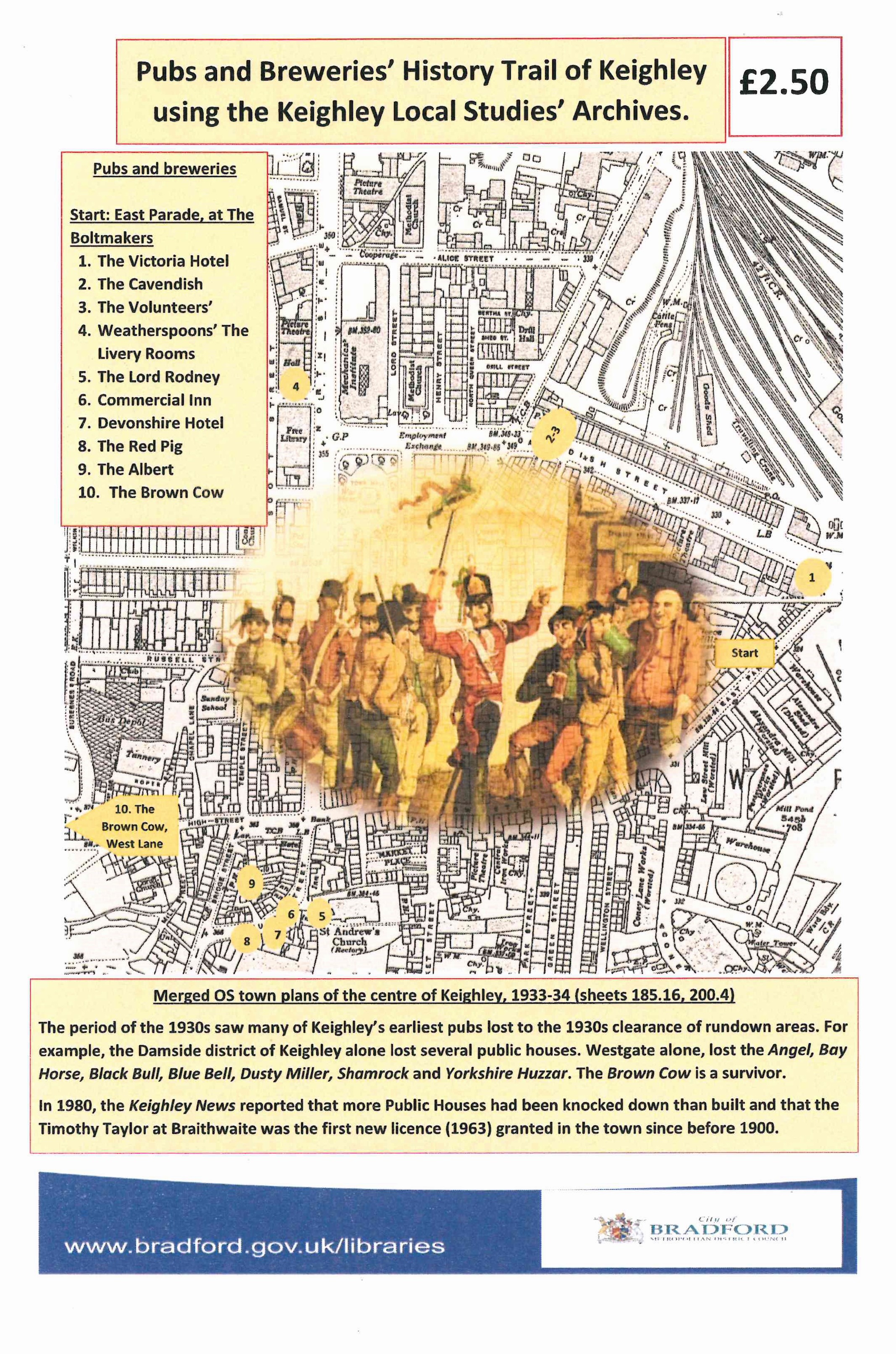
On Saturday 1st June, staff at Keighley Local Studies Library launched another in their series of Keighley Heritage Town Trails, this time: Pubs and Breweries’ History Trail of Keighley using the Keighley Local Studies’ Archives, price £2.50, limited publication only.
The trail consists of a walk around our town to look at 10 of the oldest pubs and how their histories, as with many old buildings, also help to tell the unfolding story of this unique place and of some of their associated characters, some of whom would contribute directly to Keighley’s development and achievements. In Keighley’s case there is the publican who founded Keighley’s Free grammar school in 1713 and so helped to launch the careers of some very high achievers from the subsequent Keighley Boys’ Grammar School, including two historians who changed the course of history writing: Sir Herbert Butterfield (who highlighted a Whig interpretation of history) and Lord Asa Briggs (champion of urban and social history, higher education, the Open University and code breaker at Bletchley Park).
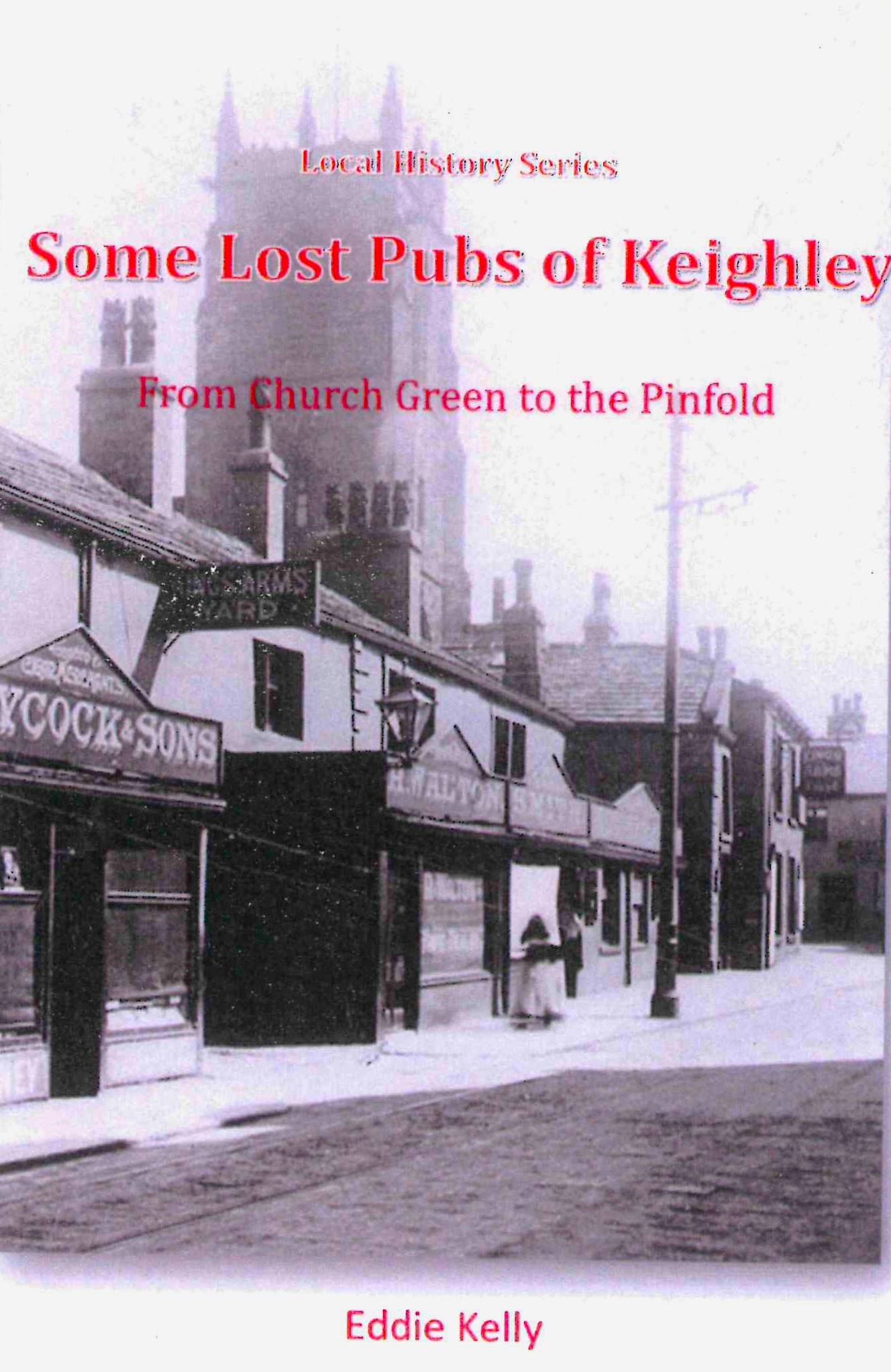
Staff were helped in the writing and production of the trail by our local specialist in pub history, Eddie Kelly. He gave generously of his time and in-depth research of Keighley’s history over many years. The Library already holds a couple of Eddie’s studies in the library that are very popular with researchers, and he also produced his own history for the occasion: Some Lost Pubs of Keighley, From Church Green to the Pinfold that was published for sale for £7.50, limited publication only, all proceeds to the Library service.
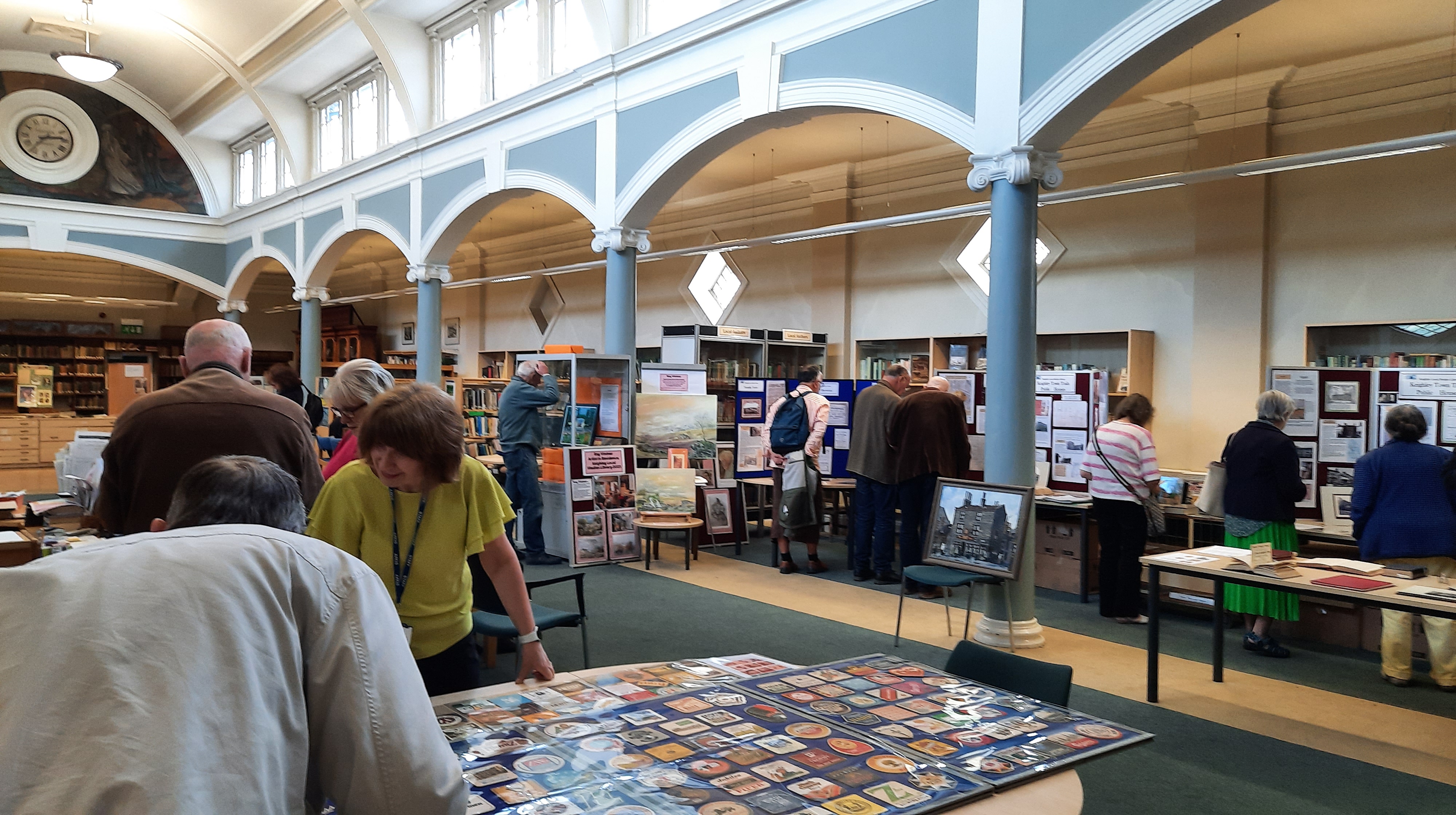
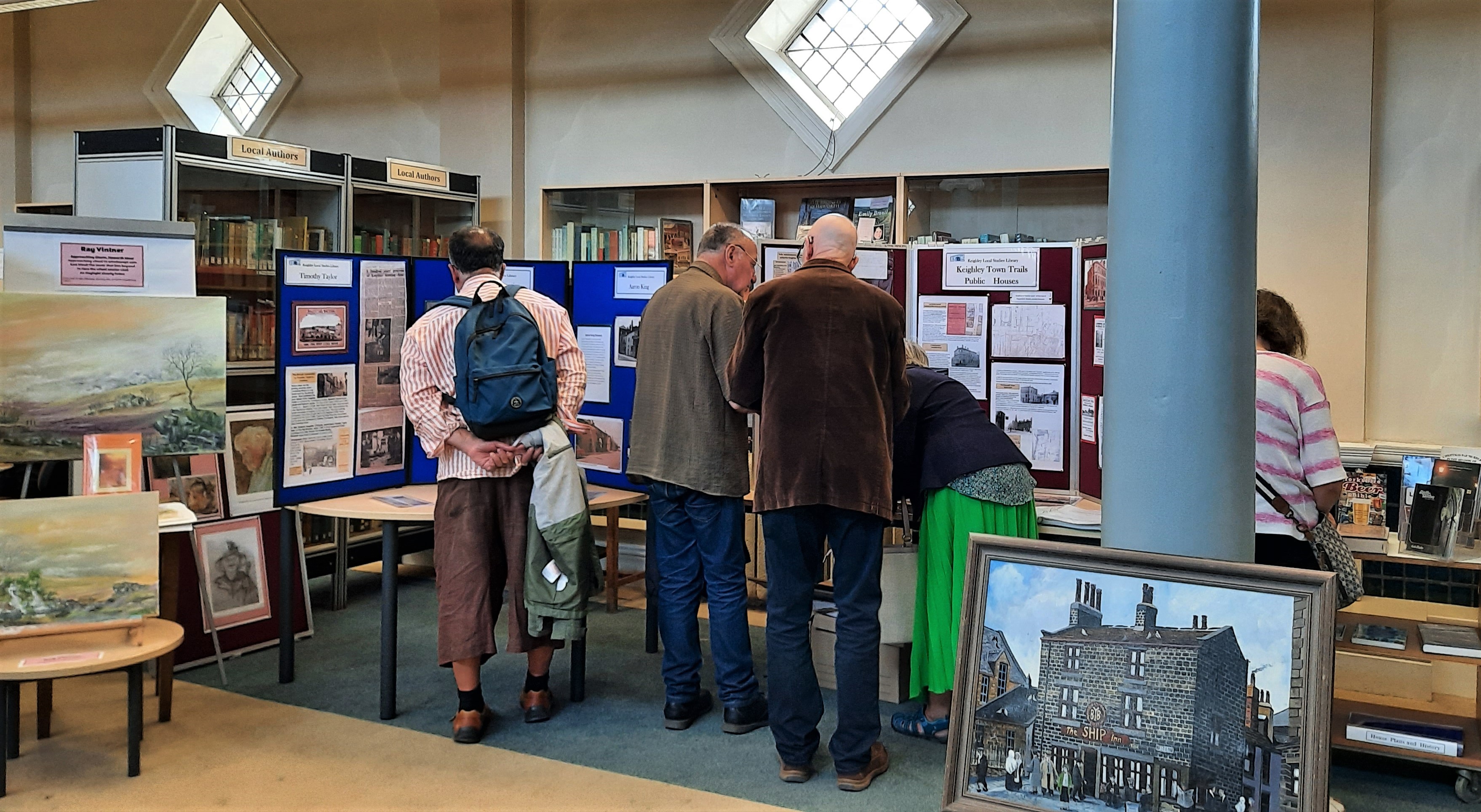
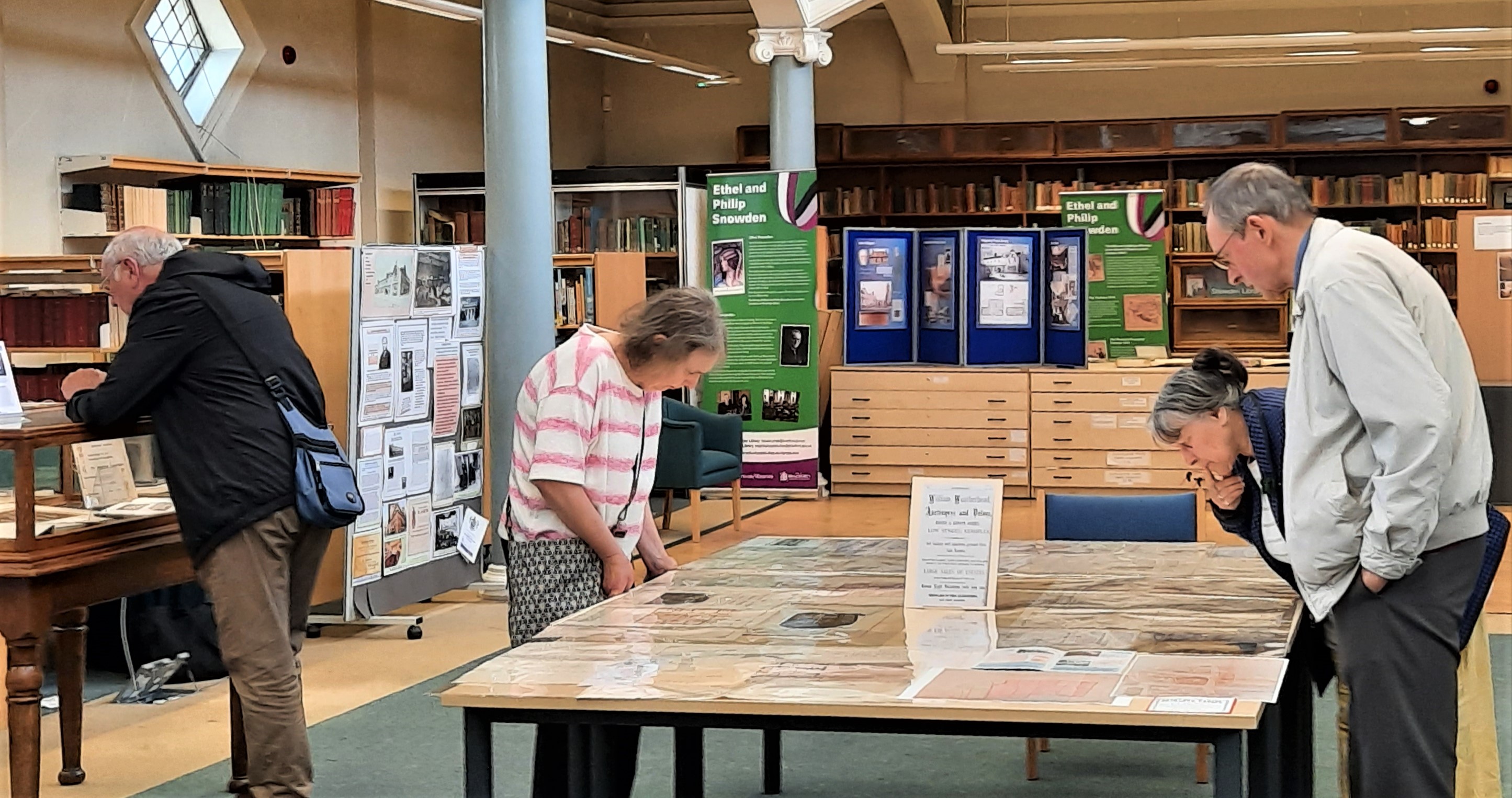
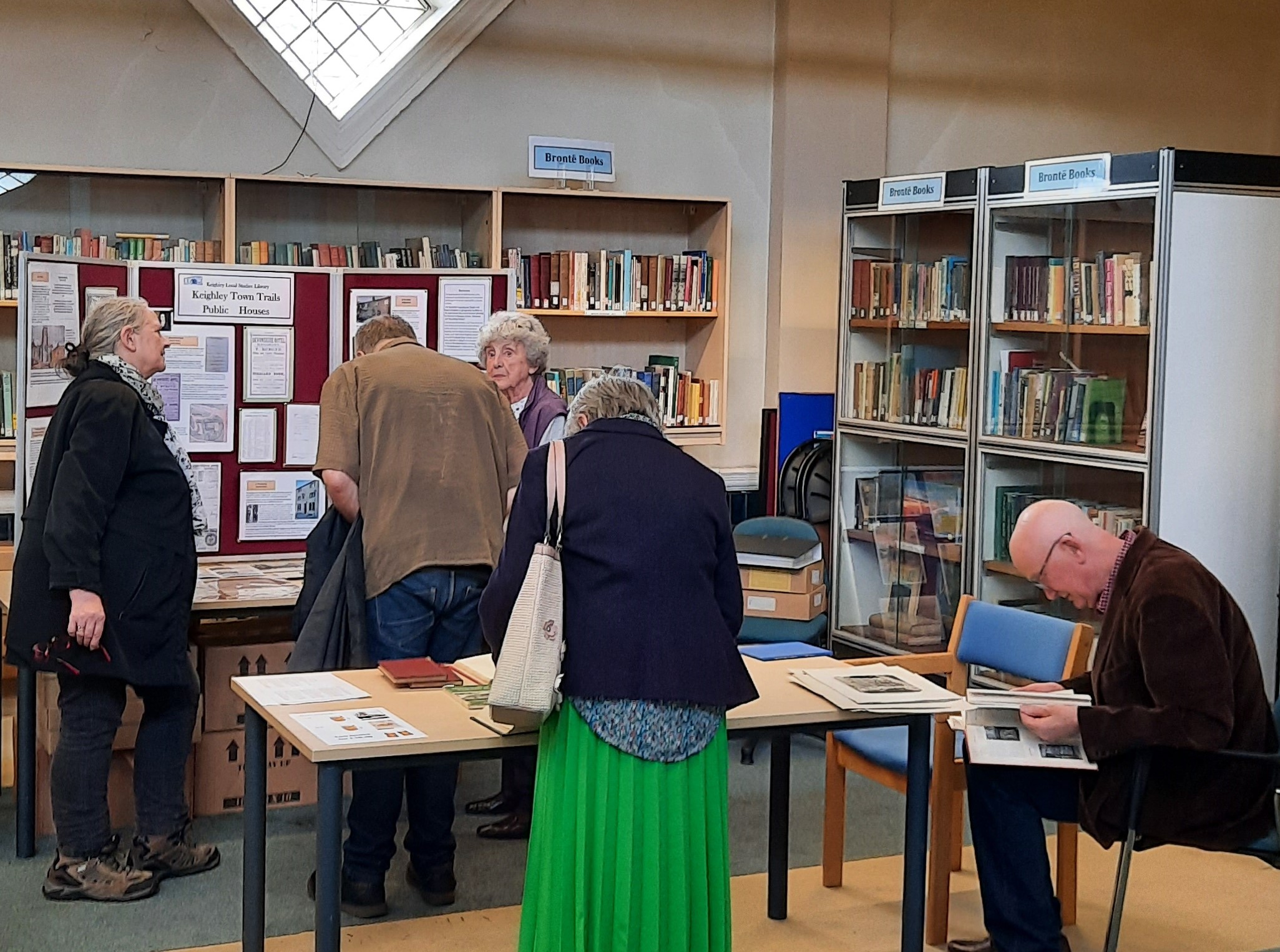
A large display accompanied the launch including records from Keighley Local Studies’ substantial archive such as photographs, business archives and local estate agent’s Weatherhead collection of sale plans. Town plans and trade directories were also on exhibited and a source that proved very useful: Keighley Year Books and Almanacks because in their descriptions of local societies, they include how many met and even held competitions in hotels and pubs, like the Gooseberry Growers’ Association that held their annual meetings and prize giving at the Wellington Inn in Hanover in the 1870s. As always, news cuttings were an important addition as well as local histories of pubs, hotels and inns, business guides and books on how to trace your publican ancestry. Some of the buildings that were researched have fine historic architectural features and consequently are listed by English Heritage, these descriptions were also made available such as for one of the oldest, Taylor’s on the Green, formerly more locally known as The Lord Rodney.
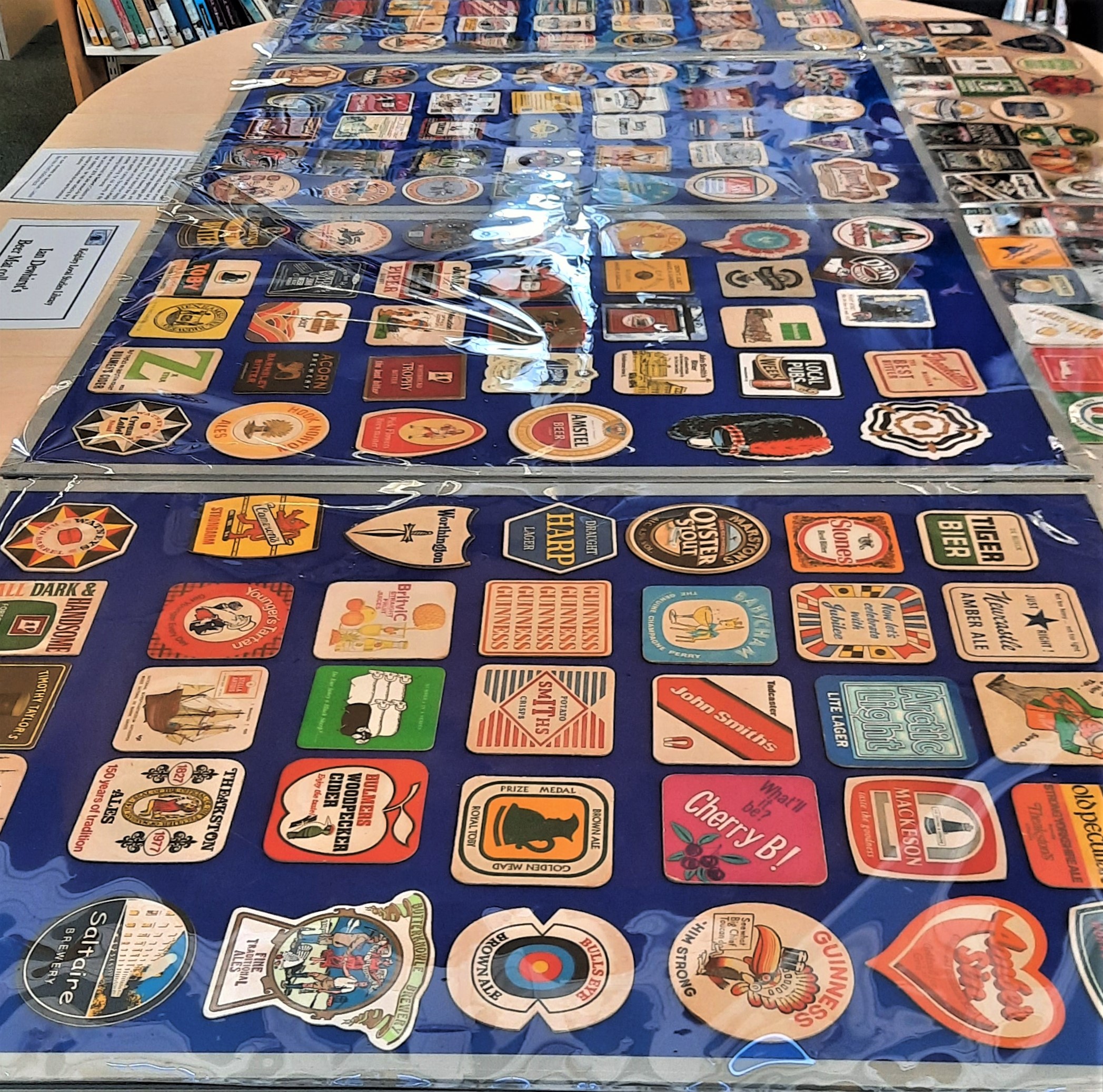
Attendees were also fortunate to see a large sample from a very fine collection of beer mats by no other than ex Keighley Reference Librarian and local historian, Dr Ian Dewhirst MBE that attracted a lot of attention and brought back many memories of changing fads and fashions in drinking in Yorkshire pubs over the last 50 years or so.
The turn-out was satisfyingly about right for an unusually dry, warm and sunny Saturday and copies of both trails were sold and some since. The basic display is up for another week or so but due to the limited publication of both, it has been decided to publish some sections of the Keighley Local Studies’ trail online each week on this blog. We hope that you will enjoy them.
Earlier this year ‘The Men of Worth Project’ was awarded a grant by the ‘National Lottery’s Heritage Fund’ for a wonderful project. The funding is to add more names to the Borough of Keighley Roll of Honour.
The Roll commemorates those that served and gave their lives in the First World War.
A fitting tribute, as this year Keighley will celebrate the centenary of the original book and of our wonderful Borough of Keighley War Memorial, which was unveiled in Keighley’s Town Hall Square on 7th December 1924, in a ceremony that was attended by several thousand people.
For the past 23 years, Keighley’s Men of Worth Project has researched local people who served the country in wartime. Over the years, Andy Wade and Ian Walkden and the project’s volunteers have worked hard, dedicating many hours to making sure that the stories of those who served are not forgotten.
The group share their expertise in many ways: from helping families research relatives, creating displays, attending commemorations and contributing many articles to the Keighley News. They are also regulars at the local shows and galas in and around Keighley and attend the Haworth 1940s weekend. The group have also been instrumental in saving local war memorials from destruction.
You can find out more about their work on their website at www.menofworth.org.uk and they now also have a whole area dedicated to researching local women who served during wartime.
In 2021 the project received the ‘Queen’s Award’ for voluntary service, an honour that marked the group’s dedication to research and many years helping people from all over the world.
The library has fully supported the lottery funding bid and has worked with the Men of Worth Project over many years, the group have hosted many exhibitions in the library and attended our local and family history open days each year.
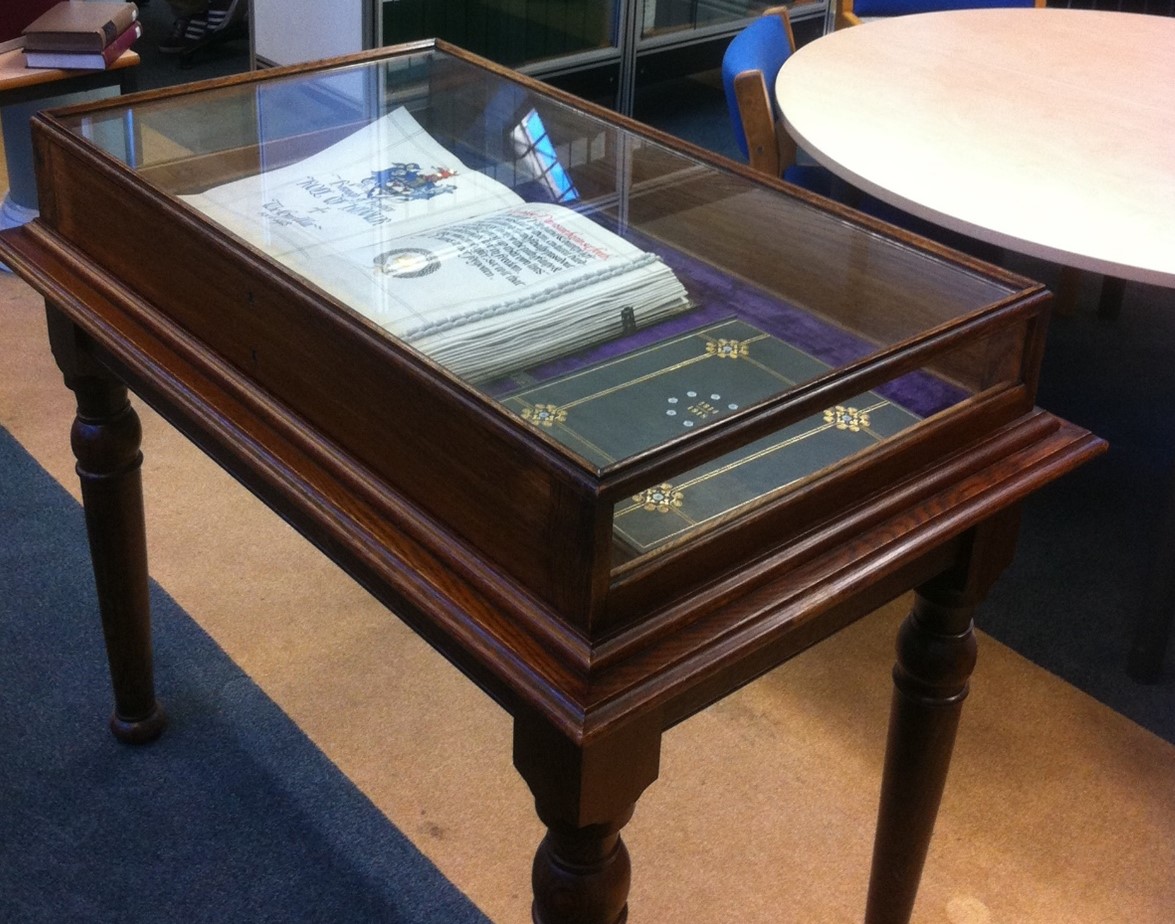
Keighley library has had the honour of holding the beautiful original Roll of Honour since it was handed to the library in December 1924. In 1998, Bradford Council facilitated the creation of a Supplementary Volume, after a successful campaign by the relative of Private Henry MacDonald, so that his name could be added to the Roll. MacDonald was shot at Dawn in 1916 for cowardice but was later pardoned in 2006 along with over 300 other British and commonwealth soldiers who had also suffered a similar fate.
The Supplementary Volume was created with room to add many more names and after many years of research the Men of Worth have gathered a list of over 100 names of potential candidates to be added. Lottery funding has enabled an independent panel of local people to decide on each candidate and their merit for adding to the Roll. So that now 100 years on these forgotten names, names that did not get added for a variety of reasons, will finally be added to the Keighley Roll of Honour.
The project will culminate with an event this Autumn to mark this important centenary and an unveiling of the updated roll, with copies of the roll of honour to be sent to local schools and groups.
Over the next few months, we will be featuring some of the Men of Worth’s blog posts on the project as well as some of the biographies of the people who will be added to the roll of honour.
Angela Speight, Keighley Local Studies & Archives Assistant