Celebrating Louise Carnegie

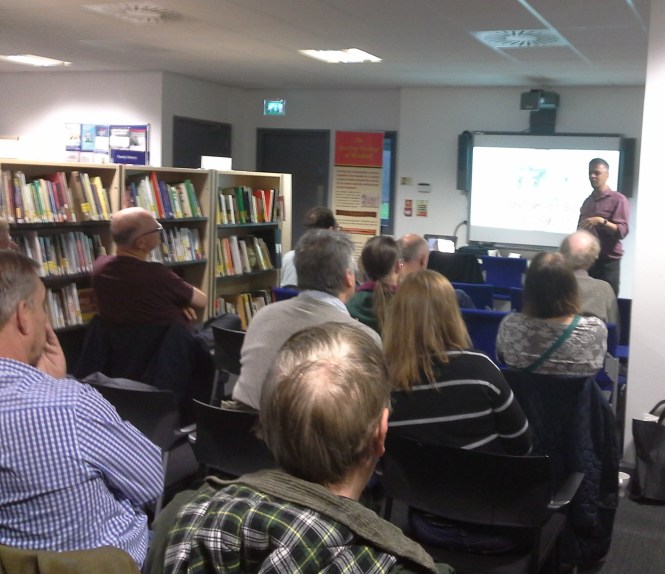
Thank you to Irene Lofthouse for her wonderful portrayal of Andrew Carnegie’s most trusted confident, his wife Louise Carnegie, in Keighley Local Studies library on Saturday 12th October, given to a packed audience. This event in our historic Carnegie library marked Libraries week and 100 years since the death of Andrew Carnegie in 1919.

Here are some photographs of the event and a short biography of Mrs Carnegie.


Louise Whitfield was born in Manhattan on March, 7, 1857. Her parents, John and Fannie, descended from families that emigrated from England in the 1600s… Louise’s father was a textile merchant. As he prospered he moved the family from Chelsea to Gramercy Park (where one of Louise’s playmates would be Teddy Roosevelt) and finally to a comfortable brownstone uptown on West 48 Street and Fifth Avenue—two blocks away from the Windsor Hotel. Andrew met John Whitfield through a mutual friend and enjoyed his company. He made frequent visits to the Whitfield home; during one of those visits, he met Louise.
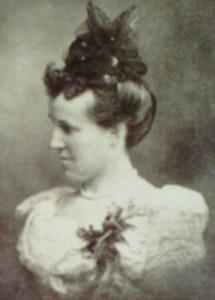
Mrs Carnegie

Louise Carnegie

They shared a love of riding horses and he invited her often to Central Park. During these rides, she let it be known she didn’t want to marry someone who was already successful, but rather help a husband to succeed. He let it be known that he had no intention of holding on to his fortune, but rather wished to give it all away…

…Louise realized that Andrew would not marry while his mother was alive; four years after their meeting, the engagement was called off. But not the friendship. After nearly a year of corresponding, they decided to renew their engagement, but kept it a secret from Andrew’s mother.

Mr Carnegie

Andrew Carnegie

In the fall of 1886, Andrew contracted typhoid fever; inconceivably a week later, his brother Tom became ill with pneumonia. While Andrew’s condition fluctuated, Tom’s rapidly deteriorated and he died on October 19 at the age of 43, leaving behind a wife and nine children. Margaret, already ailing, could not bear the news of the illnesses of her two sons and died three weeks later on November 11 at the age of 77. She was not told of Tom’s death and Andrew was not told of his mother’s death for nearly three weeks until he was fully recovered.’ https://www.carnegiehall.org/Blog/2013

The couple married in 1887 and, unusual for the time, they signed a pre-nuptial agreement, in which Andrew stated that he wanted to give away the bulk of his fortune. They were married for 32 years, had one child named Margaret, and Louise was an influential member of the board of The Carnegie Corporation until her death in Manhattan on June 24, 1946, at the age of 89.

Outstanding community benefits for the time

Significantly, the Carnegie Institute in New York City hosted events and meetings for the American Women’s Suffrage Movement. Similarly the Carnegies’ libraries were accessible to both sexes, all classes and all ethnicities. In fact, the Carnegie Library in Washington was the first public building that was non segregational.

Keighley’s Carnegie Public Library

car

Mrs Louise Carnegie was also ever present as a guiding hand with the arrangements undertaken with Sir Swire Smith for the gift of £10,000 for the building of Keighley Carnegie Public Library. This was the first library in the whole of England ever to be financed by Andrew Carnegie. The money was gifted to the people of Keighley by the Carnegie family because of the wonderful achievements of Keighley’s students, from all backgrounds, studying at Keighley’s Mechanics’ Institute. In the above photograph, Mrs Carnegie is seated with Andrew on her right and Sir Swire Smith, the champion of Keighley Mechanics’ Institute on her left. Mrs Louise Carnegie later attended the ceremony with her husband for the conferring of the Freedom of Keighley to Mr Carnegie and it was she who distributed the prizes to the students on that day, 25th September 1900.
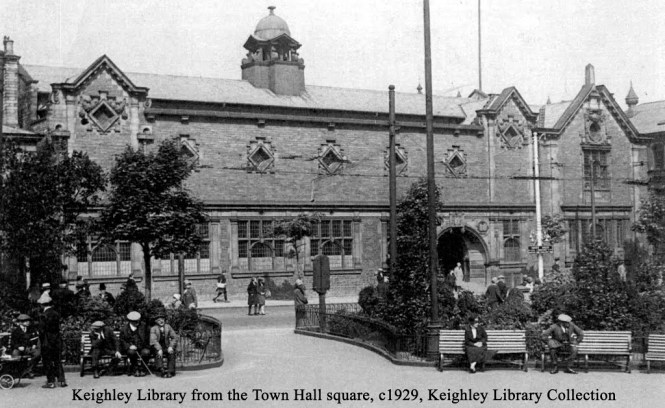
Keighley Library view c1929corespondence 1899

The Carnegie Corporation of New York

Andrew Carnegie established this in 1911,

“to promote the advancement and diffusion of knowledge and understanding,” it is one of the oldest and most influential of American grant-making foundations

“The Corporation has devoted unremitting effort toward the two issues Andrew Carnegie considered of paramount importance: international peace and the advancement of education and knowledge.”  https://www.carnegie.org/about/our-history

The Carnegie UK Trust

Established in 1913 by Scottish-American philanthropist Andrew Carnegie:

“We have sought to deliver this mission in a number of ways over the past 100 years – investing in libraries, public space, further education, social work, children’s rights, rural development and many more…”

https://www.carnegieuktrust.org.uk


Gina Birdsall, Keighley Local Studies Library
Late to the Game

robgrilloOn Saturday Bradford Local Studies Library hosted a talk by Rob Grillo, author of several sporting histories. His new book ‘Late to the Game’ covers the introduction to and early years of football in Bradford as it took over from rugby as the main winter sport. However it took the round ball game a long time to come to the West Riding and to Bradford in particular. The book is the sixth in a series of volumes in the Bantamspast series published by John Dewhirst who introduced the talk.

In his talk Rob explained how Bradford had many early failed attempts to create a successful soccer team in the late 1880s and how the current Bradford City AFC was founded in 1903. In the book there is a section on the women’s game and the reporting of early exhibition games before the FA banned women from playing on FA grounds in 1921. The book covers the successful Bradford schoolboys team, English champions in 1916 as well as details of all of the teams around the city including Bingley and Shipley.

A big thank you from Local Studies to Rob Grillo for a great morning and for sharing his expert knowledge and detailed research in this often neglected area of Bradford’s social history.

‘Late to the Game: The origins of association football in Bradford and the story of its pioneering clubs’ by Rob Grillo (bantamspast 2019) 9780956698490

‘The Origins of Soccer in Bradford’

‘The Origins of Soccer in Bradford’

A talk by Rob Grillo with an introduction by John Dewhirst

Bradford Local Studies Library,
Margaret McMillan Tower (side entrance), Princes Way,
BD1 1NN

Saturday 8 June
10.30am-12.00 noon

FREE
All welcome

For further details and to book a place please contact Bradford Local Studies Library on 01274 433688 or email: local.studies@bradford.gov.uk

During the second half of the nineteenth century Bradford established a proud reputation as a leading centre of sport and was known for the enthusiasm and prowess of its sports clubs. Bradford City and Bradford (Park Avenue) football clubs need no introduction, but over the years there have been a myriad of amateur football teams that have strived to better themselves.

Rob Grillo is the author of several sporting histories. His most recent book ‘Late to the Game’ covers the early years of association football in Bradford.

late to the game book cover 3

He will speak about his research findings; the early teams and league and cup competitions in the city as well as the early pioneers of the sport. He will also explain how the growth of soccer in the West Riding in the early years was affected by the region’s professional rugby league clubs.

John Dewhirst is well known for his interest in the history of Bradford sport in particular football and Bradford City AFC. He was co-founder of the City Gent fanzine and has authored several books in the BantamsPast series.

Come along and meet these two experts. Hear about the remarkable story of Bradford’s sporting history and there will be the opportunity to ask questions after the talk.

There will be a display to accompany the event which will remain in the Local Studies library until the end of June.

team photo 2the art of dribbling 4


Gary Cavanagh and Noise of the Valleys -Bradford Local Studies Library

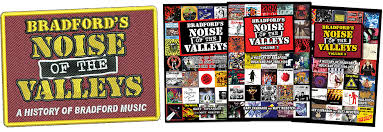
Earlier this year, Gary Cavanagh one of the co-authors of Noise of the Valleys books, gave a talk at Bradford Local Studies Library on the music scene in Bradford and surrounding areas. He focused upon musical acts from the 60’s to the 80’s and mainly upon the more mainstream and ear friendly artists which included a band called Three Good Reasons  from Keighley that reached no 1 in the Dutch charts with a cover version of the Beatles ‘Nowhere Man’!

GC

He also charted the history of the hidden musical gems of the area whilst giving the backstory to better known artists like Kiki Dee and her history with Motown and even Bingley’s Rodney Bewes with the single for the theme tune from his first sitcom, on which he performed the vocals. Gary outlined his quest to seek out these and other rare tracks for his ‘Noise of the Valleys’ project which now comprise of 14 CDs worth of music from the local area and two volumes of books.

It was an informative and entertaining talk and Gary’s enthusiasm for and knowledge of the local music scene and its history and importance shone through and some  members of the audience remembered going to the old venues and clubs he mentioned in association with the artists and bands. The talk was interspersed with snippets from rare tracks including a song from Keighley’s own Linda Russell and former Shipley based American soul star Tommy Hunt!

The Noise of the Valleys books and CDs are a real labour of love for Gary Cavanagh and Matt Webster and an important preservation of the rich spectrum of local music heritage for the people of Bradford and surrounding areas.  Volume three of the books which will cover the era 1999-2009 is currently being compiled and written. You can support this project here:

https://www.bradfordnoise.com/

NOV


Peaceful Women

Bradford and Keighley Local Studies Libraries celebrated International Women’s Day with a series of events over the week featuring ‘Peaceful Women’  by local author, playwright, actor and historian, Irene Lofthouse.

Irene Lofthouse took on the role of ‘Mrs Norton’, an ordinary working class woman actively involved in the campaign for social reform who is given just a few lines in a Bradford newspaper of the time and then lost in history until now.

Over the week, we were pleased to welcome school classes from Worth Valley Primary, Fagley Primary and Beckfoot Allerton Primary as well as Keighley Association for Women and Children, Keighley Women’s network and a great turnout from the general public on the mid-week performance.

‘Peaceful Women’ looked at the era following the end of WW1 and the efforts to use peaceful methods for change.

The performance explored the stories of local women of the time who campaigned for peace during WW1 or for rights following the end of the war. ‘Mrs Norton’ characterised each person through voice and props. The interactive performance raised awareness of known and hidden histories of local women and their impact locally and nationally through an entertaining and educative piece of theatre.

Some of the women included, campaigned for peace in WW1 such as Fanny Muir and Esther Sandiford from Bradford Women’s Humanity League/Women’s Peace Congress.

Also included were those who campained for social reform after WW1 such as Julia Varley, Ethel and Philip Snowden, Margaret McMillan, Bradford MP Muriel Nichols and Barbara Castle. Margaret Wintringham from Silsden was the first British born woman to take her seat  in the House of Commons.

Local archive materials and Electoral Registers from the local studies collections were on display. Bradford Local Studies Electoral Registers began in 1848 and Keighley’s registers began in 1882 when the town was incorporated.

Pictured below are some of the items from the Local Studies collections on display at the event.