Late Summer Local Reads

The passing game book cover

This is a heartwarming autobiography from former professional Keighley Rugby League player, David “Pete” Adamson, now living in Texas, but still following “the passing game”, that has been such an influence on his Keighley youth, career in the armed forces and as a trainer in his retirement years.

Both David’s parents were from Keighley and though he was born in Wath-on-Dearne in 1942, he returned to Keighley with his mother after the early death of his father.  His mother, Mary, was one of ten children and had taken work in the local Keighley mill from the age of 11, crawling under the machinery to pick up bobbins that had fallen on the floor. On returning to Keighley, she returned to the textile trade with a job at Knowle Mill (formerly Heaton Mill) to support herself and her son.

David’s father, Sidney, had played rugby in Keighley and his influence led to David’s lifelong passion for the game. This is a story of hard times and good and how the game supported him and brought joy into his life, even during his army service abroad. David writes about his times as a player for Keighley Albion Amateur Rugby League Club and his professional play for Keighley RLFC.

The book is dedicated to his lovely wife, Miriam, who, when they recently lived over here in Haworth for a while, volunteered in Keighley Local Studies Library. Miriam even joined us recording her research into stagecoach travel from Keighley in the 19th century, it’s still available, check it out on this website:

https://bradfordlocalstudies.com/2019/11/14/christmas-day-and-the-keighley-stagecoach/

Miriam also produced an index of Brontë images that is used by staff and customers alike. https://bradfordlocalstudies.com/2019/03/12/bronte-images-116-years-of-bronte-studies/

Thanks once again Miriam and David for the generous donation of books to Keighley Library.

Newspaper cuttings

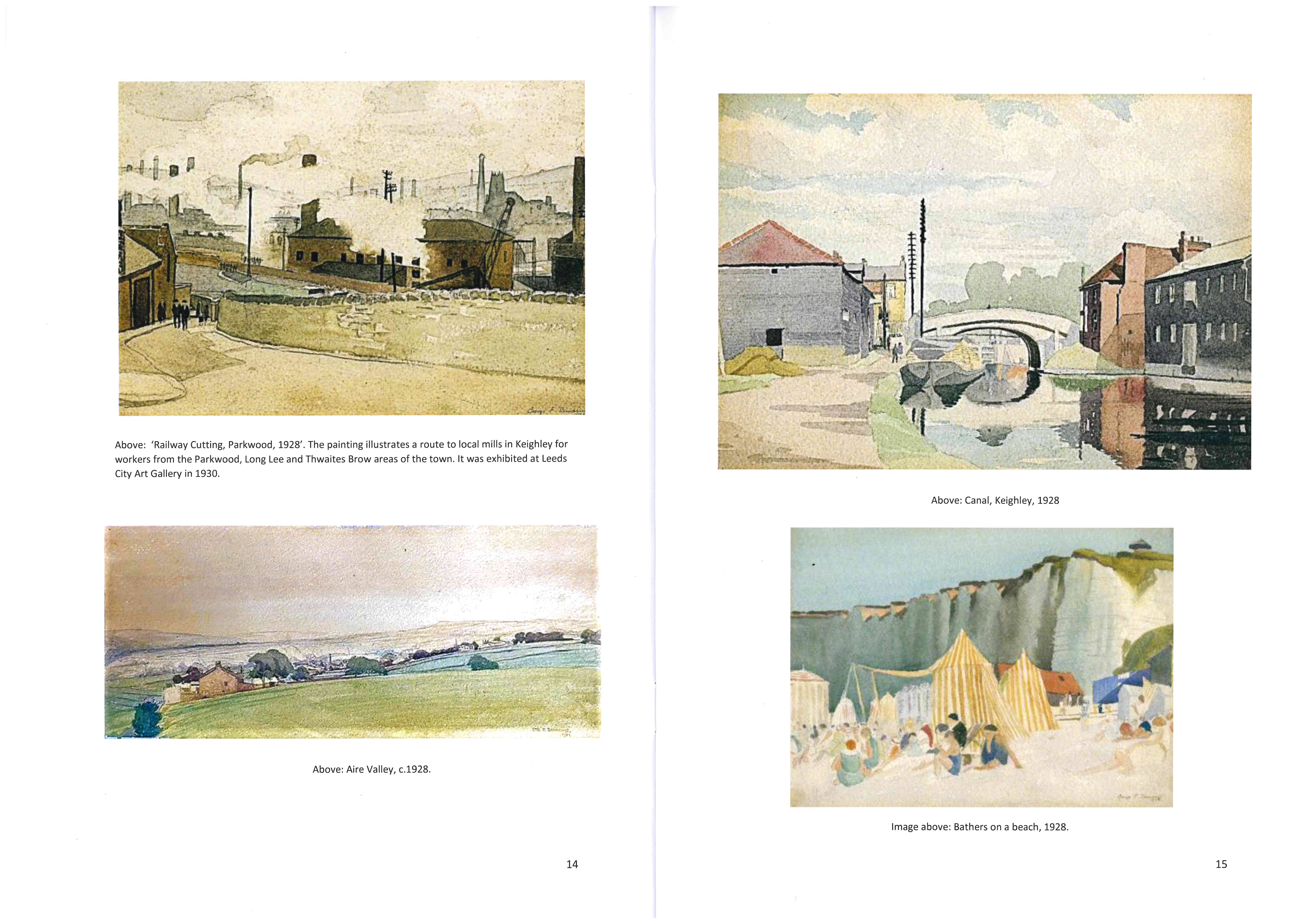
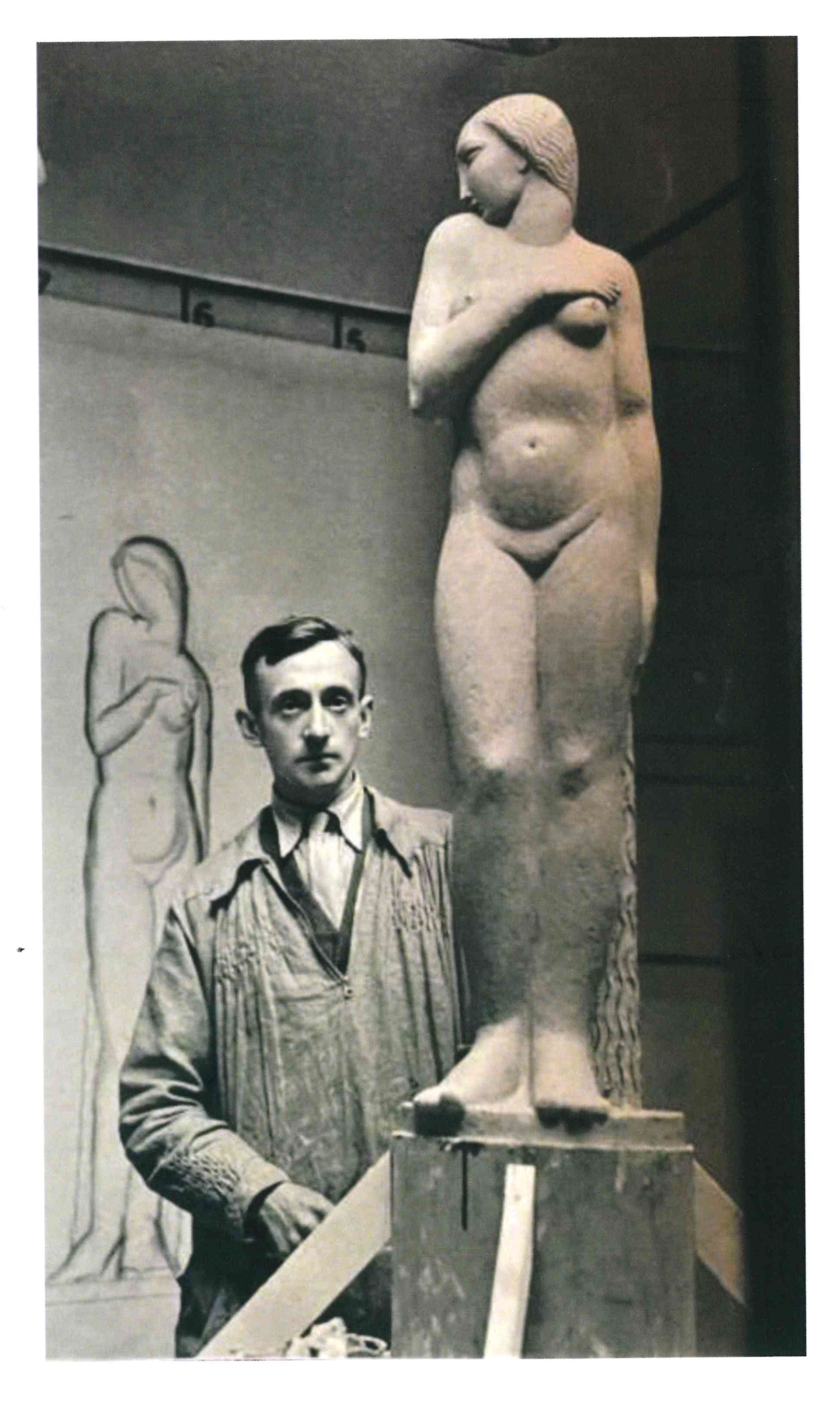
The Courage of his Convictions: The Life and Work of George Demaine
by Colin Neville (ISBN: 978-1-0682899-0-3)

This fully illustrated book is number eleven in the Not Just Hockney series of books on the work of past artists in the Bradford district. The full list of titles can be found on the Home page of the website at www.notjusthockney.info   Keighley Local Studies Library presently has 2 copies available for loan, more to follow soon.

George Frederick Demaine was a committed Methodist, husband and father; a talented painter, sculptor, model-maker, film set designer. He received his initial training at the Keighley School of Art at the Mechanics’ Institute. As a Conscientious Objector during World War One, he was imprisoned.

Colin Neville goes on to say,

“For those men that enlisted or were conscripted into the armed services, their courage came, not so much in their enlistment or acceptance of conscription into the services, but how they responded later. Their courage came from standing alongside their comrades once the real bloody horror of this war was exposed to them. Millions paid the ultimate price for this.

For George Demaine, the nature of his courage was to stand firm to his principals; principals that shunned participation – in any way, shape or form – that served this particular and pointless war. This was a courage in the face of open, bitter and sustained hostility from all sides.

But unlike the Fallen of the Great War, George lived. He lived to become a creative member of society in general, and in particular during World War Two, when he used his artistic talents to save lives and property from enemy bombing. Commitment, courage and talent of the type displayed by George Demaine always deserves recognition and its place in history.”

As usual, for Not Just Hockney publications, the book is beautifully illustrated, this time with kind permission from John Demaine, grandson of George Frederick Demaine.
New locally based Summer reads in literature and history

“The Indefatigable Asa Briggs”

ISBN 978-0-00-855641-9 (William Collins, imprint HarperCollins, 2025)

Out on the 14th August, this first, comprehensive biography of Asa Briggs has received excellent reviews in the press. Find out how this scholarship boy at Keighley Boys’ Grammar School became, “one of the best-known historians of his generation, his name on a cover a guarantee of substantial sales,” champion of the Open University and the WEA.

Written by critically acclaimed biographer Adam Sisman, who visited Keighley Local Studies for local research, this biography is impressive in detail but reads well and entertainingly, as is to be expected from an acclaimed biographer of historians, Huge Trevor-Roper, A.J.P. Taylor as well as other important cultural and literary figures Boswell, Wordsworth and Shelley and most recently John Le Carré.

Particularly fascinating is Sisman’s careful reveal of the developing historian from student through to maturity – from his own background in the newly urbanised non-conformist culture, economy and local politics of his Northern hometown through WW2 events, global travel and study and the influence of other working historians during his time at, among others, Cambridge, Oxford and Leeds Universities.  Later, one can also draw parallels with the champions of Keighley Mechanics’ Institute, of which Briggs’ grammar school was a part, and Briggs’ own championing of the value of education for all, through his dedicated involvement with the Open University, the WEA and the Commonwealth of Learning.

Briggs may have felt frustrations in his life that this biography does not ignore, but he still achieved much and was one of the great visionaries who fuelled the meritocratic changes in post war England, widened the scope of educational opportunities for generations, and wrote history that was about the many, and written for everyone to consider and interpret, not just a privileged few. A fine legacy indeed.

Comments:

His work remains significant, and his life story offers valuable insights into the intellectual and social history of his time. Summary comment William Whyte, Literary Review, August 2025

“The historian Asa Briggs was both a jet-setter and a grafter, as this superb biography shows…”

Ian Sansom, the Daily Telegraph, 2 August 2025

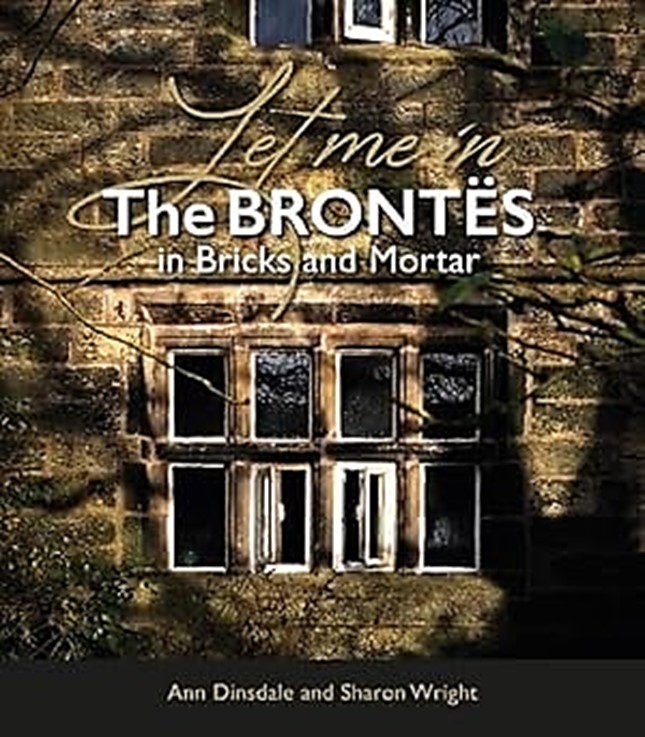
“Let Me In: The Brontës in Bricks and Mortar”

ISBN:  978-1-91-422779-0(Great Northern Books Ltd, 2025)

Ann Dinsdale (author and Principal Curator of Haworth Parsonage Museum) and Sharon Wright author (“The Mother of the Brontes”), journalist, and playwright, have joined their great knowledge and expertise and buddied up to produce a lively, beautifully illustrated and fascinating book on some of the buildings that inspired the Brontë sisters and their writing and housed the remarkable and challenging lives of Brontë family members.

Their journey takes them around Britain and Ireland as they get privileged access to private houses and reveal the history of these buildings and their inspiration for the Brontës. Brontë Parsonage secrets and those of their Thornton birthplace are revealed, as are the legends and ghosts of the real Wuthering Heights. We go to Ulster and Cornwall to look at their family heritage influences and these literary supersleuths even follow Branwell on a Victorian pub crawl around the inns and taverns that he visited.

The book is beautifully written in the voices of these two acclaimed authors who have certainly done their homework, providing an entertaining and always well researched read. If you needed any kind of bonus, there is an exclusive interview with award-winning writer and director Sally Wainwright who reveals why and how she built an eerie replica of Haworth Parsonage in the 1840s on the moors for her BBC biopic, “To Walk Invisible” and the foreword to this classic is written by Rebecca Fraser, author and broadcaster. For those of you who wonder where Brussels is in all this, there are masterly plans afoot for a sequel investigation so don’t put away your travelling cape and magnifying glass yet.

Comments:

‘A gripping tour through time with the Brontë house detectives.’ Araminta Hall

‘Personal and poetic, authoritative and richly evocative, this is a biography like no other: a family history laid out in brick and stone.’ Kathryn Sutherland

‘Full of insight, compassion and exciting new discoveries’ Stacey Halls

Local Library Collections and the Camera in Local History. A Celebration for Local History Month

Over the last couple of years Elizabeth Edwards, Professor Emerita of Photographic History at De Montfort University in Leicester, and until recently Andrew W, Mellon Visiting Professor at the V&A Research Institute, London, has been making periodic academic study visits to Keighley Local Studies Library. Elizabeth is the author of the ground-breaking study, The Camera as Historian, and generally hopes to raise awareness of library photographic collections that she feels have been much neglected in academic and heritage circles. Elizabeth generously offered to write a blog for us and in so doing, gives us a brief but fascinating insight into these valuable collections, their regional and national importance, and the vital role played by libraries in the development of local history.

The Camera as Historian

Survey Volumes

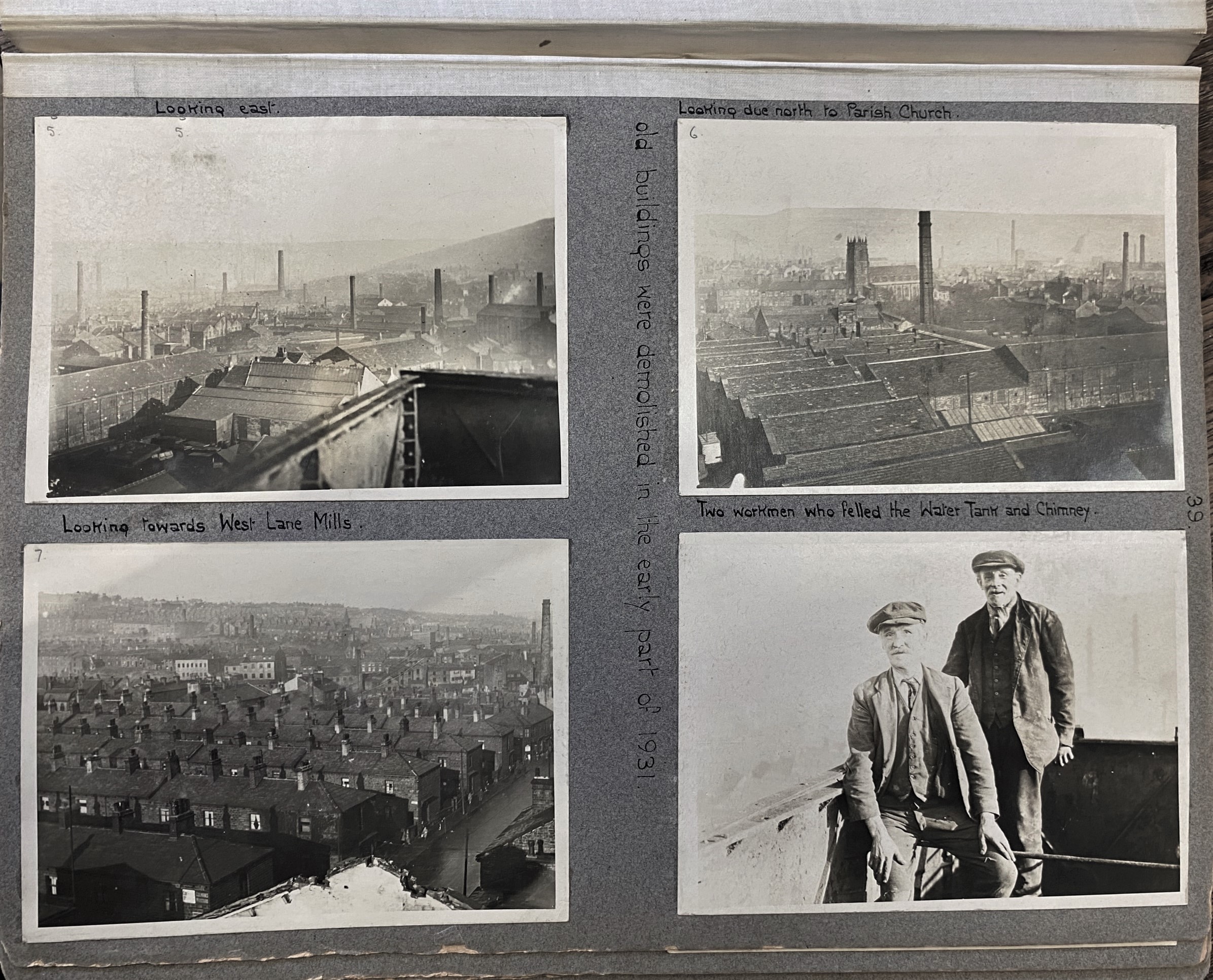
Among the local studies treasures in Keighley Public Library is a set of 6 bound volumes of photographs. That they are little known is the result of the almost total neglect of the photographic holdings in local studies libraries more generally, despite the distinguished social historian Raphael Samuel referring to them as the lifeblood of local histories. Certainly, many local historians have used the photographs productively in their work. But to really appreciate what is at stake, we have to think about the photographs collectively, as an assemblage, which came into being with a clear purpose, and with work to do in civic society.

This is where the 6 volumes come in. While they are just part of a larger collection of historical photographs in the Library, they represent a cornerstone, both as a collection and more especially as a purpose. They are described from the outset as a ‘photographic survey’ – as embossed on the spines of the volumes. They were donated to the new Library in 1911. However, their genesis was a couple of years earlier, in 1909, when Keighley Photographic Association formed a sub-committee to undertake a photographic survey.

They were inspired, according to an article in the Keighley News, by Birmingham MP Sir Benjamin Stone who was a keen amateur photographer. In 1897 he founded the National Photographic Record Association to which he hoped that local photographers and photographic societies would contribute, creating a national record of ancient buildings, folk customs and so forth. Stone seems to have been something of a thorn in the flesh of the photographic world with his pronouncements on how photographs should look and what they should do. He hated forms such as pictorialism (as practised by Keighley’s famous photographer of the early 20th century Alex Keighley) which he, Stone, referred to as ‘fuzzigraphs.’ So while many surveys give lip-service to Stone, most went their own way, working and thinking locally, bringing local knowledge and networks to bear on their production.  For all the razmataz, Sir Benjamin’s national association failed because he tried to turn into a national centralised archive, something that was profoundly local, tied to local desires and local civic and civil society.

Photo Album

Writing about the photographic survey movement, which emerged in the 1890s, has tended to characterise it as nostalgic, ruralist, conservative – anxious about the loss of the ‘old ways’. In 2012 I published a book The Camera as Historian which argued against this position. Instead I suggested that the surveys were driven not so much by a sense of loss, but one of local dynamism, and a fear not of a direct fading away, but of a future that had no sense of its past. These sentiments resonate through Keighley’s survey photographs, recording as they do, civic and national events from wars to elections and charity events, street scenes, the demise of horse-drawn trams, the advent of electric trams, the modernisation of factory plant, slum clearance, everyday life and much else. They also copied older photographs, many of which map civic society in the modern town – the postmasters (and one postmistress), the chiefs of the local constabulary, the medical officers, and local teachers – people who made up the infrastructure of the town. Consequently, Keighley’s survey is concerned not with the quaint and picturesque, but with the changing face of a modern industrial town.

Photo Album

Unfortunately, I didn’t know of the Keighley survey when I finished the manuscript for that book about 15 years ago. If I had it would only have reinforced my argument. Because it really stresses the ways in which local identities were being played out. Yes, one can make arguments about who was doing the photographing (the expense of photography meant that most photographers came from the broad middle classes) but it would be a mistake to narrowly define them and reduce them to that. They were photographing in the contexts of a broadly liberal, non-conformist, philanthropic environment, where photographic skills in relation to survey were seen as a contribution to the civic and civil body. The photographs in the albums trace the presences and life experiences of a multitude of Keighley citizens and their families if one cares to look – and think. It has the feeling of a collective being.

Scrapbook

The Library itself is an important player here. It was seen as the proper place for the survey albums, which were added to until about 1936. And Keighley is not alone here. A good many of the surveys were donated to public libraries or in some cases, such as Norwich or Dundee, were the result of a direct collaborative relationship, commission even, between public libraries and photographic clubs. I have become so interested in the role of public libraries in the development of local history, and more broadly, in a sense of local identity and local particularities, that they have now become part of my current book project. This explores the role of photography in an increasing, yet dispersed, sense of the past, which is manifested through everything from picture postcards, illustrated guidebooks, or the management of ancient monuments (the extensive visual presence of Kirkstall Abbey in west Yorkshire narratives is a good example here), to family albums, and even cigarette cards – and a multitude of photographic places in-between.  And Keighley will most definitely be playing a major role in that argument.

Elizabeth Edwards

****************************************************************

Elizabeth Edwards has generously donated her book, The Camera as Historian, Amateur Photographers and Historical Imagination, 1885-1918, (Duke University Press, 2012) and it will shortly be available for reference in Keighley Local Studies library.

Some publications by Elizabeth Edwards

Photographs and the Practice of History: a short primer. (London: Bloomsbury, 2022)

What Photographs Do: the making and remaking of museum culturesed. E. Edwards and E. Ravilious. (London: UCL Press, 2022) available as open access free download: https://www.uclpress.co.uk/products/192312

Raw Histories: Photographs, Anthropology and Museums (Oxford: Berg, 2001)

Anthropology and Photography: A long history of knowledge and affect (Taylor & Frances Online, 30 Nov. 2015)

Photography, Anthropology and History: Expanding the Frame, ed. C. Morton and E. Edwards (Aldershot: Ashgate, 2009)

Sensible Objects: Colonialism, Museums and Material Culture, ed. Chris Gosden, Ruth B. Phillips, E. Edwards (Oxford: Berg:Routledge, 2006)

Keighley Local Studies Team

Book Review: The Mother of The Brontës: When Maria met Patrick. By Sharon Wright

The Mother of The Brontës: When Maria met Patrick. By Sharon Wright. Pen-and-Sword Books, 2019. 182pp.

Maria, let us walk, and breathe, the morning air,
And hear the Cuckoo sing,
And every tuneful bird, that woos the gentle spring.

(‘Lines, Addressed to a Lady on her Birth-day’ by Patrick Brontë)

After the flush of books published recently on her children and husband celebrating their various anniversaries, it’s nice to see this full-length work on Maria Brontë (née Branwell). So often Maria remains in the shadows but now, in this excellent book by Bradford-born journalist and playwright, Sharon Wright, she features in her own right.

The book opens with a wide-ranging, absorbing, and impressively detailed account of Penzance in the late 18th century. This is followed by an account of Maria herself, her upbringing, her large and complex family, and their social, religious, military and political worlds. A picture emerges of a bright, independent and mature young lady, cultured, religious, and at home in a middle-class social scene.

Well charted is the chaos at Woodhouse Grove School at Apperley Bridge from where Maria’s aunt, Jane Fennell, pleaded for the help of her practical and level-headed niece. Here Maria was courted by the school’s examiner in classics, Patrick Brontë. There is a full account of the couple’s unusual wedding ceremony, including a description of the wedding clothes researched by dress historian Eleanor Houghton, and a lyrical account (imagined) of the wedding parties’ three-mile walk to Guiseley Parish Church.

An edge is taken off the romance by the reminder of the troubled background of England in 1813. The French Wars were sucking the country dry, the industrial revolution was laying waste to traditional employment, and a series of poor harvests combined with high prices was causing widespread hunger among the poor. Maria must have welcomed it when the couple and their growing family moved to Thornton which had a cultured society somewhat akin to that enjoyed in Penzance.

The old Thornton was a sizeable village with the parsonage fronting a busy road. We learn from church records that the parsonage had a stand for a cow and a horse, not that Patrick could afford a horse, but some of his visitors could. An analysis of socialite Elizabeth Firth’s diary helps to chronicle visits made and books read by people in the area. Both Patrick and Maria found time to write and Maria’s sole surviving essay on the Advantages of Poverty, as with her letters, is reprinted in full; though with the annual arrival of babies plus young children to look after, Maria would have had little time for writing and socializing, even with the appointment of Nancy and Sarah Garrs as servants.

With the move to Haworth we are on more familiar ground. The disputes with the Haworth Church Land Trustees and Patrick’s early duties in front of a resentful congregation are well chronicled. ‘The inhabitants of the hilltop town were hard working, hard drinking and hard to impress’ writes our author. But Maria’s elegance, fashionable dress, and her ease with social elites did her husband proud. Though all too soon the sad, long, and painful death of Maria followed. The burden placed on Patrick with six young children and a large parish led to the summoning of Maria’s sister, Elizabeth, from Penzance, to help out.

Author Wright’s wide experience as a journalist on regional newspapers has paid handsome dividends as shown by her wide ranging research and easy writing style. She quotes from the Lady’s Magazine, featuring ‘gothic bluebooks’ and ‘shilling shockers’ which were  high on the publishing scene in the early 1800s. She paints a delightful picture of both Maria, and later, her daughter Charlotte, curled up in a chair reading this mutually-owned magazine, and probably enjoying the same stories. It was all a long way from Sunday School!

This is a fine book. It is no surprise that the publishers needed a reprint. The book does not merely chronicle the life and times of the mother of the Brontë children; it puts her centre stage as an influential life-enhancing individual who played a major part in the family’s life and their subsequent development and success.

Bob Duckett

Undercliffe Cemetery and Nancy De Garrs

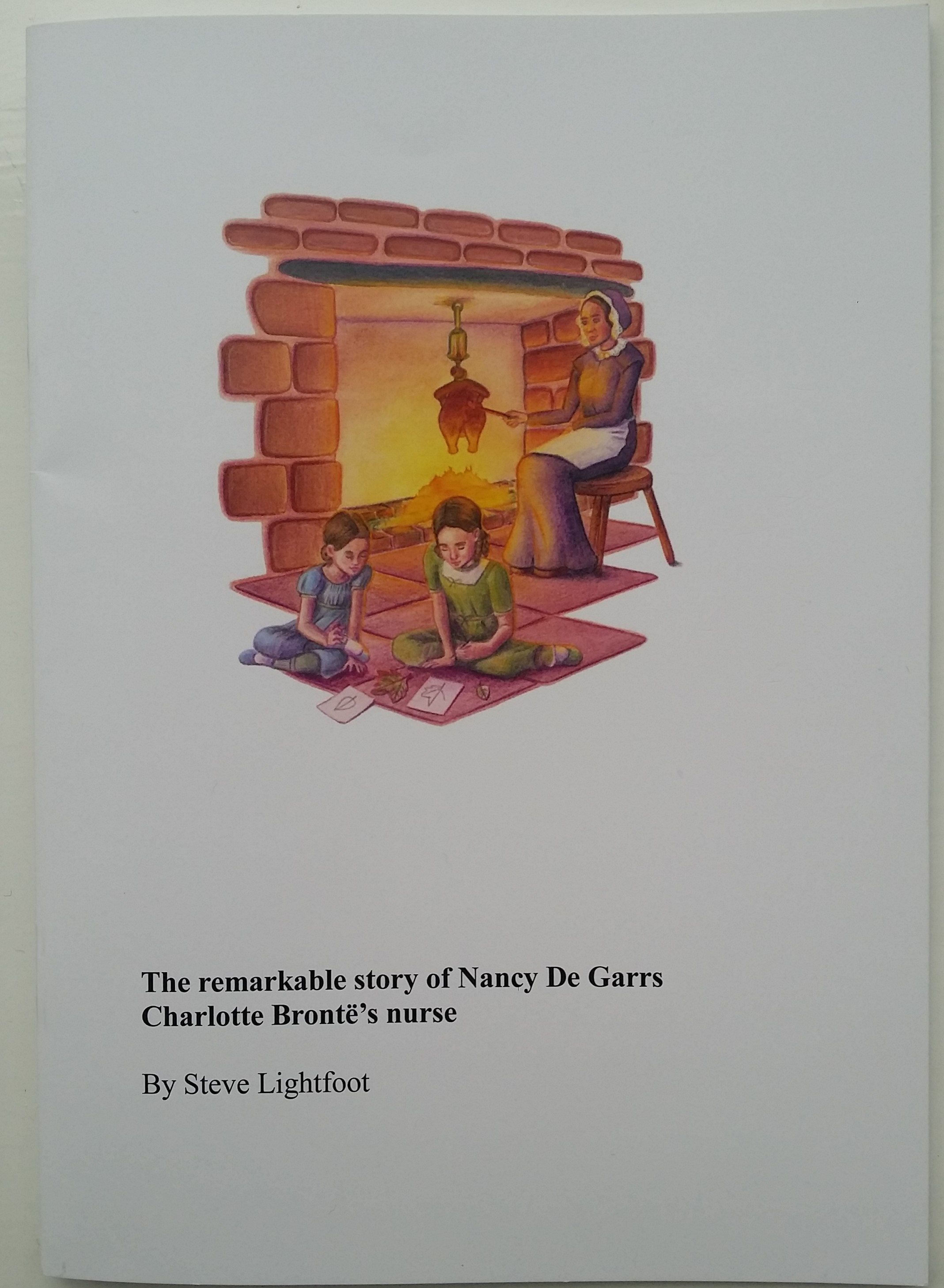
The article here was kindly sent in by Steve Lightfoot, Undercliffe Cemetery Volunteer and author of the recent publication ‘The remarkable story of Nancy De Garrs Charlotte Brontë’s nurse’

Recently the Undercliffe Cemetery Charity have been building a team of volunteers to research some of the more well known occupants of the cemetery. The first task was to install QR codes on the six listed monuments so that visitors to the cemetery could find out more about the people to which the monuments were dedicated. The volunteers then moved on to the so called Bradford Worthies, of which there are many. These were some of the most important people in Bradford’s history, including more than twenty of Bradford’s Mayors, who are buried at the cemetery. As new research is completed the information is posted on the Undercliffe Cemetery website under the history section. So far approximately thirty of the Worthies have been researched. Some of the grave sites have magnificent monuments but others are unmarked. Regular tours of the cemetery take place to raise funds for maintenance. The volunteer guides take visitors to some of the most interesting grave sites to tell the story of Bradford’s history and the people who made Bradford the place that it is. At one time of course it was the wool capital of the world.

During the research the location of Nancy De Garrs grave was finally found, underneath some undergrowth, and unmarked. Nancy was Charlotte Brontë’s nurse, she served the Brontës for eight years and helped to bring the Brontë children up at Thornton and Haworth. It was known that Nancy was at Undercliffe but nobody knew where. She died in the Bradford workhouse and could have well have ended up in a paupers grave. After some research it was found she was buried as Nancy Malone. The records showed the plot number and the maps showed the location of this, but who were the other people buried with her, Mary Stocks, James Scholey and John William Scholey. We just had to find out, and why was the grave unmarked? The last twelve months have revealed some fascinating detail about the life of Nancy De Garrs. Having found just how important Nancy was in the life of the Brontës the Charity have decided to launch an appeal for funds for a headstone to be erected and for the area to be made safe. Future visitors to the cemetery will be able to find out more about Nancy and her life with the Brontës and after. A booklet has been compiled and is currently being sold in bookshops in Haworth, in the tourist office in Bradford and in other locations in Thornton and elsewhere. All money raised will go towards paying for the work required to get Nancy a headstone and to make the area safe for visitors. So far we have had good publicity from the Telegraph and Argus, the Sunday Express and the Times but more funds are needed. Donations can be made through the Undercliffe Cemetery website or by purchasing one of the booklets. A provisional date has been fixed for the 9th May  2020, by which time, providing enough funds can be raised, the stone will be in place and a service will be conducted. See website for details of forthcoming events.

Steve Lightfoot
Undercliffe Cemetery Volunteer

undercliffe cemetery (2)

A Review of the Book

The Remarkable Story of Nancy de Garrs, Charlotte Brontë’s Nurse. By Steve Lightfoot. 2019. 32 pages.

Nancy Garrs was born in 1803, the oldest in a family of twelve children. Her father, Richard De Garrs, was a shoemaker of French descent who had a shop in Bradford. Nancy and a younger sister Sarah (b. 1806) went to the Bradford Industrial School where they learnt housekeeping and childcare skills. In 1816, aged 12, Nancy went to work in the Brontë’s Thornton home to look after the three young Brontë children. Three more children later, sister Sarah came to assist, with Nancy promoted to be cook and assistant housekeeper. In 1820 the Garrs twosome accompanied the Brontë family in their move to Haworth. Here they experienced the sad early years there and the coming of ‘Aunt Branwell’ (‘cross like and fault findin’). After serving the Brontës for eight years, Nancy left in late 1824, shortly followed by Sarah, when the oldest Brontë children went to Cowan Bridge School.

Nancy then worked as a dressmaker, marrying John Wainwright in 1830. They had two children, Emily Jane and Hannah. Significantly, Nancy signed her wedding banns with ‘her mark’ (which I found a surprise, Nancy having lived in such a literary household). Husband John, a wool comber, later an engine tenter, died after a horrific accident at work in one of Titus Salt’s Bradford mills. He was buried in the Dr Garrs family plot in Bradford where four of Nancy’s sisters were buried. The 1841 census shows Nancy and a daughter living with sister Sarah and her children, just a few doors away from their sister, Martha, who had married Benjamin Hewitt. Clearly the families were supporting each other, with their parents also nearby. In 1844, Nancy married Irishman John Malone, a warehouseman. After John’s death in 1881, Nancy fell into poverty and three years later she was taken in at the Bradford Workhouse, where she died in 1886 aged 82.

Of her years with the Brontë family, author Steven Lightfoot highlights a number of incidents and myths – of Mrs Gaskeill’s hurtful remarks in her Life of Charlotte Brontë; of the confusing comment of Patrick’s about Nancy leaving the parsonage to marry a ‘Pat’ – not in 1824 she didn’t! And there is new information about the Brontë mementoes that Nancy had, of how they were displayed in a public bazaar in 1885, acquired by John Widdop, a son of Mary, another of Nancy’s sisters, and how they may have been sold to alleviate Nancy’s penury.  Other members of the Dr Garrs family are briefly featured, notably her brother Henry, and sisters Ruth (who married John Binns) and sister Sarah, who married William Newsome in 1829, had five children, and eventually settled in Iowa, USA.

This focus on Nancy and her family circle does a good job of widening our knowledge of the social context of the time.

Bob Duckett
Past Editor Brontë Studies and The Bradford Antiquary.

Book (2)