Emily Jane Brontë – 200th year celebrations of her birth

The years of Brontë anniversary celebrations continue in to 2018 with the 200th anniversary of Emily Jane Brontë’s birth on 30th July 1818. Emily is probably the most controversial sister of the three to survive into adulthood and be published. Whereas Charlotte’s and Anne’s characters and influences are more clearly defined and documented by themselves and their contemporaries, still little is known of Emily’s inner life and full and true character, despite gleanings from her sisters’ observations and their associates. Wuthering Heights, Emily’s only published novel, similarly continues to confound and disturb readers and literary critics alike, while her poetry is much admired and reflects the truest love of Haworth’s moorland and its natural world.

This year will see some wonderful celebrations of Emily’s life and works in film, music, talks, tours and moorland walks, including the launch of the Brontë Stones, a unique celebration of the Brontë’s legacy. Check out  the Brontë Society, and Parsonage Museum’s fabulous events and workshops will continue throughout the year, please see:  www.bronte.org.uk/whats-on

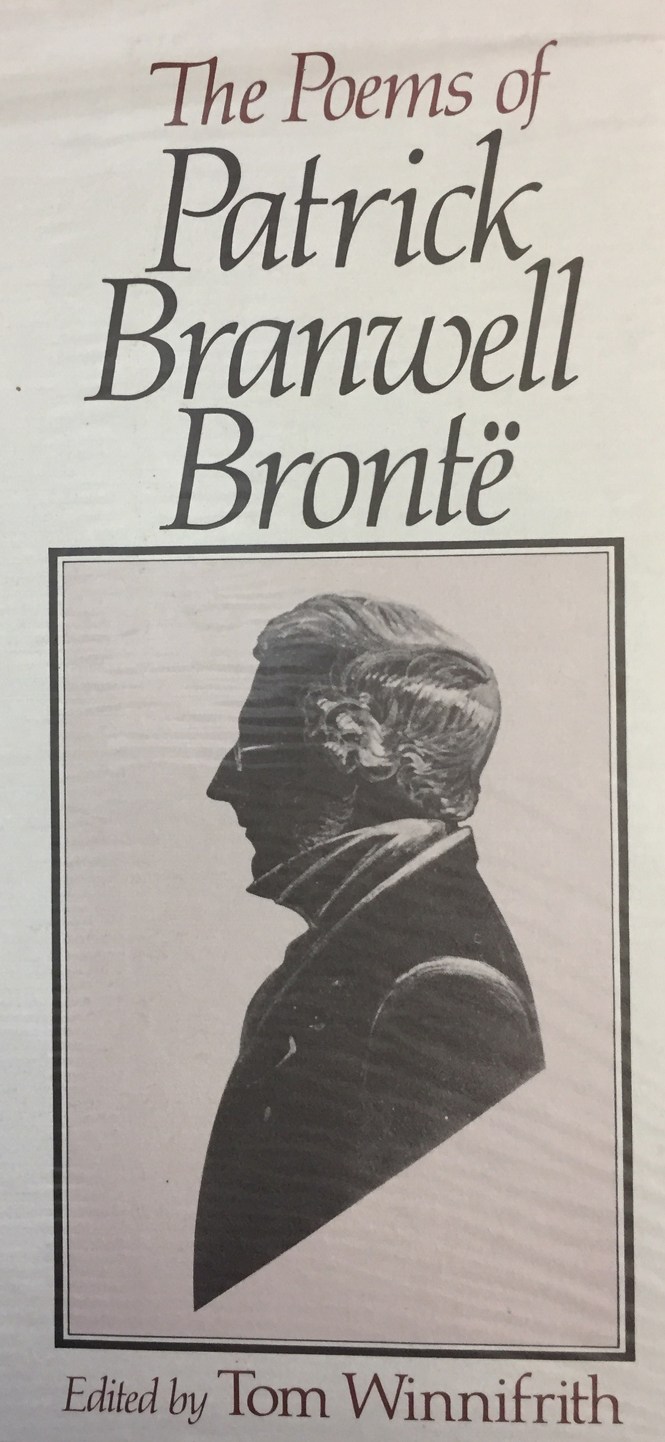
brontedisplay


Nowhere can compete with the Brontë Society Collections, Museum and Parsonage Library in Haworth  but Keighley Local Studies Library is proud to be Bradford Council’s repository for a very important collection of books, articles and news cuttings, including a small archive on the Brontës and Haworth in general. In these anniversary years, the Library is adding to this with newly published works reflecting contemporary scholarship and the latest research, with book stock for both reference and for loan. (Please see list of new books below) We also have a new fact sheet on Emily Brontë and this accompanies the full booklet about the Brontë collection and other leaflets celebrating the Brontë family and their contacts in the local area, please see:

www.bradford.gov.uk/libraries/local-and-family-history to download  free copies  or better still, call into Keighley Library to pick up a copy and see the collection for yourself. The library is open daily from 9am until 7pm and on Saturdays 9 am-5 pm, closed Sundays.

Telephone: 01535 618215; email: keighleylocalstudies@bradford.gov.uk

Emily Bronte New Books

Bradford’s Police History

During July, Bradford Local Studies Library hosted a display on Bradford’s Police History. The display has been co-produced by the Ripon Museums Trust and the  Bradford Police Museum and has been well received by customers in the Library.

Book Review: Percy Monkman – An Extraordinary Bradfordian

Percy Monkman – An Extraordinary Bradfordian. By Martin Greenwood. PlashMill Press (www.plashmillpress.com), 2018. 226 pages. Softback. A4 format. ISBN: 978-0-9572612-9-7. £24.49.

Available from Bradford Libraries

PM

A job in banking, a life in the arts.

The above quote from a section heading in this book neatly epitomises the life of Percy Monkman (1892-1986), a local celebrity in Bradford and the West Riding. He was born in Bradford and after spells as an office boy in Swan Arcade and Manningham Mills, and by another in army service (1915-19), Percy worked in Becketts Bank (which later became a branch of the Westminster Bank). He worked in the same bank for forty years, ending up as chief cashier. By night, at weekends, and on holidays, however, he was an entertainer, actor, cartoonist and watercolour painter of the Dales, the Brontë country and Bradford, whose work was acclaimed by the public and held in great respect by colleagues. He had many friendships, including a life-long one with near neighbour J B Priestley.

Percy came from a humble, non-conformist, working-class family in a closely-knit local community in the Toller Lane area of Bradford. Leaving school before he was fourteen, he received only a basic education. War service saw him develop his entertaining skills!  He joined the Bradford Civic Theatre in 1935 and was made a Hon. Life Member in 1974. He was the solo actor in The End, which was awarded one of the Ten Best Cine Films of 1960. His appearances on stage at the Bradford Civic Playhouse are listed here and we learn that from 1935 to 1958 he performed on 214 occasions in plays by such as Gogol, Ibsen, Shakespeare, Emlyn Williams, Christopher Fry, Jonquil Anthony, James Bridie and Priestley.

Percy was highly creative, talented and energetic, a man who achieved high standards in all his artistic activities. He joined the Bradford Arts Club in 1922, was Vice Chair in 1950, Chairman in 1963, and President in 1977. He won numerous prizes for his watercolours, many of which are reproduced here, and received commissions and made sales. He was also a member of the Yorkshire Watercolour Society.

In passing we note Percy’s family life – four brothers and three children; his friendships with lawyer Roger Suddards, artist Ashley Jackson, playwright J B Priestley and others; his dedication to his family with its trials and tribulations, and joys; and his passion for Bradford City FC (he was present at the Valley Road fire disaster). A nice feature is a chapter ‘Ten Perspectives of Percy’ which reproduces articles and letters about Percy from people who knew him, including the Branch Manager at the Westminster Bank (1952), an article in the Dalesman by Ken Feakes (April 1992), and family memories by his daughter, Dorothy (1990s).

This is a large book; not one to be read on the bus or propped up by the sugar bowl in a café. But in this case the extra size is used to good effect, giving the book a relaxed feel with the A4 pages facilitating a good-sized typeface and clear layouts, and, in particular, enabling justice to be done to the many excellent reproductions of Percy’s delightful landscape paintings. In all there are over ninety images. The book is superbly produced. There are several useful appendices including sources of further information and a timeline of Percy’s life with family information, lists of places where he lived, places of education and work, of his artistic achievements, and his appearances on stage at the Bradford Civic Playhouse: a veritable documentary history. The book is well-indexed. I was particularly pleased to see full credits given for the illustrations used and sources consulted, features often skimped. The author is one of Percy’s grandsons. The prose reads well, coverage is comprehensive, and browsing the book an enjoyable experience.

Bob Duckett

Retired Reference Librarian


Small Town, Saturday Afternoon

This slideshow requires JavaScript.

On Saturday 14th July, Trevor Simpson by-passed the defenders: Wimbledon, the World Cup and a hot, blue sky day in Yorkshire to strike gold for Keighley Library in a talk about – you’ve guessed it – local music heritage. He was as hot as Billy Fury and music events’ mogul, Janet Mawson, was as relieved as Gareth Southgate when an audience of upward of 70 people turned out.  In fact the Library was very lucky to get Trevor because, as a former referee, if his talk had been scheduled for the afternoon of the previous week, when the dream was very much alive and England was taking on Sweden, he would probably have shown us the red card.

Trevor Simpson has two passions in life: football and music, or is that music and football? As a referee, he officiated for the football league at the highest level for every club except West Ham United. He even put Gaza in his place during a Tottenham versus Manchester United match at White Hart Lane. He was also a linesman at a World Cup qualifier but enough said on that score.  Musically, Trevor started out as a mobile disc jockey and moved on to hospital radio in December, 1981 and is still a DJ after some 37 years. He reckons it is well worth breaking a leg to get in to hospital to listen to his show. One of his more amusing requests was for Johnny Cash’s Ring of Fire from a chap who was recovering from a haemorrhoid operation. However, it was in the days after the war when music began to change again and youth culture began to grow, along with Saturday night culture, that Trevor, with a real feel for social history and a recognition that those days marked unique and exciting change, began to collate and collect memorabilia and information about the local music scene that he so loved.  He used this information and first-hand experience to write and illustrate two original, bestselling books. Both called Small Town Saturday Night, the first volume is a musical journey through the 1960s, chronicling the development of the popular music culture in the next town from Keighley, Halifax. The second volume continues with the story of the dance halls, groups, the Champion Jack Dupree and the two local music festivals, looking at the period 1954-1970.

These two books formed the basis of the talk and although the focus was on Halifax, it translated well to a love affair with the music scene in virtually any 1960s Northern town.  In fact, some in the audience had been to the same venues and gigs as Trevor,  including Keighley’s musical heritage volunteer, Malcolm Hanson, who remembered trips to Halifax, especially to the Princess Ballroom, with his friends, often walking there and staggering back in the early hours to Denholme. We heard about the acts such as Dusty Springfield, Cliff Richard, Marty Wilde, Rod Stewart, Shirley Bassey and the time the Jackson Five were given a sound ticking off for being tardy about their second set after a brotherly bust-up before the show. Stories of colourful entrepreneurs were of equal interest from the young, ambitious dance instructor, Pearl Paling of the Princess Ballroom; the three huge wrestlers, Shirley Crabtree (alias, “Big Daddy”) and his brothers, to the budding entrepreneur who refused to book, “the Be-attles” with “someone called Cilla Black” because in true Yorkshire fashion, they were, “How much?!!..”. Trevor also illustrated these stories and anecdotes with a film he made of all the venues he spoke of. We also heard a cassette of some of the stars that had kindly recorded “hello” to the patients for his hospital radio show, including that someone called Cilla Black. All this really made the history come to life and the whole experience was an enjoyable and memorable one to match such a major sporting day. Let’s hope for a return visit please.

The next Keighley Musical Heritage event will be held on Heritage Day, 15th September and will be a celebration of the 1970s hosted by volunteer, Malcolm Hanson, who is still gathering memorabilia from bands and fans. Malcolm can be contacted for this at the following:

Email: Malcolm.b.hanson@gmail.com or call Malcolm on 01756 798730

Sadly, the two great books by Trevor Simpson packed full of information, photographs and memorabilia are now out of print but we do hold reference copies in Keighley’s Local Studies Library.

Small Town Saturday Night by Trevor Simpson (Milltown Memories Publications, Hebden Bridge, 2007), ISBN 978-0-9548960-2-7

Small Town Saturday Night (Volume Two) by Trevor Simpson (Milltown Memories Publications, Hebden Bridge, 2008), ISBN 978-0-9548960-3-4

From the Mill to Monte Carlo: The Working-Class Englishman who Beat the Monaco Casino

Many thanks to Anne Fletcher for sharing the wonderful story of her great-great-great uncle Joseph Hobson Jagger in her fascinating talk in Bradford Local Studies library at Bradford Festival on Saturday.

Based on her newly published book, Anne told the story of a man who went from Bradford mill worker to Monte Carlo millionaire. Amongst the men ‘who broke the bank at Monte Carlo’, Joseph Hobson Jagger is unique. He is the only one known to have devised an infallible and completely legal system to defeat the odds at roulette and win a fortune. But he was not what might be expected. He wasn’t a gentleman or an aristocrat, he wasn’t a professional gambler, he was a Yorkshire textile worker who had laboured in the Victorian mills of Bradford since childhood.

Joseph Jagger was an exceptional man who travelled nearly a thousand miles to the exclusive world of the Riviera in a time when most people lived and died within a few miles of where they were born. The trains that took him there were still new and dangerous, he did not speak French and had never left the north of England. His motivation was strong. Joseph, his wife and four children, the youngest of whom was only two, faced a situation so grave that their only escape seemed to be his desperate gamble on the roulette tables of Monte Carlo. Today Jagger’s legacy is felt in casinos worldwide and yet he is virtually unknown.

In  this true-life detective story, Anne uncovers how he was able to win a fortune, what happened to his millions and why Jagger should now be regarded as the real ‘man who broke the bank at Monte Carlo’.

‘From the Mill to Monte Carlo’
By Anne Fletcher
978-1-4456-7139-0

20180714_140915

AFMill-to-Monte-Carlo