Bradford History Afternoon Lectures Bradford Local Studies Library
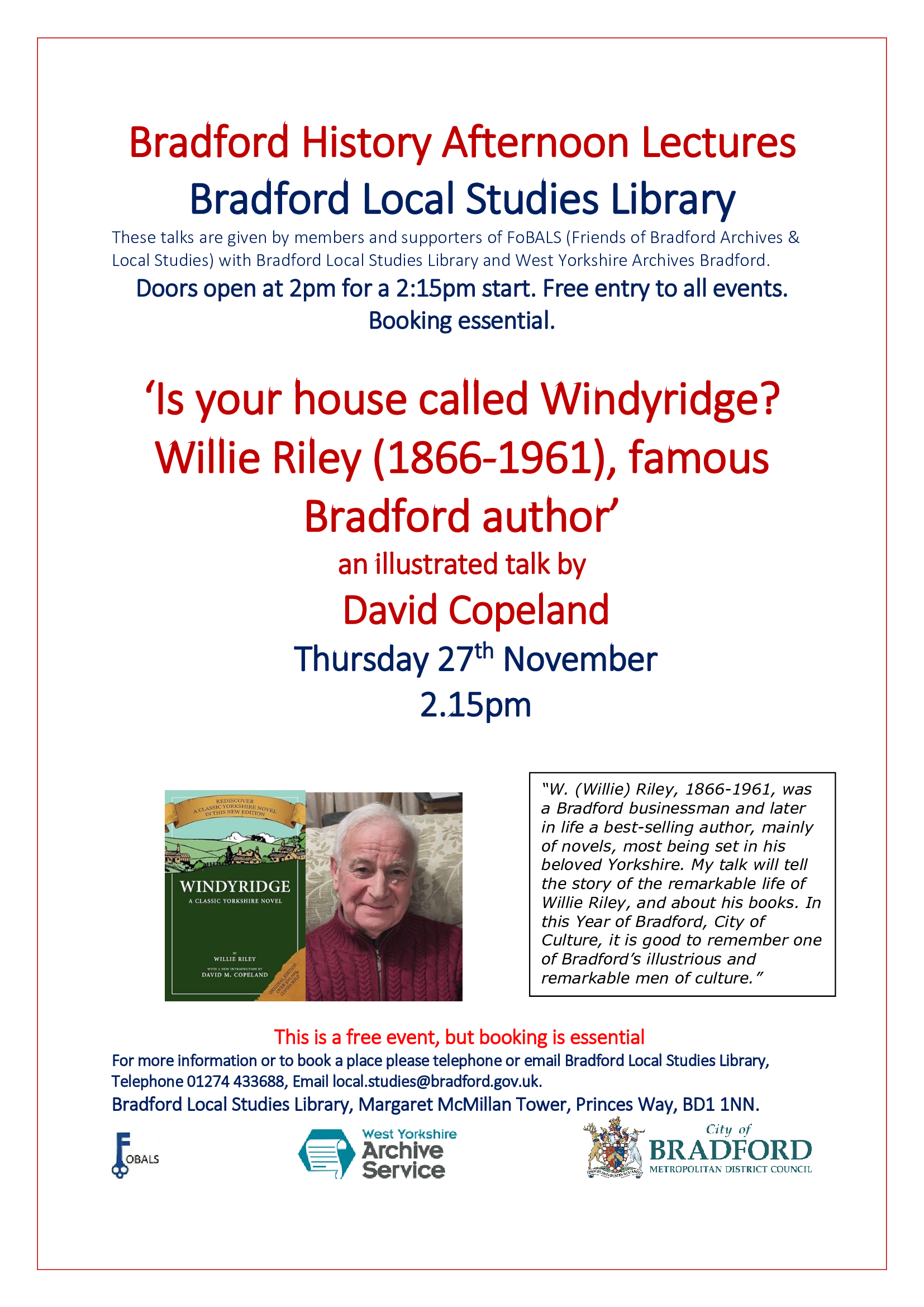
‘Is your house called Windyridge? Willie Riley (1866-1961), famous Bradford author’ an illustrated talk by David Copeland Thursday 27th November, 2.15pm
“W. (Willie) Riley, 1866-1961, was a Bradford businessman and later in life a best-selling author, mainly of novels, most being set in his beloved Yorkshire. The talk will tell the story of the remarkable life of Willie Riley, and about his books. In this Year of Bradford, City of Culture, it is good to remember one of Bradford’s illustrious and remarkable men of culture.”
These talks are given by members and supporters of FoBALS (Friends of Bradford Archives & Local Studies) with Bradford Local Studies Library and West Yorkshire Archives Bradford. Doors open at 2pm for a 2:15pm start.
The History Society recently held the third of its Local Studies Library Archive sessions at the library in Keighley. We’ve been organising these sessions because we know that between our 70+ members, we have some people working on individual projects who use these sessions as a spur to progress them further, and because we know that some members won’t be fully aware what a terrific resource the Local Studies Library is with its comprehensive collection of documents, maps, directories, photographs, plans and so on.
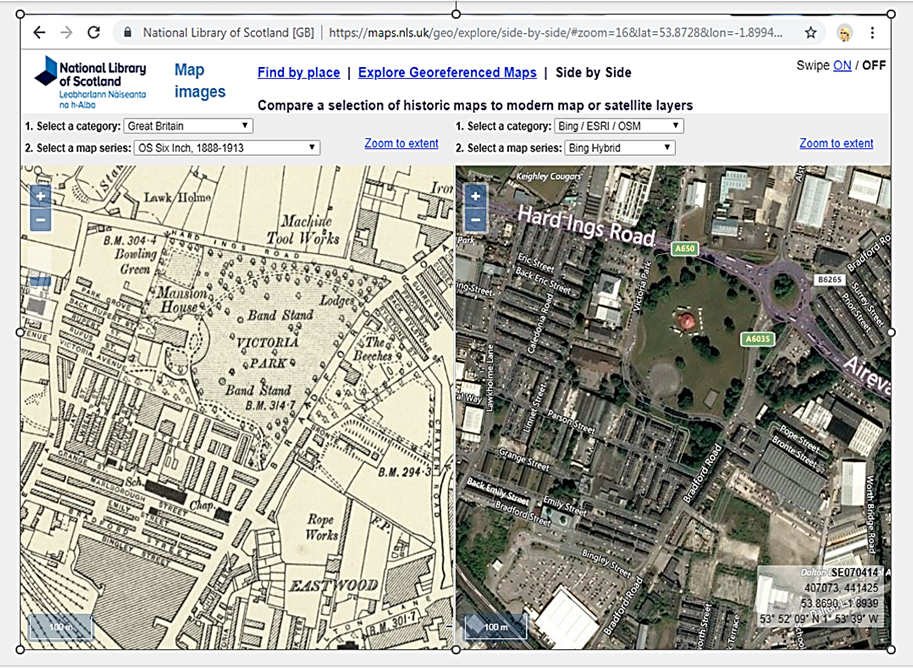
This time a couple of committee members thought it would be helpful to focus on how to research the history of particular properties (most usually the one people now live in). I personally had attended an open-session on this very topic at the library a couple of years ago, so I knew how beneficial it would be, plus I’d moved house in the meantime and had a new property I wanted to find out more about! Properties of interest to other members included a former vicarage, a converted barn, a farmhouse, a manor house, a nursery and numerous other properties dating from the seventeenth to early twentieth centuries.
The session started with Angela and Gina giving a presentation on the various collections and resources available within the library. These included the more obvious (you might think) local maps, and building plans, and expanded to census records and electoral records which would help you discover who was in your property before you. But then they talked about resources like court records from the 17th century, taxation records and rate books, and a whole host of other avenues to take your research down.
After the presentation, Angela, Gina and Janet were on hand to take our members through the various examples of records they had brought out, and that covered virtually every available surface in the upstairs library. They had also prepared a number of packs for individuals with details for some of the properties people were interested in. This included, for myself, a plan of a property linked with my own, that I am now keen to share with my neighbours who occupy said property.
Over twenty members of the History Society came along to the session (including one member who actually came to donate a plan of her previous home to the library). The morning was extremely well-received by our members. But I’ll let them say that in their own words…
“I found Saturday’s Archive session most helpful and enjoyable. The librarian ladies had gone to great lengths to help us further our study of the property we are researching which I greatly appreciate and wish to thank them again for the print outs of various documents and maps. Without their expertise and great knowledge of our Library’s resources I would have been overwhelmed.” – Eveline Rhodes
“I really enjoyed the session at the Library on Saturday. The preparation and presentation of archive materials was as always extensive. The members of the Team were knowledgeable and informative, offering links to people at various stages of their genealogical journey in addition to those seeking information about houses and buildings of interest, the two of course being closely intertwined. The Team are enthusiastic and readily accessed individual historical materials when requested. Keep up the good work.” – Eileen Whitley
“The Library Ladies, Angela, Gina and Janet, presented an impressively comprehensive array of information sources for us to consider. They had also prepared an individual pack of ‘site-specific’ information plus maps, to identify the age of my particular dwelling. This was immensely helpful and I am grateful for their time and focussed effort.” – Graham Mitchell
“I found the library session very useful and the staff gave a good presentation on what resources were available – and where to find them in the library. A few good tips too on which resource to use and when. I had not realised there were so many useful sources of information other than old OS maps and I can see myself calling in quite often now to try and dig out bits of history relating to a couple of projects I am working on; some listed buildings in Cross Roads and the history behind bridges in the Worth Valley and Keighley.” – Roger Grimes
“The library team are very knowledgeable and organised. Always helpful and will help with ideas on how to move forward. The archives themselves are well kept and organised and on Saturday they pulled together a lot of useful books and documents. Their handout is a very helpful and informative document. The session was really useful and it has inspired me to get back into my research on our house and local hamlet.” – Sally Morgan
“Following an interest in when my barn in Ingrow was built and its history, I attended the recent Property History Research lecture at the Local Studies library. I was amazed and excited by the range and depth of the physical records held in the library. This demonstrates to me how vital the Local Studies library is in curating and preserving the history of our town.” – John Rodger
We are all looking forward to future archive sessions in 2026.
Bradford History Lunchtime Lectures Bradford Local Studies Library
These talks are given by members of FoBALS (Friends of Bradford Archives & Local Studies) with Bradford Local Studies Library and West Yorkshire Archives Bradford.
Doors open at 2 pm for a 2:15 pm start. Free entry to all events. Booking essential.
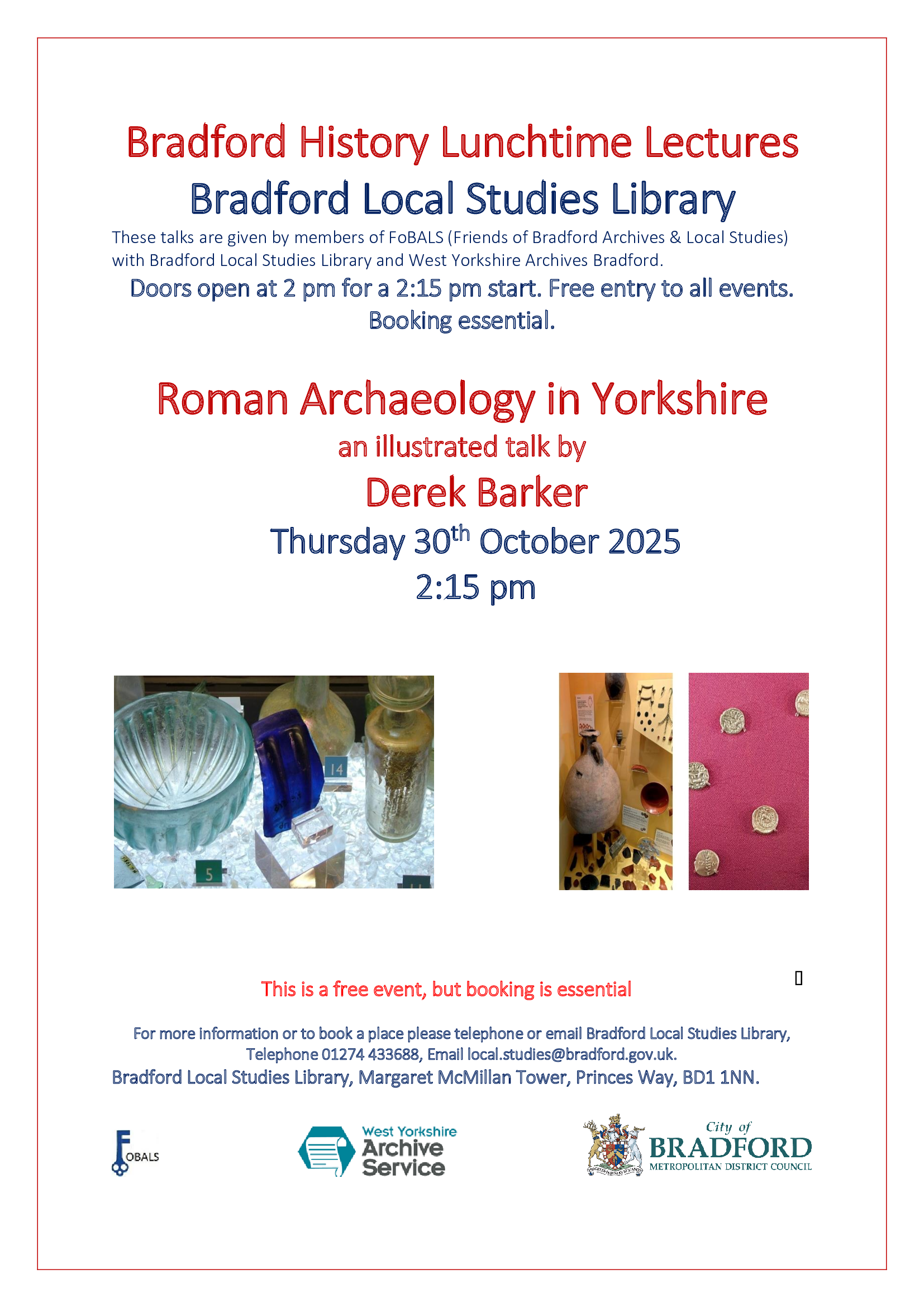
Roman Archaeology in Yorkshire – an illustrated talk by Derek Barker Thursday 30th October 2025 2:15 pm
This is a free event, but booking is essential
For more information or to book a place please telephone or email Bradford Local Studies Library, Telephone 01274 433688, Email local.studies@bradford.gov.uk. Bradford Local Studies Library, Margaret McMillan Tower, Princes Way, BD1 1NN.
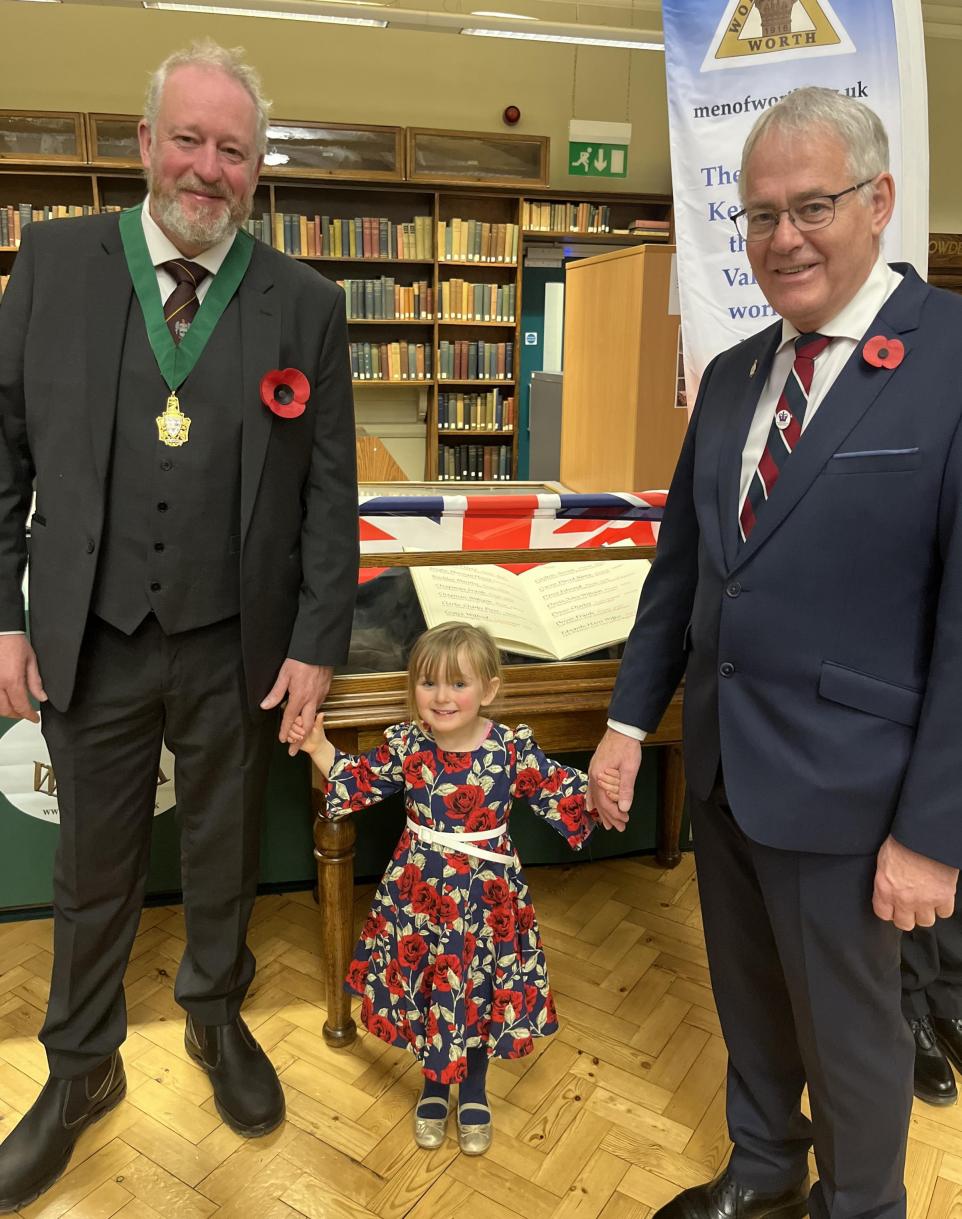
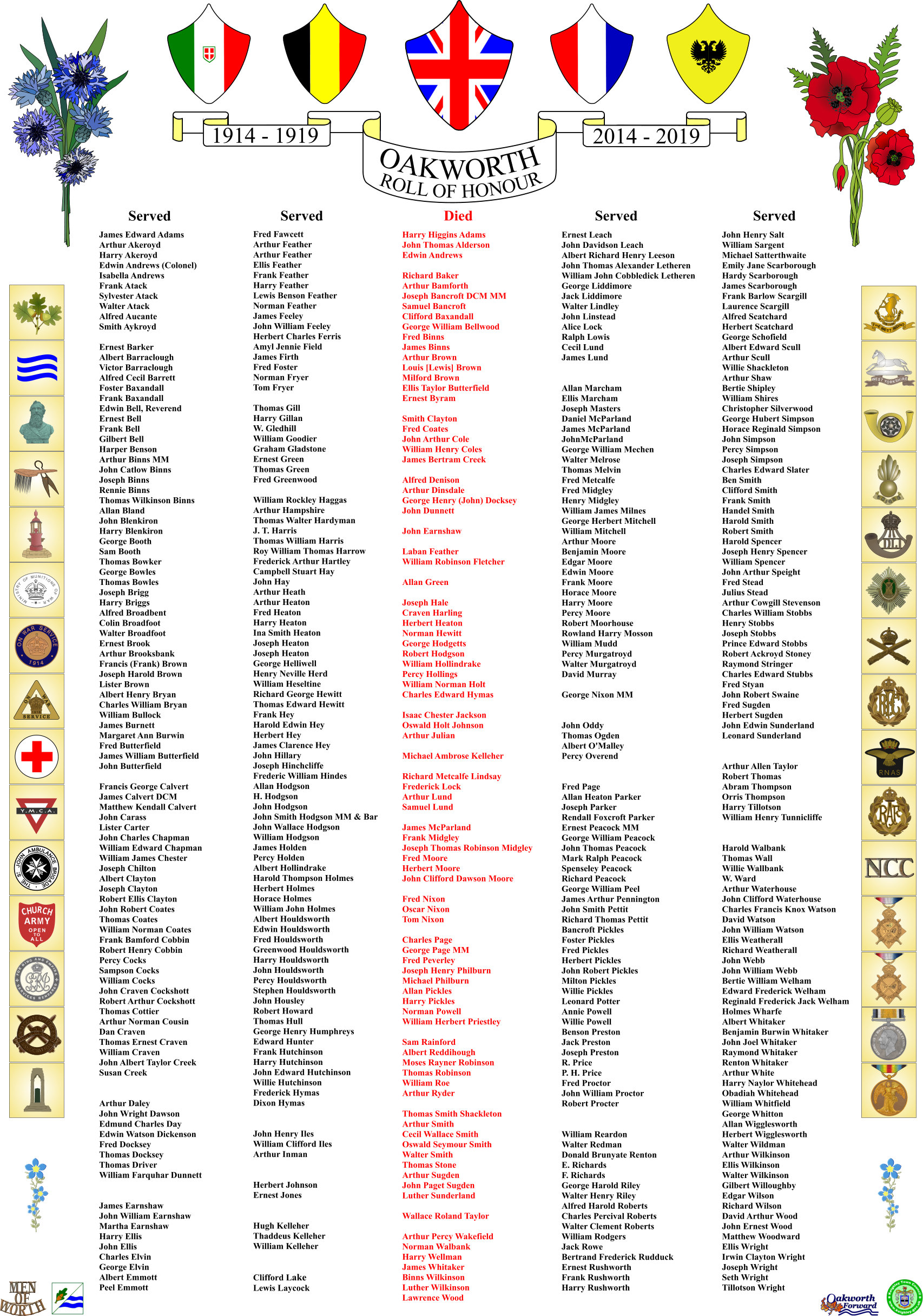
The Men of Worth Project have been busy creating a Remembrance Trail in Oakworth and the launch event will be at Oakworth Community Hall on the 30th of October. About 100 A3 boards will be installed by volunteers on lampposts around Oakworth on 28th October 2025 and they will be on display until the end of November.
The boards will be positioned near to the former homes of each man. People who read their brief stories on the boards can visit The Men of Worth Project website and/or use their phones to scan a QR Code on each board to go to the website to read their whole stories. We hope it will give people a sense of where these brave soldiers lived, before going off to war, never to return.
Andy Wade, project director states:
“One hundred A3 boards will be seen on lamp posts around Oakworth from the end of October until the end of November. People who read their brief stories on the boards can use their phones to scan the QR Code on each board to go to the Men of Worth Project website where they can read their whole stories. We hope it will give people a sense of where these brave soldiers lived their lives before going off to war, never to return.”
Keighley Mayor, Councilor Chris Herd, responeded: “Keighley Town Council is proud to support the Oakworth Remembrance Trail, ensuring the bravery and sacrifice of our local service people are remembered where they lived. This project, in partnership with Men of Worth and the Army Cadets, honours their legacy and brings our community together in respect and remembrance.”
For More information on the Men of Worth Project please see the website Men Of Worth
‘Meeting the Meat Demand’ with Karl-Heinz Wüstner.
Over the summer, the History Society was presented with the opportunity for a talk by Karl-Heinz Wüstner on German immigration to West Yorkshire. With all of our regular slots already filled (and the budget pretty much used up), our solution was to book Keighley Local Studies Library for an extra talk on the afternoon of Wednesday 1st October. The talk, entitled ‘Meeting the Meat Demand’ will start at 2.30pm and will finish around 4.30pm (time for the talk plus discussion at the end). There is a charge of £2 per person (fee applies to members and visitors).
Karl-Heinz Wüstner is a retired high school teacher from Ilshofen, Germany. As a local historian he has studied labour migration and conducted research on trade and craftsmanship in the Hohenlohe region of Germany for many years. He is a committee member of the Historical Society for Württemberg-Franconia and chairman of a local museum that exhibits painted furniture. He writes books and articles, and has given talks at numerous conferences and seminars.
Karl-Heinz Wüstner: “The continuing industrialisation of Yorkshire in the 19th century created many additional jobs in wool mills and factories. Industrial centres grew rapidly and the large number of newly arrived workers needed to be fed. German immigrants in particular took advantage of these circumstances. As butchers, they not only offered meat, but also produced a variety of tasty sausages, meatloaf, rissoles and many other products that could be eaten either cold or warm after brief heating. With the introduction of takeaways, also offering hot meals, they broke new ground in food supply and thus established new eating habits.
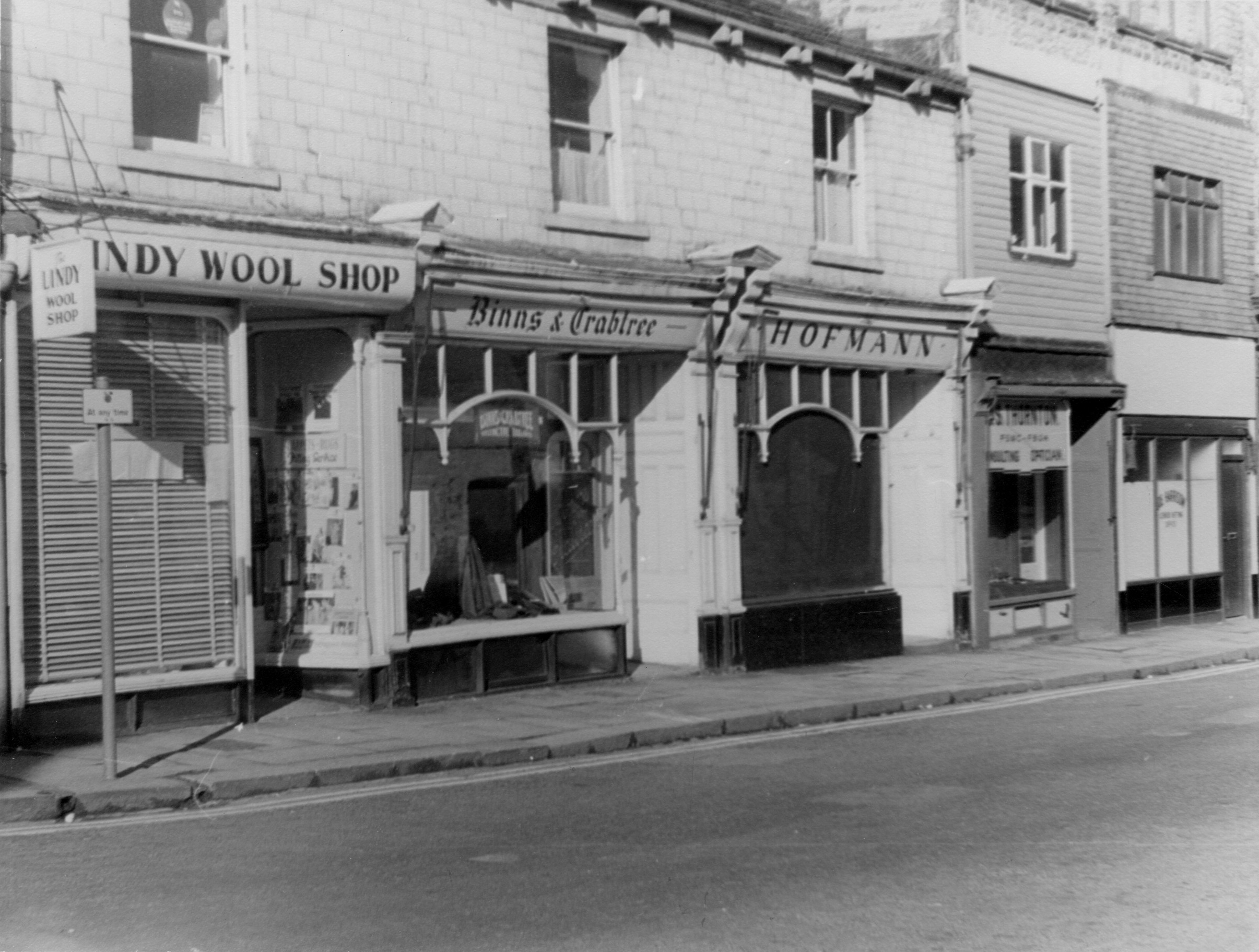
“Quite a number of such pork butchers settled in the up-and-coming town of Keighley. A whole series of butcher’s shops with more than thirty female and young employees dominated the streetscape. Names such as Andrassy, Pfeiffer, Hofmann and Schneider may still be remembered by some today.
“I will try to explain why the butchers and their families left their homeland and how they were able to succeed as immigrants. I will explore the important role they played in the development of the towns and cities, as well as their personal fates.”
Article and Photos by Tim Neal, Keighley & District Local History Society.